

Commercial Data Center Electrical Distribution Design
Commercial data center electrical distribution design: how Kord Electric keeps power steady
At Kord Electric, we build commercial data center electrical distribution design that supports maximum uptime and strong efficiency, especially for mission critical loads in modern data centers and major commercial property buildings. In the real world, a data center is not “just a building with servers.” It is a living system where power quality, fault management, and thermal load all work together. Therefore, we plan the electrical path like we plan a good backup route on a road trip: clear, tested, and ready before traffic gets dramatic.
In this guide, our expert service staff explains the steps we use to optimize distribution design, and they do it in plain language, not engineer math homework. Meanwhile, we also share the practical habits that prevent downtime, because nobody wants their uptime to look like a buffering video from 2007. Let’s begin.
Map the power path before you touch a wire
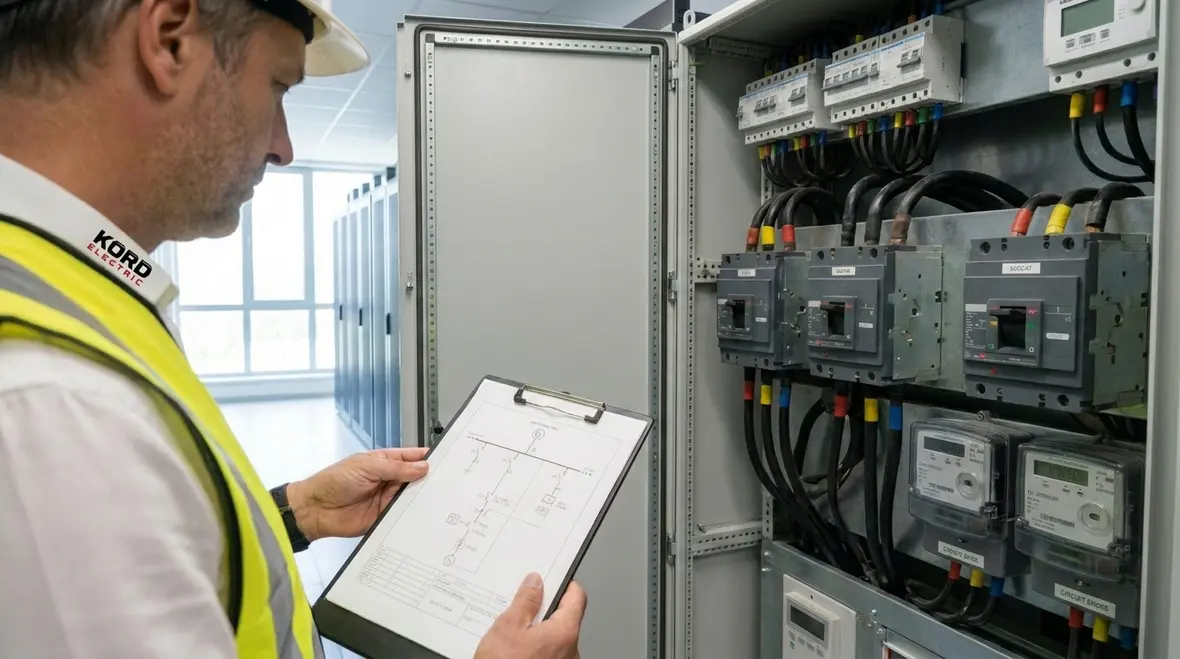
When teams optimize a data center’s electrical distribution, they start with clarity. First, we review the facility’s load profile, including IT racks, cooling equipment, lighting, and life safety systems. Then, we map the power path from utility entry to switchgear, transformers, busways, UPS, and distribution panels to each critical area.
Next, we confirm which loads must ride through events and which loads can pause briefly. For example, a UPS might protect compute loads while other systems follow a planned sequence. However, if the design team mixes up the priorities, the whole system can “work,” yet still fail business goals during an outage. So, we model the system with real operating scenarios rather than guessing. In other words, we do not wait for Murphy to show up, we plan for him.
Our technicians then align the electrical single line diagram with field realities, so the final installation matches the model. As a result, commissioning becomes smoother, and troubleshooting later takes less time. And yes, fewer surprises means fewer late nights, which counts as a win in anyone’s book.
For readers who want to zoom out beyond distribution design and understand the broader backbone of data center infrastructure, Kord Electric also breaks down the fundamentals in their dedicated overview on data center electrical infrastructure essentials, which walks through how switchgear, UPS systems, and power paths all work together to support uptime across commercial and industrial environments.
Reliability starts with redundancy you can explain to others
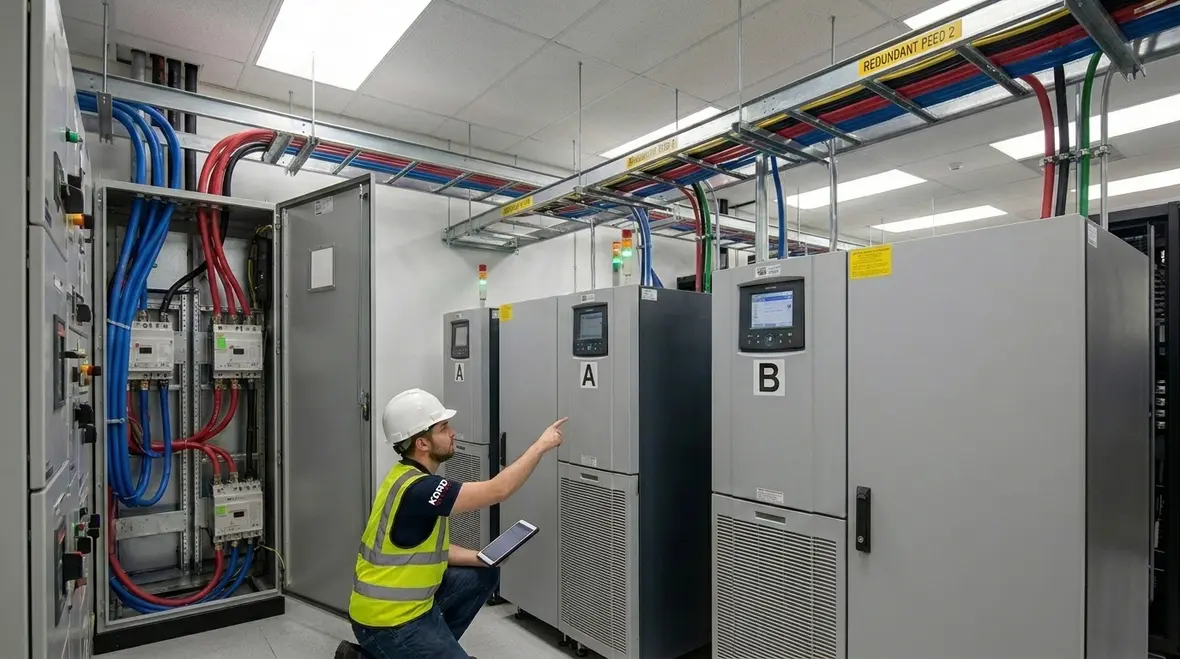
Redundancy is not a buzzword at Kord Electric. We build redundancy that staff can understand, operate, and maintain without confusion. Therefore, we focus on N and N plus arrangements where the design supports critical loads during the loss of a component. We also consider how switchgear sections, UPS modules, and transfer paths behave under load.
In practice, we reduce single points of failure by separating feeds, using well-defined transfer logic, and coordinating protective devices. At the same time, we maintain a simple plan for operators. That matters because, during a fault or maintenance event, the right action must happen fast.
Then we add clarity for our clients by walking through the operating sequence with our expert service staff. We explain what happens during utility loss, what happens during a transformer event, and how maintenance transfers should proceed. When the team understands the steps, uptime improves because response times drop. It is hard to beat a plan that your people can actually follow.
Protective coordination: stop faults early, not after they spread

Faults in a data center should be contained quickly. To help that happen, we optimize protective coordination across the full distribution chain. First, we review device settings and selectivity between upstream and downstream breakers, fuses, and relays. Next, we test assumptions against the expected fault current levels at each bus.
After that, we confirm arc flash mitigation steps through coordinated clearing times and labeling for safe access. However, the goal is not just safety. We also protect uptime by preventing unnecessary trips that take down parts of the facility. For instance, if a device trips early in the chain, the system can isolate more than needed, which can interrupt cooling or power to entire zones.
Our technicians use a careful, step by step approach so the system responds in the right order. As a result, the design supports faster restoration and fewer downtime hours. Think of it like traffic control at an intersection: when signals match the plan, cars move. When they do not, everyone gets stuck.
Efficiency gains come from power quality and smart loading

Efficiency in a data center is not only about fewer losses. It also reflects how stable the power stays under real operating conditions. So, we focus on harmonics, voltage regulation, and load balance across feeders.
To keep power stable, we work with appropriate transformer sizing and consider how UPS systems interact with downstream loads. Then, we verify that bus voltage and distribution components match the actual demand. If the facility runs too lightly for long periods, some losses can still add up. If it runs too heavily, components heat up and performance slips. Therefore, we target smart loading ranges that support both uptime and energy goals.
Next, we address harmonics that can overheat equipment and shorten service life. We coordinate filters or mitigation methods where needed, especially around nonlinear IT loads. Also, we monitor for neutral currents when applicable.
Finally, we build the design so future growth does not force the facility into inefficient operation. Because growth happens, it always does. And when it does, we prefer that it follows a planned pathway, not a scramble. Our expert service staff helps clients understand these tradeoffs before construction starts, which prevents redesign later.
If your facility has already experienced nuisance trips, flickering lights, or unstable voltage during peak demand, pairing thoughtful commercial data center electrical distribution design with structured electrical preventive maintenance can further stabilize performance across major properties and mission critical environments.
Commissioning, testing, and documentation that your team will use
Even a strong design can underperform if commissioning does not verify real behavior. Therefore, we test and document the system in a way that supports operations. First, we check continuity, insulation, terminations, and control wiring. Then, we confirm that protective devices trip and reclose as intended and that alarms match the single line diagram.
Next, we run functional tests on transfer switches and UPS bypass paths when the project scope includes them. We also validate interlocks and sequencing for maintenance modes. However, the biggest difference maker is that we align test results with how the facility will actually operate.
Our technicians then deliver documentation that helps the team run the system confidently. That includes as built drawings, relay settings, test reports, and a clear set of operating instructions for common events. With this foundation, troubleshooting gets faster when the unexpected happens. And it will, because the real world has a sense of humor. Still, your team will have the right playbook.
Dual column planning: uptime risk by zone and action
Below, Kord Electric uses a practical planning approach to reduce risk. It connects operational zones to actions that support uptime, so teams can act quickly and avoid guesswork.
Zone and common risk
- UPS area and bypass paths: risk of improper transfer behavior
- Switchgear buses: risk of unnecessary trip during faults
- Transformer interfaces: risk of overheating or unstable regulation
- Critical branch feeders: risk of overloading or imbalance
Action Kord Electric takes
- We verify transfer sequences and interlocks during commissioning
- We coordinate breakers and relays for selective fault clearing
- We size and test to match expected load and voltage ranges
- We balance loads and address harmonic impact where needed
FAQ: commercial data center electrical distribution design
Ready for a calmer, more reliable power system?
If your data center or major commercial property building needs better uptime and real efficiency, Kord Electric can help with design support, upgrades, and commissioning for commercial and industrial facilities. Our technicians and expert service staff focus on protective coordination, reliable redundancy, and power quality so your team spends less time reacting and more time operating. Reach out to us now to review your electrical distribution goals and next steps, and let us turn power planning into a steady system you can trust.
For facilities that need rapid support when something unexpected does happen, Kord Electric also provides structured emergency electrical services to stabilize systems, protect equipment, and restore power safely across commercial and industrial properties.


