Data Center Electrical Systems Infrastructure Power Reliability
When clients ask about Data Center Electrical Systems: Infrastructure, Power & Reliability, we answer with one idea: the electrical backbone must stay dependable, even when the rest of the world feels anything but. Our technicians at Kord Electric build and maintain electrical infrastructure for commercial and industrial facilities, including major property buildings and data centers where downtime costs real money. They do not guess, and they do not “hope it holds.” Instead, we follow proven designs, careful installation, and clear testing. So, if power is the oxygen of your facility, then we treat every connection, every protection device, and every distribution pathway like it matters. Because it does. And yes, we know, power systems can be as exciting as watching paint dry. We make it less boring anyway.
Electrical backbone basics for data center power design
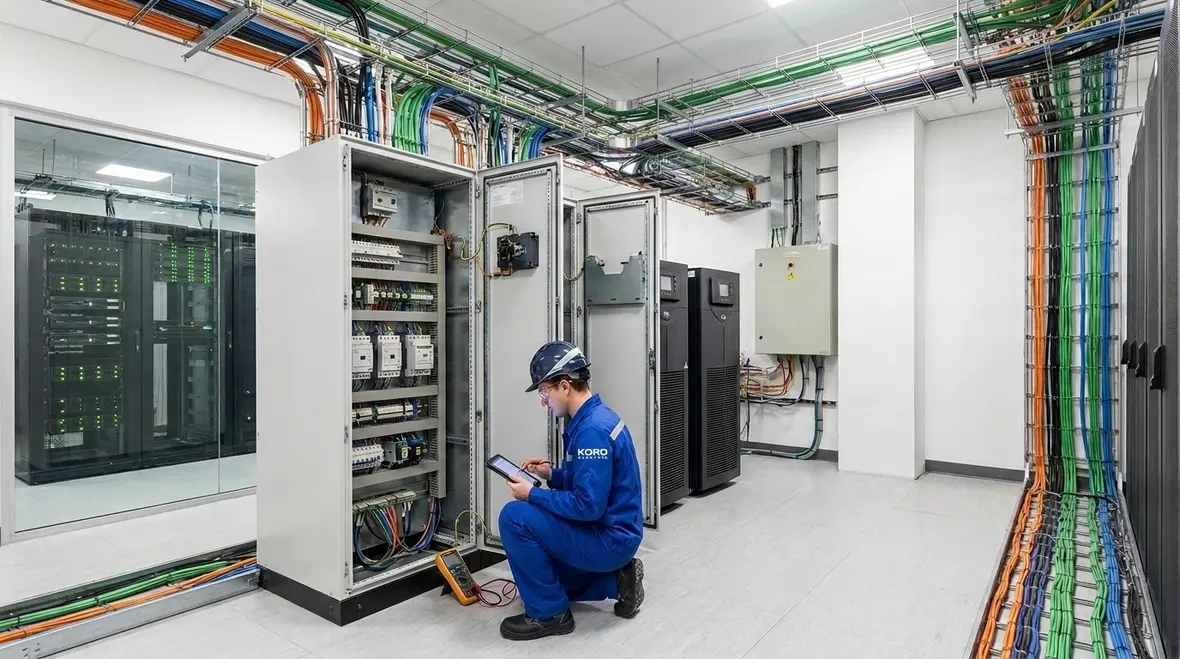
In a data center, power does not behave like a simple utility feed that you plug in and forget. We design the system as a layered chain, where each stage supports the next. First, an incoming utility service lands at electrical rooms built for safe access and maintenance. Then we distribute that energy through switchgear and busways that route power to critical loads. After that, the system feeds UPS units, which condition power during utility events. Finally, distribution boards and PDU networks deliver power to racks, engines, and supporting systems.
In practice, we pay attention to more than just “having power.” We coordinate voltage levels, load balance, fault current limits, and physical layout so equipment operates within its limits. Moreover, we plan for service access without turning your uptime into a construction project. A data center team needs speed, but they also need order. And we bring both, with technicians who explain what they are doing while they do it.

How we plan redundancy without wasting real time
Redundancy sounds simple until you watch a system fail in the real world. Then you learn that redundancy has to be engineered, not just added. We help clients structure multiple paths for critical loads so failure in one component does not shut the facility down. For example, we evaluate whether you need parallel UPS strings, separate distribution paths, or independent feeders for different critical zones. We also look at whether the design supports maintenance events, not only catastrophic failures.
Additionally, we help others align redundancy with the facility’s operational needs. A major property building with mixed tenants may have different priorities than a site running always-on compute and storage. Therefore, our approach stays practical. We focus on keeping critical loads stable while allowing maintenance windows that do not become emergency events. And yes, we do make the occasional joke during commissioning. If someone says, “This is foolproof,” our expert service staff usually responds, “Great, now we will test it like it is not.”
For clients who want a broader foundation on how the electrical backbone fits together before redundancy decisions, we often recommend reviewing Kord Electric’s companion guide on data center electrical infrastructure essentials, which walks through upstream infrastructure, distribution, and cooling coordination in more depth.
UPS integration and power conditioning for critical loads
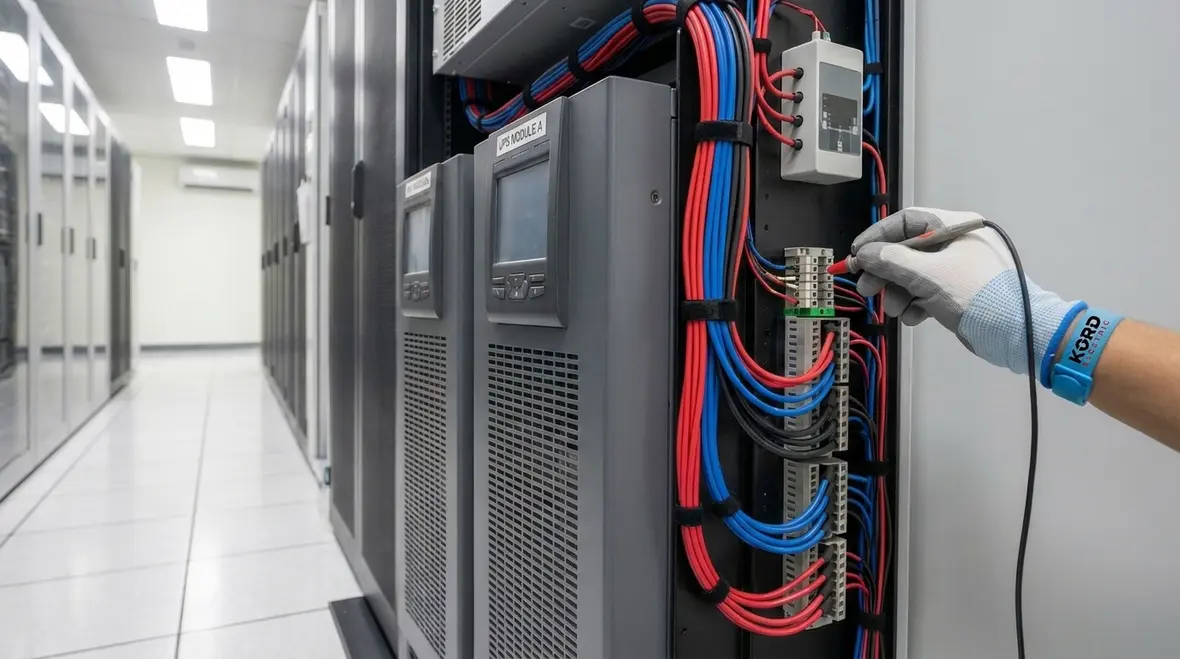
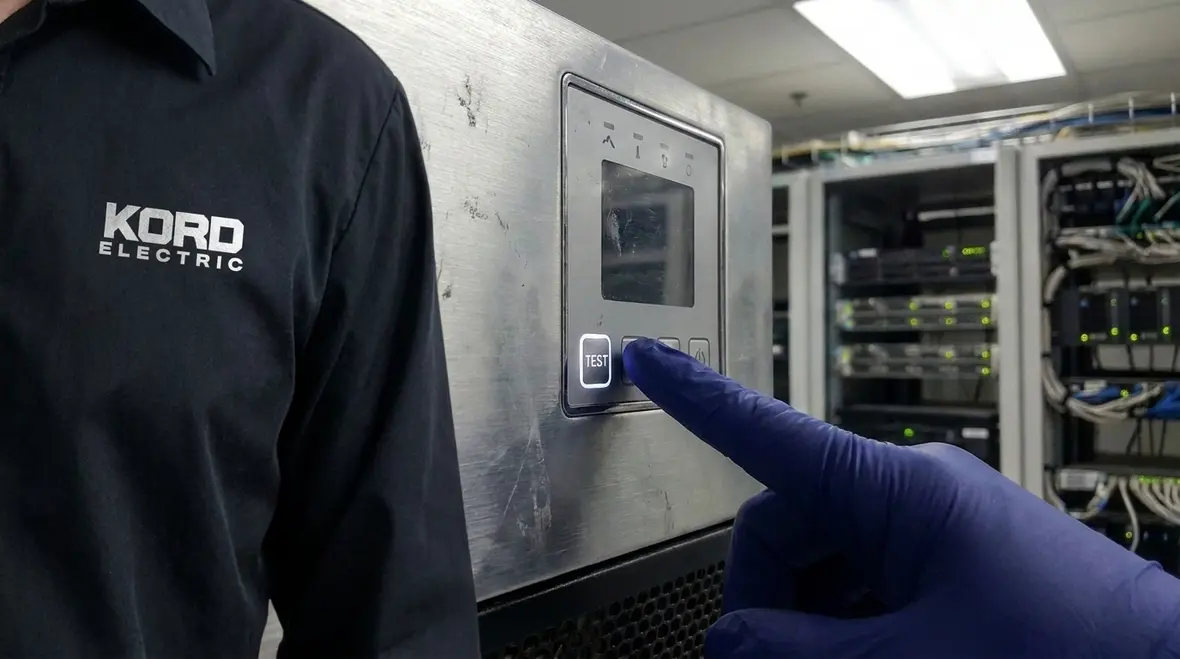
UPS systems serve as the bridge between utility power and the ability to sustain operations. However, the UPS alone does not solve every problem. We look at integration details: how the UPS transfers power, how it handles harmonics, how it manages load changes, and how it coordinates with downstream breakers and protective devices.
From our experience, many issues start as “small” electrical mismatches. For instance, poor load sharing can push one module harder than others. In addition, mismatched impedance can affect voltage regulation. We reduce these risks through design review and on-site verification. Our technicians do not simply connect equipment; they confirm that the system meets the intended behavior across operating modes, including utility loss and transfer states.
Also, we consider the real-world conditions that data centers face: varying IT load, seasonal cooling changes, and planned maintenance. Meanwhile, power quality must stay stable enough for sensitive electronics. When we coordinate UPS commissioning, we test performance and document results in a way your facility team can use later. That clarity prevents surprises when something changes.
Backup power and generator coordination that actually works
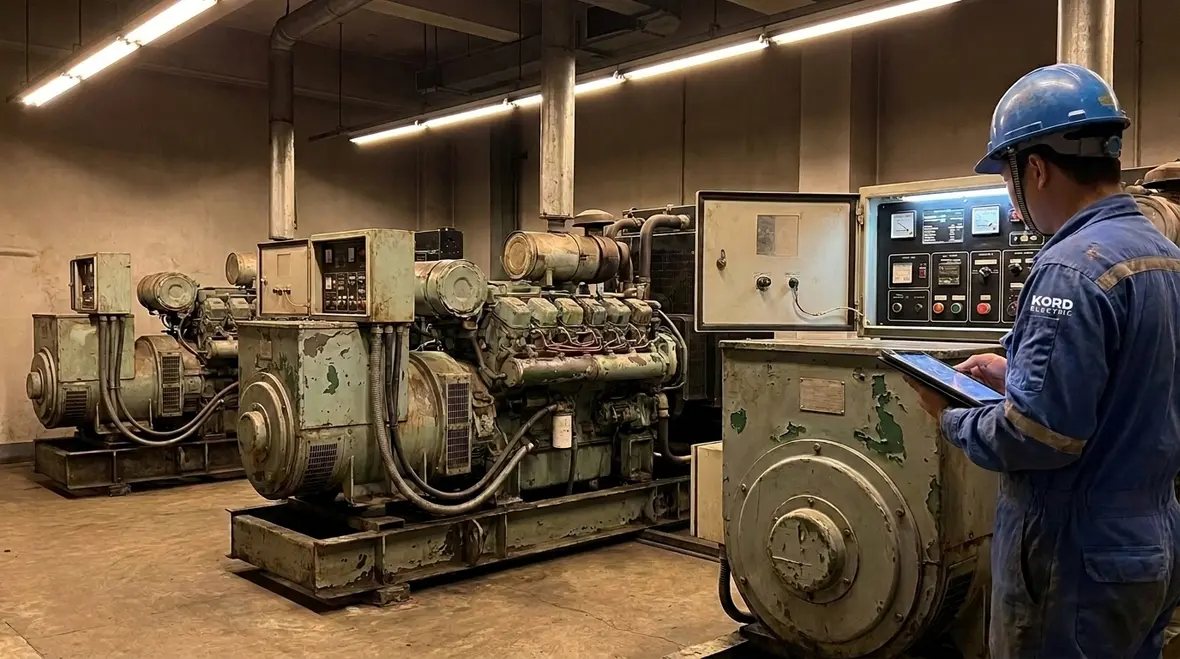
Generators are often the headline, but the coordination matters more than the headline. If the generator starts too late, the UPS has to cover the gap. If transfer logic is wrong, critical loads may experience interruptions or unstable voltage. So we engineer generator sets with careful timing, protection settings, and load transfer design.
We also plan for practical operations. Battery systems, fuel supply, exhaust handling, and physical separation affect reliability. Plus, we confirm that the electrical system supports generator ramp behavior and stability under load. If your facility uses multiple generators or staged loading, we ensure the sequence matches operational goals.
To keep the system calm during stressful moments, our expert service staff explains the transfer sequence in plain language. They walk clients through what happens at each step. Then we verify it through functional testing. After all, a generator that “could work” is not the same as a generator that does work when a real outage hits. In our world, calm power beats dramatic power every time.
Distribution, protection, and power quality in one dependable system
Distribution turns a power source into usable power for equipment. Yet protection ensures safe operation when something goes wrong. We design and service both as a connected system, not separate checklists. That means proper breaker coordination, correct protection settings, and safe fault clearing times. It also means we account for the electrical characteristics of modern loads, including variable-speed motors and switch-mode power supplies.
Power quality matters because data center equipment often responds poorly to long or repeated disturbances. Therefore, we evaluate harmonic levels, voltage drop, and grounding performance. We verify that neutral and grounding systems support safe operation and stable reference points. We also examine cable sizing and routing so heat and mechanical stress do not quietly reduce reliability over time.
To keep this work efficient, our technicians use structured verification during installation and during upgrades. Then, we document what we test and what we find. When your team needs to troubleshoot later, the answers should be available, not invented. That is how we reduce downtime risk for commercial and industrial facilities that cannot afford guesswork.
Monitoring, test plans, and reliability you can prove
Reliability grows from maintenance, and maintenance grows from visibility. We help clients implement monitoring that supports timely response, not just alarms that show up like surprise guests. Monitoring should connect to the electrical system at meaningful points: where current flows, where switching occurs, and where abnormal conditions develop. When you catch issues early, you fix them during planned windows instead of during unplanned ones.
We also support test and inspection plans that fit your operating reality. Instead of one-time “set it and forget it” behavior, we help clients build a routine that covers critical components. That includes periodic checks of protective devices, UPS performance verification, and verification of transfer behavior for standby systems. We also review environmental conditions affecting electrical rooms, such as airflow and temperature, because electrical equipment hates surprises that feel like hot summer days.
And because our team works closely with your facility staff, our expert service staff explains results and next steps. We do not hide behind technical fog. We tell you what matters, what changed, and what action prevents future disruption. That is not just service; it is risk management with a human voice.
Dual column approach: electrical infrastructure mapping and upgrade strategy
To keep upgrades organized, we often build an electrical infrastructure map that your team can reference during design, construction, and maintenance. Then we pair it with an upgrade strategy that protects uptime and reduces rework. Below is a simple view of how we structure it.
| What we map | What we plan next |
Incoming feeds, switchgear paths, bus layouts |
Upgrade order that preserves critical power continuity |
UPS outputs, transfer logic, distribution panels |
Commissioning steps and verification checkpoints |
Generator controls, synchronization, and protection settings |
Testing schedule aligned with downtime windows |
Grounding design, monitoring points, and power quality focus areas |
Maintenance plan that keeps performance measurable |
This mapping and planning approach also supports long-term growth. When you later evaluate scalability or efficiency improvements, you can align them with broader strategies such as Kord Electric’s data center power scalability and reliability guides, instead of treating each upgrade like a standalone project.
FAQ on data center electrical systems
Partner with Kord Electric for dependable power in commercial and industrial facilities
When your facility depends on computing and storage, electrical reliability cannot be a guess. At Kord Electric, we engineer and service data center power systems with technicians and expert service staff who explain every step and verify results. We help commercial and industrial facilities protect uptime through strong infrastructure, smart redundancy, and real testing. If you are planning a new site build, a major upgrade, or a reliability refresh, contact us today. We will map your current setup, highlight risks, and chart a clear path forward.
For organizations across the region, our team also supports broader property portfolios with solutions such as Los Angeles County electrical services for commercial and industrial facilities, applying the same mission critical mindset used in data center work to office, campus, and specialty sites.
If your next project needs a deeper dive into how upstream design choices shape power paths and long-term resilience, you can also explore our related resource on data center electrical infrastructure essentials for additional context before finalizing your roadmap.