
Electrical Grounding and Bonding for Facilities
Electrical Grounding and Bonding Basics for Commercial and Industrial Facilities
In every commercial tower, industrial plant, and major property building, three quiet forces stand guard behind the walls and beneath the floors: grounding, bonding, and safety. They do not flash like new LED lighting. They do not hum like a transformer on a hot July afternoon. Yet they protect equipment, shield people, and keep operations steady when the unexpected strikes. At Kord Electric, we approach grounding and bonding the way a seasoned captain approaches a storm. Calm. Precise. Prepared. Our technicians and expert service staff take the time to explain what is happening behind the panels, because when clients understand their systems, they make smarter, safer decisions.
Now let us step into the foundation of it all and bring some clarity to a topic that deserves more than a passing glance.
The Foundation of Electrical Protection in Large Facilities
In large commercial and industrial environments, electrical systems carry heavy loads and support critical operations. Manufacturing lines, data centers, medical complexes, distribution hubs, and high rise offices rely on stable power. However, without proper grounding and bonding, that stability becomes fragile.
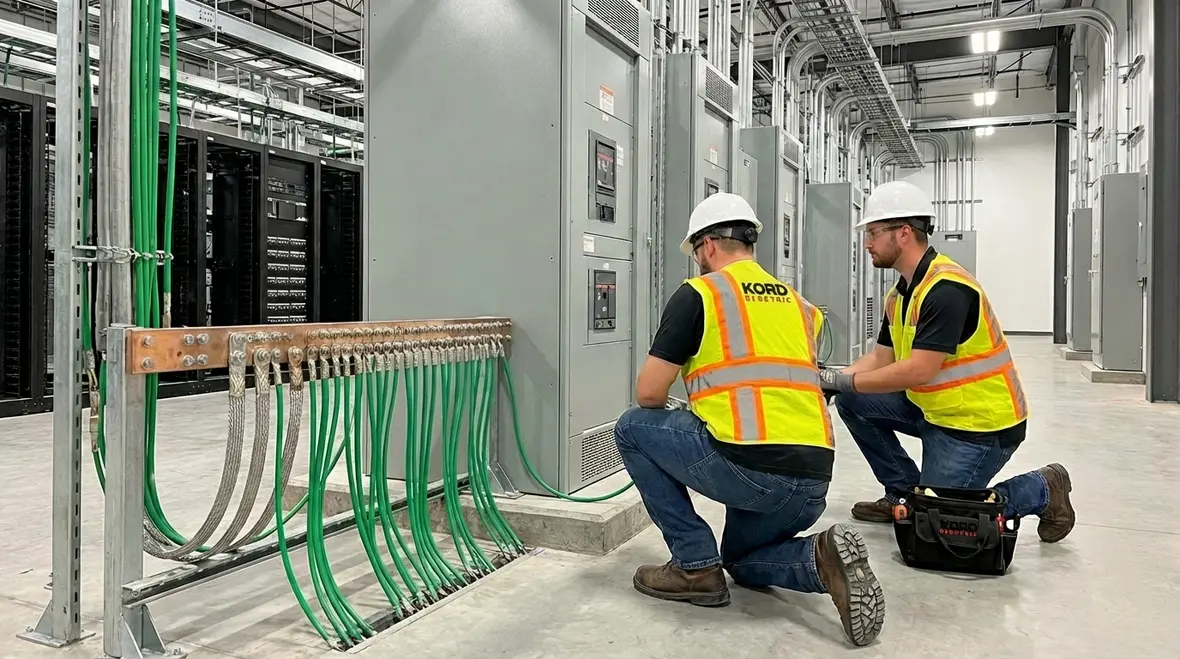
Grounding creates a controlled path for stray electricity to travel safely into the earth. Instead of wandering through steel framing, conduit, or worse, a human body, fault current moves along a deliberate route. As a result, protective devices such as breakers and relays trip quickly. That quick action prevents equipment damage and reduces fire risk.
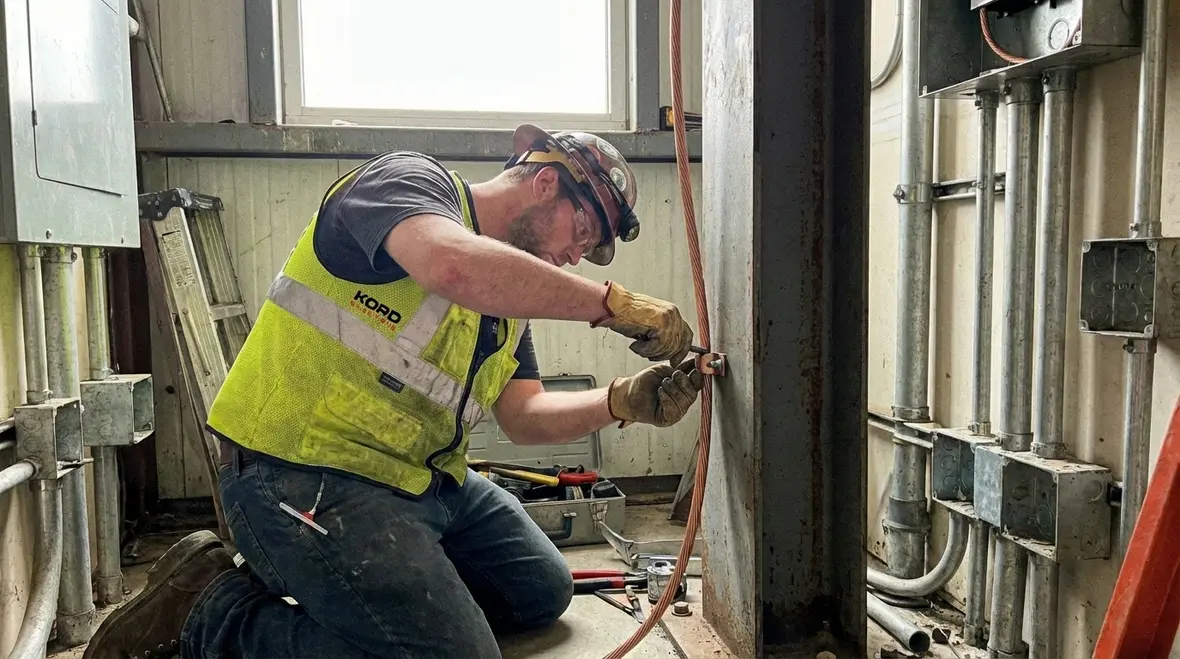
Bonding, on the other hand, connects all non current carrying metal parts together. It ensures that metal enclosures, conduit systems, cable trays, and structural steel remain at the same electrical potential. Therefore, if a fault occurs, voltage differences do not appear between surfaces. No surprises. No unintended shock hazards.
At Kord Electric, our crews treat these systems as the backbone of facility safety. While some might see a green wire and think, well, that looks simple enough, our team knows the engineering behind that conductor is anything but casual.
For many multi-story properties and campuses, these fundamentals also tie directly into other life safety infrastructure. For example, fire alarm panels, monitoring equipment, and notification devices depend on stable reference points and clean fault paths to operate reliably alongside fire protection systems. When grounding and bonding are treated as optional, every downstream safety system feels that decision.
That is why Kord Electric builds grounding and bonding strategies that align with the broader protection picture, coordinating with fire protection specialists the way an orchestra coordinates with its percussion section. Everything must hit on time when safety is on the line.
How Grounding Works in Commercial and Industrial Systems
In large facilities, grounding extends far beyond a single rod driven into the soil. Instead, it often includes grounding electrode systems, building steel connections, concrete encased electrodes, and integration with utility service grounds.
When a fault occurs, such as insulation failure inside a motor or panelboard, current seeks the fastest return path to its source. Proper grounding provides that path with low impedance. Consequently, high fault current flows momentarily, and protective devices operate without hesitation.
Without effective grounding, fault current may remain too low to trip a breaker. That delay creates heat. Heat creates damage. And damage, in a commercial or industrial environment, creates downtime. As every facility manager knows, downtime has a talent for showing up at the worst possible moment.
Moreover, grounding supports surge protection. Lightning strikes, utility switching events, and internal load changes can create voltage spikes. A well designed system channels that excess energy into the earth. In turn, sensitive equipment such as PLCs, control panels, and IT infrastructure remain protected.
Kord Electric’s teams see this up close in complex environments like data centers, where grounding and bonding design directly influence uptime, noise levels on communication lines, and the reliability of emergency power transitions. If you would like a deeper dive into how these concepts play out in technology-driven spaces, our data center electrical infrastructure essentials guide walks through real-world examples of how grounding and bonding protect sensitive loads during switching events.
Our expert service staff often walk facility teams through this process step by step. They explain not only what is installed, but why it matters. Because when a plant manager understands how fault current behaves, maintenance planning becomes proactive rather than reactive.
Grounding is also where electrical and life safety goals overlap. Fire alarm panels, notification circuits, and supervisory systems need dependable ground references so that faults clear quickly and alarms do not misfire or go silent when they are needed most. When the power system and the protection system share a well-engineered grounding network, each reinforces the other.
Bonding Explained Clearly for Property Managers and Engineers
Bonding might not get the spotlight, yet it plays an equal role in safety. In simple terms, bonding connects conductive parts so that they share the same electrical potential. However, in a large building, that task becomes complex.
Consider metal water piping, structural steel, cable trays, HVAC housings, and switchgear enclosures. If these elements are not bonded together, a fault in one area could energize a single surface. Meanwhile, an adjacent surface remains at a different potential. Touch both, and the human body becomes the bridge.
Through intentional bonding, facilities eliminate that voltage difference. As a result, when a fault occurs, current travels through low resistance bonding conductors rather than through unintended paths.
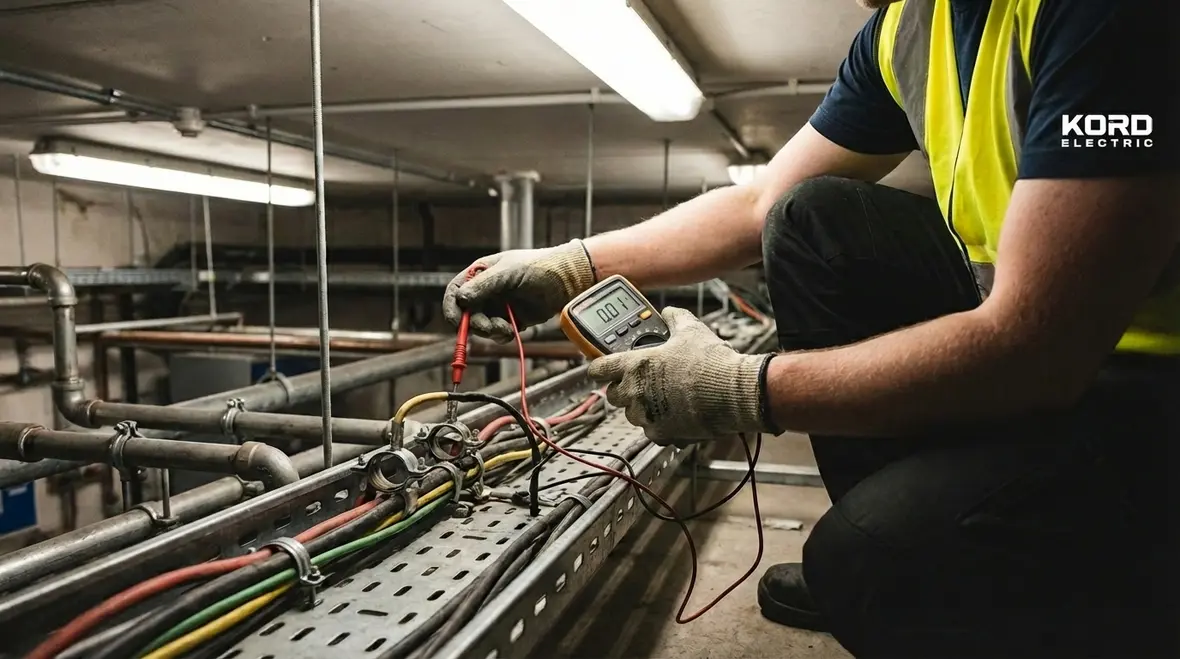
At Kord Electric, technicians inspect bonding jumpers, verify continuity, and confirm compliance with electrical codes specific to commercial and industrial properties. Furthermore, they document findings in a clear, organized manner. No guesswork. No mystery notes scribbled on the back of a napkin.
And yes, sometimes bonding conductors hide in places that require creativity to access. Fortunately, our crews have seen it all. If electrical systems had a reality show, bonding inspections would make for surprisingly dramatic episodes.

In many facilities, bonding also intersects with life safety infrastructure. Fire alarm risers, notification appliance circuits, and monitoring hardware are often routed in or near metallic raceways and building steel. When those components are properly bonded, faults clear cleanly, panel diagnostics make sense, and nuisance activity on fire alarm systems is less likely to distract staff from real events that require a response.
That connection between electrical bonding and dependable alarms is one reason Kord Electric often collaborates with fire protection partners who specialize in alarm testing, monitoring, and sensitivity verification. When everyone is literally on the same potential, the entire life safety strategy works better.
Grounding and Bonding Safety in High Load Environments
High load environments introduce unique challenges. Heavy machinery, large HVAC systems, and expansive distribution panels generate substantial current flow. Therefore, any weakness in grounding and bonding becomes magnified.
In industrial plants, motor faults can produce significant fault current. Proper grounding ensures rapid breaker operation. In addition, bonding keeps equipment frames at uniform potential, reducing shock risk for maintenance staff.
Data centers and technology driven facilities present another layer. Sensitive electronics demand clean, stable reference points. Although grounding primarily protects against faults, it also influences signal integrity. Consequently, well designed systems reduce electrical noise that could disrupt operations.
At Kord Electric, our technicians do not rely on assumptions. They perform continuity testing, impedance measurements, and visual inspections. Moreover, they assess whether expansions or retrofits have altered original grounding and bonding layouts. Over time, facility upgrades can unintentionally compromise earlier designs.
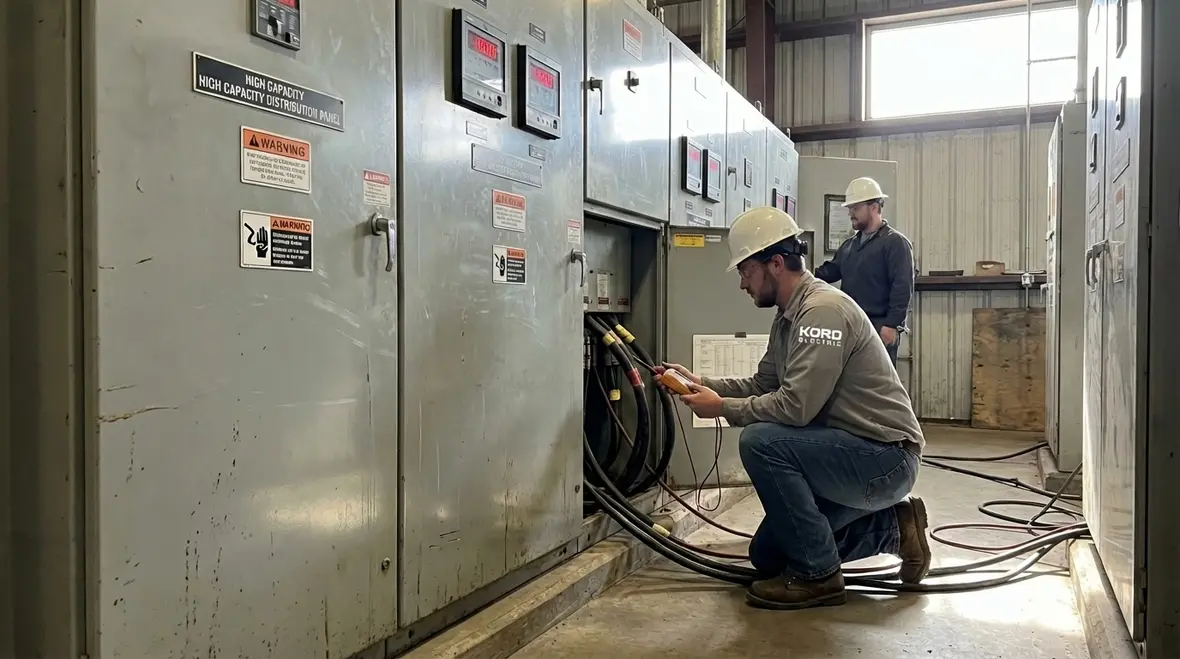
Because of this, we emphasize periodic evaluations. After all, a facility evolves. Its protection systems should evolve with it. That includes not only breakers and feeders, but also surge protection, emergency transfer equipment, and the alarm and monitoring systems that keep watch over them.
When high load equipment shares a stable grounding and bonding network with fire alarm panels and monitoring hardware, fault events are more predictable and easier to investigate. Technicians can quickly distinguish between a genuine equipment failure and a wiring or bonding issue, reducing the risk of repeated alarms or unexplained system behavior that chip away at staff confidence.
Common Grounding and Bonding Issues Found in Major Buildings
In large commercial and industrial properties, grounding and bonding issues often develop gradually. They do not announce themselves with flashing lights. Instead, they hide quietly until a fault exposes them.
Below is a concise comparison of common conditions and their potential impact.
| Condition | Potential Impact |
|---|---|
| Loose bonding connections | Increased resistance and delayed breaker operation |
| Corroded grounding electrodes | Reduced effectiveness during surges or lightning events |
| Improper equipment grounding conductors | Elevated shock risk for maintenance personnel |
| Unbonded metal piping or structural steel | Voltage differences between conductive surfaces |
| System modifications without review | Compromised coordination and protection schemes |
Each of these issues may appear minor at first glance. However, in a large facility, even a small flaw can escalate under load. Therefore, our expert service staff approach inspections with disciplined attention to detail. They understand that safety often depends on what others overlook.
In some buildings, patterns of electrical problems also show up as repeated trouble signals, unexplained equipment resets, or nuisance fire alarm activity. Those symptoms are not always caused by the panel itself; sometimes the real source is a grounding or bonding discrepancy further upstream. When that root cause is corrected, both electrical reliability and life safety performance improve together.
What Facility Managers Often Ask About Grounding and Bonding
Facility leaders frequently ask how to know whether their system meets current standards. The answer begins with documentation and testing. Up to date drawings, proper labeling, and recorded test results create a clear picture of system health.
They also ask whether older buildings require upgrades. In many cases, yes. Electrical codes evolve. Technology changes. Load profiles increase. Consequently, grounding and bonding systems installed decades ago may not align with present demands.
Another common question involves coordination with other building systems. For example, lightning protection, surge protection devices, and emergency power systems must integrate seamlessly with grounding infrastructure. If they operate in isolation, overall protection weakens.
At Kord Electric, we answer these questions directly. Our technicians and engineers speak in clear language, not jargon. They walk clients through findings and recommend practical next steps. In doing so, they build trust that extends well beyond a single service call.
For facility teams that also oversee fire alarm, sprinkler, and suppression equipment, this clarity matters even more. Coordinating electrical bonding and grounding with fire protection testing, alarm monitoring, and device calibration helps reduce false signals and ensures that when a panel reports a problem, it is worth everyone’s attention.
The Kord Electric Approach to Long Term Electrical Safety
Grounding and bonding are not one time tasks. Instead, they require ongoing oversight. As facilities expand, add equipment, or reconfigure spaces, electrical distribution shifts. Therefore, protective systems must adapt.
Kord Electric focuses exclusively on commercial and industrial facilities and major property buildings. This focus allows us to understand the scale and complexity involved. Our technicians coordinate with facility managers, engineers, and safety officers to align improvements with operational goals.
First, we evaluate existing infrastructure. Next, we test and verify continuity and impedance. Then, we identify gaps or code concerns. Finally, we provide a clear action plan. Throughout the process, we keep communication steady and transparent.
There is a certain calm that comes from knowing a facility is protected at its core. Like a well rehearsed orchestra, every conductor, connection, and electrode plays its part. And when everything works together, the result is quiet reliability.
When those electrical protection layers are aligned with robust fire alarm monitoring and testing programs, the building’s safety posture strengthens from every angle. Faults are detected earlier, alarms are more trustworthy, and maintenance teams can focus on the issues that truly matter. For property owners managing large portfolios, that level of coordination is not just a technical advantage; it is peace of mind.
If your team is also responsible for fire alarm monitoring, consider pairing a grounding and bonding assessment with a dedicated alarm service request so that both electrical and life safety systems are evaluated together. Kord Fire Protection offers streamlined alarm assistance through their fire alarm monitoring service request portal, making it easier to keep every layer of building protection working in concert.
Frequently Asked Questions About Grounding, Bonding, and Facility Safety
Facility managers, property owners, and safety officers often return to the same core questions about grounding and bonding. Clear answers help everyone make better decisions about inspections, upgrades, and long term planning.
Conclusion
Grounding and bonding form the unseen framework that protects every commercial and industrial facility. When designed, tested, and maintained with care, they guard people, equipment, and operations with quiet strength. Kord Electric stands ready to evaluate, improve, and safeguard these critical systems for major property buildings. Connect with our expert service staff today, and let us bring clarity, confidence, and lasting safety to the core of your electrical infrastructure.
For properties that also need coordinated fire protection, consider pairing an electrical assessment with a dedicated fire alarm and monitoring service request so both disciplines reinforce each other. Kord Fire Protection offers comprehensive support for alarm monitoring, testing, and service requests through their fire alarm monitoring service request page, helping create a continuous barrier of protection around your facility.


