Electrical Load Calculation for Commercial Facilities
Kord Electric approaches every major facility with one foundational principle: accurate electrical load calculation protects performance, profit, and people. Within the first phase of any commercial or industrial project, our technicians conduct a structured power demand analysis that maps current usage, peak demand, future expansion, and system limits. Consequently, our clients avoid overloads, nuisance shutdowns, and costly retrofits. In other words, we measure twice so you do not pay twice. Throughout this guide, we explain how our expert service staff handles load planning for large properties and why precision today prevents chaos tomorrow.
Let us begin where it matters most.
Understanding Electrical Load Calculation for Commercial and Industrial Facilities
Electrical systems in large buildings do not forgive guesswork. Data centers, distribution hubs, manufacturing plants, hospitals, and multi story office towers all demand stable and balanced power. Therefore, every project starts with a detailed review of connected loads, operational schedules, and equipment ratings.
An electrical load calculation determines how much power a facility requires under normal and peak conditions. However, it does more than tally equipment wattage. It evaluates diversity factors, demand factors, motor starting currents, and system efficiency. Because commercial and industrial properties operate complex systems at the same time, we must consider real world usage instead of theoretical numbers on a brochure.
Our technicians review panel schedules, transformer capacities, feeder sizes, and switchgear ratings. In addition, they analyze HVAC systems, process equipment, elevators, lighting arrays, and IT infrastructure. While it may sound like a backstage tour of a sci fi movie set, it is actually a disciplined method that ensures reliability.
After all, no facility manager wants to discover their power limits during a peak production run. That plot twist belongs in a disaster movie, not in your quarterly report.
Why Accurate Power Demand Analysis Protects Your Bottom Line
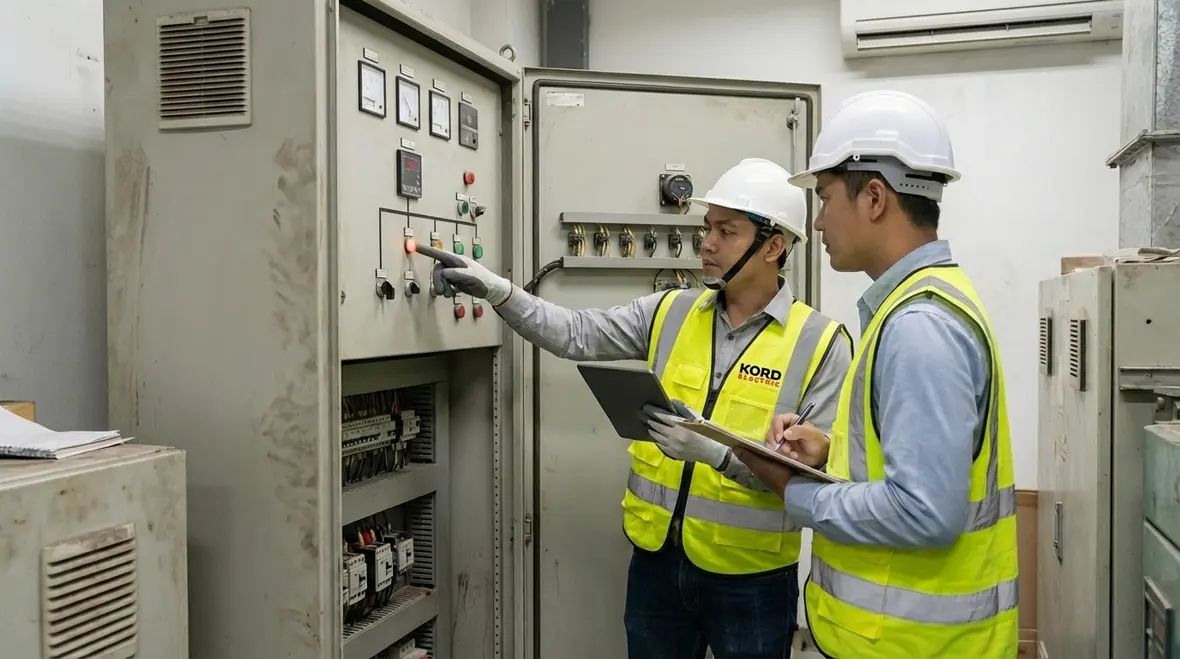
Electricity is not just a utility. It is the backbone of operations. When power systems are undersized, breakers trip, transformers overheat, and equipment life shortens. Conversely, when systems are oversized without proper evaluation, companies overspend on infrastructure they never fully use.
Because of this balance, a precise power demand study offers measurable advantages.
Operational continuity
Therefore, properly sized systems reduce shutdown risks and prevent emergency service calls that disrupt workflow.
Cost control
Moreover, right sized feeders and transformers lower material costs and reduce utility demand penalties.
Future readiness
Additionally, thoughtful capacity planning supports expansion without full system replacement.
Our expert service staff explains these factors in clear language. We believe that decision makers deserve clarity, not electrical jargon that sounds like it was written by a robot having a caffeine rush. Consequently, we walk facility leaders through each finding, outlining practical implications rather than abstract theory.
In many cases, we identify hidden inefficiencies. For example, staggered equipment start times can reduce peak demand. Likewise, balancing panel loads can improve performance without major capital expense. Small adjustments, when guided by data, produce large returns.
How Kord Electric Approaches Complex Load Studies

Large properties require structure. Therefore, our process follows a disciplined sequence that ensures no component hides in the shadows.
Step One: Data Collection
First, our technicians gather nameplate data, panel schedules, historical utility bills, and system drawings. If drawings are outdated, we verify conditions onsite. Accuracy begins with facts.
Step Two: Onsite Measurement
Next, we use metering tools to record real time demand, voltage stability, and load balance. Because operating conditions shift throughout the day, we often measure during different production phases.
Step Three: Load Categorization
Afterward, we classify loads as continuous, noncontinuous, motor driven, or specialty equipment. This distinction matters. Motors, for instance, create starting currents that differ greatly from steady state usage.
Step Four: Demand and Diversity Review
Then, we apply demand factors that reflect how equipment actually operates. Not every machine runs at full capacity simultaneously. However, assuming that none do can lead to trouble. Experience guides our judgment here.
Step Five: Capacity Verification
Finally, we compare calculated demand against transformer ratings, feeder ampacity, and switchgear limits. If gaps appear, we present corrective options.
Throughout this process, our technicians explain findings in plain terms. They do not disappear behind clipboards. Instead, they collaborate with facility managers and engineering teams. As a result, everyone understands the reasoning behind each recommendation.
For facilities already facing warning signs like flickering lights, nuisance trips, or unexplained voltage swings, pairing an electrical load calculation with a targeted voltage assessment can be especially powerful. Kord Electric’s team frequently combines load studies with services outlined in our voltage fluctuation repair programs to stabilize power before it disrupts production. To see how this plays out in practice, explore our overview of voltage issues in large facilities.
Learn how Kord Electric resolves voltage fluctuations in commercial and industrial facilities.
Electrical Load Calculation and Future Expansion Planning

Growth is a sign of success. Yet growth without planning can strain electrical systems beyond safe limits. Therefore, a forward looking electrical load calculation considers not only today’s equipment but tomorrow’s ambitions.
For example, if a distribution center plans to add automated sorting lines, we estimate projected motor loads and control systems now. Likewise, if a manufacturing facility anticipates robotic integration, we evaluate transformer capacity before installation day arrives.
This proactive strategy avoids reactive spending. Instead of scrambling to upgrade switchgear during expansion, clients phase improvements strategically. Consequently, downtime decreases and budgeting becomes predictable.
Our expert service staff often asks a simple question: where do you see this facility in five years? That conversation shapes feeder sizing, panel capacity, and transformer selection. It also builds confidence. After all, planning ahead feels far better than explaining to leadership why the lights flickered during a production milestone.
Even large property portfolios benefit from this foresight. Standardizing capacity planning across multiple sites creates consistency, simplifies maintenance, and strengthens long term infrastructure strategy.
This kind of foresight is especially important for facilities preparing for new technologies such as EV charging or large-scale LED lighting upgrades. Both introduce new load profiles and power quality considerations. Before installing banks of chargers or extensive new lighting systems, we align your electrical load calculation with long term infrastructure goals so today’s upgrades do not become tomorrow’s constraints.
Key Components Reviewed During a Load Assessment

While every facility differs, several core systems always demand close attention. Because each plays a vital role in overall demand, overlooking one can distort results.
| System Category | What Our Technicians Evaluate |
| HVAC Systems | Compressor loads, air handler demand, seasonal variation, and startup current |
| Process Equipment | Motor ratings, duty cycles, control panels, and production peaks |
| Lighting Systems | Fixture wattage, control schedules, and efficiency upgrades |
| Data and IT Infrastructure | Server racks, cooling redundancy, and backup integration |
| Vertical Transportation | Elevator motors, frequency drives, and peak traffic cycles |
| Emergency Systems | Generator capacity, transfer switches, and life safety loads |
Because these elements interact, we evaluate them collectively rather than in isolation. For instance, HVAC demand may spike during peak production hours. Therefore, analyzing it separately from process equipment would create an incomplete picture.
Additionally, our team reviews power factor performance and harmonic distortion when relevant. Industrial environments with variable frequency drives often require this deeper analysis. Although it may sound technical, the purpose remains simple: protect equipment and maintain stability.
In many facilities, a detailed load assessment also uncovers opportunities to modernize lighting systems. Poorly balanced or outdated lighting not only drags on your electrical load calculation but can also compromise safety and productivity. When we see those red flags, we often recommend pairing the load study with a strategic lighting upgrade so your power profile and workplace visibility improve together.
See how Kord Electric designs code-compliant lighting installation for large-scale facilities.
What Happens If You Skip a Professional Load Study?
Short answer: nothing good.
Without a formal load study, facilities rely on assumptions. Unfortunately, assumptions and high voltage do not mix well. Overloaded panels may operate within limits for months before one hot afternoon pushes them too far. Then, breakers trip, systems halt, and everyone stares at the electrical room as if it personally betrayed them.
Moreover, insurance claims and compliance reviews often examine whether systems were properly evaluated. Therefore, skipping a structured analysis can create liability concerns.
On the other hand, some facilities overcompensate. They oversize every component “just in case.” While caution has value, excessive oversizing inflates capital costs and reduces efficiency. Consequently, companies spend more upfront and recover less over time.
Kord Electric prevents both extremes. Through careful electrical load calculation, we strike a balance between safety and efficiency. We do not guess. We measure, evaluate, and confirm.
When a facility learns these lessons the hard way, the next call is often for emergency response. Our technicians have seen everything from overheated gear to production lines stuck mid-cycle because the system was pushed beyond its true capacity. The most efficient way to avoid that kind of drama is to treat a comprehensive load study as preventive protection, not an optional upgrade.
Discover how electrical preventive maintenance supports safe, reliable operations.
Working With Technicians Who Explain, Not Intimidate
Technical accuracy means little without clear communication. Therefore, our technicians and expert service staff make education part of every engagement.
During site visits, they outline what they are measuring and why. After analysis, they present findings in structured reports that include load summaries, capacity comparisons, and practical recommendations. In addition, they remain available for follow up discussions with property managers, engineers, and executive teams.
This approach builds trust. Rather than delivering a stack of numbers and vanishing, we stay involved. Because large commercial and industrial properties depend on reliable infrastructure, collaboration becomes essential.
Our team understands the stakes. A production shutdown affects payroll, contracts, and reputation. Therefore, we treat each project with the seriousness it deserves, while still keeping conversations approachable. Yes, electricity commands respect. However, discussing it should not feel like a final exam in advanced physics.
In the end, clarity empowers better decisions. And better decisions protect both assets and people.
FAQ About Commercial and Industrial Load Planning
Facility leaders often ask similar questions when planning an electrical load calculation, especially when coordinating upgrades, expansions, or new construction. The following FAQs address the most common concerns we hear in the field.
Partner With Kord Electric for Precision and Confidence
Power supports every operation inside your facility. Therefore, do not leave its capacity to chance. Kord Electric delivers precise analysis, clear guidance, and forward thinking strategies for commercial and industrial properties. Our technicians stand ready to evaluate, explain, and optimize your infrastructure with confidence and care. Contact us today to schedule your comprehensive load assessment and secure the reliability your operation demands.
If your facility is preparing for new equipment, expansion, or a major modernization effort, combining a detailed electrical load calculation with targeted system upgrades can dramatically reduce risk. From lighting installation and electrical preventive maintenance to voltage correction and emergency response, Kord Electric provides an integrated path from assessment to implementation.
Explore lighting installation services that align with your long-term electrical load strategy.