Electrical Noise and Power Quality Solutions
Electrical Noise and Interference Solutions for Commercial and Industrial Facilities
In every commercial tower, manufacturing plant, and major property building, there is an invisible force shaping performance. It is not lighting, HVAC, or even automation. It is power quality and our interference environment. When voltage fluctuates, when harmonics creep in, or when stray signals disrupt sensitive equipment, productivity quietly suffers. At Kord Electric, we treat electrical noise and signal disruption the way a master conductor treats an orchestra. Every note matters. Every system must play in harmony. Because in large scale facilities, small disturbances can grow into costly downtime.
While others may see flickering lights or nuisance alarms as minor issues, we recognize them as early warnings. Therefore, our technicians and expert service staff approach each facility with calm precision, explaining the source of disturbances and guiding building managers toward lasting solutions. After all, electricity should power progress, not plot twists worthy of a science fiction film.
Understanding Electrical Noise in Large Facilities
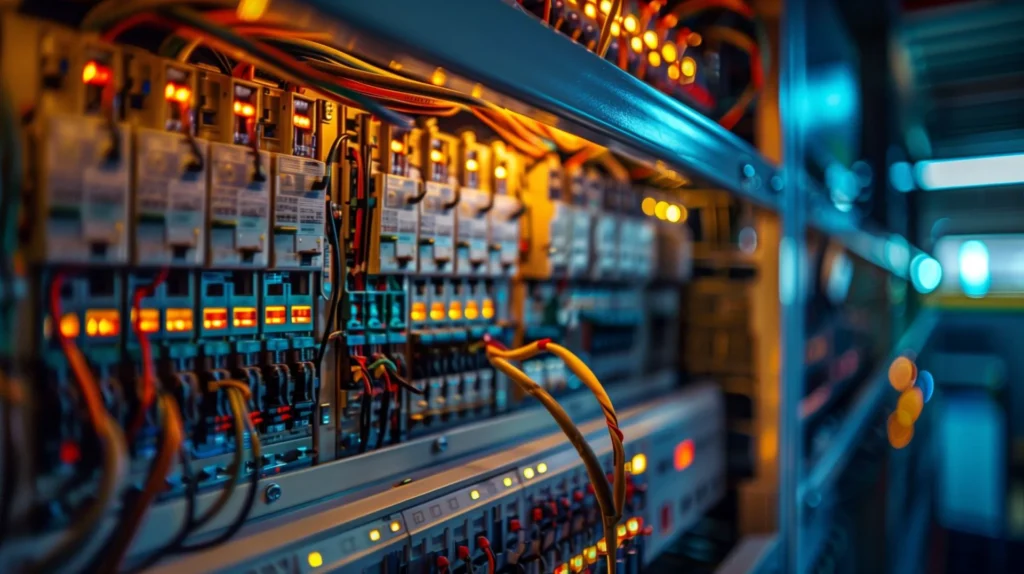
Electrical noise is any unwanted signal that distorts or disrupts the intended flow of electricity. In commercial and industrial buildings, this noise often stems from variable frequency drives, switching power supplies, large motors, or even poorly grounded systems. As facilities grow more automated, the electrical environment becomes more complex. Consequently, systems that once operated independently now interact in ways that can create signal distortion.
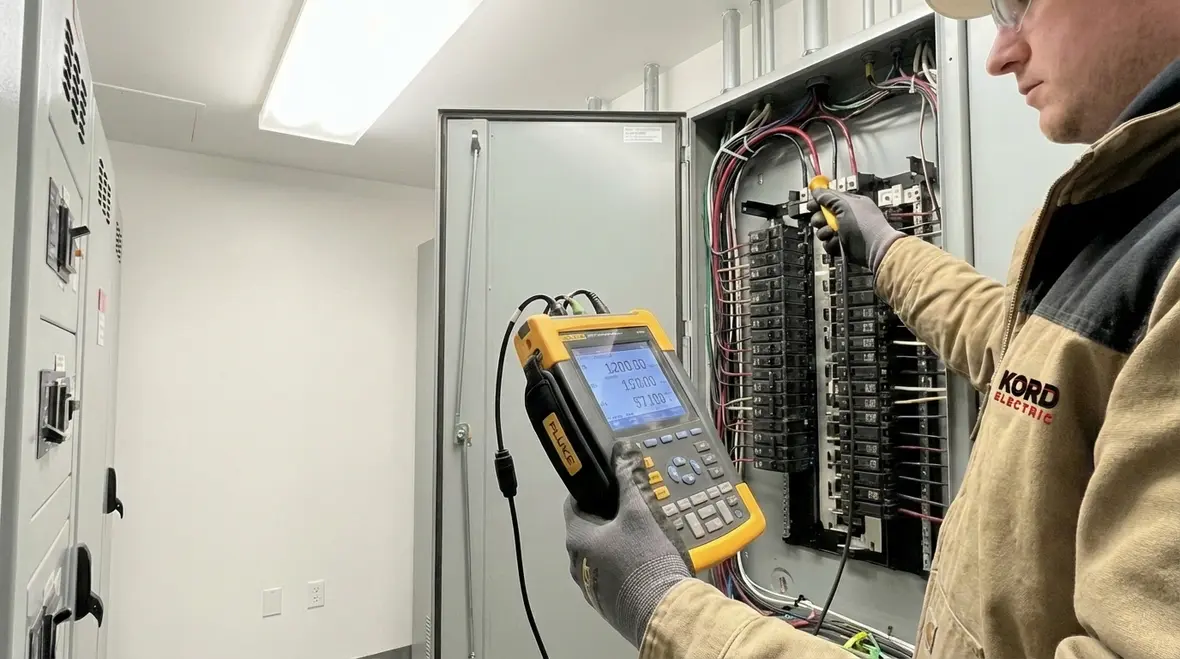
There are two primary forms of electrical noise. First, there is conducted noise, which travels along conductors. Second, there is radiated noise, which moves through the air as electromagnetic interference. Both can impact control systems, data lines, and sensitive equipment. However, the symptoms are rarely dramatic at first. Instead, they show up as communication errors, unexplained shutdowns, or premature equipment wear.
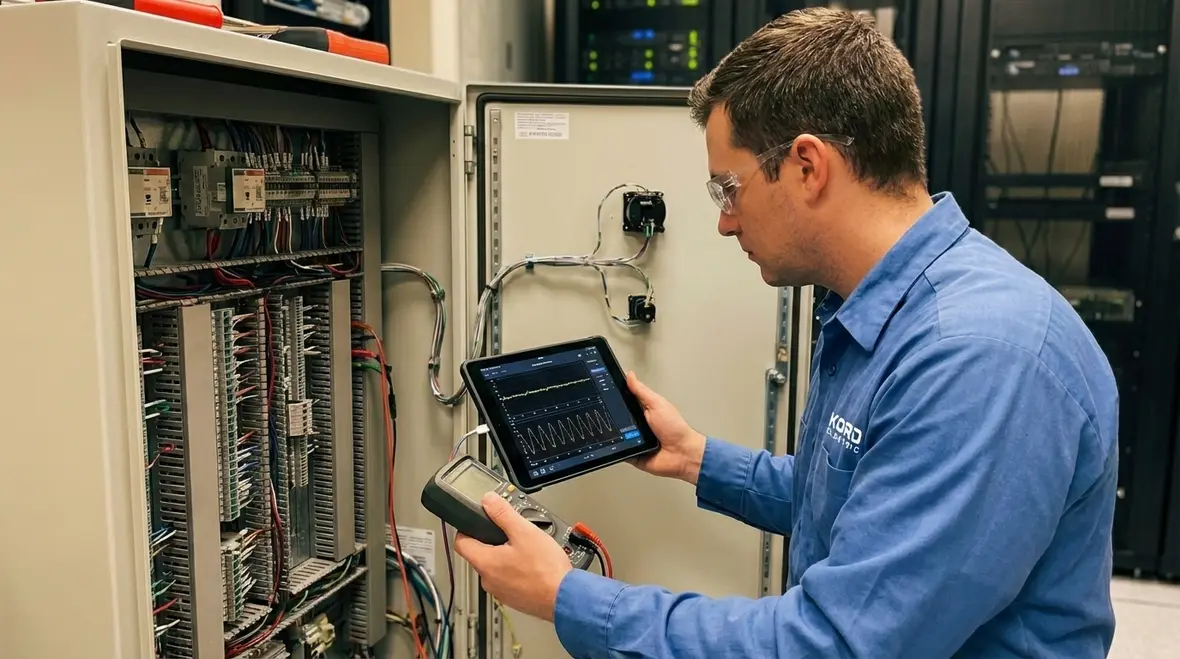
At Kord Electric, we begin with measurement. We analyze voltage stability, harmonic distortion, grounding integrity, and load balance. Moreover, we study how equipment interacts across panels and distribution systems. Because in large buildings, nothing operates in isolation. It is a network, and one misstep can ripple outward.
Why Power Quality Directly Impacts Operational Stability
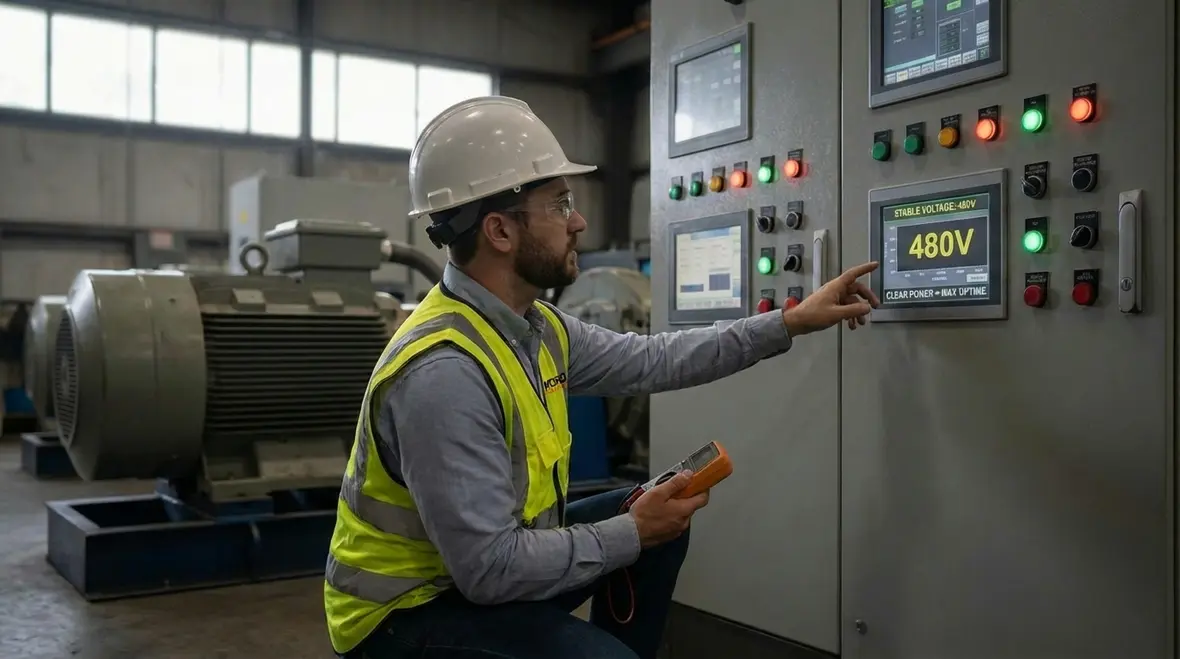
Clean power is not a luxury. It is a requirement. When voltage sags, swells, or harmonic distortion increase, equipment efficiency drops. Over time, motors overheat, drives misfire, and control boards fail. Therefore, maintaining strong power quality protects both assets and budgets.
In industrial facilities, distorted waveforms often originate from nonlinear loads. These loads draw current in abrupt pulses rather than smooth waves. As a result, harmonic currents build up in the system. This buildup leads to transformer overheating, neutral conductor stress, and reduced system capacity. It is similar to traffic congestion. When too many vehicles merge unpredictably, flow slows down. Except in this case, the vehicles are electrons, and they are not known for patience.
Our expert service staff explains these conditions in clear language. Instead of overwhelming clients with technical jargon, we translate waveform data into operational impact. For instance, we show how harmonic mitigation can extend transformer life. We demonstrate how voltage stabilization reduces equipment resets. And importantly, we connect improved electrical conditions to lower maintenance costs. For facilities already dealing with voltage swings, we can also align interference solutions with structured electrical preventive maintenance programs to keep future issues in check.
How Kord Electric Diagnoses and Solves Interference Issues
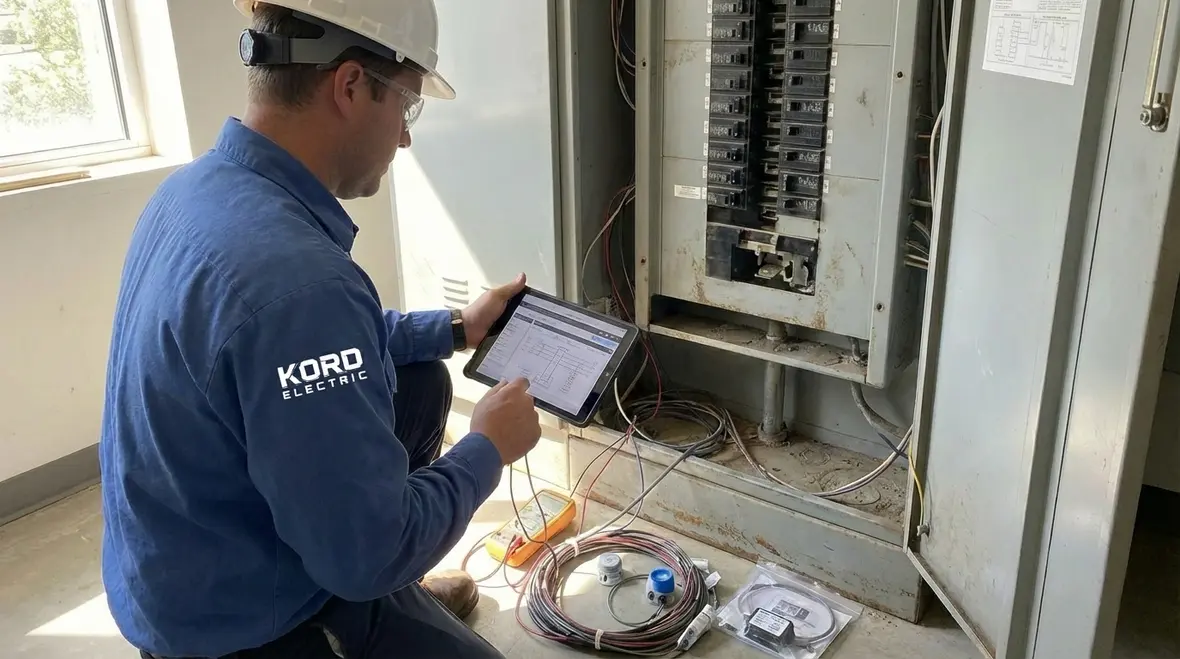
Every solution begins with disciplined analysis. First, we conduct detailed site assessments using advanced monitoring equipment. We capture real time data on voltage variation, harmonic distortion, grounding paths, and transient events. Then, we correlate that data with reported equipment behavior. Because numbers alone do not tell the whole story. Context matters.
Once we identify the source of interference, we design targeted corrective actions. These may include:
- Installation of harmonic filters
- Isolation transformers for sensitive loads
- Surge protection devices at distribution points
- Shielded cable routing and separation
- Grounding system redesign and bonding corrections
However, we never apply a one size fits all fix. Instead, we align each recommendation with the building’s operational profile. A manufacturing facility with heavy motor loads requires a different approach than a commercial office tower filled with data systems. Therefore, we tailor every mitigation plan.
Moreover, our technicians take time to walk facility managers through findings. We believe understanding builds confidence. When clients know why a harmonic filter is necessary or how a grounding correction eliminates signal distortion, they make informed decisions. And informed decisions create long term stability.
Common Sources of Electrical Interference in Commercial Buildings
Large facilities often contain overlapping electrical systems. While each system serves a purpose, together they can create complex interactions. Below is a simplified comparison of frequent disturbance sources and their operational impact.
| Source of Disturbance | Operational Impact |
| Variable frequency drives | Harmonic distortion and overheating transformers |
| Improper grounding | Signal instability and communication errors |
| Switching power supplies | High frequency noise affecting control circuits |
| Large motor startups | Voltage dips impacting sensitive equipment |
| Poor cable separation | Induced noise in data and control lines |
While these sources are common, they are not inevitable problems. With proper planning and corrective measures, facilities can operate with minimal disturbance. Therefore, proactive assessment often prevents reactive repair.
What Are the Signs Your Facility Has Electrical Noise Problems?

This is the question many property managers ask, usually after a string of unexplained issues. Fortunately, the warning signs are consistent.
Frequent equipment resets often indicate voltage instability. Additionally, unexplained breaker trips may signal harmonic overload. Flickering LED lighting can reflect waveform distortion. Meanwhile, data errors or control malfunctions frequently point to grounding deficiencies or electromagnetic coupling.
Although each symptom may seem isolated, together they form a pattern. Therefore, when multiple minor disruptions occur, it is wise to evaluate the electrical environment. Ignoring them is a bit like ignoring a check engine light. It may continue running, but the story rarely ends cheaply.
At Kord Electric, we encourage facility leaders to treat these indicators as invitations to investigate. Our technicians arrive methodically, gather evidence, and present clear findings. No drama. No guesswork. Just disciplined analysis and practical solutions.
Designing Facilities for Long Term Stability
Solving existing interference issues is only part of the mission. Equally important is designing systems that prevent future instability. As commercial and industrial buildings integrate more automation, electric vehicle infrastructure, and advanced controls, system complexity increases. Consequently, electrical planning must evolve.
We collaborate with engineers, facility managers, and property stakeholders during upgrades and expansions. By evaluating load growth projections and distribution capacity, we help prevent harmonic buildup before it begins. Furthermore, we specify equipment with compatibility in mind. Isolation techniques, proper bonding, and balanced load distribution all contribute to resilient performance.
Additionally, we prioritize grounding architecture. A well designed grounding system serves as the silent guardian of signal integrity. Without it, even the most advanced equipment struggles. With it, systems communicate cleanly and operate predictably.
Our approach blends precision with practicality. We do not recommend unnecessary upgrades. Instead, we focus on measurable improvements that strengthen reliability. Because in commercial and industrial environments, downtime is not an inconvenience. It is lost revenue.
The Human Element Behind Technical Precision
Technology solves problems. People prevent them. At Kord Electric, our technicians and expert service staff bring both experience and clarity to every engagement. While advanced analyzers capture waveform data, it is human judgment that interprets the results.
We take pride in explaining findings in language that resonates with facility leadership. For example, when describing harmonic distortion, we might compare it to background chatter in a crowded room. The main speaker is still there, yet the message becomes harder to hear. Reduce the chatter, and communication improves. It is simple, relatable, and accurate.
Moreover, our team maintains a calm and steady presence. Electrical challenges can feel overwhelming, especially in mission critical facilities. Therefore, we approach each project with measured pacing and confident direction. Think less frantic action movie and more seasoned narrator guiding the plot toward resolution.
Future Ready Solutions for Modern Industrial Demands
As industries adopt automation, robotics, and data driven systems, sensitivity to electrical conditions increases. Modern control platforms rely on stable voltage and minimal distortion. Consequently, maintaining strong power quality becomes foundational to digital transformation.
We help facilities prepare for this shift by integrating monitoring systems that track voltage stability, harmonic levels, and transient events continuously. Instead of reacting to failure, building operators gain visibility. With visibility comes control.
Furthermore, we recommend scalable mitigation strategies. Facilities evolve. Loads expand. New technologies enter the scene. Therefore, solutions must accommodate growth. Whether through modular filtering systems or expandable distribution designs, we plan for tomorrow while solving today.
It is not about eliminating every minor fluctuation. That would be unrealistic. Rather, it is about creating an electrical ecosystem where disturbances remain within safe thresholds. When that balance is achieved, systems operate smoothly, equipment lifespan extends, and operational confidence grows.
Frequently Asked Questions
Conclusion
Electrical stability does not happen by accident. It is measured, refined, and protected. At Kord Electric, we help commercial and industrial facilities take control of their electrical environment with steady expertise and practical solutions. If unexplained disruptions or performance issues have begun to surface, now is the time to act. Whether you are dealing with electrical noise, voltage fluctuations, or broader system concerns, our team can help you stabilize conditions and strengthen long term reliability.
For facilities facing active power disturbances or urgent outages, pairing interference mitigation with our 24/7 emergency electrical services ensures that both immediate issues and underlying causes are addressed. From there, integrating structured electrical preventive maintenance keeps your system resilient as loads grow and technology evolves.
Electrical noise and power quality challenges may be invisible, but their impact is not. Contact our team today, and let us restore clarity, balance, and confidence to your building’s electrical foundation.