GFCI Commercial Safety and Ground Fault Protection
In every commercial and industrial facility, electricity hums quietly behind walls and above ceilings. It powers production lines, data centers, office towers, and distribution hubs without asking for applause. Yet when something goes wrong, it demands attention immediately. That is why GFCI commercial safety is not a luxury. It is a core layer of protection. At Kord Electric, we treat ground fault protection as a serious matter, but we explain it in a way that feels clear and calm. Our technicians do not just install devices. They guide property managers and facility directors through the “why” behind every recommendation, because informed clients make safer buildings.
Ground fault protection may sound technical, but its purpose is simple. It protects people, equipment, and property from dangerous electrical imbalances. In large commercial environments, that protection can mean the difference between a routine day and a costly shutdown.
Understanding Ground Fault Protection in Commercial Spaces
Ground fault protection monitors the flow of electricity through a circuit. Under normal conditions, current travels out on the hot conductor and returns on the neutral. However, when electricity strays from its intended path and finds ground through a person, water, or metal surface, a ground fault occurs. That is where protective devices step in.
In commercial and industrial facilities, these systems operate on a much larger scale than in residential settings. Higher voltages, complex distribution panels, heavy machinery, and wet or high traffic areas all increase risk. Therefore, the design and installation must match the size and purpose of the building.
At Kord Electric, our expert service staff approach each property as its own ecosystem. A food processing plant presents different exposure risks than a high rise office tower. Likewise, a logistics warehouse differs from a medical research facility. Because of that, we analyze load calculations, panel configurations, and environmental conditions before recommending any solution.
Think of ground fault protection as the quiet bodyguard of your electrical system. It does not boast. It simply watches, waits, and acts in milliseconds when needed. And in the commercial world, milliseconds matter.
How GFCI Commercial, Safety Systems Protect People and Property
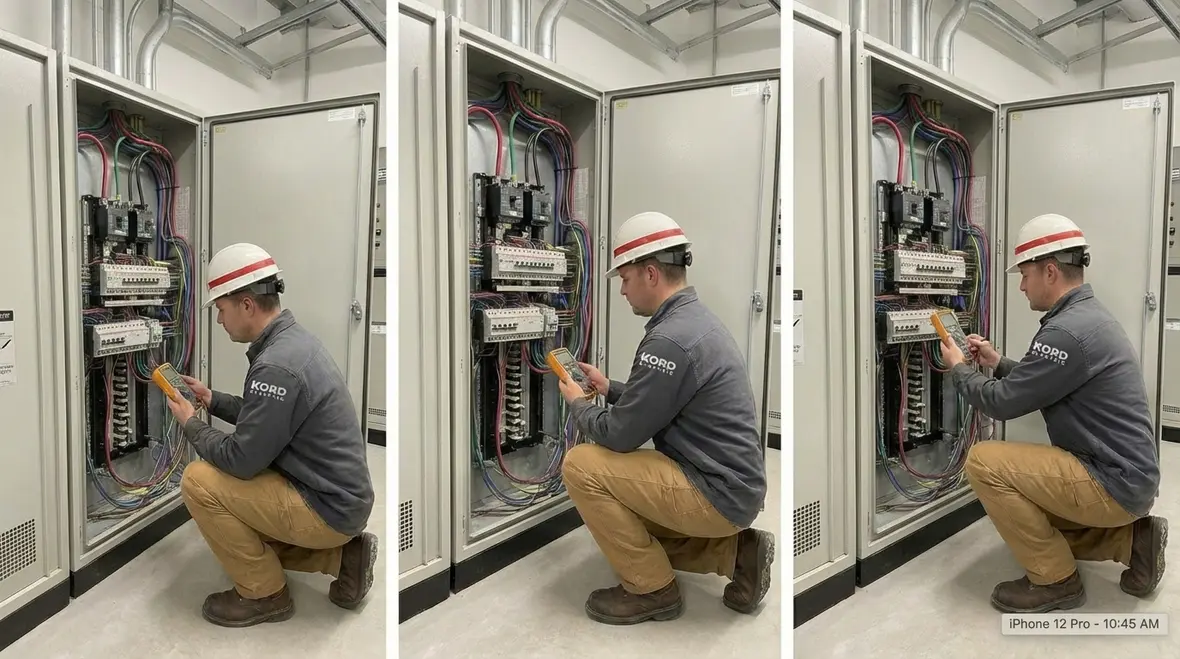
When discussing GFCI commercial safety, it helps to move beyond the small receptacles people recognize from break rooms. In commercial settings, protection can be integrated at receptacles, breakers, or even service entrance equipment. Each layer serves a purpose.
First, these devices detect minute differences in current, often as small as 4 to 6 milliamps at the receptacle level. Once detected, they interrupt the circuit almost instantly. As a result, the risk of serious shock drops significantly. In environments with janitorial crews, maintenance teams, or production workers using portable equipment, this rapid response is critical.
Second, ground fault protection reduces the chance of electrical fires. When current leaks to ground, it can create heat and arcing. Over time, that heat may ignite nearby materials. By shutting down the circuit quickly, the device limits damage and potential downtime.
Moreover, these systems support regulatory compliance. Commercial and industrial facilities must meet strict electrical codes and workplace safety standards. Failing to address ground fault hazards can lead to citations, fines, or worse, liability in the event of an injury. For a deeper dive into how electrical codes shape design decisions, many facility teams also study NFPA 70: the National Electrical Code and its evolving ground fault requirements for commercial environments, including kitchens and other wet locations.
Our technicians take time to explain these layers to facility managers. We walk through panel schedules, identify high risk areas, and clarify how protection ties into the overall electrical distribution plan. We do not speak in riddles. We translate technical standards into practical steps. After all, no one wants to nod politely during a safety meeting while secretly wondering what just happened.
Where Commercial and Industrial Buildings Need Ground Fault Protection Most
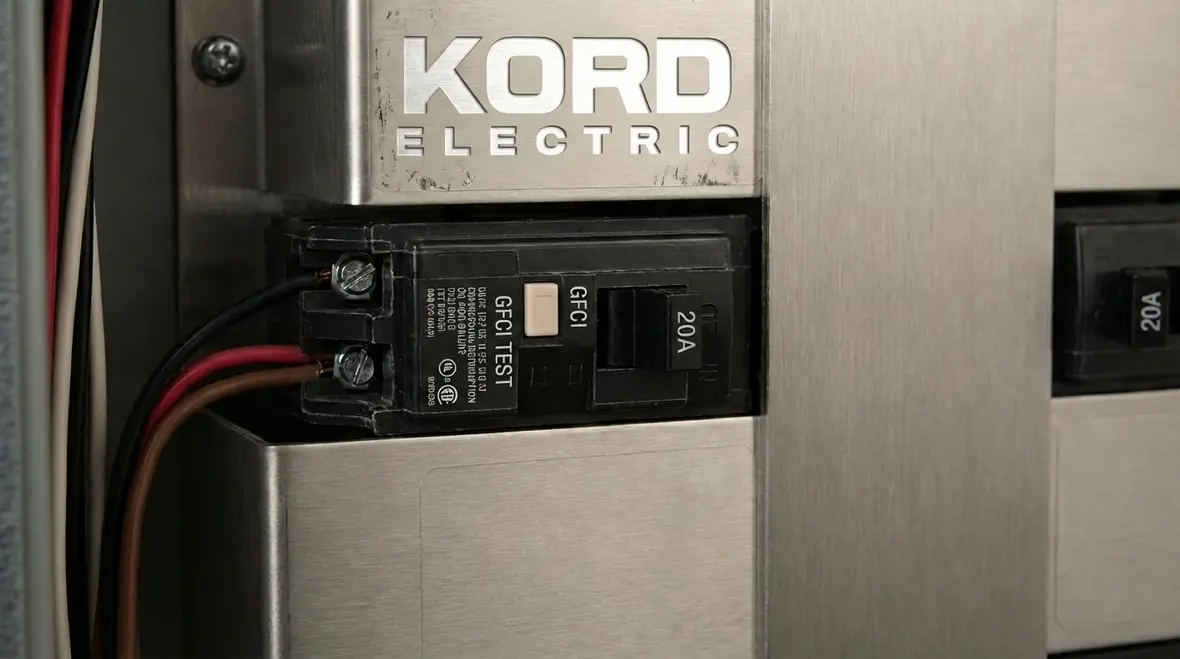
Facility directors often ask, “Where should we prioritize upgrades?” The answer depends on usage, but certain zones consistently rise to the top.
High priority areas include:
- Mechanical rooms with pumps and HVAC equipment
- Commercial kitchens and food processing lines
- Restrooms and locker facilities
- Exterior outlets and rooftop equipment zones
- Loading docks and wash down stations
These environments combine moisture, conductive surfaces, and human interaction. Consequently, the risk of a ground fault increases. In industrial plants, heavy machinery adds another layer of complexity. Motors, variable frequency drives, and large panels demand coordinated protection to avoid nuisance tripping while still maintaining safety.
At Kord Electric, our service teams perform detailed site evaluations. We assess how employees move through spaces, how equipment is powered, and how maintenance tasks are performed. Then, we recommend targeted upgrades rather than blanket solutions. This approach saves money and improves performance.
It is a bit like casting a superhero team. You do not send the same hero to every crisis. You match the skill set to the threat. Yes, that was a pop culture reference, but the principle holds true in electrical design.
What Happens If a Commercial Facility Ignores Ground Fault Risks?
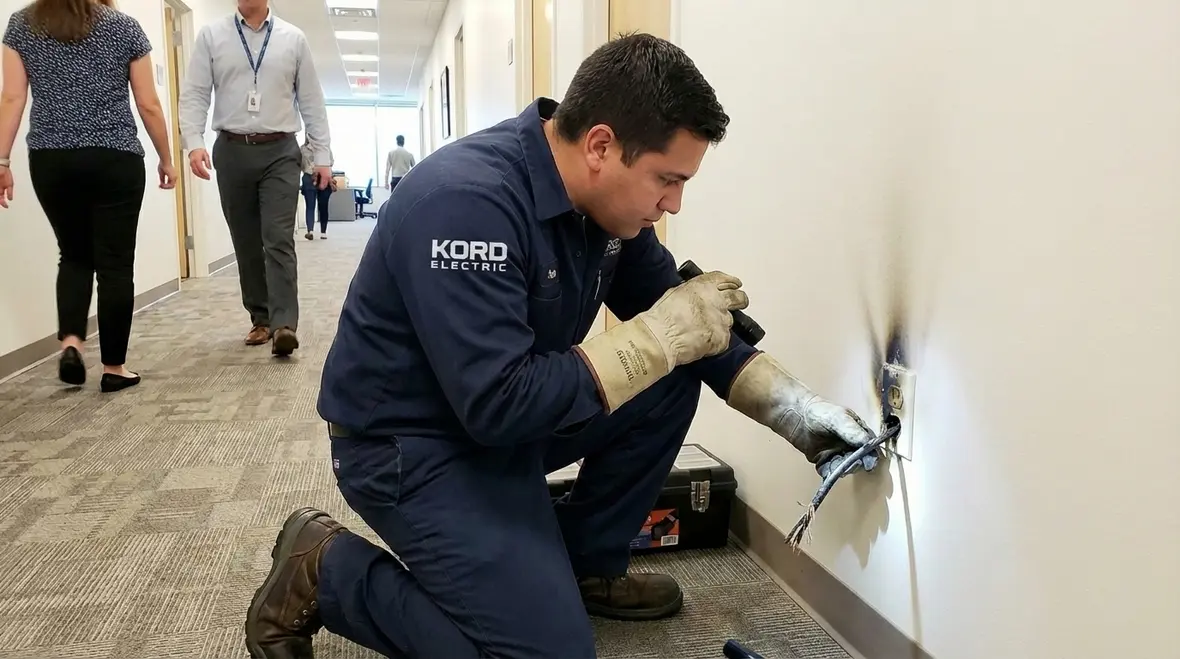
Ignoring ground fault hazards does not make them disappear. Instead, it allows small vulnerabilities to grow quietly.
Without proper protection, a single fault can energize metal surfaces, creating shock risks for employees or contractors. In addition, undetected leakage currents may damage sensitive equipment over time. For data centers or automated manufacturing lines, that damage can interrupt operations and affect revenue.
Furthermore, insurance providers increasingly examine electrical safety measures during risk assessments. A facility that lacks modern protection may face higher premiums or complications during claims investigations. Therefore, proactive upgrades often pay for themselves by reducing long term exposure.
Our expert service staff have responded to facilities after incidents occurred. While we restore systems efficiently, we would rather help clients prevent emergencies in the first place. We believe prevention is always less dramatic and far less expensive than recovery. Hollywood may love a last minute rescue. Operations managers usually do not.
Choosing the Right Ground Fault Strategy for Large Properties
Commercial and industrial properties require a coordinated approach. Protection at the receptacle level alone may not suffice. Instead, engineers and electricians must consider selective coordination, system grounding methods, and the relationship between main and downstream devices.
At Kord Electric, we evaluate several factors before recommending a plan:
- System voltage and load characteristics
- Type of grounding system in place
- Critical equipment that must remain online
- Code requirements for the specific occupancy
- Maintenance capabilities of on site staff
Because industrial processes often run continuously, we design solutions that balance safety with operational stability. In some cases, we integrate ground fault protection at the service level to guard against major faults. In others, we focus on branch circuits in high exposure zones.
Importantly, our technicians explain the reasoning behind each layer. We review how the devices function, how to test them, and how to document compliance. As a result, facility managers gain confidence in their systems. And confidence, in the world of commercial operations, is almost as valuable as uptime.
Comparing Protection Methods in Commercial and Industrial Facilities
Below is a simplified comparison our team often shares during consultations. It helps decision makers see how different approaches fit within a broader electrical strategy.
Receptacle Level Protection
- Installed at specific outlets in high risk areas
- Ideal for localized personnel protection
- Lower installation cost per unit
- Requires routine testing at each device
Breaker and Service Level Protection
- Installed within panels or main distribution equipment
- Designed to protect larger sections of the system
- Higher upfront cost but broader coverage
- Often integrated into scheduled panel maintenance
While both approaches support electrical safety, the right choice depends on facility size and risk profile. Therefore, we often recommend a layered strategy that combines both. This layered approach strengthens overall protection without compromising performance.
How Kord Electric Implements and Maintains Protection Systems
Implementation begins with a comprehensive assessment. Our technicians review as built drawings, inspect panels, and perform load analysis. Next, we identify gaps between current conditions and modern code standards. Then, we present a clear action plan with timelines and cost projections.
During installation, our crews coordinate closely with facility management to minimize disruption. We schedule work around production shifts and critical operations whenever possible. Because commercial and industrial properties operate on tight schedules, we respect the value of time.
After installation, we provide documentation and training. We show maintenance teams how to test devices properly and how to recognize early warning signs of trouble. Additionally, we offer ongoing inspection services to ensure systems continue performing as intended.
Our expert service staff believe education is part of the job. When a client understands how their protection works, they are more likely to maintain it. And well maintained systems perform better over the long run.
Frequently Asked Questions About Ground Fault Protection
Partner with Kord Electric for Reliable Protection
Electrical safety in commercial and industrial facilities demands expertise, planning, and steady hands. Kord Electric delivers all three. Our technicians design and maintain ground fault protection systems that support safe operations and long term reliability.
If your property needs evaluation or upgrades, we are ready to help. From high rise offices to industrial campuses, Kord Electric builds ground fault strategies that align with NFPA 70 requirements and real world operating conditions. For teams who also manage fire alarm and life safety systems, our sister company’s educational resources on topics like NFPA 70 and the National Electrical Code make it easier to keep both power and protection working together.
When you are ready to take the next step, schedule a professional assessment and let experienced electricians verify that your GFCI commercial safety plan, panels, and distribution equipment are all working as a unified system.
Electrical systems rarely ask for applause, but they always deserve attention. Contact Kord Electric today and let us strengthen the systems that keep your facility powered, protected, and prepared for whatever tomorrow brings.