Electrical Panel Labeling Best Practices Guide
At Kord Electric, we treat electrical panel labeling best practices as a safety system, not a checklist item. In the first moments of an emergency, responders need clear, consistent panel markings that identify what power feeds and where it goes. We recommend standardized labeling that is easy to read from a standing position, uses simple wording, and matches the building’s real wiring plan. We also make sure labels are durable, updated after any change, and cross checked with the as built drawings. Because when the lights go out, nobody wants a treasure hunt. Our technicians and expert service staff explain what they found and why it matters, step by step, so facility managers can keep pace with the building, not chase it.
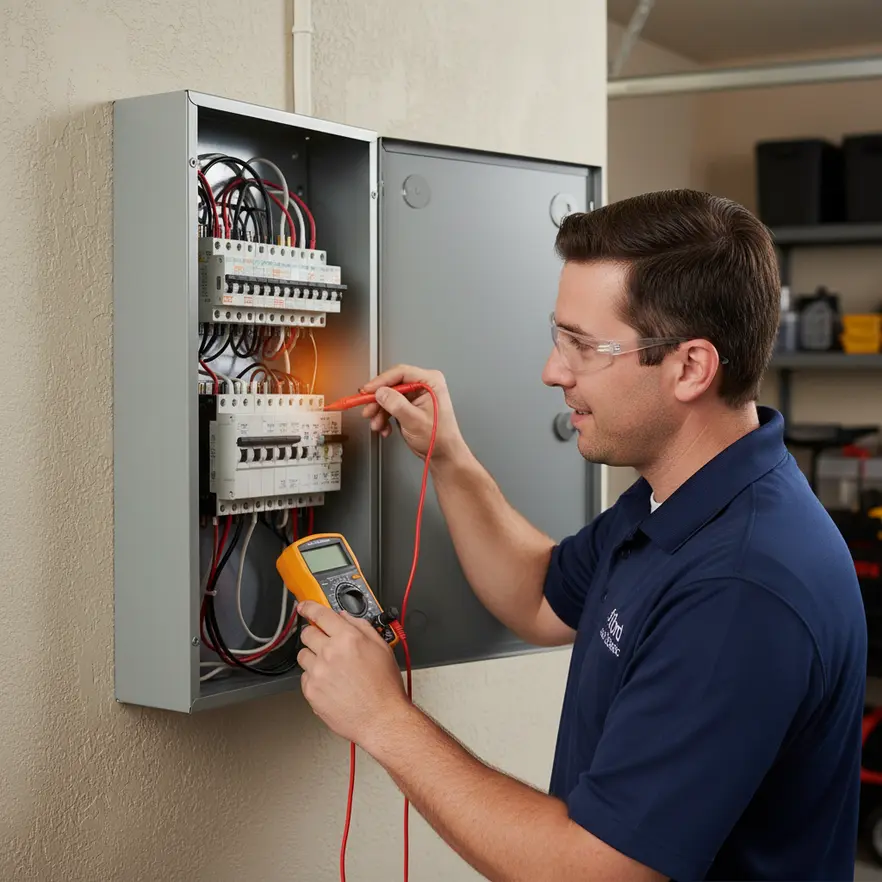
Fast emergency response starts at the panel door
In an emergency, electrical panels are more than metal doors hiding breakers. They are decision points. If those doors open to a jumble of inconsistent labels, faded handwriting, and mystery abbreviations, even the best responders lose precious time. That is why we design labeling so that the panel becomes a visual checklist: where power enters, where it goes, and what happens when a breaker moves. Each label becomes a small piece of guidance in a high stress moment.
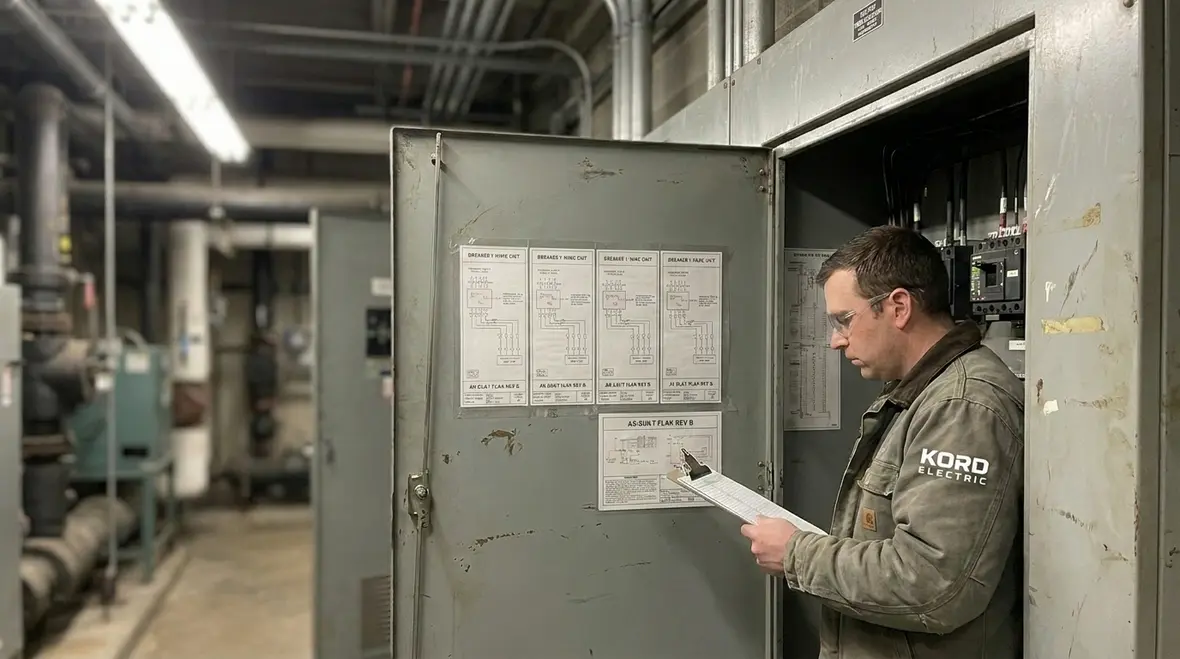
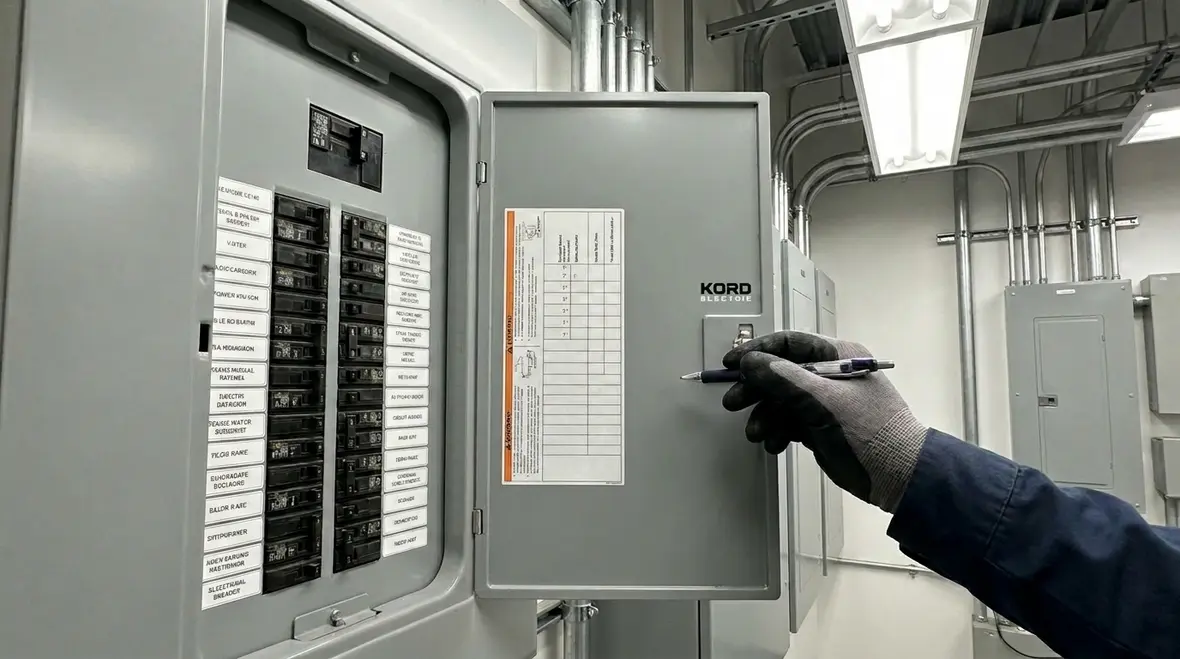
We focus on legible type, durable material, and layouts that match how people stand and work in front of the panel. Labels that wrap around corners, live under hinges, or hide behind handles do not help anyone. When you can walk up, scan left to right, and immediately understand which circuits feed which areas, you have turned a metal box into a real-time safety tool.
Why standardizing panel labeling saves minutes during outages
In commercial and industrial facilities, emergencies move fast. A tripped breaker can trigger alarms, stop critical HVAC, shut down pumps, or delay production. Yet many panels look like they were labeled by five different people with three different marker types and one shared fear of accuracy. Standardization changes that. When labels follow one clear system, others can locate the right circuits quickly and safely.
In the moments after an event, responders often face poor visibility, limited time, and multiple hazards. Therefore, clear electrical panel labeling reduces guesswork, which reduces risk. It also helps teams coordinate actions, because everyone speaks the same “panel language.” We help organizations connect the labeling to the actual load schedule and electrical one line, so the panel door becomes an operational tool, not a mystery box. Yes, the mystery box is fun on TV. It is not fun during a standby generator transfer.
Standardized electrical panel labeling best practices also support long term operations. As new technicians join the team, they do not have to decode past handwriting habits or unspoken rules. Instead, they inherit a clear map backed by documentation, so whether the outage happens at noon or 3 a.m., the labels tell the same story.
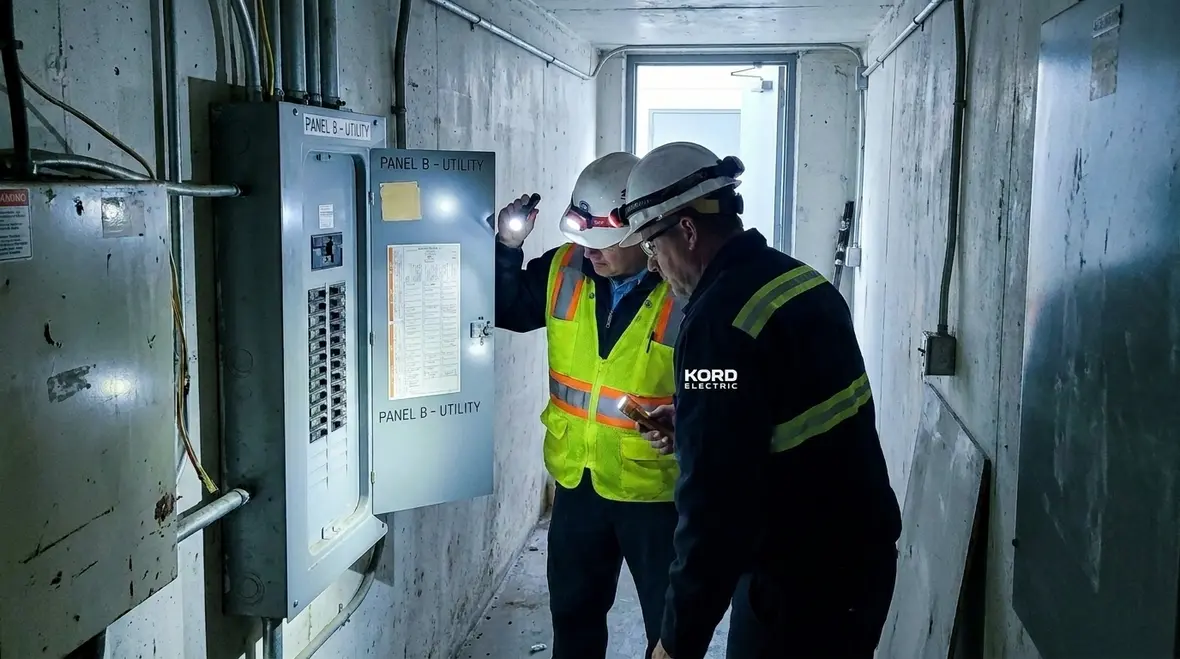
During outages and planned shutdowns, a well labeled panel speeds up lockout/tagout, reduces wandering from panel to panel, and lets multiple teams communicate clearly: “We are on Panel L3, Section B, circuits 7 through 10.” In multi-building campuses or high rise properties, that level of precision removes confusion before it can start.
How modern building electrical systems shape labeling needs
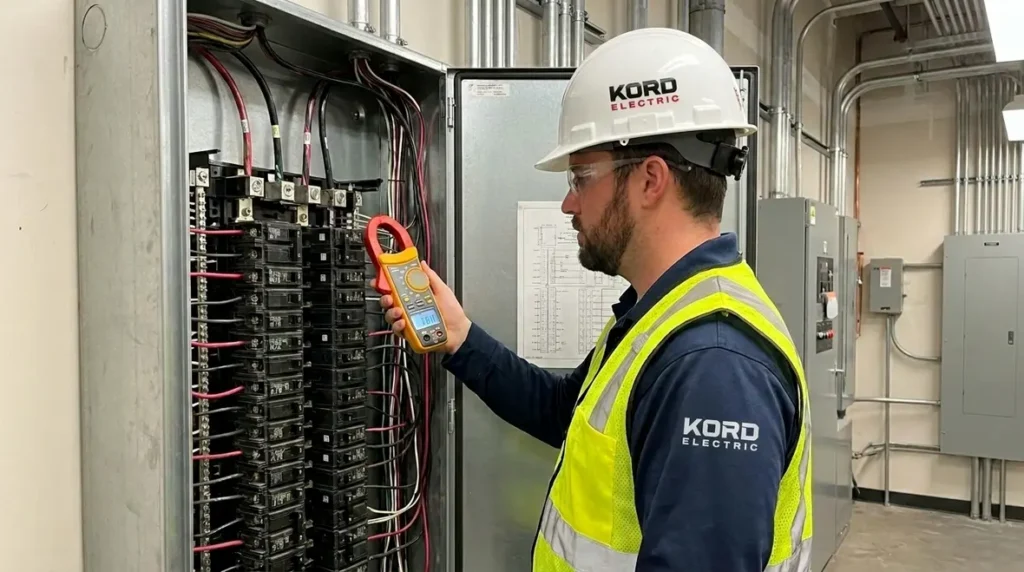
Modern commercial buildings rely on more than just basic distribution. They blend power for life safety, tenant loads, critical infrastructure, and increasingly automated controls. Kord Electric supports this reality in our work for commercial electrical systems for modern buildings, where electrical distribution must keep pace with design changes, tenant turnover, and facility upgrades.
As a result, labeling must reflect system behavior. For instance, a labeled circuit for a critical process area should align with the equipment it serves, the room it protects, and the switching or backup strategy it depends on. If the building uses separate feeders for life safety and normal power, the labels should show that difference clearly. If the electrical architecture includes panels dedicated to mechanical ventilation, controls, or emergency lighting, the markings should help technicians and responders find those loads right away.
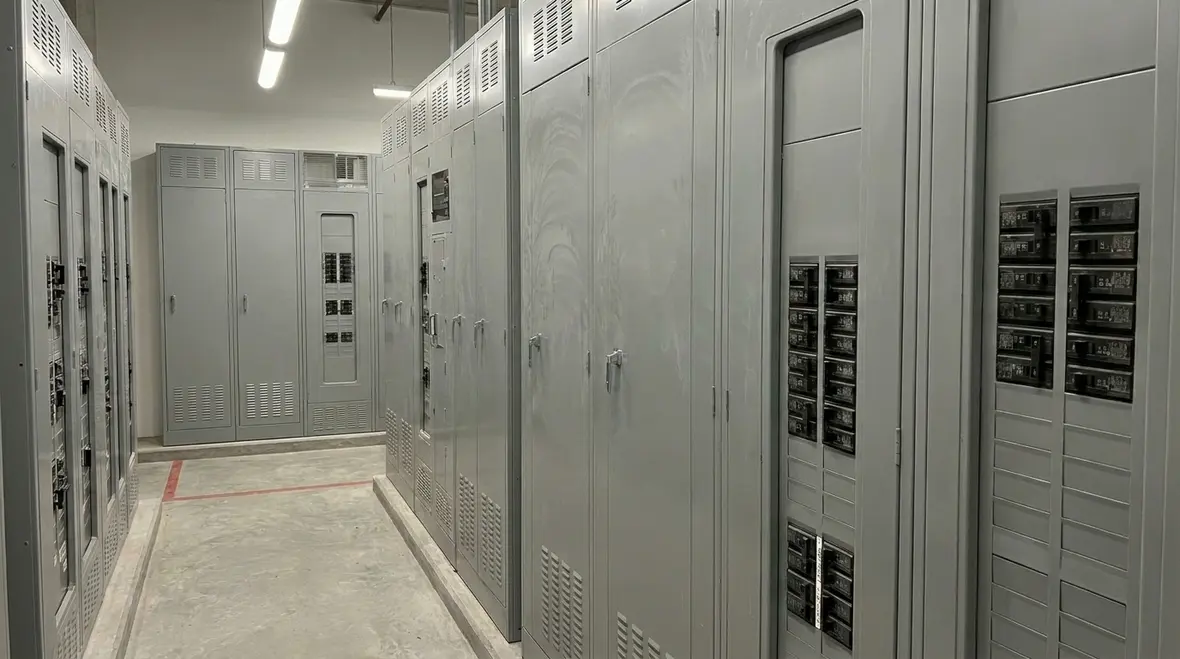
So, labeling is not just naming breakers. It functions as a map that connects the panel to the electrical story of the building. Our expert service staff explains these connections in plain terms and shows how small updates prevent bigger confusion later. When someone asks, “What happens if we open this breaker?” the label, the documentation, and the panel schedule should all answer in the same way.
In facilities with automation, metering, or integrated building management systems, clear and consistent electrical panel labeling best practices also make digital points easier to trace in the field. When the screen and the steel match, troubleshooting becomes calmer, faster, and more accurate.
Our labeling system: what we standardize and what we avoid
We standardize labels around clarity, consistency, and traceability. First, we confirm the circuit’s purpose and endpoint. Then, we build labels that follow a consistent format across the building. Next, we verify readability with real viewing angles and lighting conditions. Finally, we update labels after any modification, because a label that lies is worse than no label at all.
Below is the approach we use for commercial and industrial panel labeling:
- Consistent circuit naming: We use uniform terms for lighting, receptacles, HVAC, pumps, controls, and life safety loads, rather than mixed shortcuts.
- Clear panel and section identifiers: We mark panel names, sections, and rows so responders know where to start and where to look next.
- Location based information: We include the room, zone, floor, or area served when the building needs it for operational speed.
- Equipment or load reference: We reference the equipment tag when available, so technicians can match the circuit to the maintenance scope.
- Waterproof and durable materials: We use label materials that hold up in warehouses, service corridors, and mechanical rooms.
- Change control: After any work, we confirm label updates in the field and document them for continuity.
We avoid vague labels like “misc” or “plug 1.” We also avoid overly clever naming that looks good in a training slide but fails in an emergency. A good panel label works like a good sign: it tells the truth fast. Occasionally, we run into older systems where someone tried to invent a code. In those cases, we help teams untangle it, then re label in a way that the next technician can trust.
As part of our electrical panel labeling best practices, we also document the standard itself. That way, when new areas are built or old areas are renovated, the same rules apply. No one is guessing where to place the label, what font size to use, or how to phrase the description. The result: doors you can open anywhere on site and instantly recognize the same system at work.
Testing readability and keeping labels current after work
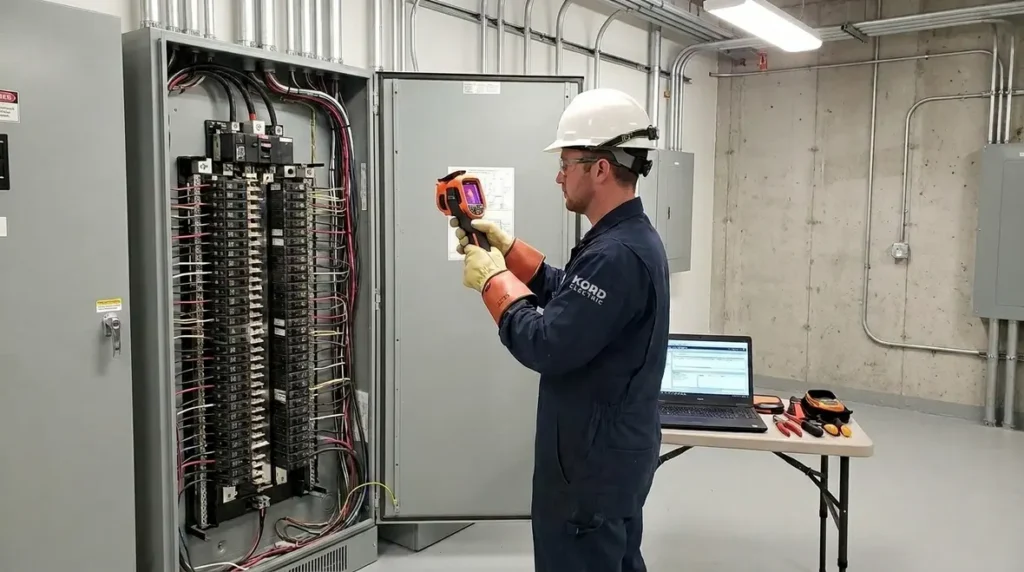
Even the best label design fails if it cannot be read under real conditions. Therefore, we check visibility from the likely working distance and position. We review glare, color contrast, glare from nearby lights, and dirt build up that happens in mechanical spaces. We also confirm that labels do not cover ventilation slots, interfere with panel covers, or conflict with existing labeling rules.
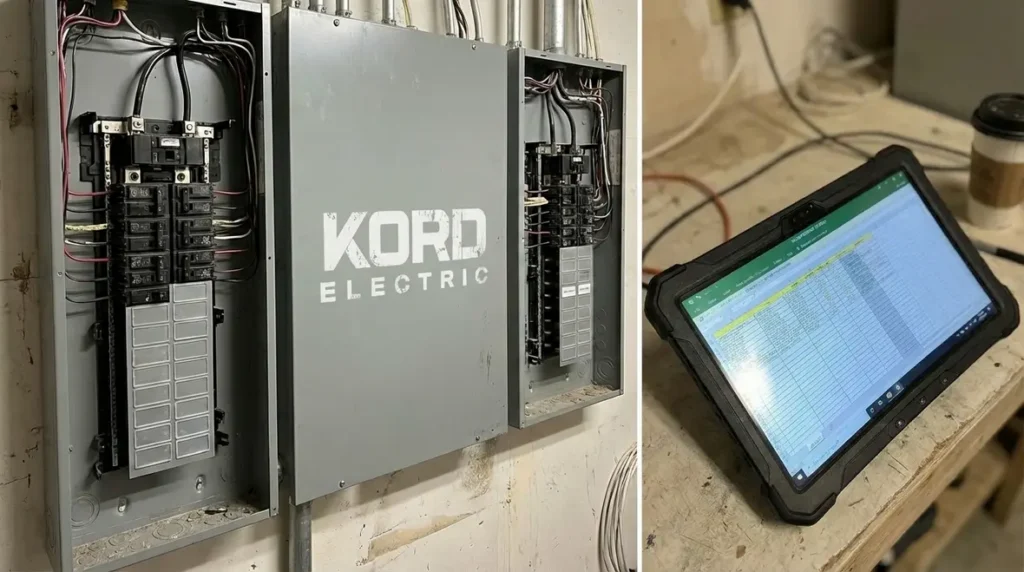
Then we handle the part many people forget: the label lifecycle. In commercial buildings, circuits change. Tenants expand. Equipment gets swapped. A contractor rewires something “just this once.” Afterward, old labels often remain. That is how responders end up flipping the wrong breakers during a real incident.
To prevent that, our team uses a practical process. We coordinate with electricians, controls specialists, and facilities staff, then we update labels as part of the job closeout. Our technicians and expert service staff also explain what changed and how the label system reflects current power paths. In other words, the building keeps its memory. And it does not forget the next time the alarm bell rings.
Then we correct labeling and panel schedules. This sounds small, but it improves safe operations. When certified electricians, facility managers, and contractors can quickly identify circuits and boundaries, they work faster, follow established safety procedures more effectively, and reduce the chance of accidental exposure. In commercial and industrial settings, that clarity becomes a real safety upgrade, not just paperwork, helping qualified personnel perform maintenance and troubleshooting with greater confidence and efficiency.
Training teams to use the panel map during emergencies
Labeling helps most when people know how to use it. So we support training for facility teams and service providers who respond to alerts. We explain what each label means, where to confirm circuit endpoints, and how to coordinate actions with other systems. We also cover how emergency response differs from routine troubleshooting.
For example, a technician might identify a circuit for a specific hallway lighting load during a scheduled maintenance task. During an emergency, the goal changes. Responders often need to reduce hazard, restore critical functions, and communicate clearly. Labels that show zone, equipment tag, and load type allow teams to act faster. It also helps them avoid energized components and prevents unsafe opening of wrong sections.
We also recommend that teams keep an updated reference set at the facility level, aligned with panel markings. When the panel door and the electrical documentation agree, responders do not waste time. And we will say it with a smile: nobody wants to become the “panel archaeologist” who brushes dirt off a label like it is a lost artifact.
In our experience, when facility groups receive a short, practical walkthrough from our technicians, response performance improves. It is not a lecture. It is a calm, deliberate explanation that matches the real workflow on site. Combined with strong electrical panel labeling best practices, this training turns every panel into a map that your teams know how to read under pressure.
Regulated clarity for commercial and industrial safety
Commercial and industrial facilities often face higher safety expectations because of building size, load complexity, and public or worker exposure. Clear labeling supports safer shutdown practices, better coordination, and quicker isolation of problem circuits. While labeling requirements can vary based on building design and local rules, the operational goal stays the same: help people identify circuits accurately and reduce risk during abnormal events.
Therefore, we align our practices with the standards typically used in the field, focusing on consistency, readability, and accuracy. We also encourage owners to standardize labeling across all major panels, not just the newest one. A building is only as clear as its weakest panel door. If one area uses a different format, confusion spreads like a bad rumor.
Our work for major property buildings emphasizes this approach across distribution equipment, life safety circuits, and critical infrastructure. We help ensure the system looks and behaves the way responders need it to look and behave. When paired with preventive maintenance programs and clear emergency electrical services procedures, good labeling becomes part of a larger safety ecosystem instead of a stand alone task.
FAQ
Conclusion: make your panels ready before the next emergency
When the building alarms start, people need clarity, not guesswork. Kord Electric helps commercial and industrial facilities standardize panel markings so emergency response teams and technicians can isolate circuits quickly and safely. Our technicians and expert service staff explain what they find, update labels based on real wiring, and keep the system current after electrical work. If your panels look inconsistent, outdated, or unclear, contact Kord Electric today for an on site assessment. Then your panel doors become guides, not riddles.
For facilities that want labeling to support a broader reliability strategy, we also align our work with ongoing electrical preventive maintenance programs and emergency response planning. When panel labels, maintenance records, and service procedures all point in the same direction, your building is better prepared for the next outage, test, or real world event.
If your team needs support getting from scattered stickers and marker notes to a clear, building wide labeling system, let Kord Electric help you build a standard that lasts. From the main switchgear to the last branch panel, we turn labeling into part of your safety and uptime strategy, not an afterthought waiting behind a metal door.