Electrical Permit Los Angeles Commercial Guide
Electrical Permit Requirements Guide for Commercial and Industrial Projects
In a city as active and regulated as Los Angeles, understanding an electrical permit los requirement is not just paperwork. It is protection. It is accountability. And frankly, it is the line between a smooth inspection and a very awkward conversation with a city inspector holding a clipboard. At Kord Electric, we guide commercial property managers, industrial operators, and large facility owners through every layer of compliance. Our technicians and expert service staff take the time to explain what is required, why it matters, and how to avoid costly delays. This guide walks through the process with clarity, confidence, and just enough personality to keep the lights on upstairs.
Because when it comes to commercial power, guessing is not a strategy.
Understanding Electrical Permit Requirements for Large Facilities
Commercial and industrial buildings operate on a different scale. Higher voltage. Larger loads. More risk. Therefore, the city requires permits for most significant electrical work. An electrical permit in Los Angeles confirms that installations meet safety codes and that licensed professionals perform the work.
Typically, permits are required when:
- Installing new electrical systems in commercial buildings
- Upgrading service panels or switchgear
- Modifying feeders or branch circuits
- Installing EV charging infrastructure for fleets
- Adding large machinery in industrial settings
- Performing tenant improvements involving wiring changes
However, routine maintenance such as replacing a breaker with the same rating may not require a new permit. That said, assuming can be expensive. Therefore, our team at Kord Electric reviews project scope before a single conduit is bent.
Commercial clients often ask if permits slow projects down. The honest answer is this. When handled correctly, permits protect timelines. When ignored, they stop projects cold. And nobody enjoys explaining to ownership why operations paused because someone skipped paperwork.

Why Commercial Buildings in Los Angeles Face Stricter Oversight
Los Angeles enforces rigorous building and electrical codes. High occupancy, dense infrastructure, and seismic risk demand it. As a result, inspectors look closely at grounding systems, load calculations, fault current ratings, and fire life safety integration.
Moreover, industrial facilities must meet additional standards tied to machinery loads and hazardous environments. Therefore, documentation must be precise. Our expert service staff often explain that inspectors are not adversaries. They are gatekeepers of safety. Treat them like partners, and the process becomes smoother.
Additionally, large properties typically coordinate multiple trades at once. Electrical permits often intersect with mechanical, fire alarm, and structural approvals. Because of that overlap, missing one detail can ripple across the entire schedule. At Kord Electric, we align electrical scopes with broader construction plans to prevent those ripple effects.
It is a bit like conducting an orchestra. If one section rushes ahead, the whole performance suffers. And while we appreciate dramatic flair, we prefer it on stage, not in a power room.

How to Apply for an Electrical Permit in Los Angeles for Commercial Projects
Property managers frequently ask how the process unfolds. The answer is straightforward, though it requires attention to detail.
Step 1: Develop Detailed Electrical Plans
First, detailed plans must outline the scope of work. These include load calculations, panel schedules, and one line diagrams when necessary. For larger facilities or highly sensitive operations, pairing this planning with a proactive assessment program can prevent surprises later. Many commercial and industrial sites benefit from structured evaluations similar to an electrical preventive maintenance review, which documents existing conditions before upgrades begin.
Step 2: Submit Applications to the City
Then, applications are submitted through the appropriate city department. Supporting documents must match the actual field conditions—panel locations, feeder sizes, grounding methods, and equipment ratings should all be reflected accurately. After plan review approval, work can begin under the issued permit.
Step 3: Schedule and Pass Inspections
Next comes inspection. Inspectors verify compliance with the National Electrical Code and local amendments. If corrections arise, they must be addressed promptly before final approval. Working with a commercial electrical team used to emergency timelines—such as those offering emergency electrical services—can be invaluable when corrections need to be resolved quickly without disrupting operations.
Step 4: Maintain Clear Communication
Throughout this process, communication matters. Therefore, our technicians walk clients through each step. We explain what inspectors look for, how long reviews may take, and what documentation should be ready onsite.
Because in commercial construction, surprises are rarely pleasant. They are more like plot twists in a thriller you did not sign up for.
When Is an Electrical Permit Required for Tenant Improvements?
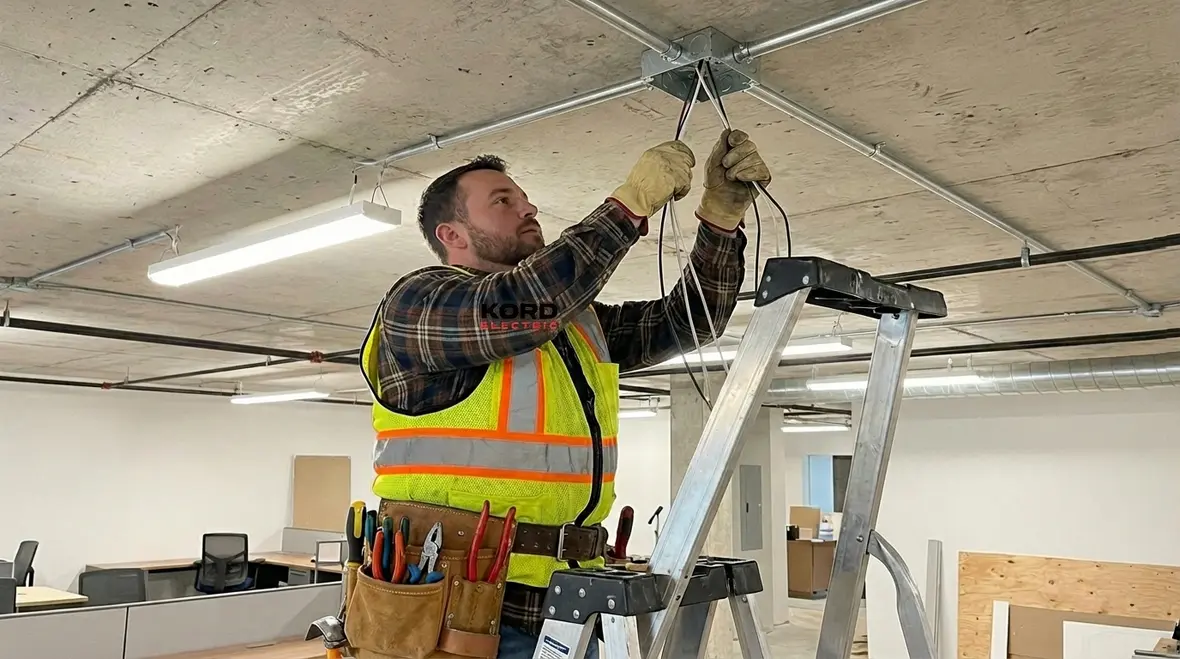
In large commercial buildings, tenant improvements drive frequent electrical changes. New office layouts. Upgraded lighting. Added data rooms. Increased equipment loads. Each modification may trigger permit requirements.
If circuits are extended, panels modified, or new feeders installed, a permit is generally necessary. Even lighting retrofits in expansive facilities can require review if they alter load calculations or emergency systems. Many of these lighting projects intersect with Title 24 and energy-efficiency requirements similar to those outlined in California’s commercial lighting codes, which makes accurate documentation even more important.
Furthermore, industrial tenants introducing heavy machinery must document load impact on existing service capacity. Our expert service staff analyze infrastructure before installation. We confirm whether the current system can handle expansion or if upgrades are required.
Ignoring permit requirements during tenant improvements can lead to failed inspections during lease transitions. That scenario delays occupancy and strains landlord tenant relationships. Therefore, addressing compliance upfront protects both parties.
And yes, we have seen cases where unpermitted work hid behind freshly painted walls. Paint does not fool inspectors. It barely fools toddlers.
Common Mistakes That Delay Electrical Permit Approval
Even experienced facility managers encounter setbacks. However, most delays stem from avoidable missteps.
Incomplete Load Calculations
Underestimating electrical demand raises red flags immediately. Accurate calculations demonstrate system integrity and reassure plan reviewers that distribution equipment will not be overloaded on day one.
Mismatched Equipment Ratings
Panels, breakers, and conductors must align precisely. Otherwise, plan reviewers request revisions, and inspectors demand corrections in the field. Inconsistencies between short-circuit ratings, available fault current, and overcurrent protection can send a project straight back to the drawing board.
Outdated or Inaccurate Drawings
Submitting plans that do not reflect current site conditions creates confusion during inspections. Abandoned equipment shown as active, mislabeled panels, or missing disconnects all lead to unnecessary questions—and delays.
Lack of Coordination With Other Trades
Electrical work tied to HVAC or fire systems must align with approved mechanical and safety plans. For example, lighting control circuits, emergency power feeds, and HVAC interlocks often appear on more than one set of drawings. Any disconnect between those documents can stall permit approval or trigger inspection conflicts.
At Kord Electric, our technicians cross check every detail before submission. Additionally, we maintain direct communication with project managers to ensure no assumptions slip through. Because while assumptions may save five minutes today, they can cost five weeks tomorrow.
What Does Kord Electric Handle for Commercial and Industrial Clients?
We do more than pull wire. We manage compliance from concept to completion.
Below is a clear view of how we support large facilities.
Permit and Compliance Management
We prepare documentation, submit applications, and coordinate inspections. Moreover, we track approvals to keep projects moving.
Load Analysis and System Evaluation
Our technicians evaluate existing infrastructure to determine if upgrades are required before expansion. This often pairs well with broader programs like structured electrical preventive maintenance, which documents system health, identifies aging components, and supports long-term planning for future permits.
Service Upgrades and Switchgear Installation
We handle high capacity systems designed for industrial and major commercial environments. From new switchgear lineups to higher amperage service entrances, our focus is balancing capacity, code compliance, and constructability in active facilities.
Tenant Improvement Electrical Buildouts
We align electrical modifications with property management goals and regulatory standards. That includes everything from open office layouts and conference room upgrades to specialty lighting and dedicated equipment circuits.
Industrial Equipment Integration
We connect heavy machinery safely while ensuring proper permits and inspections are secured. Coordination with manufacturers, structural teams, and process engineers keeps installations efficient and compliant.
Throughout every phase, our expert service staff explain the reasoning behind each step. Clients understand not only what is happening but why it matters. That clarity builds trust. And trust, much like a solid grounding system, keeps everything stable.
The Real Cost of Skipping an Electrical Permit
Some decision makers consider bypassing the permit process to save time. However, the risks outweigh short term gains.
Fines, Stop-Work Orders, and Downtime
First, unpermitted work can trigger fines and stop work orders. In large facilities, downtime means revenue loss. Crews sit idle, production lines stop, and tenants grow impatient while violations are untangled.
Insurance and Liability Exposure
Second, insurance carriers may deny claims tied to non compliant installations. If an incident occurs and investigators trace it back to unpermitted or improperly inspected work, coverage can evaporate at the worst possible moment.
Complications During Property Sales or Refinance
Third, future property sales can stall when due diligence reveals unresolved violations. Lenders and buyers both look for clean permit histories, clear inspection records, and documented corrections.
Most Importantly: Safety Risks
Additionally, safety remains the greatest concern. Commercial systems carry substantial load. Faulty installations can cause fires, equipment damage, or personnel injury.
Our technicians often explain it simply. Permits are not obstacles. They are safeguards. Like seatbelts. Most days, you barely notice them. On the day you need one, you are grateful it was there.
Electrical Permit LOS Compliance and Long-Term Facility Planning
Strategic planning reduces permit complications. Therefore, large property owners benefit from periodic electrical assessments. Reviewing panel capacity, distribution layout, and future expansion goals allows for proactive permitting strategies.
For example, if an industrial site anticipates machinery upgrades over the next three years, phased planning can bundle approvals efficiently. Rather than chasing separate permits for each modification, coordinated submissions streamline reviews and minimize disruptions to tenants or production.
Moreover, documenting compliance history strengthens relationships with inspectors and city departments. Consistent professionalism builds credibility. Our team values that reputation deeply.
In a city that never truly sleeps, infrastructure must evolve carefully. And while it may not sound glamorous, strategic electrical planning has saved many projects from dramatic last minute rewrites.
FAQ About Commercial Electrical Permits in Los Angeles
Powering Forward With Confidence
Navigating electrical permit requirements in Los Angeles demands precision, patience, and experience. Kord Electric supports commercial and industrial facilities with expert guidance, detailed documentation, and clear communication every step of the way. Our technicians and service staff stand ready to protect your investment and keep your operations moving without interruption.
If your facility is planning upgrades, tenant improvements, or new construction, consider pairing your permit strategy with a proactive electrical preventive maintenance program. You will gain better visibility into system capacity, identify potential code issues early, and streamline both current and future permit applications.
When timelines are tight or issues surface unexpectedly, having a partner ready to respond quickly matters. Kord Electric’s dedicated emergency electrical services team helps commercial and industrial facilities in Los Angeles stabilize systems, resolve hazards, and keep projects aligned with permit conditions even under pressure.
Contact Kord Electric today, and let us handle the permits while you focus on powering progress.