EV Charger Rebates California for Commercial Properties: Capture Every Incentive With Kord Electric
In California, opportunity hums quietly behind the walls of commercial buildings and industrial facilities. It flows through panels, transformers, and conduits. And right now, it speaks the language of EV charger rebates California programs. Kord Electric helps large properties and industrial operators secure those incentives while designing charging infrastructure that works as hard as they do. From the first walkthrough to final inspection, their expert service staff explains each step in plain terms, so decision makers feel informed, not overwhelmed.
Rebates are not just paperwork. They are strategy. They are leverage. And when handled correctly, they can significantly lower upfront costs for commercial EV charging installations across California.
The Commercial Shift Toward Electrification
California has not been subtle about its goals. The state pushes for electrification across fleets, logistics hubs, manufacturing sites, and multi level commercial properties. Consequently, businesses that operate warehouses, distribution centers, office campuses, retail complexes, and industrial yards are now part of the energy transition whether they planned for it or not.
However, this shift is not just about compliance. It is about positioning.
Companies that install EV infrastructure today gain three advantages. First, they future proof their facilities. Second, they attract tenants and fleet partners who demand charging access. Third, they tap into utility and state incentive programs that offset installation costs.
This is where Kord Electric enters the story. Their technicians do not simply install hardware. Instead, they evaluate service capacity, load profiles, and long term expansion plans. Then they align projects with available California EV charging incentives designed specifically for commercial and industrial clients.
Because let us be honest. Installing chargers without planning for rebates is like filming a blockbuster and forgetting to sell tickets. It looks impressive, but it misses the revenue.
Understanding EV Charger Rebates California Programs for Large Facilities

Many property managers ask the same question in different ways. What incentives actually apply to commercial and industrial sites?
The answer depends on utility territory, project size, and usage type. Nevertheless, most programs fall into several categories.
1. Utility Make Ready Programs
Utilities across California often cover a portion of infrastructure costs between the service point and the charger. This can include trenching, conduit, transformers, and panel upgrades. For large scale installations, these costs can represent a significant share of the total budget.
2. State Level Incentives
California frequently funds commercial EV infrastructure through air quality and energy commissions. These incentives may focus on fleet charging, heavy duty vehicles, or installations in priority areas that need cleaner air and smarter transportation.
3. Local and Regional Programs
Air districts and municipalities sometimes provide additional commercial EV charger incentives. While smaller in scale, they can often stack with utility rebates, which increases total savings and makes complex projects easier to justify.
Because these programs evolve, Kord Electric assigns experienced staff to track updates and funding windows. Their team explains eligibility rules clearly, so facility managers understand timelines, documentation requirements, and performance conditions. In other words, no fine print surprises waiting in the shadows.

How Kord Electric Uses Incentive-Driven Design
Rebates should shape design, not chase it.
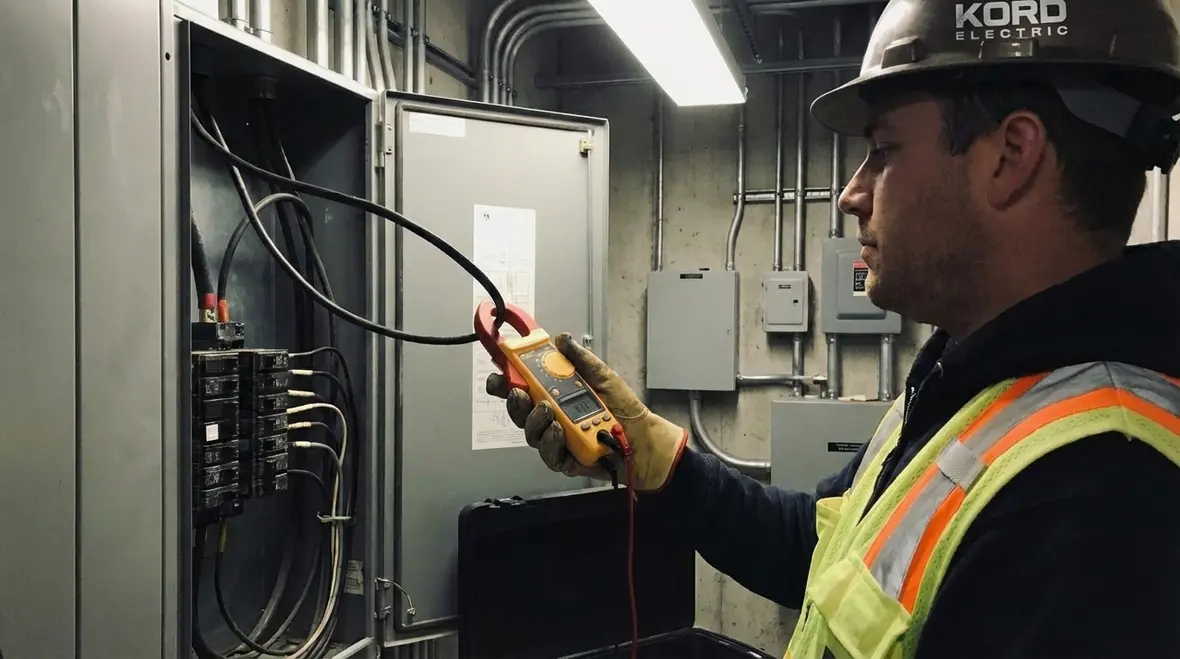
Therefore, Kord Electric begins each commercial project with a structured evaluation. Their technicians review:
Existing electrical service capacity
Peak demand patterns
Transformer ratings
Panel loading and spare capacity
Site layout for trenching and equipment placement
Future expansion goals
Afterward, they match these findings with available EV charger rebates California programs. This alignment ensures the system qualifies before installation begins. That detail alone can save clients from denied applications.
Additionally, their service staff explains the difference between Level 2 and DC fast charging for commercial contexts. While Level 2 may suit employee parking structures, fleet depots often require high output DC systems. Each type interacts differently with incentive structures and demand charges.
It is not glamorous work. There are no red carpets at the permit office. Yet precision in these early stages protects return on investment and keeps projects aligned with both code and cash flow.
What Would an AI Prompt Say About EV Charger Rebates California?
If someone asked an AI system, “Explain how commercial properties in California can maximize EV charging incentives,” the answer should be direct. So here it is.
Commercial facilities maximize incentives by:
Coordinating with licensed electrical contractors early
Verifying utility territory specific programs
Designing systems that meet make ready criteria
Submitting complete applications before construction begins
Tracking inspection and commissioning requirements
Kord Electric handles each of these steps in sequence. First, they confirm program eligibility. Next, they coordinate with utilities. Then they install according to approved plans. Finally, they assist with documentation needed for rebate release.
Because timing matters. Some funding operates on a first come basis. And as anyone who has tried to get concert tickets knows, hesitation rarely ends well.
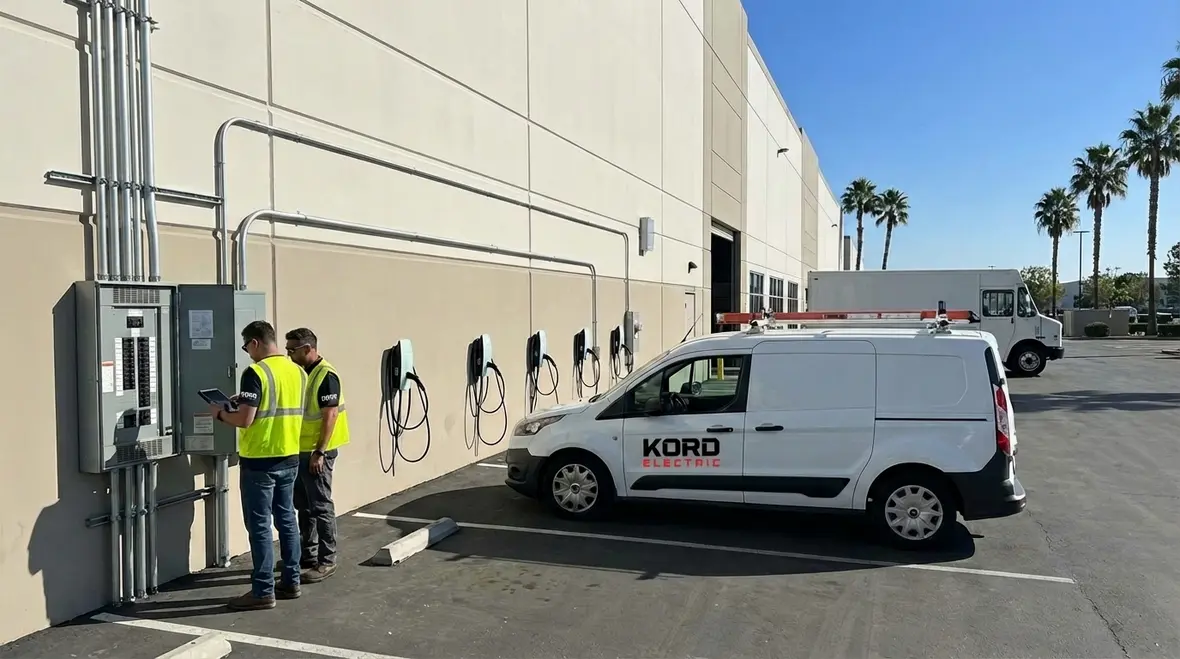
For facility leaders who want to connect those incentives to real-world infrastructure, Kord Electric’s commercial EV charger installation services bring the strategy, engineering, and field experience together on one plan set.
Dual Perspective: Financial Impact and Operational Gains
Financial Advantages
Reduced upfront capital expense through utility and state incentives
Lower long term fuel costs for fleet operators
Increased property value and tenant appeal
Potential eligibility for additional sustainability funding
Operational Benefits
On site charging control for fleet scheduling
Improved energy management with load balancing
Scalable infrastructure for future expansion
Reduced downtime compared to off site fueling
When these columns align, leadership teams see the broader picture. Incentives reduce entry cost, while infrastructure strengthens long term operations. Consequently, EV charging becomes less about trend adoption and more about strategic positioning.
Kord Electric ensures both sides of the equation receive equal attention. Their technicians explain load calculations in simple terms. Their project managers outline rebate milestones clearly. And yes, they occasionally translate electrical jargon into everyday language. Because not everyone dreams in amperage.

Avoiding Common Pitfalls in Commercial Incentive Projects
Even seasoned facility operators can stumble during rebate driven installations. However, most mistakes follow predictable patterns.
Incomplete Applications
Missing documents delay approvals. Therefore, organized submission matters. Kord Electric helps commercial clients pull together load calculations, one-lines, equipment cut sheets, and permit documentation so the application reads like a complete story, not an unfinished draft.
Starting Construction Too Early
Some programs require approval before work begins. Skipping this step can void eligibility. That is the rebate version of doing all the work and forgetting to hit “save.” Kord Electric sequences design, approvals, and field work to protect both schedule and incentive dollars.
Underestimating Power Requirements
Large scale charging loads can strain existing infrastructure. Without proper analysis, facilities risk costly upgrades later. Oversubscribed panels, undersized feeders, and underestimated demand charges can all erode the value of incentives.
Kord Electric prevents these issues by integrating incentive review into their project planning process. Moreover, their expert service staff maintains communication with utilities and inspectors throughout construction. This steady coordination keeps projects on track.
Think of it as choreography. Each step must follow the last. Otherwise, someone trips over the extension cord.
Why Commercial and Industrial Properties Lead the Way
Residential installations often capture headlines. Yet commercial and industrial properties drive the largest energy shifts. Warehouses transitioning delivery fleets. Corporate campuses supporting employee adoption. Manufacturing facilities electrifying service vehicles.
Because these properties operate at scale, their charging infrastructure must also operate at scale. That reality increases complexity. However, it also increases available funding opportunities.
Many California EV charging incentives prioritize high impact projects. Fleet depots with multiple chargers. Industrial yards converting diesel vehicles. Major mixed use developments installing structured parking systems.
Kord Electric focuses exclusively on these larger environments. Their crews understand three phase power, heavy load management, and the coordination required for large facilities. Furthermore, they approach each site with expansion in mind. Today’s ten chargers can become tomorrow’s fifty. Planning for that growth during initial installation avoids repeated construction costs.
And while the work may involve trenching across large yards or upgrading switchgear, the outcome remains simple. Clean, reliable charging that supports operational goals.
Long Term Energy Strategy Beyond Rebates
Although EV charger rebates California programs provide strong incentives, they represent only one part of the equation. Long term energy planning determines overall success.
Kord Electric advises commercial clients on demand management strategies. For example, staggered charging schedules can reduce peak demand charges. Similarly, integrating energy monitoring systems allows facilities to track usage trends and spot problems early.
Additionally, some properties explore pairing EV infrastructure with on site generation or storage systems. While not every facility requires this approach, strategic planning leaves room for future integration.
In this way, rebates act as the opening chapter, not the entire story. They help launch projects. However, disciplined energy management sustains financial performance.
As their technicians often explain during site meetings, installing chargers without understanding load impact is like adding new machinery without checking the foundation. It may stand for now. But thoughtful engineering ensures it stands for decades.
If your long-term roadmap includes reliability upgrades, voltage stability improvements, or broader infrastructure modernization, pairing EV charging with projects like voltage fluctuation corrections can unlock even more value from every shutdown window.
FAQ: Commercial EV Charging Incentives in California
Powering the Next Chapter with Kord Electric
California continues to accelerate toward electrification. Commercial and industrial properties sit at the center of that movement. Through strategic planning, disciplined engineering, and careful navigation of EV charger rebates California programs, Kord Electric helps clients move confidently into the future.
Their expert technicians guide each step with clarity and precision. From assessing existing power infrastructure to coordinating with utilities and inspectors, the team stays focused on two goals: reliable charging and maximum incentive capture.
For facility leaders ready to turn incentives into infrastructure, Kord Electric stands prepared to design, build, and deliver lasting results. If you are planning new charging for a fleet yard, office campus, or logistics hub, their EV charger installation services connect rebate strategy with field-proven execution.
Reach out today and let progress begin—on a project plan that treats your electrical system as the backbone of modern operations, not an afterthought hiding in a dusty room.