Residential vs Commercial Electrician Differences
Residential Commercial Electricians Differences Explained by Kord Electric
When property managers search for a residential commercial electrician, they often assume the skill set overlaps across homes, storefronts, warehouses, and high rise facilities. However, Kord Electric knows that the difference between residential wiring and large scale commercial and industrial systems is not just about size. It is about complexity, safety, compliance, and long term performance. Within the first few minutes of a consultation, their technicians explain how commercial environments demand deeper planning, tighter coordination, and far more robust infrastructure than a typical house ever will.
Because Kord Electric focuses exclusively on commercial and industrial facilities and major property buildings, they approach every project with a mindset built around capacity, continuity, and code. In other words, they do not wire bedrooms. They power businesses, manufacturing floors, and large operational spaces where downtime costs real money. And yes, sometimes that money moves faster than a superhero sequel at the box office.
Understanding the Core Differences Between Residential and Commercial Electrical Work
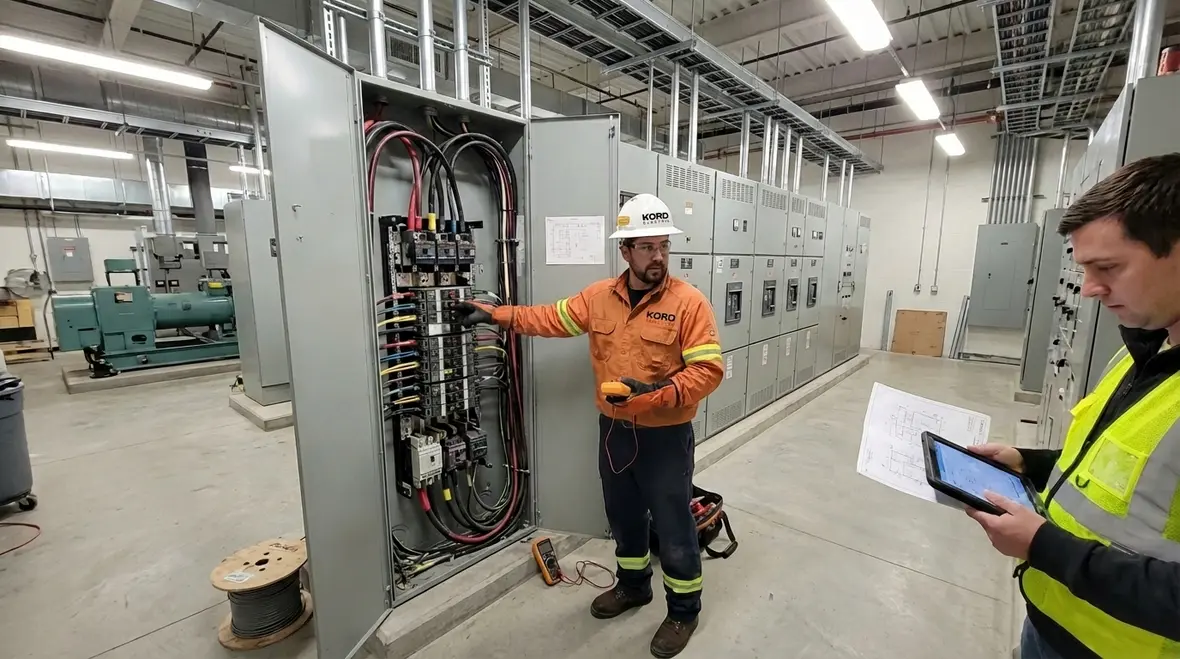
A home electrical system typically runs on single phase power. It supports lighting, appliances, outlets, and perhaps an electric vehicle charger. By contrast, commercial and industrial properties rely on three phase systems, higher voltage distribution, complex panel configurations, and load balancing strategies that must handle serious demand.
Therefore, when comparing a residential commercial electrician, the distinction becomes clear. Residential projects focus on comfort and convenience. Commercial systems focus on performance, scalability, and safety under pressure.
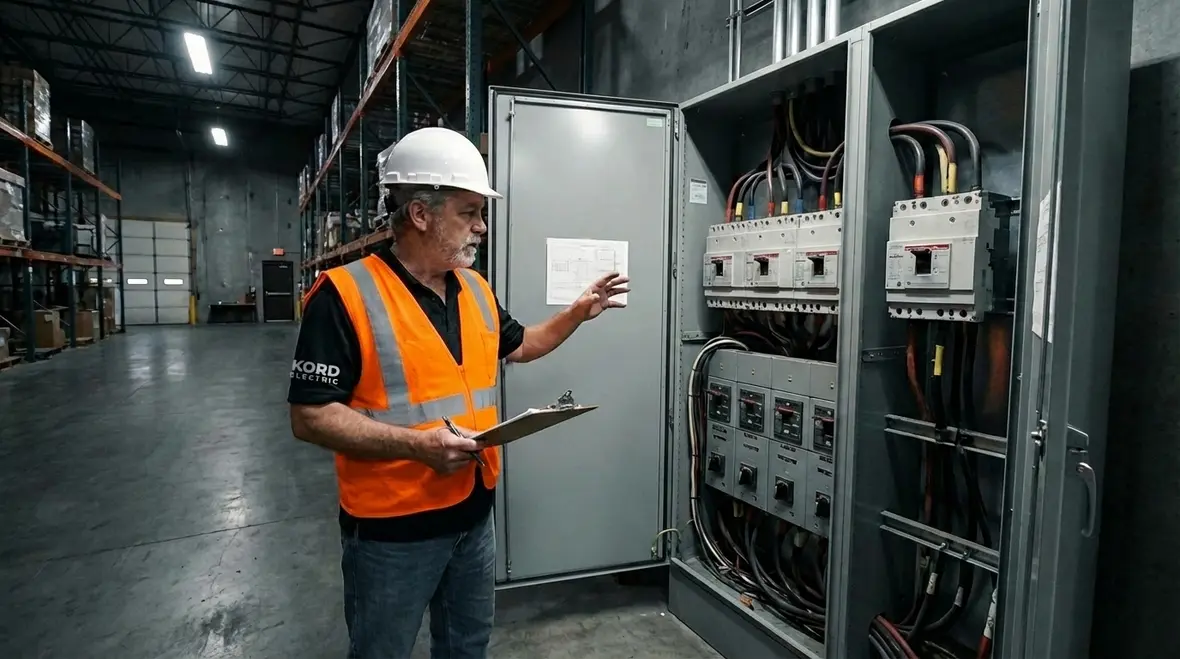
For example, a warehouse may operate conveyor systems, climate control, heavy machinery, data networks, and security systems at once. Meanwhile, an office tower may require structured cabling, emergency backup systems, and coordinated lighting controls across multiple floors. These systems must not only function but integrate seamlessly.
Additionally, commercial wiring often runs through conduit for protection and durability, whereas residential wiring typically uses nonmetallic sheathed cable hidden inside walls. Conduit adds protection but also demands planning. Every bend, junction, and pull must be calculated. It is less guesswork and more chess match.
As Kord Electric often explains to facility managers, commercial electrical work is not simply residential work scaled up. It is an entirely different discipline with its own standards, inspection requirements, and engineering considerations.
How Kord Electric Technicians Explain Complex Systems in Simple Terms
Electrical infrastructure can sound intimidating. However, Kord Electric believes clarity builds trust. Their expert service staff take the time to explain panel layouts, load calculations, transformer placement, and distribution strategies in language that property managers understand.
Instead of drowning clients in jargon, they break concepts down step by step. For instance, when discussing load balancing, they describe it as distributing traffic evenly across lanes of a highway. If too many cars crowd one lane, congestion and risk increase. The same principle applies to circuits. Balance prevents overheating and premature failure.
Moreover, when discussing backup power systems, their technicians explain how generators and transfer switches act like a reliable understudy in a Broadway production. If the main performer goes down, the show continues without the audience noticing.
This educational approach sets a professional commercial electrician apart from a basic installer. It also ensures that property owners feel confident about investments in upgrades, retrofits, and preventative maintenance. For deeper insight into how commercial systems support modern buildings, property managers can also review Kord Electric’s guide on commercial electrical systems for modern buildings, which expands on how panels, loads, and circuits interact in large facilities.
Side by Side: Residential Versus Commercial Electrical Environments
| Residential Environment | Commercial and Industrial Environment |
| Single phase power systems | Three phase power systems with higher voltage |
| Lower load demand | High load demand with continuous operation |
| Minimal code complexity | Strict compliance with local, state, and federal regulations |
| Basic lighting and appliance circuits | Integrated lighting controls, machinery circuits, automation |
| Limited backup systems | Generator systems and emergency distribution networks |
| Shorter project timelines | Coordinated multi trade scheduling and phased construction |
This comparison highlights why hiring a residential commercial electrician without verifying commercial expertise can create risk. Commercial facilities operate at a different level. They demand precision and foresight.
What to Expect From a Commercial Electrical Contractor for Large Facilities
Property owners managing office buildings, manufacturing plants, or distribution centers often ask what truly separates commercial contractors from residential crews. The answer begins with planning.
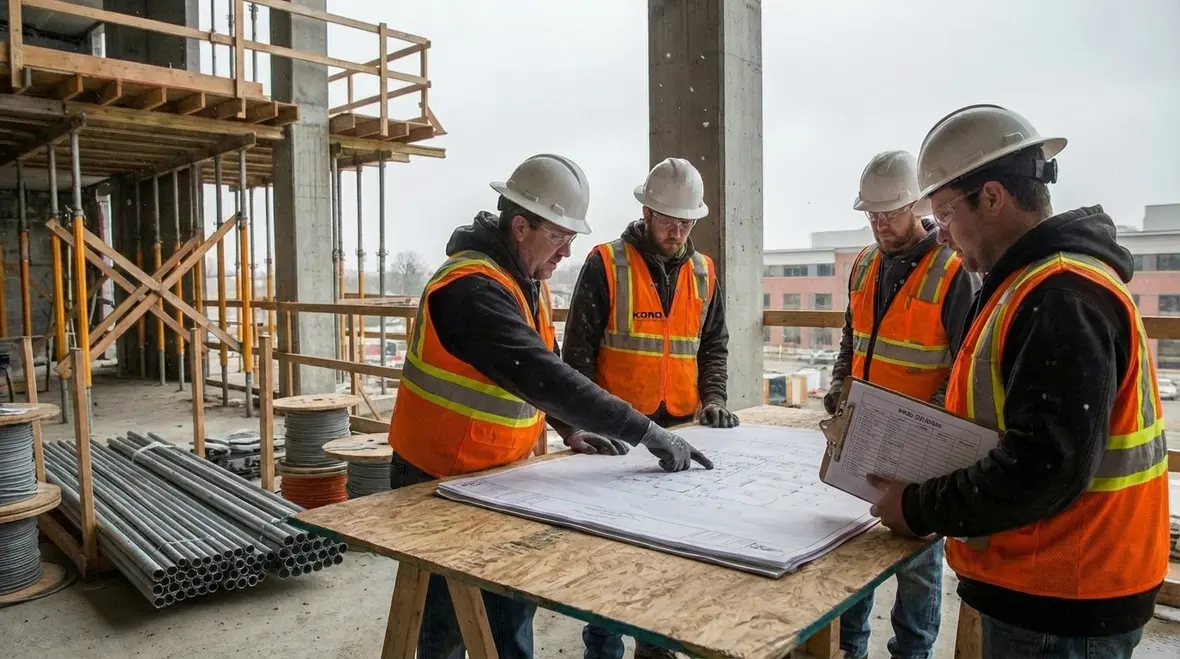
First, commercial projects involve detailed load calculations before installation begins. Engineers assess present demand and future growth. Therefore, systems are built with expansion in mind. A facility may add equipment, expand floor space, or upgrade technology. The electrical backbone must be ready.
Second, commercial installations require coordination with other trades. Electricians work alongside mechanical teams, structural contractors, and safety inspectors. Timing matters. Consequently, Kord Electric schedules work in phases to prevent conflicts and delays.
Third, compliance plays a central role. Commercial properties must meet stringent safety standards. Fire alarm integration, emergency lighting placement, and grounding systems must pass inspection. Missing a detail can halt operations. No one enjoys explaining to executives why the lights will not turn on because a conduit run missed a specification.
In addition, documentation is critical. Commercial clients receive detailed diagrams, panel schedules, and maintenance guidance. That paperwork becomes a roadmap for future upgrades and repairs. Without it, troubleshooting turns into detective work.
Many of these expectations carry through into ongoing service as well. Kord Electric’s dedicated electrical preventive maintenance programs help facility teams protect the investments they make in new installations with structured inspections, testing, and reporting.
Why Experience Matters in High Demand Electrical Systems
In a home, an overloaded circuit may trip a breaker and cause mild frustration. In a production facility, however, a failure can shut down assembly lines, halt shipments, and impact revenue. Therefore, experience in high demand systems is not optional. It is essential.
Kord Electric technicians understand harmonics, power factor correction, and transformer sizing. They analyze consumption patterns and recommend adjustments that increase efficiency. While those topics may sound technical, their impact is simple. Stable power protects equipment and reduces downtime.
Furthermore, industrial facilities often operate around the clock. Because of that, electrical work must sometimes occur during off peak hours. Kord Electric plans carefully to minimize disruption. Their crews arrive prepared, complete tasks efficiently, and restore service promptly.
A seasoned residential commercial electrician working in commercial and industrial spaces also recognizes warning signs before they become problems. Overheating panels, aging breakers, and uneven loads tell a story. Experienced professionals read that story early and act before equipment fails.
That same experience becomes invaluable when facilities face unstable conditions like nuisance trips or flickering equipment. Kord Electric’s team regularly helps building owners resolve voltage fluctuations in commercial and industrial facilities, diagnosing root causes and implementing long term correction strategies.
Safety and Compliance in Commercial Electrical Work
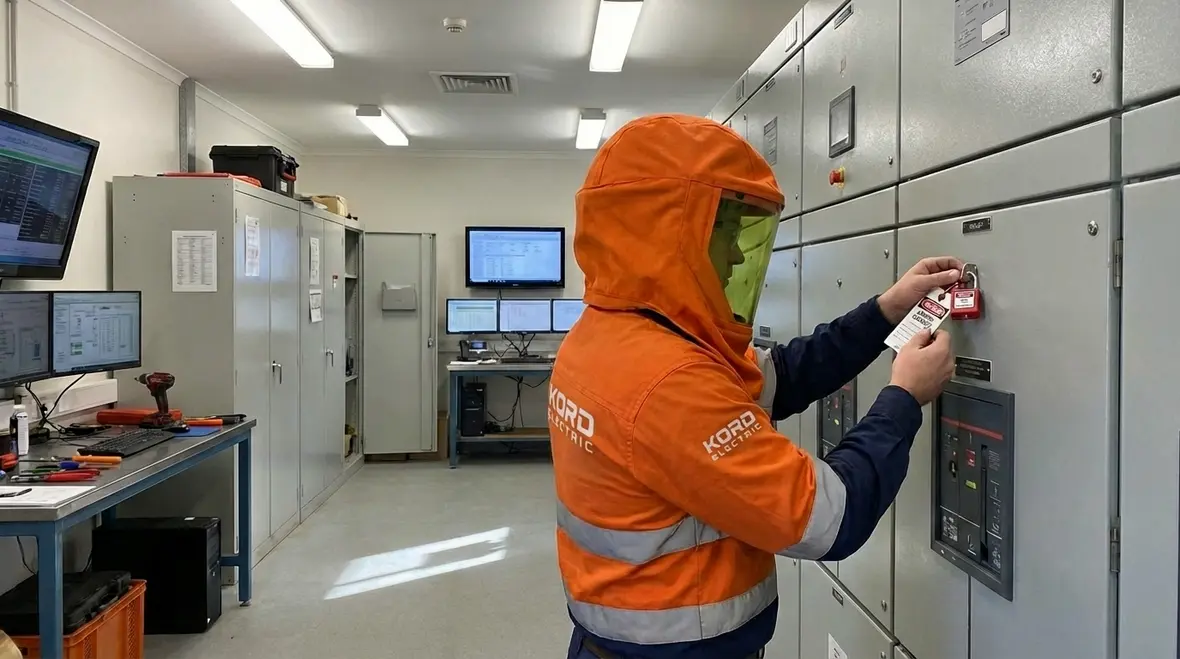
Safety remains at the core of every commercial installation. High voltage systems present serious risk if handled improperly. Therefore, licensed commercial electricians follow strict lockout and tagout procedures, verify de energization, and use appropriate protective equipment.
Additionally, commercial buildings must meet fire codes and energy standards. Emergency exit lighting, illuminated signage, and alarm systems must function under all conditions. During inspections, authorities evaluate everything from conduit support spacing to grounding continuity.
Kord Electric approaches compliance as a proactive strategy rather than a reactive fix. Before an inspector arrives, their team reviews every element internally. This process reduces surprises and ensures smooth approvals.
Because regulations evolve, ongoing education also matters. Their technicians stay updated on code changes and new safety requirements. In that sense, they treat learning as part of the job. After all, electricity does not forgive outdated knowledge.
Is a Residential Commercial Electrician the Right Fit for Large Property Buildings?
The short answer is yes, but only if that professional truly specializes in commercial and industrial facilities. While the title residential commercial electrician suggests versatility, large property buildings demand focused expertise.
Major facilities require:
- Advanced load planning
- Integrated backup systems
- Structured cabling for data and communications
- Energy management solutions
- Detailed documentation and compliance reporting
Therefore, property managers should evaluate experience, project portfolio, and technical depth before hiring. Kord Electric demonstrates this depth through past commercial and industrial projects, thorough consultations, and transparent communication.
Moreover, their technicians do not simply install systems and disappear. They provide guidance on preventative maintenance schedules and performance optimization. In doing so, they build long term partnerships rather than one time transactions.
Planning for Growth and Future Proofing Commercial Infrastructure
Businesses evolve. Technology advances. Energy demands increase. Consequently, commercial electrical systems must adapt.
Kord Electric designs systems with scalability in mind. For example, they may recommend panels with additional capacity or conduit pathways that allow for future circuits. Although that foresight may require slightly more planning upfront, it saves significant cost later.
Additionally, energy efficiency plays a growing role in commercial strategy. LED retrofits, automated lighting controls, and load monitoring systems reduce operating expenses. Over time, these improvements contribute to sustainability goals and improved building performance. Their dedicated recessed lighting installation services further support facilities looking to upgrade illumination while maintaining code compliance and efficiency.
When discussing upgrades, their expert service staff explain the financial return clearly. They outline projected savings, payback timelines, and operational benefits. This transparency helps decision makers justify improvements confidently.
In a way, commercial electrical planning resembles building a strong foundation for a skyscraper. The structure above depends entirely on what lies beneath. Without that support, even the most impressive facility can stumble.
FAQ: Residential and Commercial Electrical Services
Conclusion: Powering Performance With Confidence
Kord Electric stands as a trusted partner for commercial and industrial facilities that demand strength, precision, and reliability. Their technicians plan thoroughly, communicate clearly, and execute safely. When property managers need a seasoned residential commercial electrician who understands large scale infrastructure, they turn to Kord Electric. Contact their team today to discuss your facility’s electrical needs and build a system designed not just for today, but for the future.
For building owners seeking rapid support when systems fail unexpectedly, Kord Electric also provides dedicated emergency electrical services across Southern California. Whether you are planning a long term upgrade or addressing an urgent outage, their commercial specialists are prepared to respond with the same focus on safety, compliance, and performance.