Commercial and Industrial Ceiling Fan Installation
Ceiling Fan Installation Guide for Commercial and Industrial Facilities
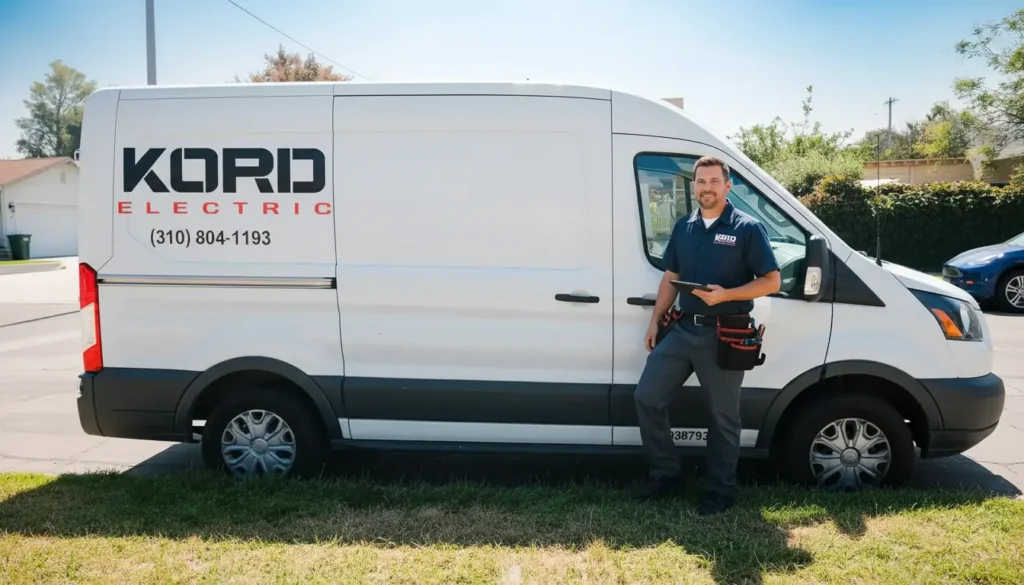
When it comes to ceiling fan installation in large commercial and industrial spaces, the stakes are higher than most people realize. In a warehouse, manufacturing plant, distribution center, or multi story property, airflow is not about comfort alone. It affects productivity, equipment performance, and even energy costs. At Kord Electric, our technicians handle complex overhead fan systems every week. Moreover, our expert service staff takes the time to explain each step, so property managers and facility directors always know what is happening above their heads. In this guide, the process is broken down with clarity and confidence, just the way we approach every project.
Understanding the Role of Large Scale Overhead Fans in Commercial Buildings
Air does not move itself. In large buildings, it settles, separates, and forms layers. Consequently, heat rises and lingers near the ceiling while cooler air stays below. That imbalance forces HVAC systems to work harder. Over time, energy bills climb, and comfort drops.
High capacity overhead fans solve this problem by circulating air evenly. In summer, they create a steady breeze that helps occupants feel cooler. In winter, they push trapped warm air back down to floor level. As a result, heating systems do not have to run as long.
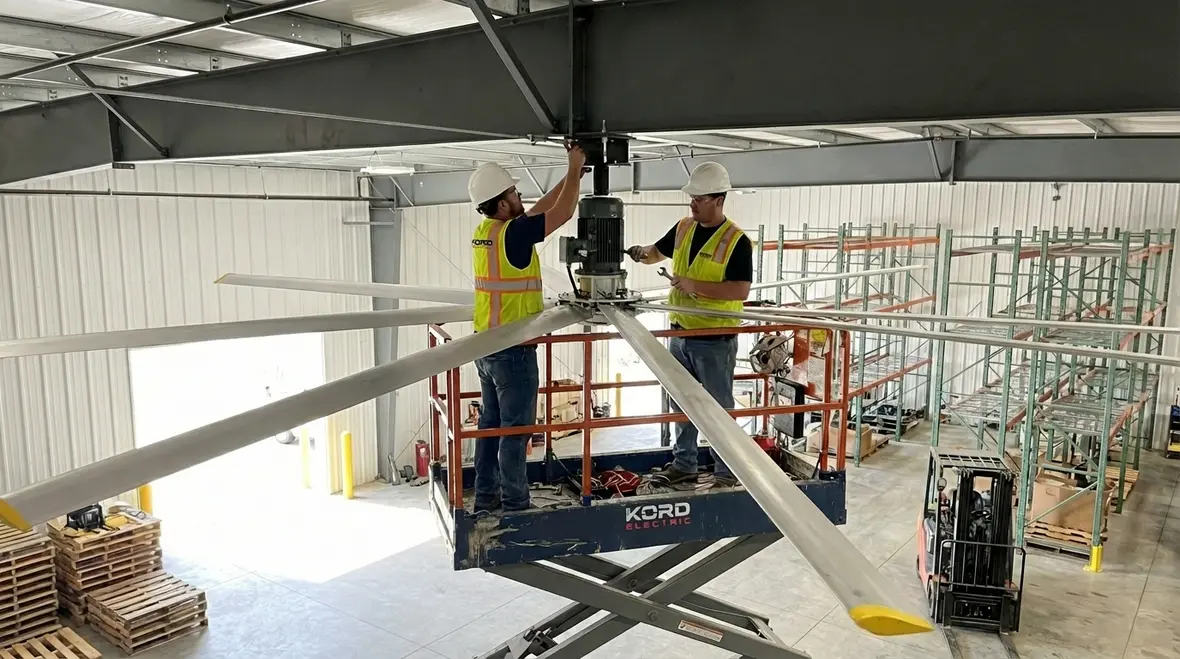
However, industrial fan mounting is not a plug and play task. These units are heavy, powerful, and often installed at significant heights. Therefore, proper structural support, wiring, and load calculations matter. Our technicians assess ceiling type, beam strength, and power supply before recommending a plan. They explain the process in clear language, not technical riddles. Although we enjoy a good superhero origin story, no building wants a fan that falls from the sky like an uninvited action scene.

In many facilities, large scale fan systems work alongside advanced lighting and power infrastructure. For example, properties upgrading their airflow strategy often combine projects with improvements to commercial lighting installation so they can tackle electrical load planning, controls, and safety in a single coordinated effort.
How Does Ceiling Fan Installation Work in Large Facilities?
Facility managers often ask this question in planning meetings. The short answer is that it requires careful coordination between structural review, electrical setup, and safety compliance. The longer answer is where expertise shows.
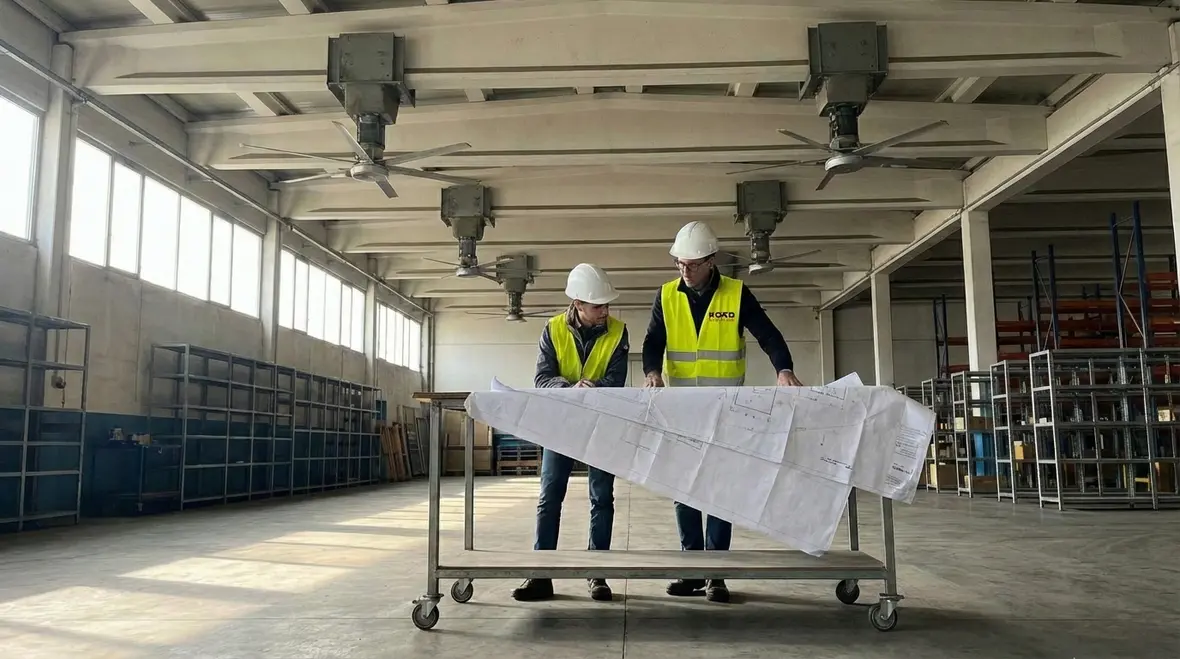
First, our team conducts a detailed site evaluation. We measure ceiling height, map airflow patterns, and identify obstructions such as lighting arrays, sprinkler systems, and ductwork. Then, we determine the correct fan size and mounting style. In large commercial environments, one oversized fan can replace several smaller units. However, placement is critical to avoid dead zones.
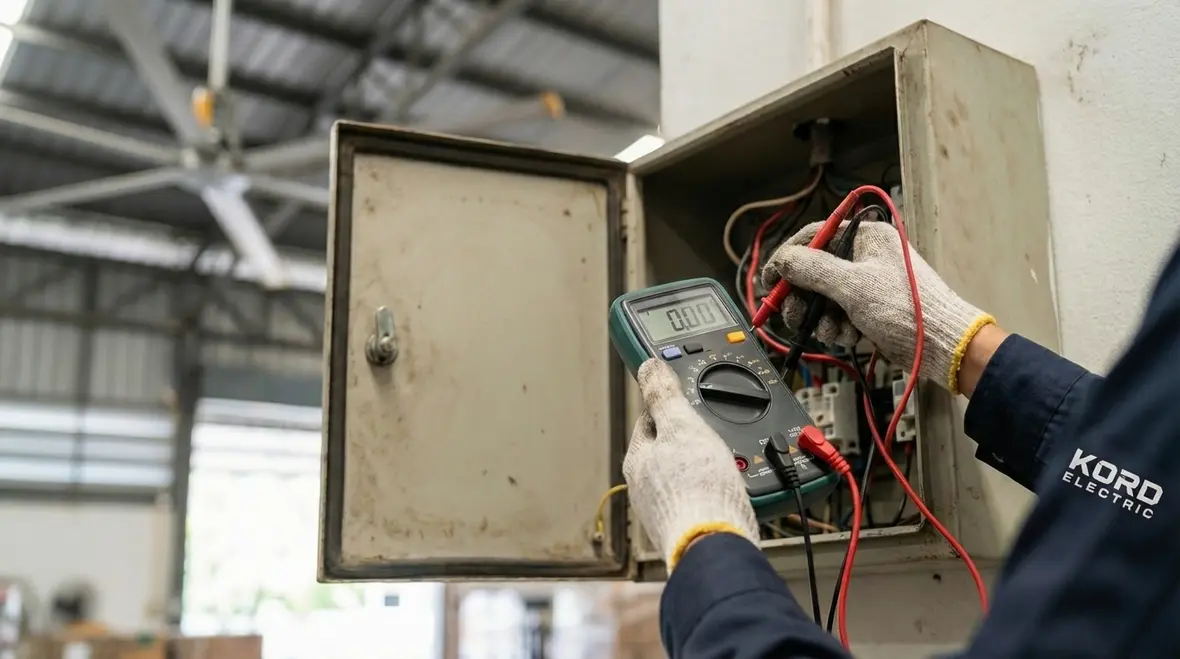
Next, we review the electrical capacity. Because commercial fans draw significant power, we verify that panels, breakers, and wiring can handle the load. If upgrades are needed, we complete them in accordance with code. Safety always comes first.
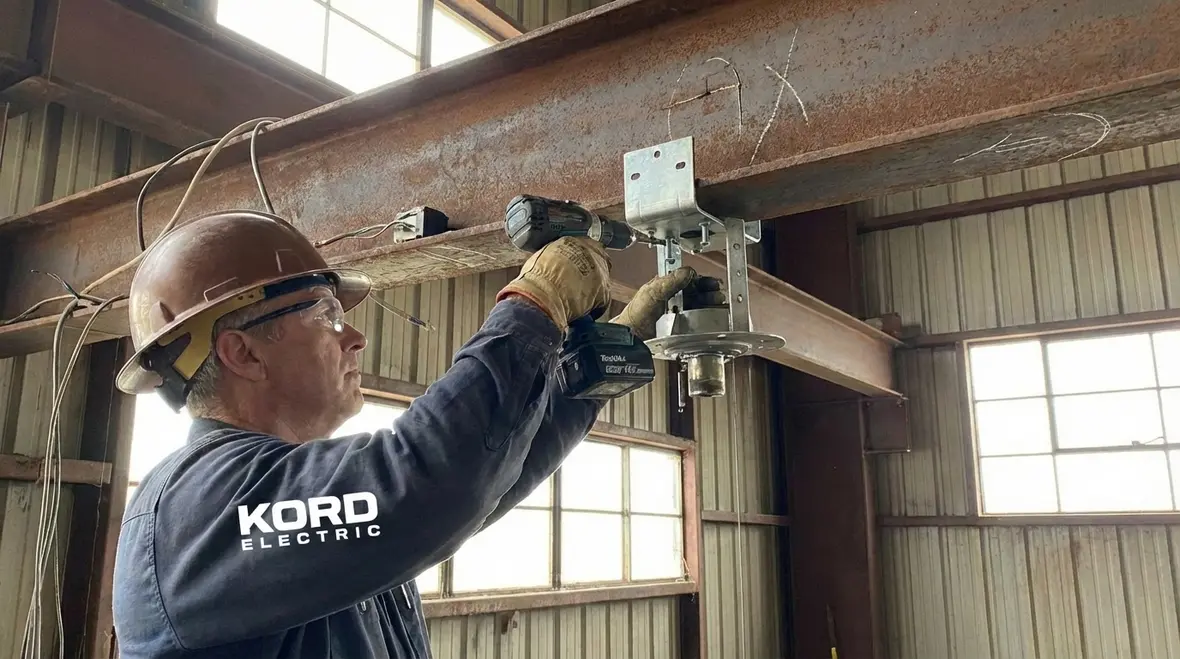
During the actual fan setup, our licensed electricians secure mounting brackets to structural members, not just surface panels. They balance the blades, connect control systems, and test operation at multiple speeds. Finally, we perform a full inspection. We do not leave until the system runs smoothly and quietly.
Throughout the process, our expert service staff explains what they are doing and why. Transparency builds trust. Besides, nobody enjoys mystery wiring.
Coordinating With Other Building Systems
In a modern facility, a new fan system rarely exists on an island. It has to share overhead space with lighting, conduit, cable trays, and sprinkler piping. It may also tie into automation and building management systems. That is why fan projects often overlap with broader electrical work such as stabilizing voltage in high load environments or preparing infrastructure for future equipment.
The more complex the facility, the more valuable an experienced commercial electrician becomes. Coordinating all these elements up front keeps change orders, surprises, and do overs out of your project timeline.
Planning a Commercial Fan Mounting Project the Right Way
Successful projects begin long before the first bolt tightens. Planning shapes performance.
To start, facility leaders must define their goals. Are they seeking energy savings, improved worker comfort, moisture control, or all three? Once objectives are clear, airflow strategy becomes easier to design.
At Kord Electric, we approach planning with a structured framework:
- Load Assessment Evaluate structural capacity and confirm mounting points.
- Electrical Review Confirm panel space, breaker ratings, and wiring paths.
- Control Integration Determine whether wall controls, automated sensors, or building management systems will operate the fans.
- Safety Compliance Ensure adherence to local and national electrical codes.
- Operational Scheduling Coordinate installation during low activity periods to reduce disruption.
Additionally, our technicians consider long term maintenance access. A fan placed in the wrong spot can turn simple servicing into a logistical puzzle. Therefore, we design with the future in mind.
Although planning may not sound thrilling, it prevents costly surprises. Think of it as rehearsing before opening night. The audience never sees the preparation, but they appreciate the smooth performance.
Integrating Fan Projects With Preventive Maintenance
Well planned ceiling fan installation often becomes part of a broader reliability strategy. Many facility leaders pair new fan systems with electrical preventive maintenance programs to keep panels, feeders, and controls operating safely over the long term. When inspections and testing are already scheduled, it is easier to keep overhead fans in top working condition instead of waiting for a noisy bearing or alarming wobble to grab attention.
Key Factors That Influence Industrial Overhead Fan Performance
Not all installations deliver the same results. Several factors determine how well a system performs.
Ceiling Height and Fan Sizing
Ceiling Height plays a major role. Higher ceilings require larger diameter fans to move sufficient air volume. Consequently, selecting the wrong size leads to weak circulation.
Building Layout and Obstructions
Building Layout also matters. Columns, machinery, and storage racks can block airflow. Therefore, placement must account for physical barriers.
Electrical Infrastructure and Reliability
Electrical Infrastructure influences reliability. If wiring is undersized or improperly routed, performance suffers and safety risks increase.
Controls, Schedules, and Efficiency
Control Strategy determines efficiency. Variable speed controls allow facilities to adjust airflow based on season and occupancy. This flexibility reduces energy waste.
Our technicians review each of these factors before completing a ceiling fan installation. Moreover, they communicate their findings clearly. They do not overwhelm clients with jargon. Instead, they explain how each decision impacts airflow and operating cost.
In large facilities, small adjustments produce big outcomes. A few feet of placement shift can transform circulation patterns. Therefore, precision is not optional. It is essential.
Safety Standards and Code Compliance in Ceiling Fan Installation
Commercial and industrial environments operate under strict safety standards. Electrical systems must meet code. Mounting systems must withstand vibration and load stress. Controls must function reliably.
At Kord Electric, compliance is not an afterthought. It is the foundation of every ceiling fan installation we perform.
Our electricians follow national and local electrical codes. They use approved hardware and ensure grounding and bonding meet standards. In addition, they confirm that all connections are secure and protected.
Because many of these fans operate continuously, durability matters. Our team verifies torque settings, inspects structural anchors, and tests control panels under real conditions. Furthermore, we document the work for facility records. Clear documentation supports inspections and future upgrades.
Safety meetings occur before each project begins. We review lift procedures, fall protection, and lockout protocols. While it may sound serious, it should. When equipment hangs dozens of feet above a production floor, careful planning prevents accidents.
Our expert service staff often explains these steps during walk throughs. Clients appreciate knowing that nothing is rushed. Even though we move efficiently, we never cut corners. That philosophy keeps people safe and operations steady.
Why Licensed Commercial Electricians Matter
Industrial fan systems sit at the intersection of structural engineering and electrical expertise. Partnering with a commercial contractor familiar with high load distribution, lighting integration, and emergency systems reduces risk. The same technical insight that supports complex services like 24/7 emergency electrical repair becomes invaluable when a fan system must operate safely above busy work areas every single day.
Energy Efficiency and Long Term Cost Savings
Energy efficiency drives many commercial fan projects. Although installation requires investment, long term savings often justify the decision.
By improving air circulation, large fans reduce heating and cooling strain. Consequently, HVAC systems cycle less frequently. Over months and years, that reduction lowers utility expenses.
Additionally, balanced airflow protects equipment and stored goods. Excess heat and moisture can damage materials. Therefore, proper circulation extends asset life.
Our team evaluates how each ceiling fan installation interacts with existing HVAC systems. Sometimes small control adjustments unlock significant savings. In other cases, strategic fan placement eliminates hot spots that once required extra cooling units.
Although numbers vary by facility size, many commercial properties see measurable reductions in energy use after professional overhead fan setup. More importantly, improved comfort supports employee performance. People simply work better when the air feels steady and fresh.
And yes, comfort in a warehouse may not sound glamorous. Still, when summer temperatures rise, a strong, even breeze feels less like a luxury and more like a hero entering the scene at the perfect moment.
What Property Managers Should Expect During Professional Installation
Clarity reduces stress. Therefore, property managers benefit from knowing what to expect.
Before work begins, our team provides a clear timeline. We coordinate lift access, staging areas, and safety barriers. Communication continues throughout the project.
During the process, our technicians handle mounting, wiring, balancing, and testing. Meanwhile, our expert service staff remains available to answer questions. They explain control settings, maintenance schedules, and recommended inspections.
After completion, we conduct a final review with facility leadership. We demonstrate operation and confirm that airflow meets expectations. If adjustments are needed, we address them immediately.
Below is a simplified comparison that highlights the difference between a structured professional approach and an unplanned setup.
Professional Approach by Kord Electric
- Structural analysis before mounting
- Electrical capacity verified
- Code compliant wiring
- Balanced blade calibration
- Documented testing and inspection
Unplanned Installation
- Mounting without load review
- Unverified circuit capacity
- Minimal documentation
- Limited airflow testing
- Higher risk of future issues
The difference is not subtle. One path protects assets and people. The other invites unnecessary risk. In commercial and industrial properties, reliability matters too much to leave to chance.
Frequently Asked Questions
Conclusion and Next Steps
Airflow shapes comfort, efficiency, and safety in every commercial and industrial facility. At Kord Electric, we approach each project with precision, transparency, and respect for the structures we serve. Our technicians and expert service staff guide property leaders through every phase, from planning to final inspection. If your building demands reliable overhead air movement, let us deliver a solution built to last. Explore how our broader commercial lighting installation services and power expertise support safe, efficient fan projects from the first design conversation to ongoing maintenance. Contact Kord Electric today and move your facility forward with confidence.
For facilities planning larger modernization efforts, fan installation can also be coordinated alongside other upgrades like EV charger installation or electrical capacity improvements. Combining projects under one experienced commercial contractor keeps scheduling tight, documentation consistent, and long term performance easier to manage.