Electrical System Documentation Best Practices
Electrical System Documentation Best Practices for Commercial and Industrial Facilities
At Kord Electric, we believe that strong buildings begin with strong documentation. Before a panel is energized or a breaker is labeled, our team builds clear electrical plans, detailed records, and structured reports that guide every stage of a project. In large commercial and industrial facilities, guesswork is expensive and silence in the paperwork is even more so. Therefore, we treat every drawing, update, and revision as a working tool, not a dusty archive. Our technicians and expert service staff take pride in explaining each layer of the process, because when our clients understand their systems on paper, they understand their power in practice.
In the sections ahead, we walk through what best practices look like in real buildings with real stakes. Moreover, we explain how thoughtful record keeping protects uptime, safety, and long term investment.
The Foundation of Reliable Facilities
Commercial and industrial properties do not forgive confusion. A hospital, data center, manufacturing plant, or high rise office tower depends on electrical systems that function without drama. However, behind every reliable system stands precise documentation that tells the full story of how power flows.
At Kord Electric, we see electrical plans as the blueprint of accountability. They show panel schedules, feeder paths, equipment ratings, and load calculations. Consequently, when a facility manager needs to expand a production line or add tenant improvements, the information is already clear. No treasure hunt required.
Our expert service staff explains these records in plain language. They walk property managers through one line diagrams, labeling standards, and revision notes. In addition, they answer questions before they turn into costly assumptions. After all, electrical systems are complex enough. The paperwork should not be.
Because large buildings evolve over time, proper documentation must evolve as well. Therefore, every upgrade, repair, or modification deserves a record. Otherwise, future teams operate with partial knowledge, and partial knowledge in an electrical room is like bringing a spoon to a sword fight. Entertaining perhaps, but not effective.
For many teams, documentation also connects directly to ongoing maintenance work. Detailed electrical plans and accurate records make it far easier to build structured electrical preventive maintenance programs that keep critical systems reliable year after year.
What Should Comprehensive Electrical Documentation Include?
When facility owners ask what belongs in a complete record set, the answer is simple. Everything that explains how the system was designed, installed, tested, and maintained.
Kord Electric structures documentation around clarity and future use. As a result, our commercial and industrial clients receive organized packages that support operations long after construction crews leave the site.
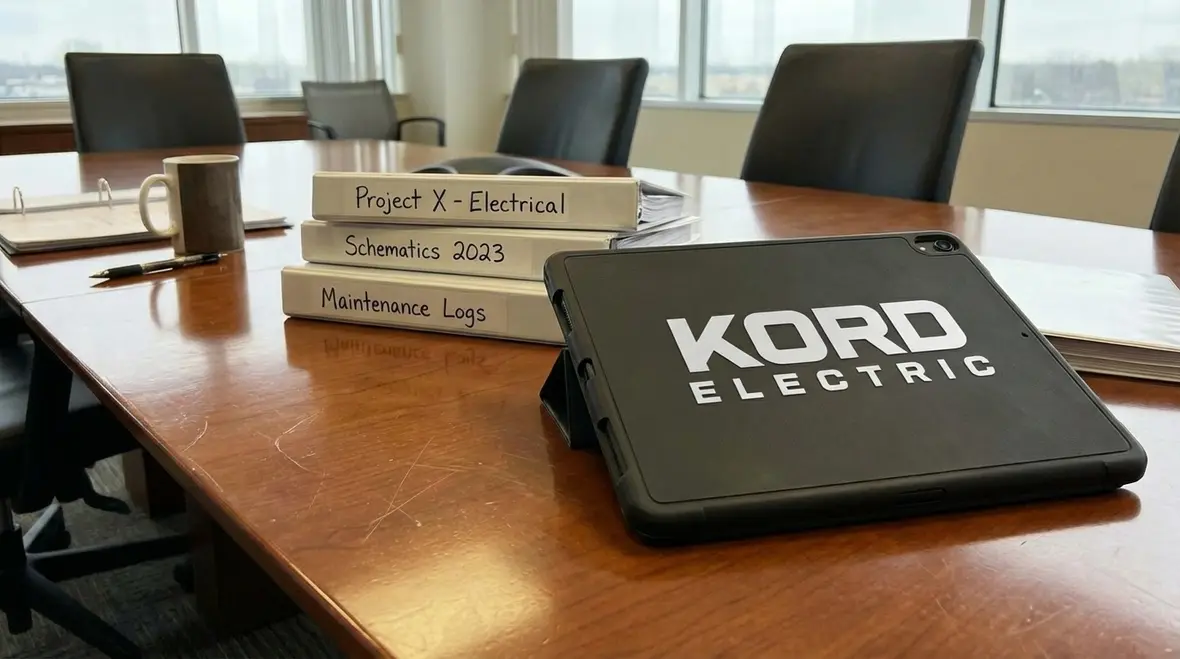
Core Elements of Strong Records
Design and Planning Documents
These include stamped electrical plans, load calculations, one line diagrams, equipment specifications, and any supporting documentation used during the design phase. Moreover, they outline the intent behind the system design, which helps engineers and inspectors understand why certain decisions were made and how capacity was planned from day one.
As Built Drawings
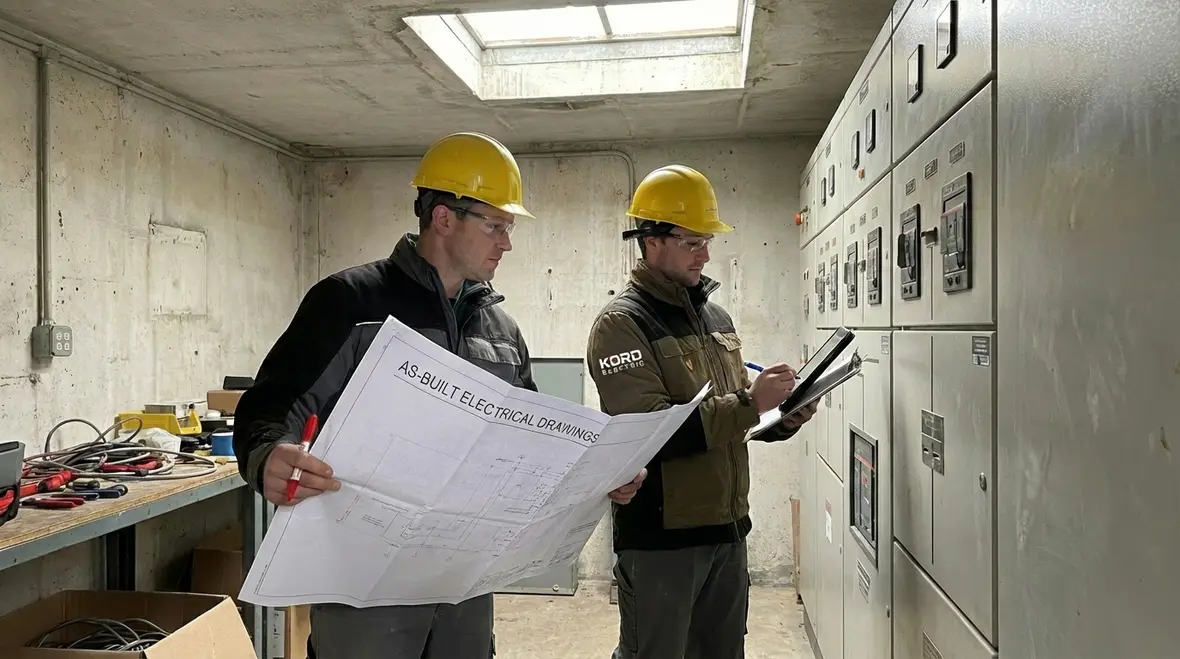
Field conditions often differ from initial drawings. Therefore, updated as built documents reflect real world installations. Our technicians verify conduit routing, panel labeling, and equipment locations so that the final set matches reality, not theory. These drawings become the everyday map for service teams, future contractors, and facility engineers.
Maintenance and Testing Records
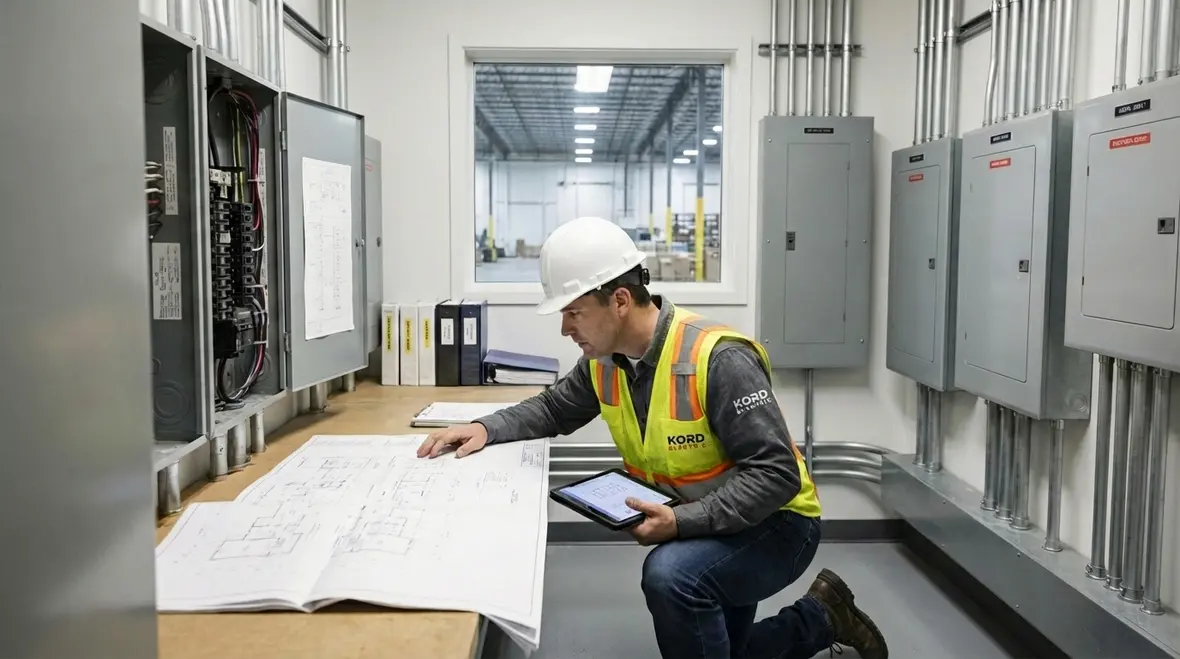
Testing reports, infrared scans, breaker testing results, and service logs show how the system performs over time. Consequently, facility managers can track trends and plan upgrades based on data instead of guesswork. When paired with a structured electrical preventive maintenance program, these records become an early warning system for emerging problems.
Change Management Logs
Every modification matters. When tenants expand or machinery changes, updates must appear in the official documentation. Our team records each revision, including dates and responsible parties, so there is a clear chain of responsibility. This makes it much easier to understand who did what, when, and why, especially during future renovations or forensic investigations.
By organizing these components into structured archives, Kord Electric ensures that large properties stay prepared for audits, inspections, and future expansion. In other words, we do not just wire buildings. We document their story, from first energized panel to the latest system upgrade.
How Kord Electric Technicians Bring Clarity to Complex Systems
Electrical rooms can feel like the backstage of a rock concert. Cables, panels, and switchgear stand quietly, yet they control the entire show. However, without clear documentation, that backstage becomes chaos.
Our technicians approach each commercial and industrial project with deliberate care. First, they verify every installed component against the approved electrical plans. Then, they document deviations with precise notes and marked up drawings. Because our crews understand that someone else will rely on this information years from now, they treat every annotation with respect.
In addition, our expert service staff spends time with facility teams. They review panel directories, explain labeling systems, and clarify how to interpret single line diagrams. Although the topic may sound dry, we keep the conversation engaging. After all, understanding your switchgear should not feel like reading ancient hieroglyphics.
Furthermore, we use consistent naming conventions and labeling standards across projects. This approach allows maintenance teams to move from one building to another without relearning the language of the system. Consistency, therefore, becomes a quiet hero in long term operations.
Clarity also matters during unplanned events. When something trips unexpectedly or equipment fails, technicians armed with accurate documentation can respond faster and safer. Electrical plans, updated panel schedules, and testing logs act like a GPS, guiding emergency work without guesswork.
Best Practices for Maintaining Accurate Records Over Time
Creating documentation once is not enough. Commercial and industrial facilities change constantly. Therefore, best practice demands a living system of updates that keeps pace with your actual infrastructure.
Kord Electric encourages clients to treat electrical records as operational tools rather than static binders. For example, when new equipment is added, updated electrical plans should reflect revised load calculations and feeder sizes. Similarly, when panels are reconfigured, directories must change immediately so technicians are never reading yesterday’s story during today’s repair.
Version Control and Accessibility
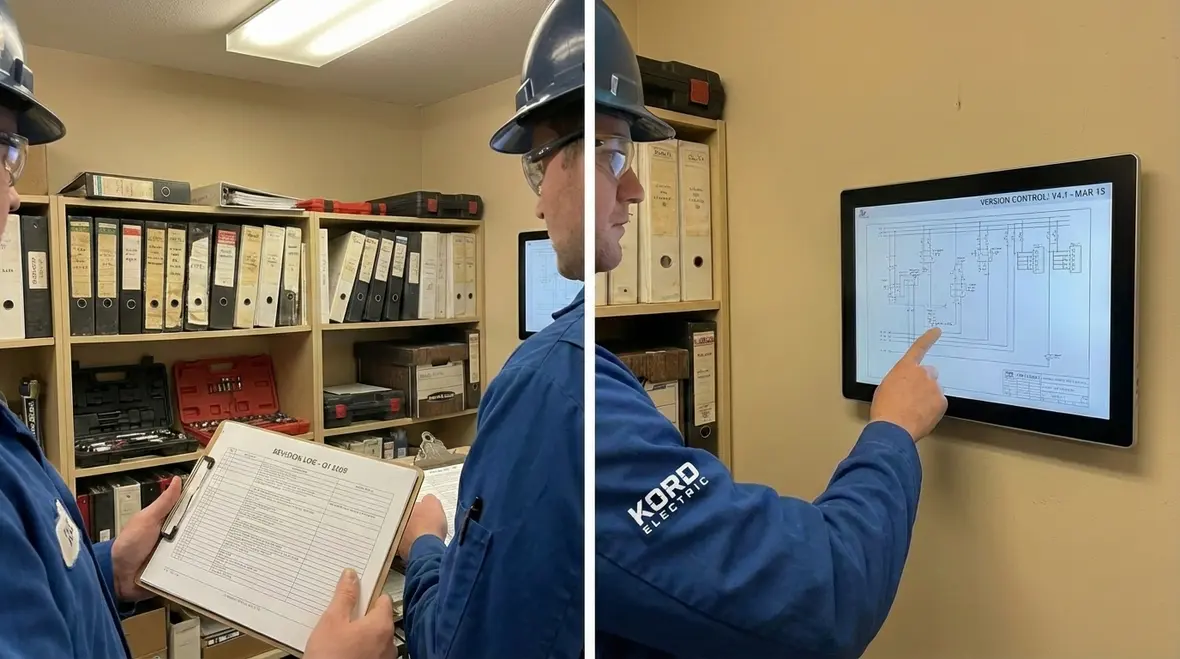
First, establish clear version control. Each revision should include a date, description of changes, and responsible party. Consequently, future reviewers can trace the evolution of the system without confusion and quickly identify the most current set of drawings.
Second, ensure accessibility. Store digital copies in secure yet reachable platforms. At the same time, maintain physical copies where required by code or facility policy. Because emergencies rarely wait for a password reset, access must be practical. The best documentation in the world will not help if it is locked in a cabinet no one can find.
Routine Audits
Periodic audits confirm that field conditions match the documentation. Our team often conducts walkthroughs to compare installed equipment with recorded data. If discrepancies appear, we update the records promptly. This process protects both compliance and operational efficiency.
In large facilities, even minor undocumented changes can snowball into serious risk. Therefore, proactive record management reduces surprises during inspections or expansions. And let us be honest, the only surprises most property managers enjoy involve birthday cake, not overloaded circuits.
Documentation and Risk Management in Major Properties
Risk in commercial and industrial buildings often hides in small details. An unlabeled breaker, an outdated panel schedule, or a missing test report can delay repairs and increase downtime. However, strong documentation acts as a shield.
When electrical plans clearly show system capacity and configuration, engineers can assess upgrades with confidence. As a result, project timelines shorten and costs remain predictable. Insurance reviews and regulatory inspections also proceed more smoothly when records are complete and organized.
Moreover, in the event of an incident, accurate documentation provides clarity. Investigators can trace circuits, verify equipment ratings, and determine whether installations met design intent. This level of transparency protects facility owners and operators from unnecessary liability.
Kord Electric designs documentation systems that align with safety standards and local codes. In addition, we guide clients through compliance requirements specific to commercial and industrial environments. Because regulations evolve, we monitor updates and advise when records should reflect new standards.
Ultimately, risk management is not about fear. It is about preparation. And preparation begins on paper long before it reaches copper and steel. When your documentation is strong, every future project, inspection, and repair stands on steadier ground.
Dual Focus: Operational Efficiency and Future Growth
Strong documentation serves two masters. It supports daily operations and it prepares facilities for growth. To illustrate this balance, consider the following comparison.
Operational Value
- Clear panel schedules reduce troubleshooting time.
- Up to date one line diagrams guide maintenance teams and support safer lockout/tagout procedures.
- Maintenance logs reveal performance trends, helping prioritize repairs before they interrupt operations.
- Consistent labeling improves safety compliance and makes it easier to train new technicians.
Growth and Expansion Value
- Accurate load data supports safe equipment additions without overloading panels.
- Detailed feeder information streamlines design changes and future build outs.
- Historical records justify capital planning decisions and infrastructure upgrades.
- Structured archives accelerate tenant improvements and change-of-use projects.
As shown above, the same set of records serves both present and future needs. Therefore, investing in proper documentation pays dividends in uptime and adaptability.
At Kord Electric, we think several steps ahead. While others may focus solely on immediate installation, we ask how the facility will function five or ten years from now. Because commercial and industrial properties rarely stand still, electrical plans must anticipate change rather than resist it.
Building a Culture of Accountability Through Documentation
Beyond drawings and reports, documentation shapes culture. When teams record their work carefully, they demonstrate ownership. Consequently, accountability becomes part of daily operations.
Our technicians understand that every note they enter could guide a future colleague during a critical repair. Therefore, they write clearly, label accurately, and confirm details before closing a project file. This discipline reflects respect for both the client and the craft.
In addition, we encourage facility managers to involve multiple departments in reviewing electrical records. Operations, safety, and engineering teams each bring unique perspectives. When they collaborate, gaps surface early and solutions follow quickly.
Training also plays a role. Kord Electric provides walkthrough sessions where our expert service staff explains how to read electrical plans, interpret testing data, and navigate structured documentation systems. Although the subject may seem technical, we keep the tone steady and practical. Think less lecture hall and more guided tour through the engine room of your building.
Because knowledge reduces hesitation, well informed teams respond faster during maintenance events. And in high demand facilities, speed paired with accuracy can mean the difference between minor disruption and major loss.
FAQ About Electrical System Documentation
Conclusion: Partner With Kord Electric for Structured, Reliable Documentation
In commercial and industrial facilities, clarity is power. Kord Electric delivers structured documentation, precise electrical plans, and expert guidance that protect operations and support growth. Our technicians and service staff explain every step with calm authority, ensuring clients understand both the system and its records. When accuracy matters and complexity rises, we stand ready to bring order to the details.
If your facility is planning electrical upgrades, new construction, or a systematic preventive maintenance program, aligning your documentation with those goals is one of the smartest moves you can make. Our team can integrate record keeping with services like electrical preventive maintenance so your systems stay safe, compliant, and ready for growth.
When you are ready to strengthen your facility from the inside out, partner with a team that treats every drawing and every note as part of your long term investment.
Contact Kord Electric today and let us help you build electrical documentation that is as dependable as the systems it represents.
To take the next step toward safer, more reliable infrastructure, explore our Electrical Preventive Maintenance services and see how structured documentation and proactive care work together to protect your facility.