Emergency Power Systems for Commercial Buildings
Emergency Power Systems: What Every Commercial Building Should Have
When the lights go out in a commercial facility, silence is rarely peaceful. Elevators stall. Data freezes mid sentence. Security systems blink into confusion. However, at Kord Electric, those moments never need to become chaos. Their commercial battery backup solutions form the first layer of protection for large buildings that cannot afford a single second of darkness. Within the first few minutes of an outage, a properly designed stored power system keeps critical systems alive while larger generators step in. That quiet continuity is not luck. It is planning, precision, and experienced technicians who understand how power behaves under pressure.
Moreover, emergency power systems are not luxury add ons for industrial properties. They are infrastructure. Kord Electric approaches them with the calm authority of a seasoned conductor guiding an orchestra through a sudden storm. Every note matters. Every circuit counts.
The Backbone of Commercial Continuity
Power disruptions rarely send a calendar invite. Instead, they arrive unannounced through grid failure, extreme weather, equipment faults, or human error. Consequently, commercial and industrial buildings must prepare for what cannot be predicted.
Emergency power systems generally consist of three coordinated elements.
- Uninterruptible power supply systems supported by battery backup units
- Standby generators
- Automatic transfer switches
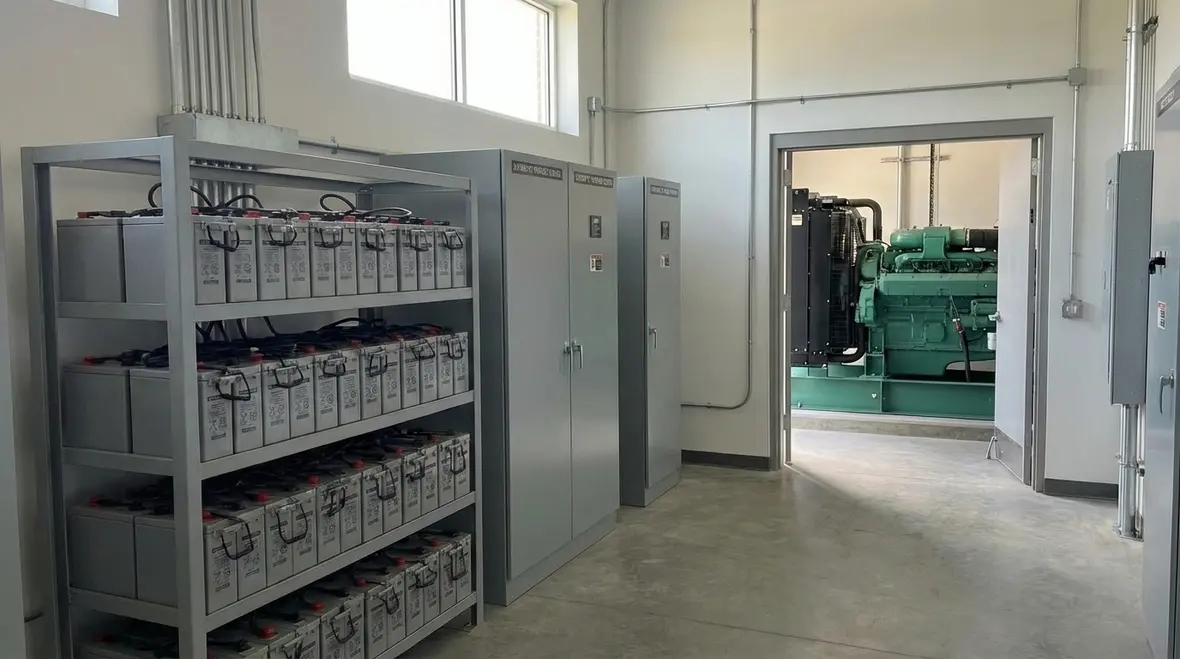
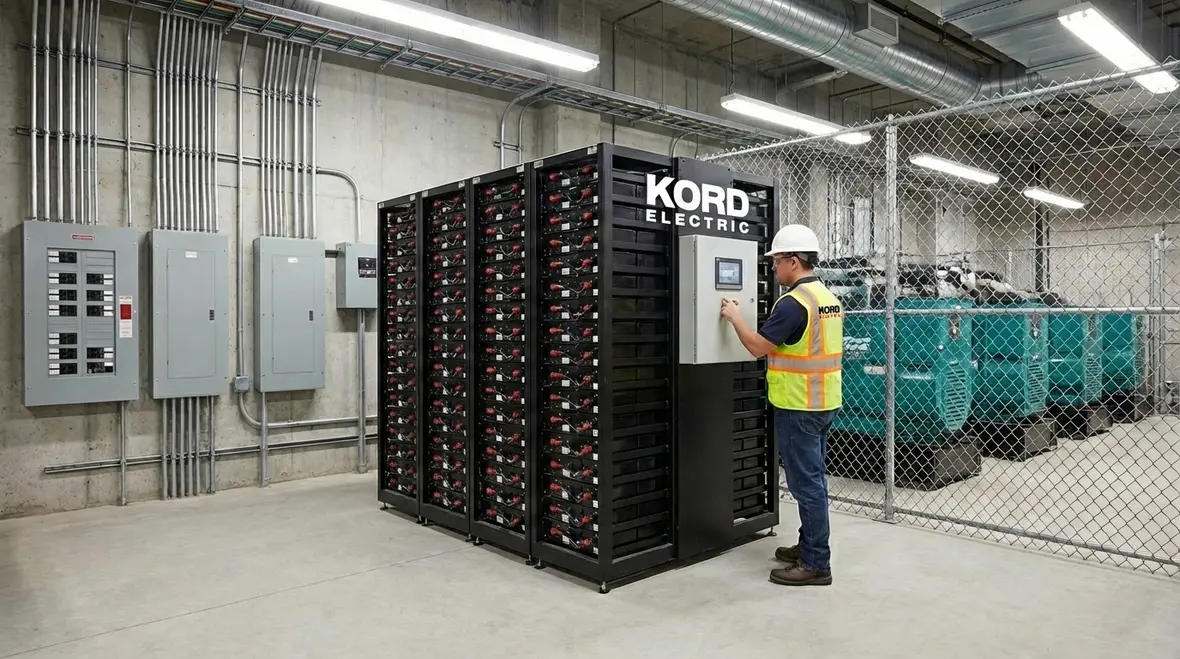
Each component performs a specific role. First, the stored energy system activates instantly when utility power drops. It protects sensitive electronics, maintains lighting in essential areas, and keeps data systems online. Then, standby generators start within seconds to provide sustained power for extended outages. Meanwhile, transfer switches shift electrical loads seamlessly from the grid to the emergency source.
Because commercial buildings contain complex electrical loads, design must be tailored. For example, a distribution warehouse has different demands than a multi story office tower or a manufacturing facility running precision equipment. Therefore, Kord Electric technicians begin with a deep site assessment. They analyze load profiles, identify critical circuits, and determine how long operations must continue during an outage.
While some may think emergency power is simply about keeping the lights on, in reality it protects revenue, data integrity, safety systems, and brand reputation. After all, customers rarely applaud a building for staying operational during a blackout. Yet they certainly remember when it does not.
What Should a Commercial Facility Include in Its Emergency Power Plan
Business owners often ask what every commercial building should include. The answer is not one size fits all. However, several core elements consistently appear in properly protected facilities.
First, a right sized battery backup system must cover critical loads. These may include:
- Fire alarm and life safety systems
- Emergency lighting circuits
- Security and access control
- Data servers and communication hubs
- Control panels for industrial processes
Second, facilities require standby generation with adequate fuel supply. Diesel or natural gas generators must handle prioritized loads without strain. Oversizing wastes capital. Undersizing invites failure. Therefore, load calculations are performed with precision rather than guesswork.
Third, automatic transfer switches must respond instantly and reliably. Even a delay of a few seconds can disrupt sensitive equipment. Consequently, high quality switching equipment becomes non negotiable.
Finally, system monitoring ensures ongoing readiness. Remote diagnostics, regular inspections, and scheduled testing confirm that components will perform when called upon. As one Kord Electric service technician often says, power systems are like parachutes. They must open on the first pull.

For facility managers who want to align their emergency power readiness with long term reliability, pairing these systems with structured maintenance can be a smart move. Programs such as Kord Electric’s preventive maintenance services help keep panels, generators, and life safety circuits in top condition so they are ready when the unexpected happens. Linking emergency infrastructure with disciplined care turns a basic backup plan into a full continuity strategy.
In addition, emergency planning ties directly into broader electrical reliability across the property. When voltage stability, distribution equipment, and life safety circuits are all addressed together, commercial buildings gain resilience that shows up in fewer outages, fewer surprises, and fewer frantic phone calls during storms or grid events.
How Battery Backup Supports Critical Systems in Large Buildings
In large commercial properties, milliseconds matter. That is precisely where battery backup technology proves its value. Unlike generators, which require startup time, stored energy systems deliver immediate power. As a result, sensitive electronics never experience interruption.
For example, data centers within office complexes rely on continuous voltage stability. A sudden drop can corrupt files or damage hardware. However, with a properly designed battery backup, voltage remains steady until generator power stabilizes the system.
Additionally, emergency lighting depends on instant energy. Stairwells, corridors, and exit routes must remain illuminated to guide occupants safely. In industrial facilities, control systems for automated machinery require seamless power to prevent production errors or mechanical stress.
Kord Electric technicians explain these systems in clear, grounded language. They walk facility managers through runtime expectations, battery chemistry options, ventilation needs, and maintenance schedules. Because transparency builds trust, clients understand not only what they are installing but why it matters.
There is also a strategic advantage. Properly configured stored power systems reduce downtime costs. In many commercial environments, even one hour of outage can translate into thousands of dollars in losses. Therefore, investing in reliable infrastructure becomes less about expense and more about protection.
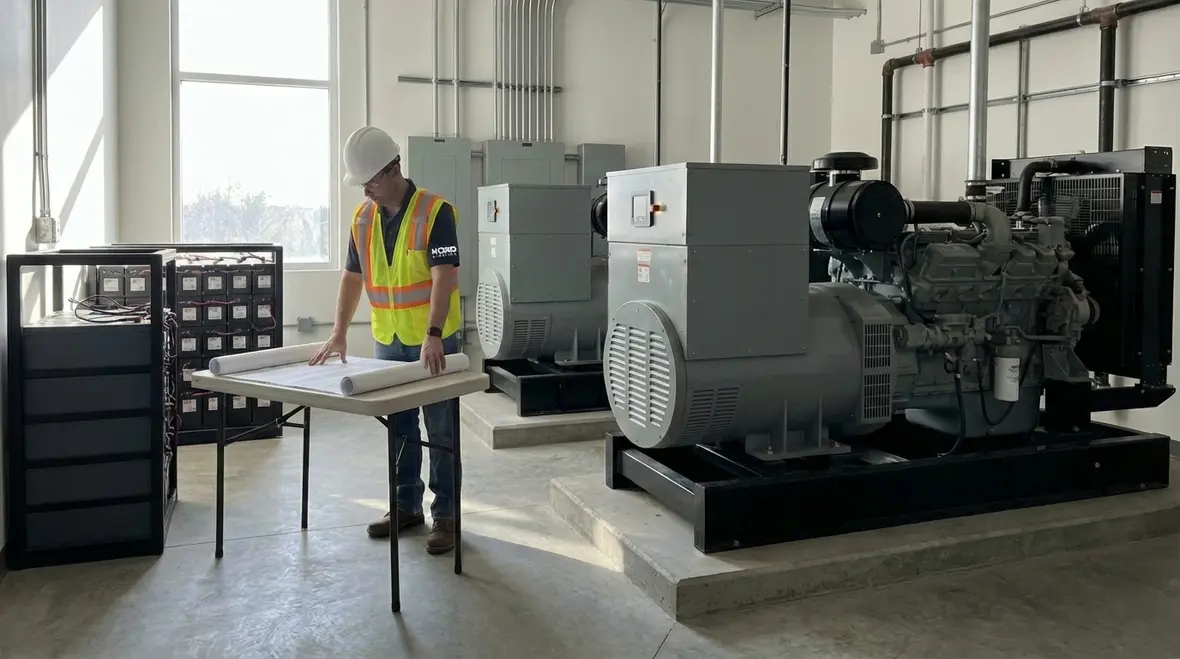
In multi tenant properties and campuses, battery backup systems also complement broader electrical reliability strategies. When paired with power quality solutions that stabilize voltage and address fluctuations, they help protect servers, automation systems, and modern LED lighting from nuisance shutdowns or premature failure. Taken together, stored energy and stable voltage form a quiet but powerful shield around critical operations.
For facilities with heavy digital infrastructure, such as data centers or communication hubs, the combination of battery backup and disciplined electrical design becomes even more important. Clean, uninterrupted power is the difference between seamless operations and a long night of recovery work after an unexpected outage.
Designing for Scale: From High Rises to Industrial Plants
Commercial and industrial properties are rarely simple. They include layered distribution panels, heavy mechanical loads, and specialized equipment. Accordingly, emergency power design must scale intelligently.
Kord Electric approaches each project with a structured methodology.
Assessment Phase
Technicians evaluate existing electrical infrastructure, identify single points of failure, and review code compliance. They also consult with building engineers to understand operational priorities.
Engineering Phase
Load studies determine which circuits require immediate support. Engineers then design integrated systems combining battery backup modules, generators, and transfer equipment.
Installation Phase
Certified electricians install equipment with strict adherence to safety and industry standards. Wiring pathways, ventilation clearances, and structural considerations receive careful attention.
Testing and Commissioning
Systems undergo simulated outages to verify performance. Transfer times, voltage stability, and runtime capabilities are measured and documented.
Because industrial facilities often operate around the clock, installation schedules are coordinated to minimize disruption. In some cases, work occurs during off peak hours. In others, temporary power solutions bridge the gap. Either way, planning replaces improvisation.
For properties that are modernizing lighting, adding EV charging, or expanding production lines, integrating emergency power planning into broader electrical projects can be an efficient path. Addressing generator capacity, battery backup, and distribution upgrades within the same project window reduces downtime and helps ensure that new systems are fully supported during an outage.
Comparing Emergency Power Components
Emergency resilience rarely comes from a single device. Instead, it arises from a coordinated set of components that share the load during a crisis. Understanding the distinct role of each part helps facility leaders prioritize investment and planning.
| Component | Primary Function |
| Battery backup systems | Provide instant short term power to critical circuits and stabilize voltage |
| Standby generators | Deliver extended power during prolonged outages |
| Automatic transfer switches | Seamlessly transfer electrical load between utility and emergency sources |
| Monitoring and control panels | Track performance, send alerts, and support preventive maintenance |
Together, these components form a coordinated defense system. Remove one element, and the chain weakens. Integrate them properly, and the building gains resilience that feels almost invisible. Like good air conditioning, no one notices until it stops working.
For many commercial and industrial properties, these systems also intersect with broader reliability services such as electrical preventive maintenance. Regular inspections, testing, and documentation help verify that generators start on cue, transfer switches operate smoothly, and battery backup strings deliver their rated runtime when the grid goes quiet.
Maintenance and Compliance Are Not Optional
Installing an emergency power system is only the beginning. Ongoing maintenance ensures reliability and code compliance. In fact, many jurisdictions require documented testing of life safety systems.
Kord Electric service staff conduct routine inspections that include:
- Battery condition assessments and capacity testing
- Generator load bank testing
- Transfer switch inspection and calibration
- Thermal imaging of electrical connections
- Fuel system checks
Furthermore, technicians provide detailed reports that support regulatory audits and insurance requirements. Because commercial property managers juggle countless responsibilities, having organized documentation simplifies their workload.
There is also the human factor. Over time, batteries degrade. Connections loosen. Fuel quality declines. Therefore, proactive service prevents unpleasant surprises. As much as everyone enjoys a dramatic movie scene where backup power kicks in at the last second, real life should aim for less drama and more certainty.
Connecting emergency power assets with a structured electrical maintenance plan allows building teams to catch issues before they show up in an outage. Regular inspection cycles, thermal imaging, and performance testing turn emergency systems from “install and hope” into a disciplined operational strategy.
Planning for Risk and Redundancy
Large commercial buildings often require layered redundancy. Instead of relying on a single battery backup unit, facilities may deploy parallel systems. This configuration ensures that if one module fails, another carries the load.
Similarly, industrial plants may separate critical production lines across multiple emergency circuits. That way, essential operations continue even if secondary areas shut down temporarily. Redundancy design requires thoughtful coordination between electrical engineers and facility leadership.
Kord Electric technicians guide these discussions with practical insight. They explain how runtime requirements influence battery capacity, how generator sizing affects fuel consumption, and how load prioritization protects mission critical systems first.
Additionally, cybersecurity now intersects with emergency power planning. Monitoring systems connect to networks, which means secure configuration matters. While power may seem purely physical, digital oversight adds another layer of complexity. Therefore, integration must remain secure and controlled.
For facilities that operate in demanding environments or around the clock, risk planning also includes evaluating how emergency power interacts with other upgrades. Whether the property is adding high density lighting, installing EV chargers, or expanding production equipment, the emergency system must be able to shoulder the additional load without hesitation.
Partnering with Experienced Commercial Electricians
Not all electricians specialize in large scale commercial and industrial systems. Emergency power for major properties demands advanced expertise, licensing, and project management discipline. Kord Electric focuses exclusively on commercial and industrial facilities, which means their teams understand high capacity distribution systems and complex building infrastructure.
From the initial consultation to final commissioning, their technicians communicate clearly. They answer questions in straightforward language. They provide realistic timelines. Most importantly, they stand behind their work with dependable service support.
When property managers and facility directors evaluate contractors, they often look beyond price. They consider reliability, experience, and responsiveness. After all, emergency power systems exist for worst case scenarios. Therefore, the installation partner must demonstrate calm competence long before a crisis occurs.
For buildings that need both day to day electrical project support and a trusted team for the unexpected, working with a commercial electrician that also provides 24/7 emergency electrical services closes the loop. The same team that understands your infrastructure can respond when something goes wrong, bringing familiarity and speed to high pressure situations.
FAQ: Emergency Power Systems for Commercial Buildings
Conclusion: Power That Stands Ready
In commercial and industrial environments, downtime is never convenient and rarely affordable. Therefore, Kord Electric designs and maintains emergency power systems that stand ready without hesitation. Their experienced technicians combine careful engineering with dependable service, ensuring that every battery backup, generator, and transfer switch performs when needed most. If your facility demands resilience and uninterrupted operation, Kord Electric is prepared to build a power strategy that keeps your business steady, secure, and confidently illuminated.
For properties across Southern California, that strategy can extend from emergency planning to everyday electrical improvements. Integrating emergency power with preventive maintenance and code compliant lighting upgrades helps protect people, equipment, and operations in a single, well coordinated approach. When the next outage arrives uninvited, a thoughtfully designed system will already be in place, quietly doing exactly what it was built to do.
If your commercial or industrial facility is ready to evaluate its emergency power systems, consider pairing that review with a broader look at electrical preventive maintenance and emergency electrical services. A unified plan makes it easier to budget, schedule, and stay compliant while keeping your building ready for both everyday demands and the rare but costly moments when the grid goes dark.
Kord Electric offers comprehensive support for large scale properties, from routine inspections and testing to rapid response when something goes wrong. Connecting with a team that understands your infrastructure, your risk profile, and your operational priorities gives you a single, reliable partner for the full life cycle of your electrical systems.