Prevent Electrical Emergencies in Commercial Facilities
Not long ago, one of our commercial clients called us at dawn. Their production floor had gone silent. Conveyor belts froze. Office lights flickered, then gave up. What began as a small electrical failure in a secondary panel quietly cascaded into a full shutdown. In less than an hour, shipments stalled, staff stood idle, and the cost meter started running like it had somewhere important to be. At Kord Electric, we have seen how quickly a minor fault can grow teeth. This article explains why electrical emergencies shut down businesses and, more importantly, how we prevent them for commercial and industrial facilities.
So settle in. We will walk through the causes, the warning signs, and the strategies that keep major properties powered, productive, and calm under pressure.
1. The Real Cost Behind an Electrical Failure
When power systems collapse, the impact is not limited to dark rooms and silent machines. Instead, it touches every layer of an operation. Manufacturing halts. Data systems freeze. Security networks fail. In industrial settings, even a brief power outage can damage sensitive equipment that costs more than a small island.
Moreover, downtime spreads fast. Once a facility stops operating, recovery takes time. Systems must be inspected, equipment reset, and safety verified. That means lost revenue, overtime pay, delayed contracts, and frustrated tenants.
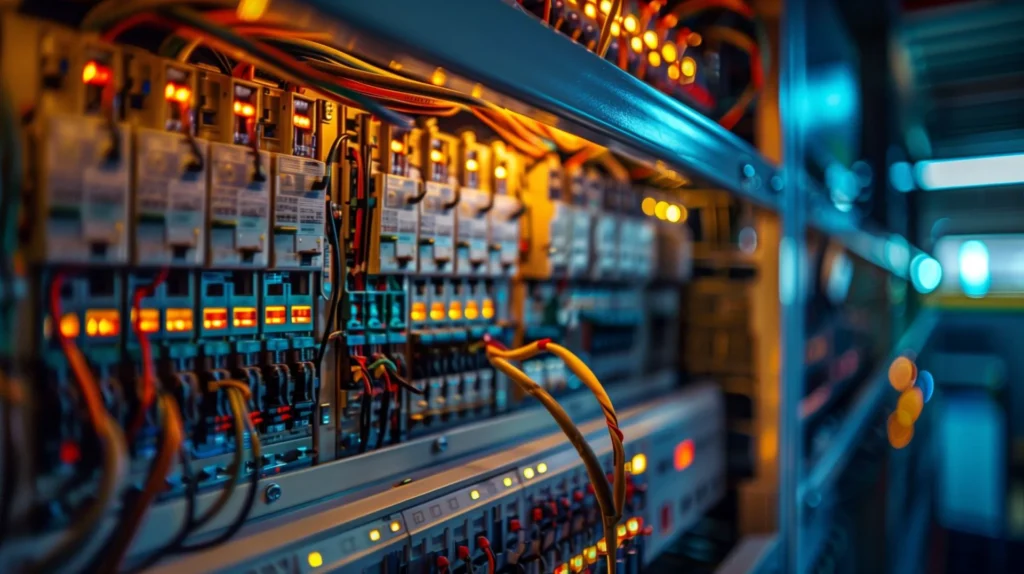
Electrical failure rarely announces itself with fireworks. More often, it begins quietly. A breaker overheats. A connection loosens. A transformer strains under excess load. However, if these early signs go unchecked, the final event feels sudden and dramatic.
At Kord Electric, our technicians explain this in plain language. They often tell facility managers, “Power systems whisper before they scream.” It may sound poetic, but it is true. And yes, we say it in a calm, steady tone that would make any narrator proud.
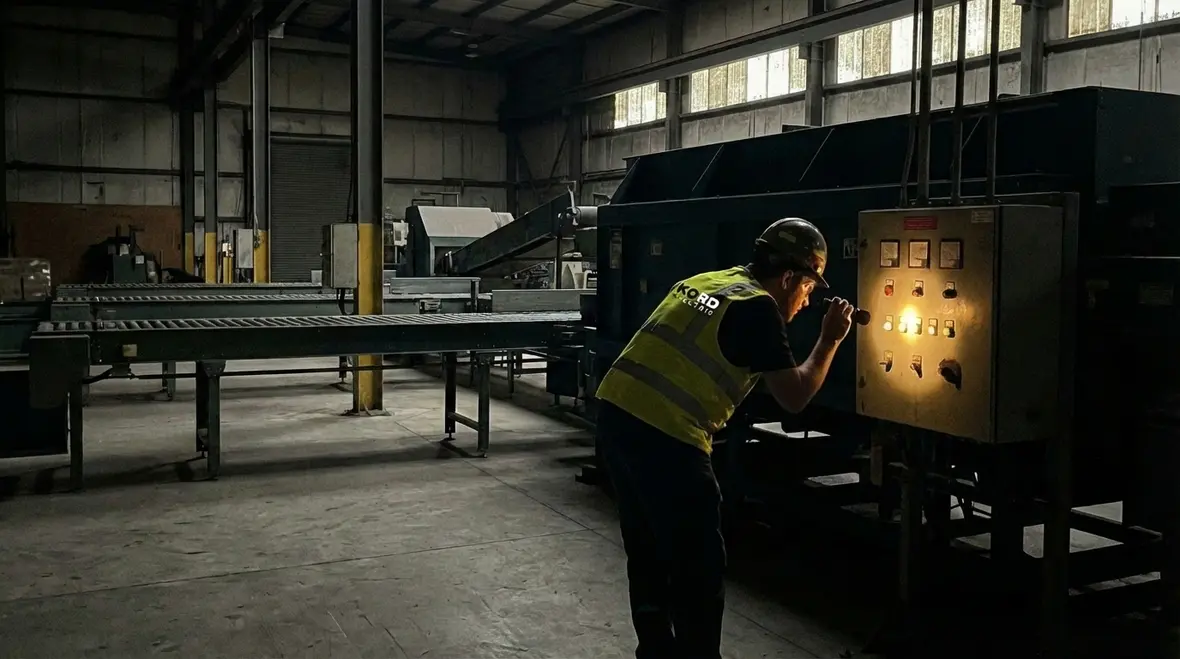
2. What Causes Electrical Emergencies in Commercial and Industrial Buildings?
Facility managers often ask us this directly, so we answer directly. Electrical emergencies in large properties usually stem from predictable sources. When those root causes go unaddressed, a quiet electrical failure can turn into a very loud business problem.
Overloaded Systems
As businesses expand, they add equipment. New machinery, additional HVAC units, upgraded servers. However, many facilities do not upgrade their electrical infrastructure at the same pace. Consequently, circuits run hotter than designed. Panels operate near maximum capacity. Eventually, something gives, and that “something” is often the weak link that takes an entire line or building offline.
Poor Maintenance
Electrical systems need regular inspections. Dust accumulates. Connections loosen due to vibration. Moisture seeps into enclosures. Without routine service, small defects turn into serious electrical faults. Over time, neglected panels and switchgear quietly drift from “reliable assets” to “unplanned outage waiting to happen.”
Aging Infrastructure
Some commercial properties still rely on decades old switchgear. While it may look sturdy, internal components degrade over time. Insulation becomes brittle. Contact surfaces corrode. Therefore, failure risk rises quietly year after year. Eventually, a simple demand spike or environmental condition pushes the system past what it can safely handle.
Improper Installations
Not all electrical work is created equal. If previous upgrades were rushed or poorly designed, the system may contain hidden weaknesses: undersized conductors, incorrectly terminated feeders, mislabeled circuits, or unbalanced loads. In industrial facilities, that is like building a race car with bicycle brakes. It might move fast—for a while—but it is not ready when conditions change.
Our expert service staff spends time explaining these root causes to property owners and facility leaders. We believe understanding removes fear. And fear has no place in a well run facility, especially when you can turn unknowns into a clear action plan with a structured electrical maintenance program. For deeper planning around this, many clients pair this approach with our dedicated electrical preventive maintenance services.
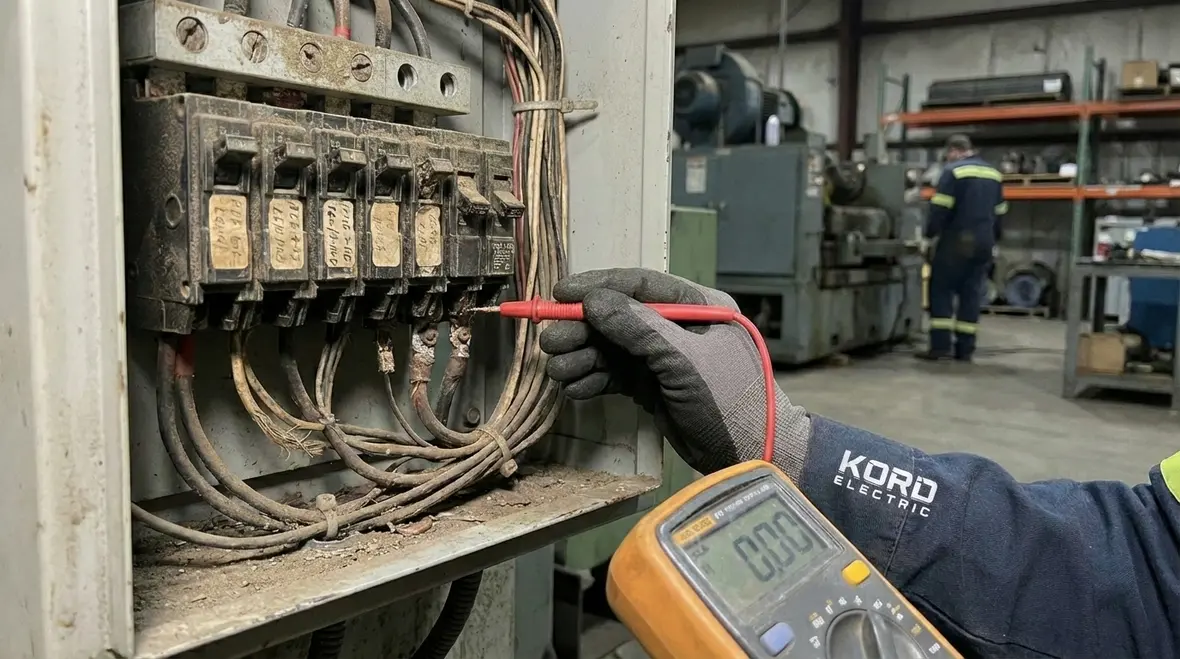
3. Early Warning Signs Facility Managers Should Never Ignore
Before a full electrical shutdown occurs, warning signals appear. The key is recognizing them and acting quickly. A facility that responds to “whispers” rarely has to deal with full-volume emergencies.
First, frequent breaker trips signal stress within the system. While a single trip may not raise alarms, repeated incidents suggest overload or short circuit conditions. Resetting the breaker without investigating the cause is like hitting snooze on a blaring alarm.
Second, flickering lights in large commercial spaces often indicate voltage instability. Although it may look like the building is trying out for a horror movie, it is usually a sign of loose connections, load imbalance, or equipment that is drawing more current than the system can comfortably deliver.
Third, unusual smells near panels or switchgear require immediate attention. A burning odor often points to overheating insulation or components that are on the verge of failure. If your electrical room smells like burnt toast and nothing is in the break room microwave, it is time to act.
Additionally, buzzing sounds from transformers or panels should not be ignored. Electrical systems should hum gently, not audition for a heavy metal band. Sudden changes in sound often signal mechanical looseness or electrical imbalance that will only get worse with time.
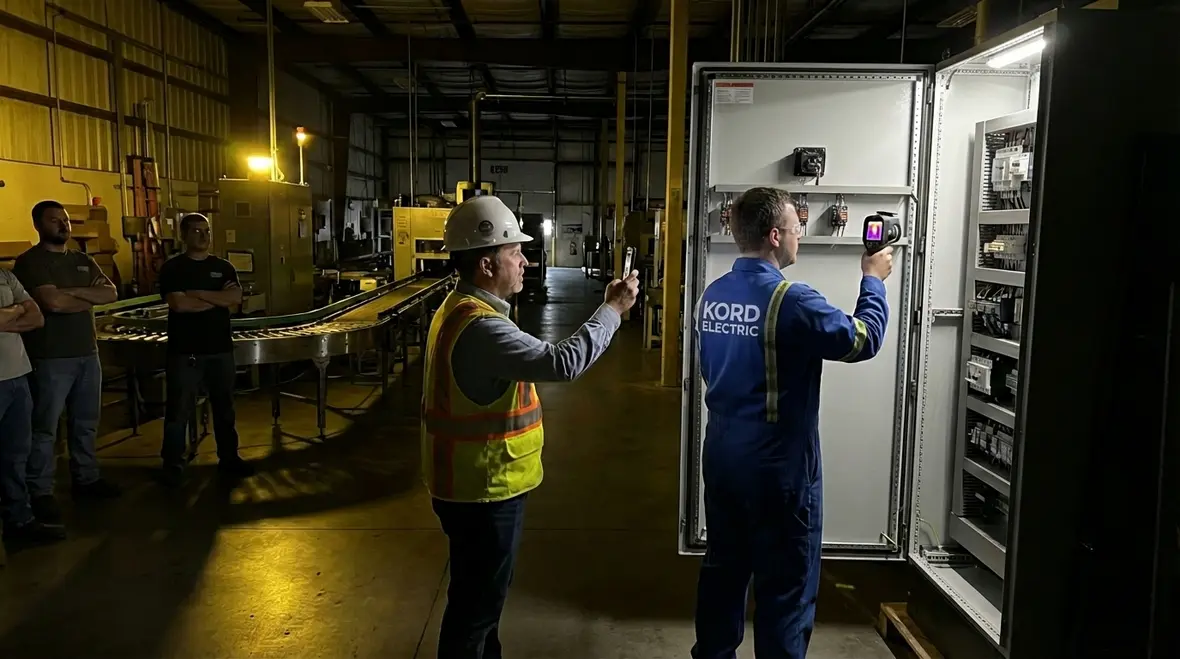
At Kord Electric, our technicians perform thermal imaging and load testing to identify hot spots before they escalate. Because we focus exclusively on commercial and industrial environments, we understand the scale and complexity of these systems. We do not guess. We measure. For facilities that want deeper resilience, we often tie these inspections into broader commercial and industrial electrical maintenance plans that keep systems stable year-round.
4. How to Prevent Electrical Failure in Large Facilities
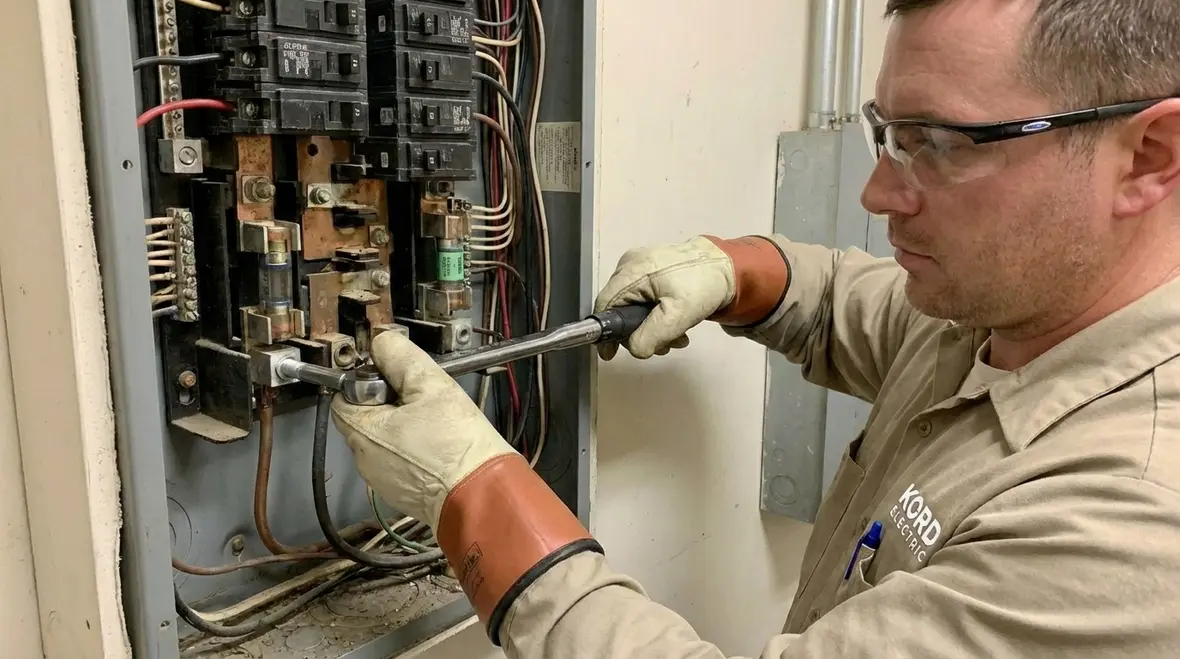
Prevention begins with structure and discipline. While no system is immune to issues, strategic planning reduces risk dramatically. That planning turns “we hope the power stays on” into “we know what our system can handle and how it behaves under stress.”
Scheduled Preventive Maintenance
Routine inspections form the backbone of prevention. During these visits, we tighten connections, test breakers, inspect transformers, and verify load balance. As a result, we catch minor defects before they grow. This is the same disciplined mindset behind our electrical preventive maintenance programs, which are tailored to the demands of commercial, industrial, and government facilities.
Load Analysis and System Upgrades
As operations expand, electrical demand increases. Therefore, we conduct detailed load studies to confirm whether infrastructure supports current usage. If not, we design upgrades that align with long term goals rather than short term patches. That might include new distribution panels, dedicated feeds for mission critical equipment, or modernizing outdated components so your system can handle tomorrow’s production instead of yesterday’s workload.
Emergency Preparedness Planning
Even with prevention, facilities need contingency plans. Backup generators, automatic transfer switches, and surge protection systems keep essential operations running. Consequently, when utility disruptions occur, businesses remain stable. A smart plan identifies which loads must stay on, how long backup power must last, and how systems are tested so they are ready when they are needed—not just impressive on paper.
Our expert service staff walks clients through these strategies step by step. We explain why each measure matters and how it protects revenue. Because at the end of the day, prevention costs far less than recovery, and a well designed plan means a single electrical failure never has the chance to shut down everything at once.
5. Electrical Failure vs. Power Outage: Why the Difference Matters
Many people use these terms interchangeably. However, they are not the same. Understanding the difference helps you respond faster, communicate clearly, and avoid confusion when you are already dealing with a stressful situation.
Where the Problem Starts
A power outage often originates from the utility provider. Storm damage, grid overload, or external accidents disrupt supply before power ever reaches your building. In contrast, electrical failure typically occurs within the facility’s internal distribution system—panels, feeders, transformers, or downstream equipment.
Why Responsibility Changes
This distinction matters because responsibility changes. Utility companies address grid issues, but building owners and facility managers must maintain their internal infrastructure. Insurers, regulators, and occupants expect you to manage what happens on your side of the meter, including the maintenance, upgrades, and documentation that keep systems safe and reliable.
A Simple Comparison
Issue Type Primary Source
Utility Power Outage External grid disruption
Internal Electrical Failure On site equipment, panels, wiring
Understanding this difference helps facility managers respond quickly and call the right team. Fortunately, when the issue lies within the building, Kord Electric stands ready with commercial and industrial expertise designed specifically for complex properties, not just small tenant spaces.
6. Why Quick Response Is Critical During an Electrical Shutdown
Time behaves differently during an emergency. Minutes feel like hours. Meanwhile, financial losses accumulate in real time. Production targets slip, tenants start calling, and the operations team suddenly becomes very popular.
When a commercial facility experiences an electrical shutdown, immediate assessment prevents further damage. For example, leaving overheated equipment energized can worsen internal damage. Therefore, trained technicians must evaluate the system quickly and methodically, isolating hazards and documenting what happened so you can report clearly to executives, insurers, and other stakeholders.
At Kord Electric, our crews approach emergencies with calm precision. First, we isolate affected sections. Next, we perform diagnostic testing. Then, we identify root causes rather than treating symptoms. Because patchwork fixes often invite repeat incidents, we focus on resolving the underlying electrical failure instead of simply getting the lights back on for the moment.
Our clients often comment on our composure. We believe panic solves nothing. Instead, clear communication and deliberate action restore stability. Think of us as the steady voice in the control room when alarms flash and screens go dark.
7. Long Term Infrastructure Planning for Industrial Stability
Preventing recurring electrical faults requires vision. Short term repairs may solve immediate problems, but sustainable stability demands strategic planning. Without that longer view, every upgrade becomes a reaction instead of a step toward a stronger system.
Plan for Growth, Not Just Today’s Load
First, facility leaders should map projected growth over five to ten years. If production capacity will increase, electrical distribution must scale accordingly. That might mean designing new feeder routes, planning additional substations, or building in capacity for automation, new lines, or expanded data infrastructure before those upgrades arrive.
Modernize Aging Equipment
Second, modernization of aging switchgear enhances reliability. Although upgrades require investment, they significantly reduce the risk of catastrophic failure. Replacing obsolete components, integrating smarter protection devices, and improving arc flash safety all contribute to an environment where the electrical system quietly supports operations instead of threatening them.
Use Data to Stay Ahead of Problems
Third, integrating monitoring technology provides real time insights. Advanced metering systems detect anomalies early. Consequently, maintenance teams can intervene before disruption occurs. Energy trends, load profiles, and event logs all help you see patterns that would be invisible during a quick walk-through of the electrical room.
Our technicians take time to explain these long term strategies in clear terms. We avoid technical jargon when possible. After all, no one wants a lecture that sounds like a robot reading a wiring manual. Because we specialize in commercial and industrial properties, we design systems that handle heavy loads, complex layouts, and continuous operation schedules. That focus allows us to anticipate challenges others may overlook and build plans that keep your facility ahead of its next electrical failure instead of reacting to it.
8. Frequently Asked Questions About Electrical Emergencies
Conclusion: Protecting Your Business from the Next Electrical Failure
Electrical emergencies do not have to define a business. With structured maintenance, strategic upgrades, and rapid response, large facilities can operate with confidence. At Kord Electric, we focus exclusively on commercial and industrial properties because we understand their complexity. Our teams are built for production floors, data centers, warehouses, campuses, and high demand environments where “just keeping the lights on” is not good enough.
If your facility shows warning signs—or simply needs a proactive plan—let us step in before whispers become screams. A disciplined program of inspections, testing, and planning helps you avoid the kind of electrical failure that stops conveyor belts, silences production, and leaves your operations team explaining what went wrong instead of celebrating what went right.
From ongoing preventive maintenance to targeted upgrades and emergency response, our commercial and industrial experts are ready to help you build a stronger electrical backbone for your facility. To take the next step, explore our dedicated electrical preventive maintenance services and put a long term protection plan in place.
If your building portfolio also includes life safety systems that need attention, our sister company provides comprehensive fire protection services across Southern California, aligning your electrical reliability and fire safety strategies under one coordinated approach. Reach out to our expert team today, and keep your operations powered, steady, and prepared.