Commercial Electrical Emergencies in Large Facilities
In the world of commercial and industrial facilities, commercial electrical problems rarely send a polite memo before they arrive. They flicker the lights during a production run. They trip a breaker in the middle of a tenant presentation. They silence a conveyor line just as the clock hits peak output. At Kord Electric, we have seen how these moments test not only equipment, but patience, profit margins, and sometimes even faith in modern technology. Therefore, this article explores the most common electrical emergencies in large properties and how our technicians, with calm voices and steady hands, step in to restore order before chaos decides to lease office space.
Understanding Commercial Electrical Problems Before They Escalate
Commercial and industrial systems operate on a different scale than residential wiring. Higher voltages, heavier loads, complex distribution panels, backup generators, automation systems, and miles of conduit create an ecosystem that demands respect. Consequently, when commercial electrical problems surface, they often ripple through multiple departments at once.
Our expert service staff explains this to facility managers in simple terms. Electricity behaves much like traffic in a busy city. When one intersection fails, congestion spreads. Likewise, when a transformer overheats or a breaker fails, other systems compensate, sometimes beyond their limits. As a result, what begins as a minor disruption can become a full scale outage.
Moreover, industrial environments introduce additional stressors such as moisture, vibration, dust, and temperature swings. Over time, these elements weaken insulation, loosen connections, and degrade components. Therefore, early detection and decisive action remain critical to avoiding costly downtime.
Power Outages in Large Facilities
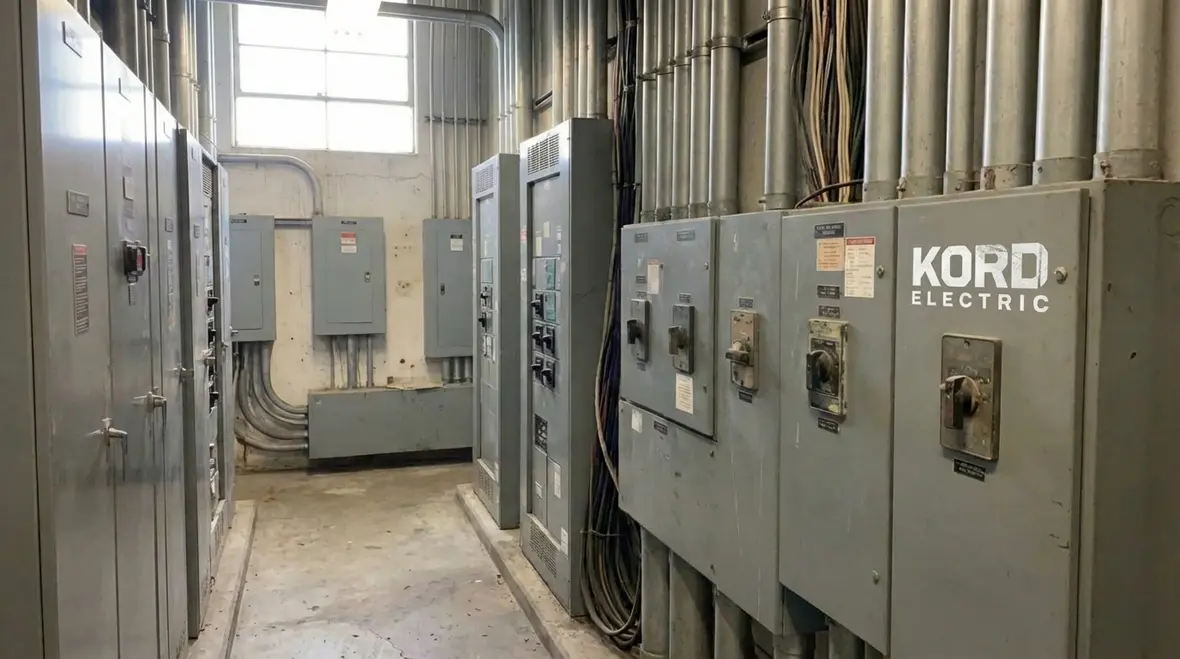
Few things silence a facility faster than a power outage. In commercial buildings, that silence translates into stalled elevators, dark corridors, disabled security systems, and very uncomfortable conference rooms. In industrial plants, however, the impact becomes even more severe. Production halts, automated systems reset, and sensitive equipment risks damage during sudden shutdowns.
Outages often stem from overloaded circuits, utility supply failures, or internal distribution faults. Additionally, aging switchgear and neglected maintenance can weaken resilience. When our technicians arrive on site, they begin with a methodical assessment. First, they isolate the affected sections. Then, they test incoming feeds, inspect panels, and evaluate backup systems.
We have learned that calm communication matters just as much as technical skill. While management reviews impact reports, our team explains the issue clearly and outlines the recovery plan. No jargon. No dramatic flair. Just facts, solutions, and steady progress.
Furthermore, we reinforce long term strategies. Backup generators, automatic transfer switches, and routine infrared inspections can significantly reduce the risk of extended downtime. Because in large facilities, prevention costs far less than interruption. For properties that want to go deeper into structured prevention, pairing emergency readiness with a dedicated electrical preventive maintenance program creates a stronger foundation for power reliability across critical systems.
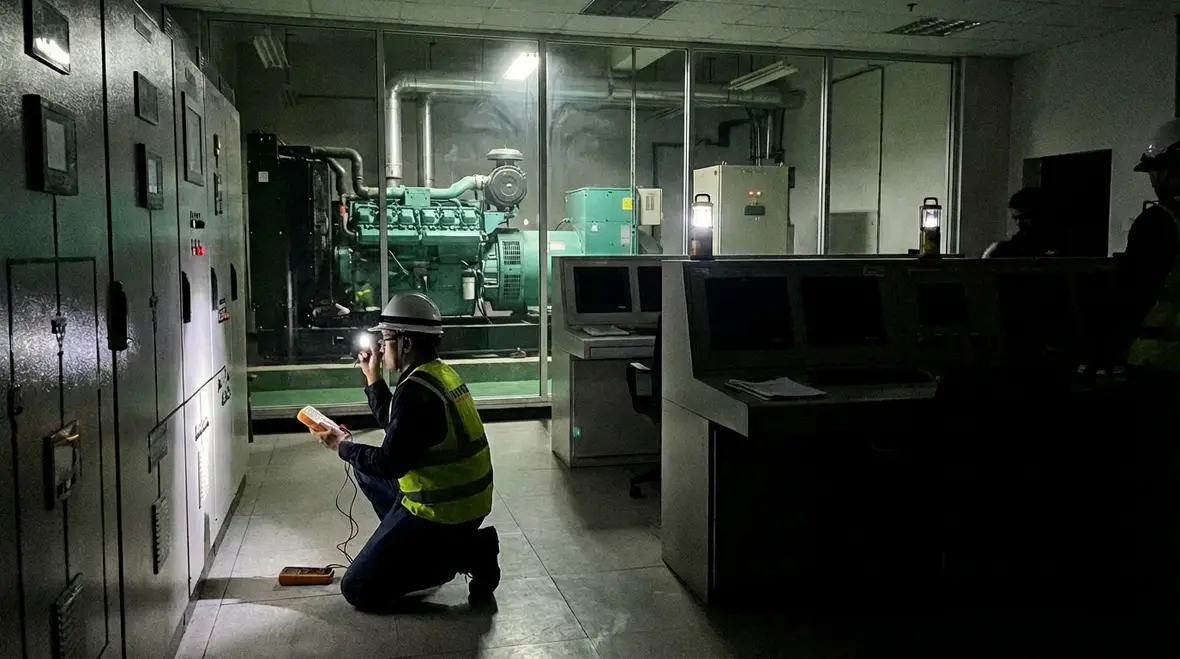
Electrical Panel Failures and Overloaded Circuits
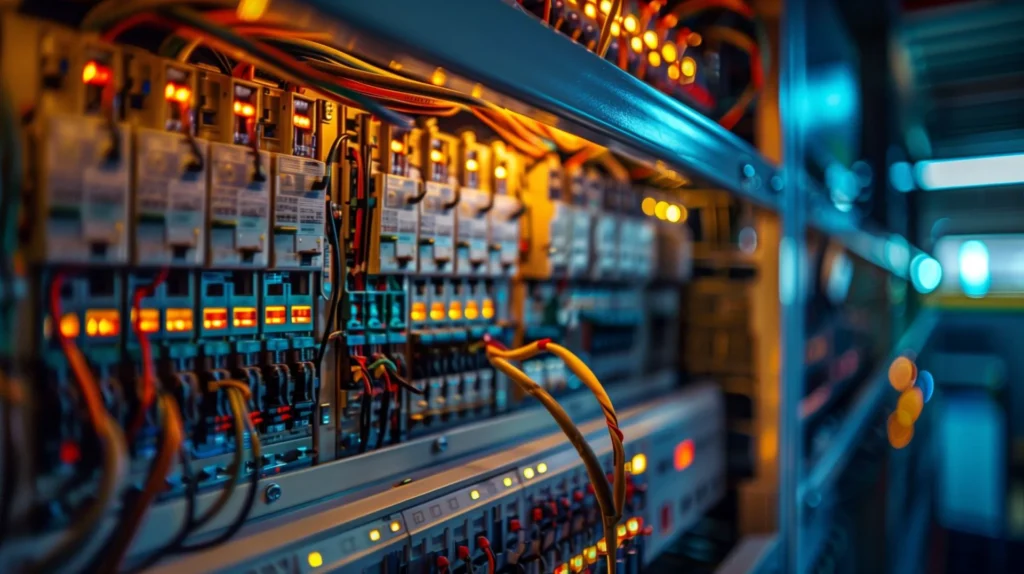
Panels serve as the command centers of commercial electrical systems. When they fail, the message is immediate and often loud. Breakers trip repeatedly. Equipment shuts off without warning. In some cases, a faint burning odor drifts through the mechanical room, which no one enjoys explaining to upper management.
Overloaded circuits rank among the most common commercial electrical problems in growing facilities. As companies expand operations, they add equipment. However, the original electrical infrastructure does not always grow at the same pace. Consequently, circuits operate near or beyond capacity.
Our expert service staff frequently explains that a breaker tripping once is a warning. A breaker tripping daily is a conversation. A breaker that refuses to reset is a crisis. Therefore, we analyze load distribution, verify panel ratings, and assess whether upgrades are necessary.
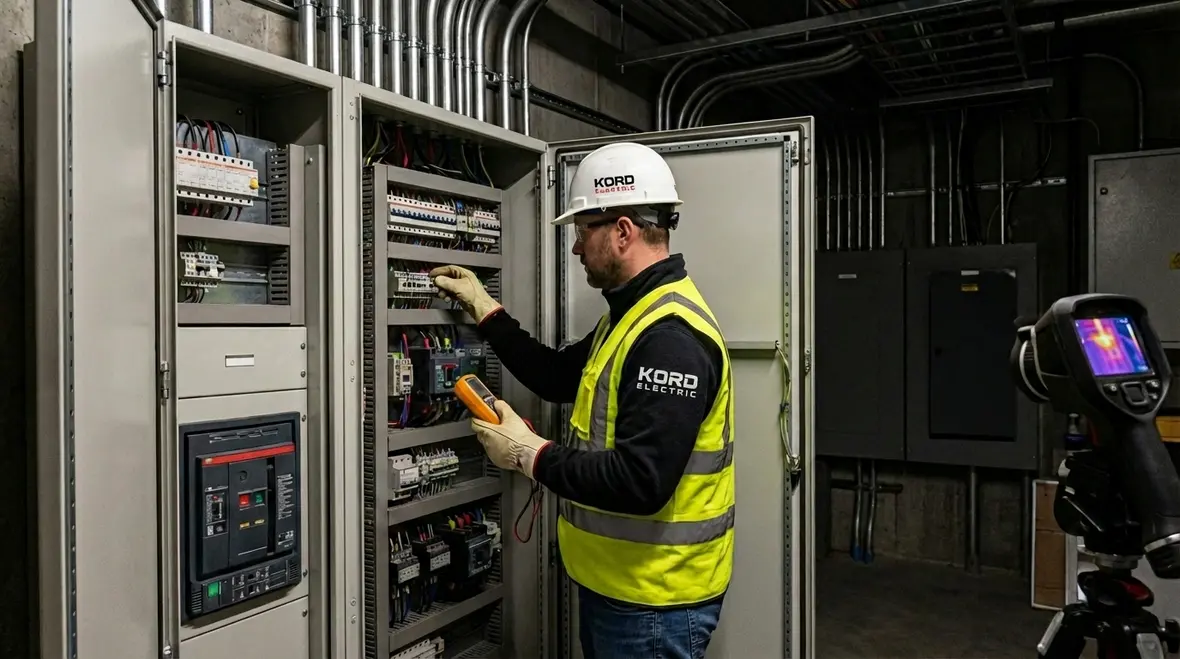
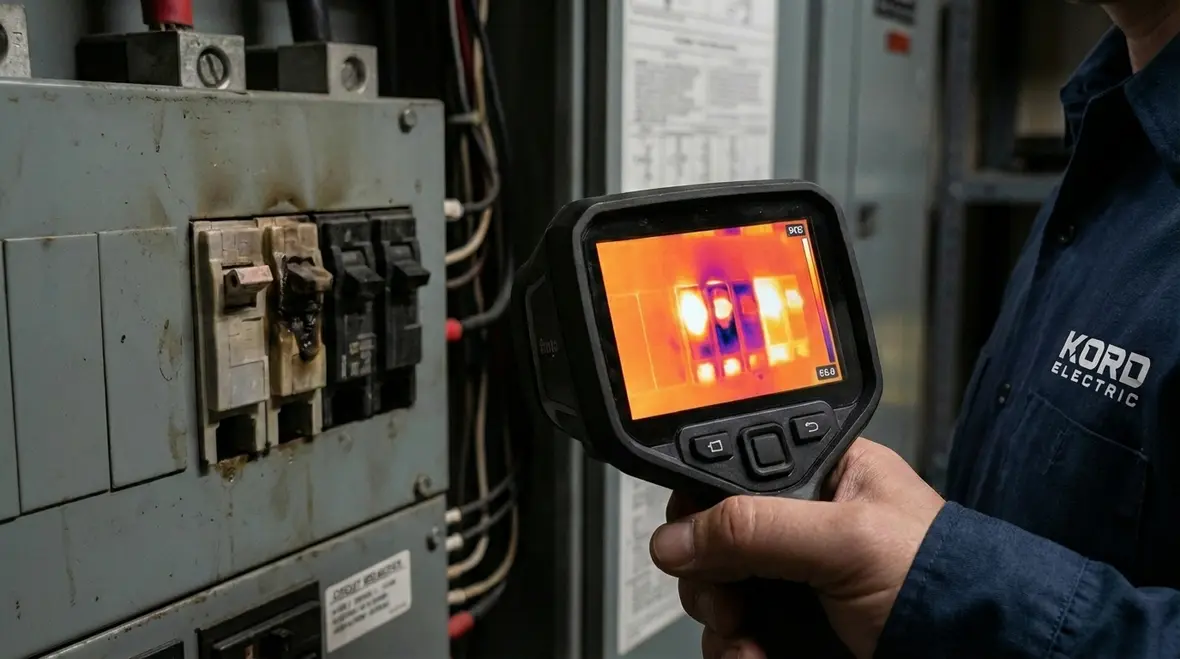
In industrial properties, panel failures may also arise from loose bus connections or thermal stress. We use thermal imaging to detect hot spots before they become failures. In addition, we torque connections to manufacturer specifications and replace aging components with modern, higher capacity alternatives.
And yes, we have seen panels that looked like they survived a science fiction explosion scene. The good news is that with proper engineering and timely upgrades, such drama remains confined to movie theaters.
Short Circuits and Arc Flash Hazards
Short circuits represent some of the most dangerous electrical emergencies in commercial and industrial environments. When unintended paths allow current to travel with minimal resistance, the result can be immediate equipment damage, intense heat, and potential arc flash events.
Arc flashes release tremendous energy in fractions of a second. Consequently, they pose serious safety risks to personnel and can devastate switchgear. Our technicians approach these scenarios with strict adherence to safety protocols. Personal protective equipment, lockout procedures, and careful diagnostics guide every step.
Moreover, we conduct arc flash studies for large properties. These studies evaluate fault currents, protective device coordination, and labeling requirements. By doing so, we help facility managers understand risk levels and implement proper safeguards.
While the science behind arc flash analysis can feel complex, our team breaks it down in clear language. Electricity, when contained and directed, serves faithfully. When mismanaged, it behaves more like an action hero in the final battle scene. Therefore, respecting its force remains essential.
Equipment Failures in Industrial Operations
Industrial facilities depend on specialized equipment such as motors, drives, control panels, and programmable logic controllers. When these systems fail due to electrical faults, production schedules suffer.
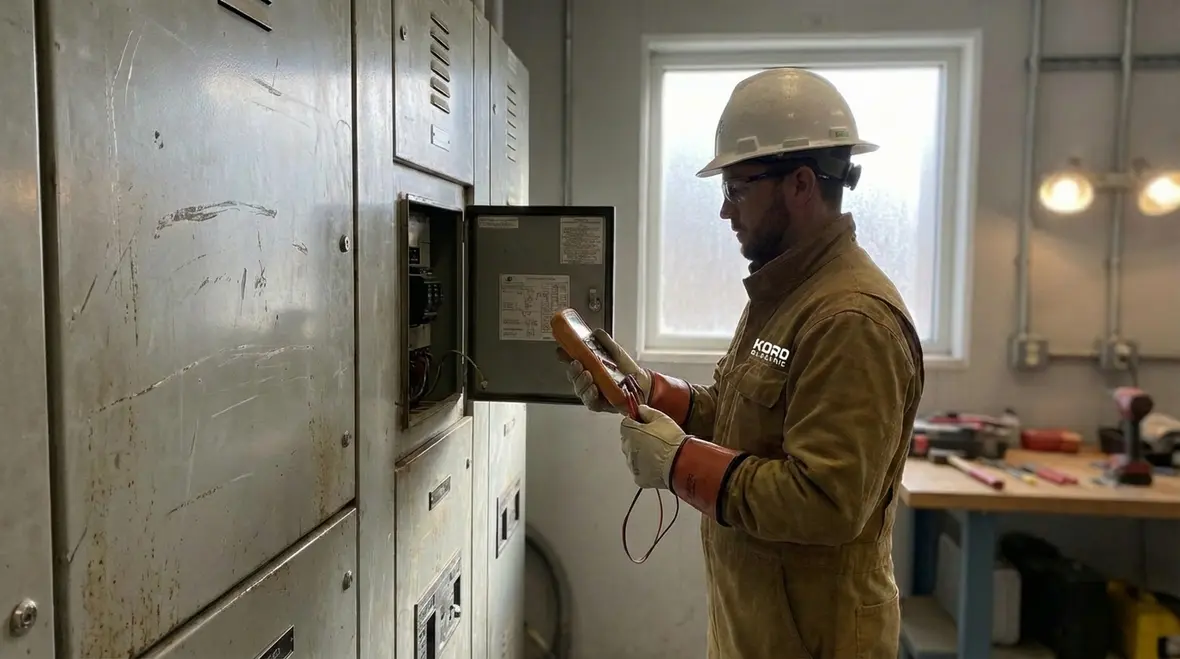
Common causes include voltage fluctuations, phase imbalances, and degraded wiring. Additionally, improper grounding can introduce erratic behavior in sensitive automation systems. Our technicians trace these issues through systematic testing. They measure voltage consistency, inspect grounding systems, and verify protective devices.
To present this clearly, we often outline the issue and solution in a straightforward format.
Emergency Source
Motor overheating
Drive malfunction
Control panel shutdown
Frequent fuse failure
Kord Electric Response
Load testing, insulation checks, airflow review
Voltage analysis, harmonic assessment, recalibration
Circuit tracing, component replacement, system restart
Short circuit investigation, load redistribution
Through this method, facility leaders gain clarity. Instead of facing an abstract technical issue, they see a defined problem paired with a precise solution.
Furthermore, we emphasize preventive maintenance schedules tailored to operational demands. Regular inspections, cleaning, torque verification, and system testing reduce the likelihood of repeat incidents. After all, equipment prefers attention before it starts sending distress signals. For organizations that want a structured approach, our dedicated commercial and industrial electrical maintenance plans help align inspection frequency with risk, load profile, and system age.
Lighting System Failures Across Major Properties
Lighting systems in commercial properties extend beyond simple visibility. They influence safety, productivity, and tenant satisfaction. When large sections fail, the building feels unsettled.
In warehouses and manufacturing plants, poor lighting can create safety hazards. In office towers, it can disrupt operations and impact morale. Therefore, addressing lighting failures quickly becomes a priority.
Common causes include ballast degradation, driver failure in LED systems, wiring faults, or overloaded circuits. Our technicians evaluate the distribution network and confirm compatibility between fixtures and controls. Additionally, we assess energy efficiency upgrades that can prevent recurring failures.
Although a flickering light may seem minor, in a large facility it often signals deeper electrical issues. Consequently, we treat recurring lighting disruptions as early indicators of broader commercial electrical problems. When outages or inconsistent light levels reveal underlying design and code issues, our team can also coordinate with specialized solutions like recessed lighting installation or broader lighting upgrades to restore both performance and compliance.
How to Respond to an Electrical Emergency in a Commercial Facility
When an electrical emergency strikes, decisive action protects both people and property. First, facility managers should secure the area and ensure personnel safety. Next, they should avoid resetting breakers repeatedly without understanding the cause. Doing so can worsen the problem.
Contacting a qualified commercial and industrial electrical contractor remains the most effective step. Our team at Kord Electric mobilizes quickly, equipped to handle large scale systems. Upon arrival, we assess risks, isolate affected zones, and communicate clearly with on site leadership.
Because commercial electrical problems often intersect with fire safety, security, and operational systems, coordination matters. Therefore, we work alongside facility managers and maintenance teams to minimize disruption.
In moments of stress, clarity calms the room. Our technicians explain what happened, why it happened, and what comes next. And sometimes, when tension runs high, a well timed lighthearted comment about electricity having a dramatic personality helps restore perspective.
For round-the-clock disruptions, large facilities in Southern California also lean on our dedicated emergency electrical services, ensuring that escalation paths are clear long before the lights go out.
Preventing Recurring Electrical Disruptions in Industrial Buildings
Prevention requires intention. Routine inspections, load analysis, thermal imaging, and system upgrades form the backbone of resilient infrastructure. Additionally, documentation and clear labeling reduce confusion during emergencies.
We encourage facilities to invest in proactive assessments. For example, reviewing panel capacities before expanding operations can prevent overload conditions. Likewise, evaluating generator performance ensures readiness during utility failures.
Our expert service staff often reminds clients that commercial electrical problems rarely appear without warning. Systems whisper before they shout. A warm panel, an occasional flicker, a breaker that trips once a month. These signs invite investigation.
By responding early, facilities avoid costly downtime and protect both equipment and personnel. And while no system achieves perfection, disciplined maintenance brings operations remarkably close.
Frequently Asked Questions
Restoring Confidence When It Matters Most
Commercial and industrial facilities depend on stable, well engineered electrical systems. When emergencies arise, they demand experience, discipline, and calm leadership. At Kord Electric, we provide expert support tailored exclusively to large properties and industrial operations. Our technicians move with purpose, communicate clearly, and resolve issues efficiently. If your facility faces electrical disruption or seeks proactive protection, contact Kord Electric today and let us restore power, stability, and peace of mind.
For properties building a long term resilience strategy, combining our 24/7 emergency electrical services with structured programs like electrical preventive maintenance creates a powerful safety net. From voltage fluctuations to lighting failures, commercial electrical problems in large facilities deserve a partner that understands both the urgency of today and the reliability demands of tomorrow.
If your team is planning system upgrades alongside emergency readiness—such as panel modernization, targeted power quality corrections, or strategic lighting improvements—our broader service lines, including dedicated emergency electrical services, integrate smoothly into your overall operational plan so that every improvement supports safer, more reliable power.