Generator Maintenance for Reliable Backup Power
Generator Maintenance Tips for Reliability in Commercial and Industrial Facilities
When the lights flicker in a hospital wing, a manufacturing line, or a high rise tower, people do not reach for candles. They look to backup power. At Kord Electric, we understand that generator maintenance is not just a line item on a budget. It is the quiet promise that operations continue, tenants stay safe, and revenue does not leak out the door. Our technicians and expert service staff approach every system with calm precision, because reliable backup power begins long before an outage ever occurs. In the sections ahead, we explain how thoughtful care, consistent inspections, and disciplined service routines protect commercial and industrial facilities from costly downtime.
So let us take a slow walk through what reliability truly means, and how we help major properties keep their power steady when the grid decides to take a coffee break.
Understanding the Stakes in Commercial Backup Power
In large facilities, power loss is not an inconvenience. It is a chain reaction. Elevators pause. Data centers blink. Production lines stall mid cycle. Therefore, generator maintenance must reflect the scale of the operation it protects.
Our service team begins every relationship with a clear assessment. We evaluate load requirements, critical circuits, fuel capacity, and environmental conditions. Moreover, we review historical performance data when available. This allows us to spot patterns before they become problems.
For example, an industrial plant that runs heavy motors demands a different maintenance rhythm than a corporate office tower. Likewise, a healthcare facility requires tighter compliance checks and documented testing. Because of this, we do not offer one size fits all plans. We tailor each maintenance schedule to the building’s real world use.
And yes, sometimes we explain this with a simple comparison. A standby generator is like a marathon runner. If it only sits on the couch eating snacks and watching reruns, it will not perform well on race day. It needs training, testing, and proper care. Our technicians say this with a smile, but they mean every word.
How Often Should Commercial Generators Be Serviced?
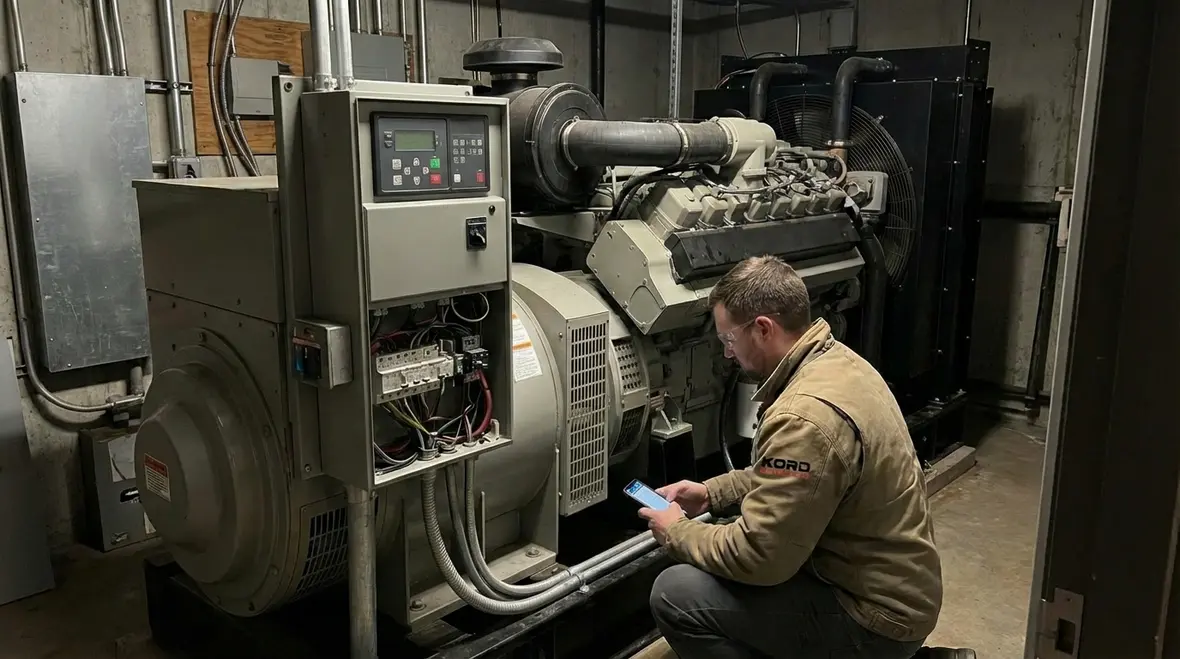
This is the one question we hear in nearly every facility meeting. The short answer is simple. More often than you think, and always on a schedule.
However, the long answer depends on usage hours, environment, and manufacturer guidelines. At Kord Electric, we typically recommend:
- Monthly visual inspections to check for leaks, corrosion, loose connections, and abnormal wear.
- Quarterly load testing to verify the system can handle real demand.
- Annual comprehensive servicing including oil changes, filter replacements, and system calibration.
In addition, facilities that operate in dusty industrial settings or extreme temperatures may require more frequent attention. Our expert service staff reviews oil samples, coolant quality, and battery health to fine tune the schedule.
Because consistency builds reliability, we document every visit. Detailed service records help property managers demonstrate compliance, especially in regulated sectors. Furthermore, they create a service history that improves long term planning. For facilities that want a broader preventive approach beyond generators alone, many integrate this work with structured electrical preventive maintenance programs that cover critical distribution equipment and life safety systems as well.
Skipping scheduled maintenance might save a few dollars this quarter. Yet, when an outage hits and the generator fails to start, the cost of downtime often makes that decision feel like a plot twist from a disaster movie. We prefer a calmer ending.
Core Components That Demand Attention
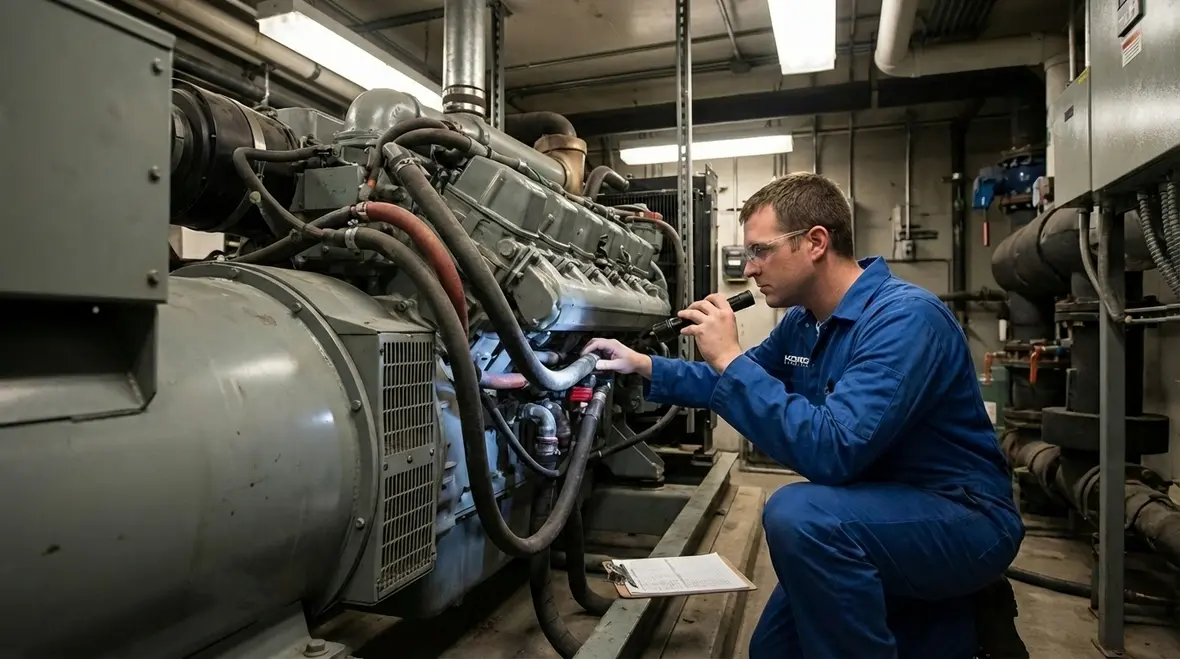
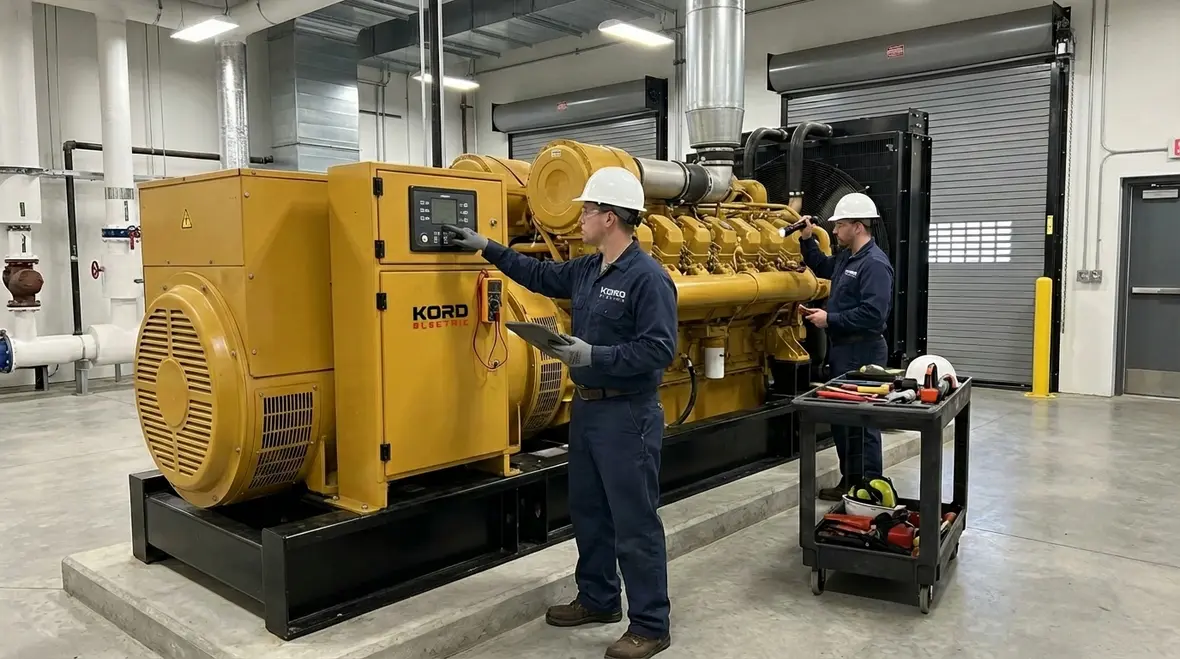
Effective generator maintenance focuses on critical systems that often fail quietly before they fail loudly. Our technicians train to notice small changes in sound, vibration, and performance. Those subtle clues tell a larger story.
Fuel System
Fuel quality plays a major role in reliability. Over time, diesel can degrade or accumulate water and contaminants. Therefore, we test and treat fuel, inspect tanks, and confirm that transfer pumps operate correctly. Clean fuel ensures smooth starts during emergencies.
Cooling System
Generators create heat. If the cooling system falters, overheating follows quickly. We check coolant levels, hoses, belts, and radiators. Moreover, we verify airflow around the unit to prevent heat buildup in enclosed mechanical rooms.
Battery and Electrical Connections
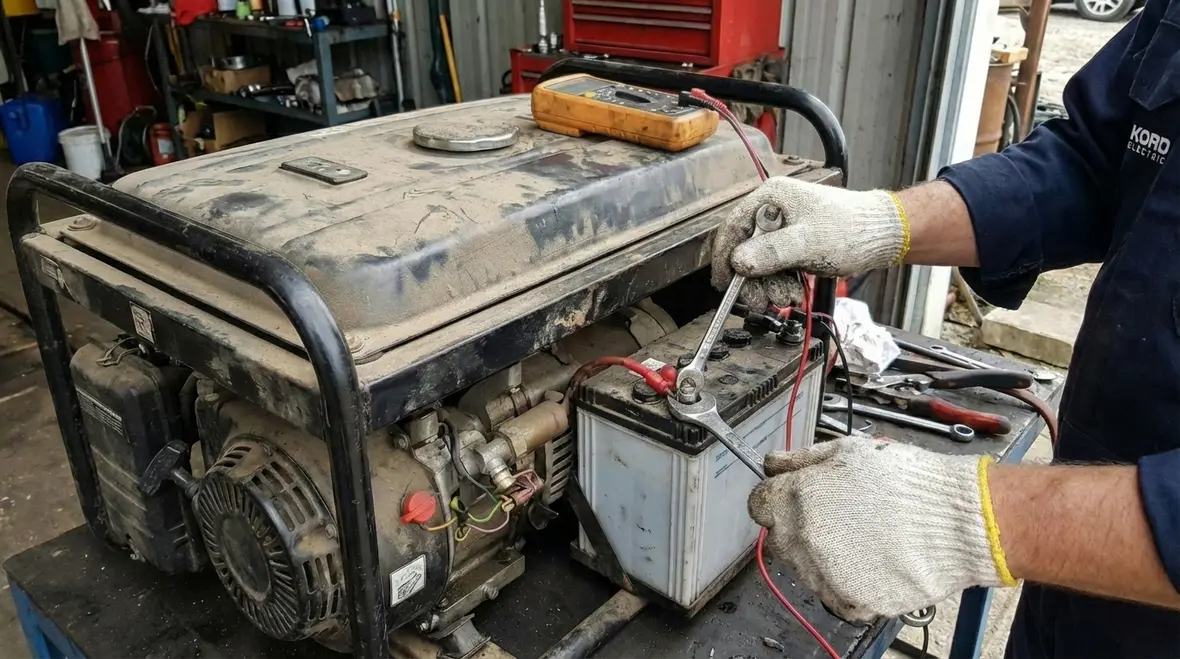
Many generator failures trace back to weak batteries or corroded terminals. It sounds simple, yet it remains one of the most common issues. Our team tests voltage, inspects chargers, and secures all connections. In a way, the battery is the unsung hero of backup systems. Without it, even the strongest engine stays silent.
Control Panels and Transfer Switches
The automatic transfer switch acts as the bridge between utility power and backup power. If it hesitates or malfunctions, the generator might run without ever delivering electricity to the building. Because of this, we test transfer switches under load and confirm proper timing and synchronization. For many clients, this work pairs naturally with recurring generator & ATS inspections that keep emergency power pathways ready when they are needed most.
By focusing on these components, we reduce the risk of surprise failures. And while none of these tasks seem glamorous, reliability rarely is. It is built in the quiet details.
Load Testing That Reflects Real World Demands
Running a generator without load tells only part of the story. It is similar to revving a car engine in park. It makes noise, but it does not prove performance.
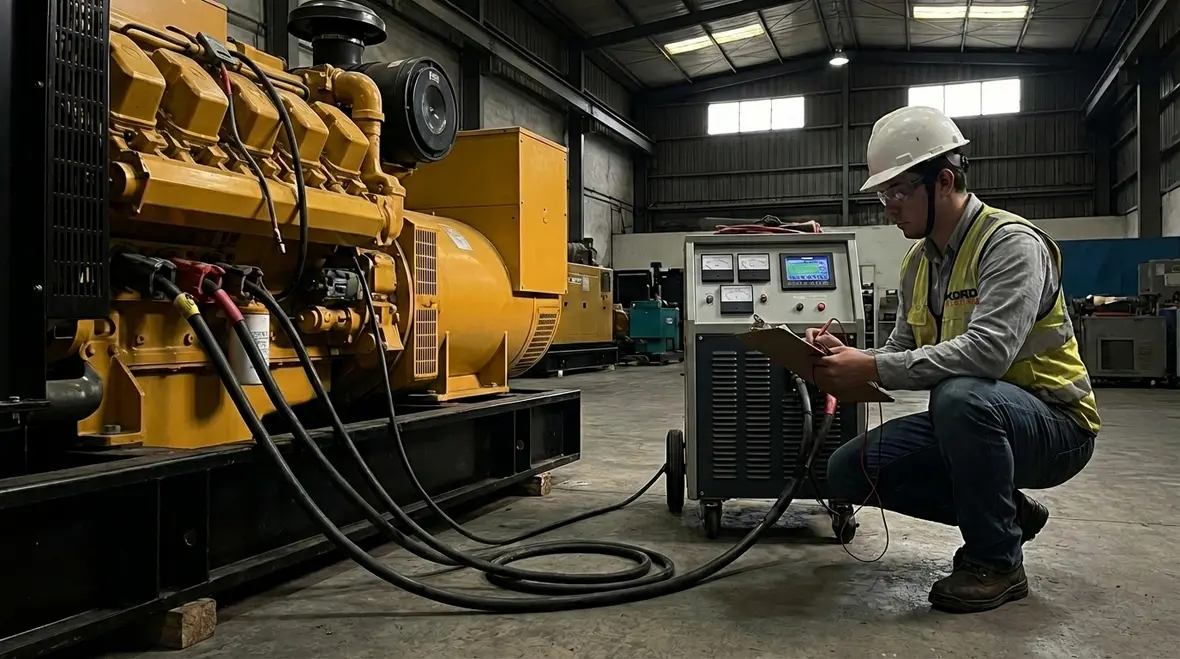
Consequently, our technicians conduct load bank testing that simulates actual operating conditions. This process verifies voltage stability, frequency control, and temperature performance under stress. It also helps prevent wet stacking, a condition where unburned fuel accumulates in the exhaust system.
For industrial clients, we align testing schedules with operational windows to minimize disruption. Meanwhile, for high occupancy buildings, we coordinate closely with property management to ensure tenant communication remains clear.
Load testing does more than check a box. It reveals hidden weaknesses. Additionally, it builds confidence among facility directors who need proof that their systems will respond when called upon.
Preventive Generator Maintenance Versus Emergency Repairs
There is a certain irony in waiting for an emergency to discover a problem with emergency equipment. Yet, many facilities fall into that trap.
Preventive generator maintenance focuses on early detection. Our expert service staff monitors wear patterns, fluid conditions, and performance trends. By replacing parts before they fail, we extend equipment life and reduce unexpected shutdowns.
Emergency repairs, on the other hand, often involve rushed decisions, premium costs, and operational stress. Although our team responds quickly when urgent issues arise, we always remind clients that planned care is far less disruptive than crisis response. When unavoidable issues surface, our 24/7 emergency electrical services team can stabilize conditions, but the goal is always to keep your generator and backup power system so well maintained that you rarely need them.
Think of it this way. It is better to schedule a routine checkup than to meet your doctor in the middle of a storm. Our technicians say that with calm humor, yet the lesson stands firm.
What a Professional Service Program Looks Like in Practice
Commercial and industrial properties require structured service plans. Therefore, we build programs that combine inspection, testing, documentation, and strategic upgrades.
Below is a simplified comparison that illustrates how we approach generator maintenance for major facilities:
|
Standard Care Elements
|
Advanced Reliability Measures
|
While many providers stop at basic servicing, we often recommend advanced measures for mission critical environments. For example, infrared scanning can reveal overheating connections invisible to the naked eye. Similarly, fuel polishing reduces the risk of contamination during extended outages.
Because our technicians explain each step clearly, facility managers understand not just what we do, but why we do it. That clarity builds trust. And trust, much like reliable backup power, should never flicker.
Environmental and Operational Factors That Influence Reliability
No generator operates in isolation. Surrounding conditions shape performance in subtle ways.
In coastal regions, salt air accelerates corrosion. In manufacturing plants, airborne particles infiltrate filters and cooling systems. Meanwhile, high rise mechanical rooms may trap heat if ventilation is inadequate. Therefore, generator maintenance must adapt to these realities.
Our team evaluates airflow, enclosure integrity, and vibration isolation. Additionally, we review load growth trends. As buildings expand or add equipment, power demands increase. Without proper adjustments, the generator may operate beyond its intended capacity.
We also advise clients on fuel storage duration and rotation practices. Long term storage without monitoring can compromise fuel quality. Because industrial facilities often maintain large reserves, this step becomes especially important.
Every site tells a different story. Our job is to listen carefully and respond with a plan that supports both current operations and future growth.
Training, Documentation, and Communication
Technology alone does not create reliability. People do.
At Kord Electric, our technicians receive ongoing training on evolving standards, control systems, and safety protocols. As a result, they approach each generator with both technical knowledge and practical experience. When they explain a finding to a facility director, they do so in plain language. No jargon. No confusion.
Moreover, we provide detailed service reports after every visit. These records outline completed tasks, test results, and recommended actions. For regulated industries, proper documentation supports compliance audits and insurance requirements.
Clear communication also strengthens emergency preparedness. We help property teams understand alarm codes, startup procedures, and basic visual checks. While we handle complex servicing, informed staff can identify early warning signs between visits.
In many ways, generator maintenance resembles a well rehearsed orchestra. Each part must perform in harmony. And when the conductor raises the baton during a power outage, everything should respond without hesitation.
FAQ About Generator Maintenance and Backup Systems
Conclusion
Reliable power does not happen by accident. It is built through disciplined generator maintenance, expert oversight, and a clear understanding of how critical systems support commercial and industrial facilities. At Kord Electric, we protect your operations before the storm arrives. If your property depends on steady performance and true backup power, allow our technicians to design a service program that keeps your building ready, steady, and confidently prepared for whatever comes next.
For facilities that want to go a step further, pairing generator maintenance with a full electrical preventive maintenance program creates a unified strategy for generator maintenance, backup power usage, distribution equipment, and safety systems. That way, your entire electrical backbone is inspected, tested, and documented on a schedule that matches the real demands of your operation.
When you are ready to align generator maintenance, emergency response, and long term reliability, our team can help you build a custom plan that fits your facility, budget, and risk profile.