Infrared Inspection and Thermal Imaging for Facilities
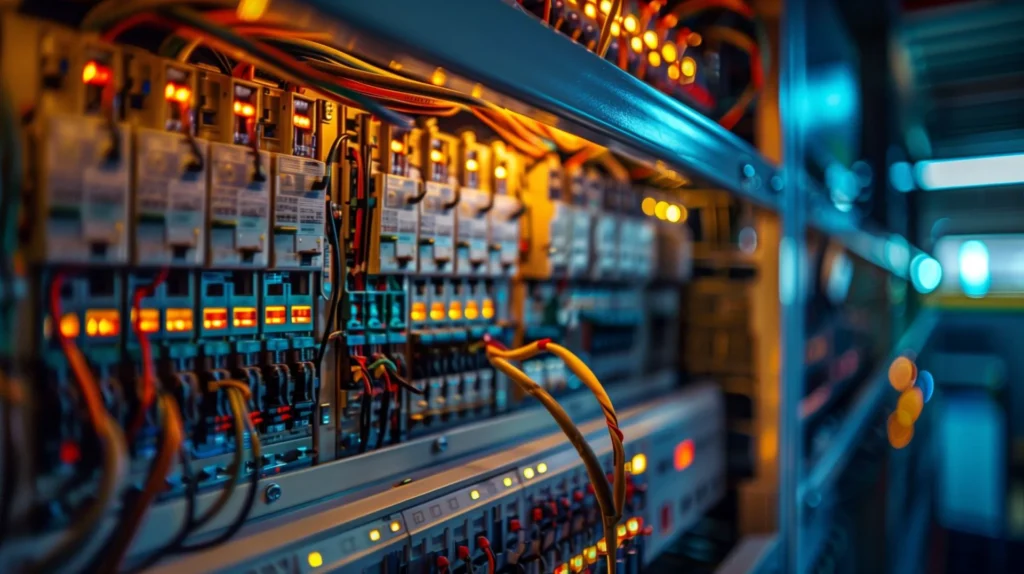
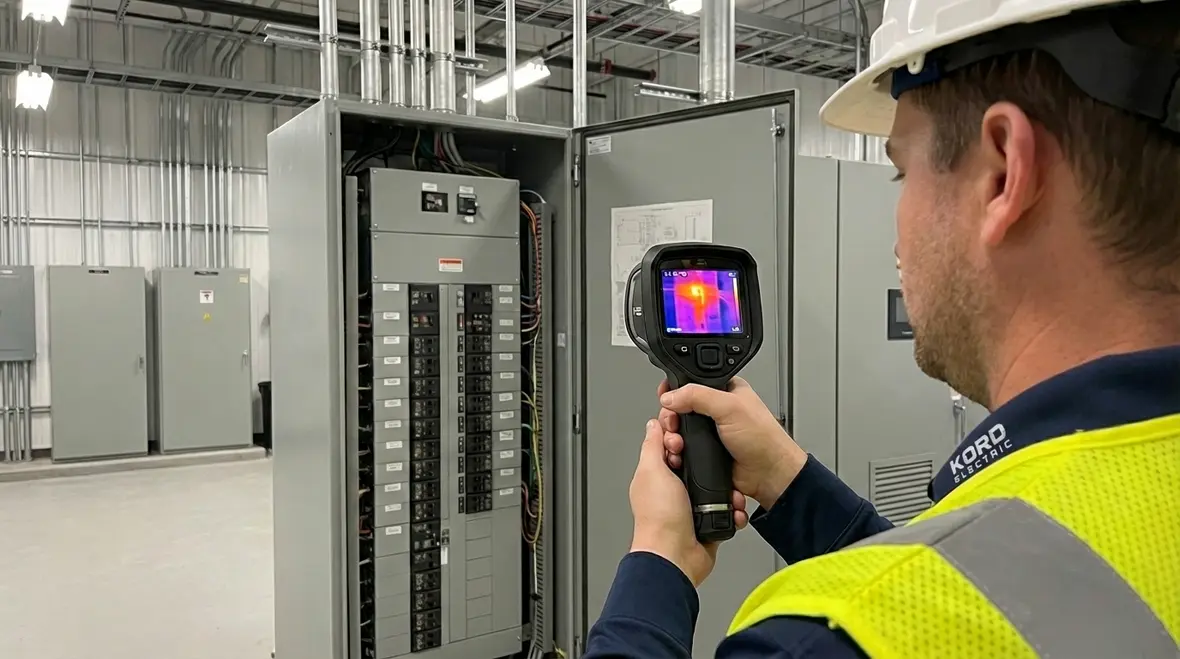
At Kord Electric, they believe that what you cannot see can, in fact, hurt your building. That is where infrared inspection and thermal imaging step into the spotlight. Within the first moments of any commercial or industrial assessment, their technicians use advanced heat sensing cameras to detect temperature irregularities hidden behind panels, switchgear, transformers, and distribution systems. While everything may look calm on the surface, excessive heat often tells a different story. And in large facilities, heat is rarely just about comfort. It is about risk, downtime, and money quietly slipping out the door.
So they slow things down. They look deeper. And they let the building speak in shades of heat.
Infrared Electrical Inspections Explained for Commercial and Industrial Facilities

An infrared inspection is a non invasive method that identifies abnormal heat patterns in electrical systems. Since heat is a byproduct of electrical resistance, loose connections, overloaded circuits, unbalanced loads, and failing components all reveal themselves through elevated temperatures.
However, this is not guesswork. Kord Electric uses calibrated thermal cameras that measure minute temperature differences across panels and equipment. Their expert service staff analyze those patterns, compare them to normal operating baselines, and determine whether the heat represents a harmless load change or a developing hazard.
In large commercial buildings and industrial plants, electrical systems operate under heavy demand. Therefore, even minor inefficiencies can compound into major failures. A single loose lug inside a distribution panel may not seem dramatic. Yet over time, that extra resistance generates heat, degrades insulation, and increases fire risk.
Consequently, thermal scanning becomes less about curiosity and more about prevention. It allows facilities managers to correct issues during scheduled maintenance instead of reacting to unplanned outages. And let us be honest, no operations director enjoys explaining a blackout to upper management. It tends to ruin everyone’s lunch plans.
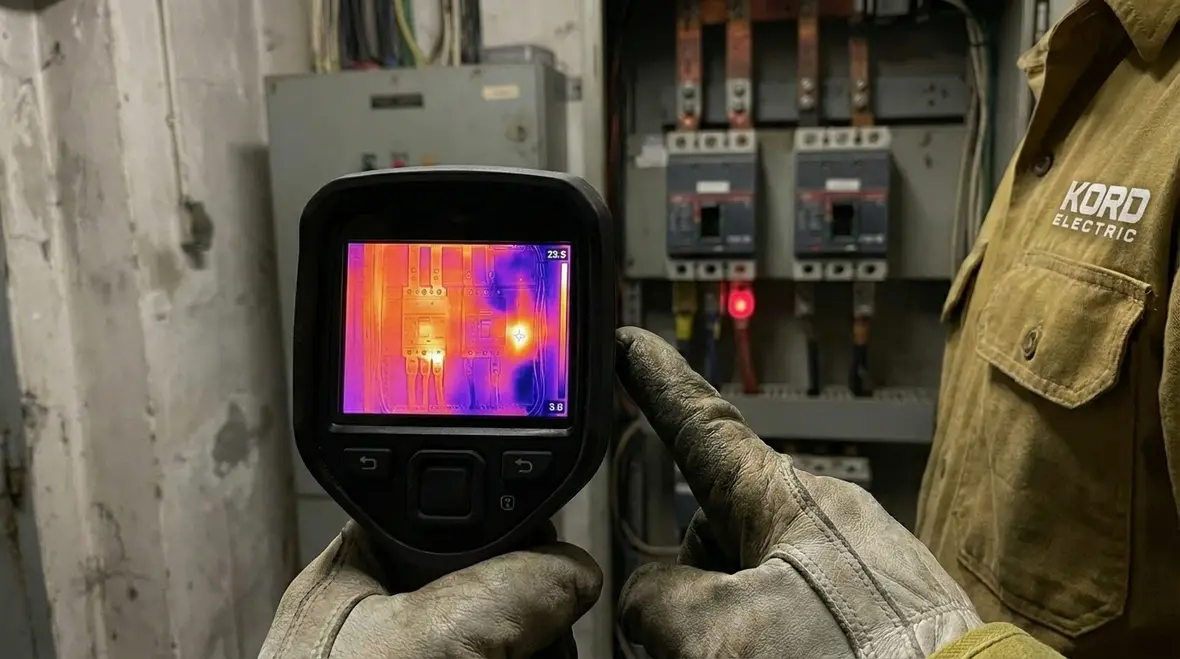
What Does Thermal Imaging Actually Detect Inside Your Building?
When clients ask what thermal imaging really uncovers, the answer is simple. It reveals stress.
More specifically, it identifies:
Electrical anomalies in:
- Main switchgear and switchboards
- Motor control centers
- Transformers and bus ducts
- Panelboards and distribution equipment
- High voltage terminations
Operational inefficiencies such as:
- Unbalanced electrical loads
- Overloaded circuits
- Deteriorating breakers
- Loose or corroded connections
Because heat develops before failure occurs, thermal imaging offers an early warning system. For example, a breaker running significantly hotter than adjacent breakers under similar load conditions signals a problem. Likewise, a transformer showing uneven heat distribution may indicate internal degradation.
Moreover, their technicians do not just capture images and walk away. They interpret the findings in context. Ambient temperature, equipment age, load conditions, and manufacturer specifications all factor into the analysis. In other words, a red spot on a screen does not automatically equal disaster. It demands professional evaluation.
And yes, while the color gradients look like modern art, this is not a gallery exhibition. It is a diagnostic tool that helps avoid expensive surprises.
Facilities that already invest in routine life safety inspections—such as fire alarm inspection and testing for commercial buildings—often find that adding infrared inspection and thermal imaging creates a more complete reliability picture. When fire protection and electrical health move in step, buildings stay safer and downtime stays rare.

Why Large Commercial Properties Rely on Infrared Inspection
Commercial and industrial properties carry higher electrical loads than smaller facilities. As a result, the margin for error narrows. Data centers, manufacturing plants, distribution warehouses, healthcare campuses, and multi tenant office towers depend on uninterrupted power.
Therefore, infrared inspection becomes a strategic asset rather than a reactive service.
Kord Electric structures inspections around operational realities. They coordinate with facility managers to scan live systems safely, minimizing disruption. Additionally, they document findings in detailed reports that categorize issues by severity, allowing leadership teams to prioritize corrective actions.
From a financial standpoint, early detection reduces emergency repair costs. It also supports insurance compliance and safety audits. Many carriers and regulatory bodies recommend routine thermal scanning for high capacity electrical systems. Consequently, documented inspections demonstrate due diligence.
There is also the matter of reputation. When a commercial building experiences a preventable outage, tenants notice. Industrial downtime affects production schedules and contractual obligations. In that sense, a scheduled inspection feels far less dramatic than a midnight phone call that begins with the phrase, “Everything just shut off.”
In multi building campuses where fire protection systems are already managed through a single partner—such as a firm that provides full fire protection services across sprinklers, alarms, and extinguishers—adding infrared inspection tightens the safety net even further.
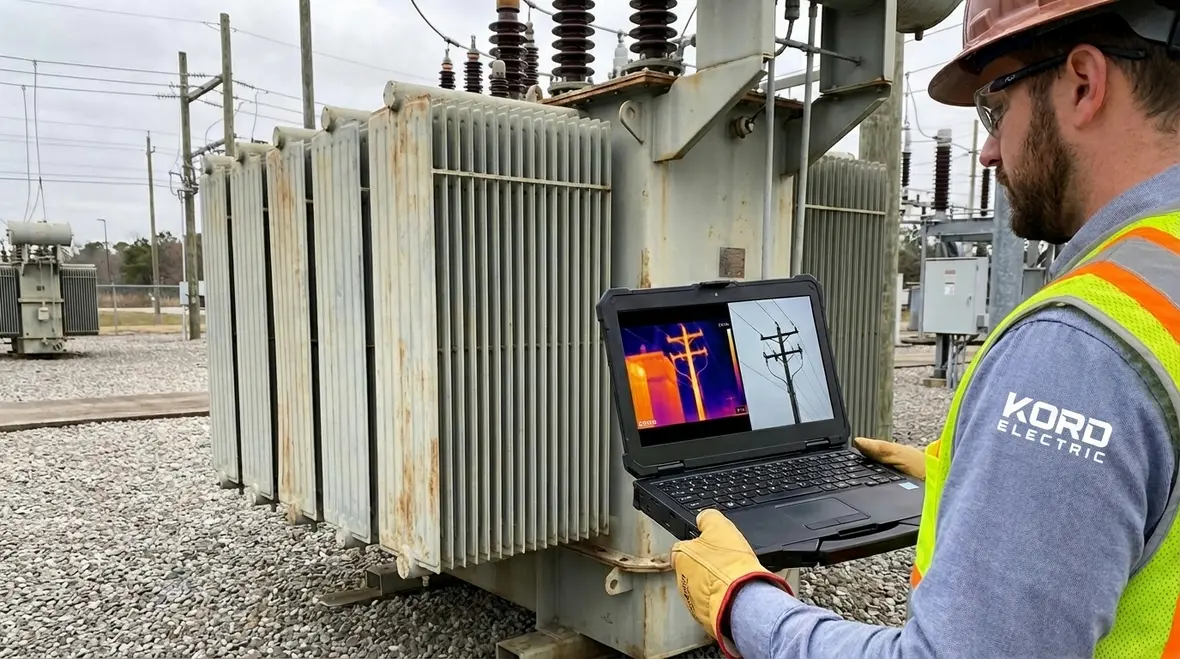
Inside the Process: How Kord Electric Performs a Professional Thermal Survey
The process begins long before a camera powers on. First, their technicians review electrical drawings and previous maintenance records. This preparation ensures they understand system layout and known problem areas.
Next, during the onsite visit, they perform a visual inspection to identify obvious hazards. After that, they use high resolution thermal imaging cameras to scan energized equipment under normal load conditions. Because electrical components must be operating to reveal meaningful heat signatures, timing matters.
During scanning, they:
- Measure temperature differentials between similar components
- Record ambient conditions
- Capture thermal and digital reference images
- Note load levels when available
Once data collection concludes, analysis begins. Their expert service staff interpret temperature variations using industry standards. They classify findings as monitor, schedule repair, or immediate attention.
Finally, they deliver a comprehensive report that includes annotated images, temperature readings, probable causes, and recommended corrective actions. Rather than handing over a stack of technical jargon, they explain findings clearly to facilities teams. Because while engineers may appreciate technical language, decision makers prefer clarity.
And clarity, much like proper torque on a lug, prevents future headaches.
Thermal Imaging and Preventive Maintenance Programs That Actually Work
Preventive maintenance often sounds like a checkbox exercise. However, when integrated correctly, thermal imaging strengthens the entire electrical reliability strategy.
For large facilities, Kord Electric aligns inspections with maintenance schedules, seasonal load shifts, and operational cycles. For instance, scanning before peak summer demand helps identify weak components before air conditioning systems push loads higher. Similarly, pre production season inspections in manufacturing environments reduce unexpected shutdowns.
Furthermore, trend analysis adds long term value. By comparing current thermal images with previous scans, technicians track changes over time. A connection that has gradually increased in temperature over multiple inspections signals progressive deterioration.
This data driven approach transforms maintenance from reactive to predictive. Instead of waiting for failure, facility managers act on measurable evidence. And in industrial operations, predictability is gold. It keeps schedules intact and budgets under control.
Besides, replacing a component during planned downtime feels vastly different from replacing it while everyone stands around holding flashlights.
Electrical Risk Reduction and Compliance for Major Facilities
Electrical failures rank among leading causes of commercial property fires. Therefore, identifying overheating components directly supports life safety initiatives.
Infrared inspection contributes to compliance with standards such as NFPA guidelines and internal corporate safety policies. While regulations may not always mandate specific intervals, they emphasize proactive hazard identification. Thermal scanning provides documented proof that a facility actively monitors its electrical infrastructure.
Additionally, insurers often view routine inspections favorably. Detailed reports demonstrate responsible asset management, which may influence underwriting decisions. More importantly, they provide peace of mind to stakeholders responsible for large capital assets.
Kord Electric approaches each facility with this broader responsibility in mind. Their technicians understand that they are not simply scanning panels. They are protecting people, production lines, and property investments.
That perspective changes the tone of the work. It becomes purposeful. Calm. Thorough.
Key Advantages for Commercial and Industrial Operations
Operational Benefit
Early fault detection
Load imbalance identification
Targeted repairs
Fire risk mitigation
Documented reporting
Practical Impact
Prevents unexpected outages and costly downtime
Improves system efficiency and extends equipment life
Reduces unnecessary component replacement
Enhances workplace safety and compliance posture
Supports insurance, audits, and asset management strategies
Each benefit builds upon the other. For example, early detection reduces downtime, which protects revenue. At the same time, improved efficiency lowers operational strain on equipment. Consequently, systems last longer and perform more reliably.
It is a chain reaction, though thankfully not the explosive kind.
FAQ About Infrared Electrical Inspections
Conclusion: See the Heat Before It Becomes a Problem
In large commercial and industrial facilities, unseen heat rarely resolves itself. It grows quietly, patiently, and expensively. Kord Electric brings clarity through professional infrared inspection and detailed thermal imaging analysis that protects operations and reputations alike. Their technicians move with care, interpret with precision, and explain findings with confidence. When prevention matters more than reaction, partnering with Kord Electric becomes the logical next step. Schedule a consultation and let experience reveal what the eye cannot see.
If your facility already relies on a trusted partner for fire alarm, sprinkler, and extinguisher service, integrating infrared inspection into that routine is a natural evolution. Kord’s sister company offers comprehensive fire protection services that keep life safety systems ready, while Kord Electric focuses on the electrical backbone those systems depend on. Together, they help your building stay safer, more reliable, and far less surprised by heat that should never go unnoticed.