Outage Safety and Backup Plans for Commercial Facilities
When the lights go out in a commercial tower or an industrial plant, silence does not follow. Instead, alarms blink, systems pause, servers hum in confusion, and managers reach for their phones. At Kord Electric, we know that outage safety and solid backup plans are not optional. They are the backbone of business continuity. Within the first few minutes of a power failure, decisions matter. Our technicians and expert service staff guide facility leaders through those moments with calm, steady direction. Because while candles may work in a camping movie, they do very little for a manufacturing line worth millions.
Therefore, this guide walks through how commercial and industrial facilities can stay protected during outages, how to plan ahead, and how to respond with confidence. We speak from experience. Others talk about preparation. We build it.
1. Electrical Safety During Power Outages in Commercial and Industrial Facilities
Power outages in large properties are not small inconveniences. They affect elevators, access control systems, fire alarms, HVAC, production lines, and data centers. Consequently, a single interruption can trigger a chain reaction that puts people, equipment, and revenue at risk.
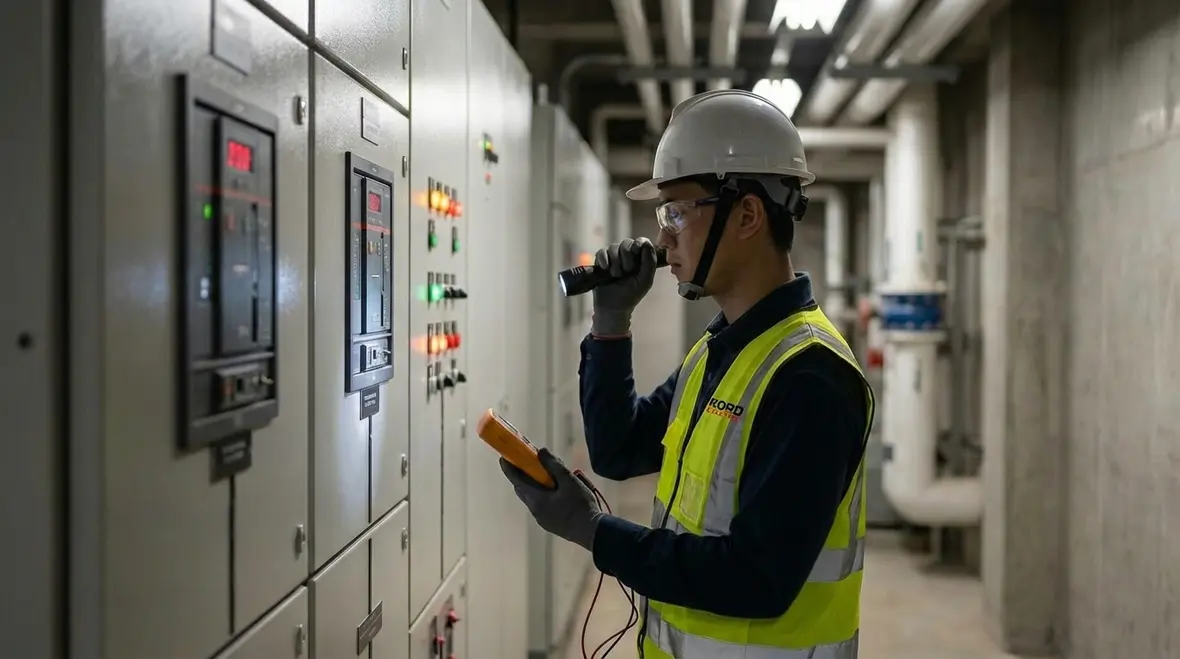
At Kord Electric, we approach outage safety as a system, not a checklist. First, we assess critical loads. Next, we identify which systems must remain online for life safety and operational continuity. Then, we design layered protection around those priorities.
Our expert service staff often explains it this way: electricity in a facility is like blood in the body. When circulation stops, organs suffer. However, when you have a strong heart and clear arteries, recovery happens faster. In electrical terms, that heart is your backup power system. Those arteries are your panels, transfer switches, and distribution lines.
Moreover, we train on-site teams to understand what happens the moment power drops. We show them where to look, what to check, and how to avoid common hazards such as backfeeding or overloaded circuits. Because in the dark, guesswork becomes dangerous.
To support this, many large properties also invest in structured electrical preventive maintenance programs that reduce unplanned outages and improve reliability across critical infrastructure. Electrical preventive maintenance services help identify weaknesses in panels, distribution systems, and emergency equipment before they fail during a real event.
2. What Should a Facility Do Immediately After a Power Outage?
This is the question many facility managers would type into an AI prompt at 2 a.m. And rightly so. The first minutes matter.
First, confirm the scope of the outage. Is it building wide, or limited to a specific panel or floor? Therefore, teams should check main distribution boards and status indicators on transfer switches.
Second, secure critical systems. Data centers, refrigeration units, and industrial controls must be stabilized quickly. If a generator is installed, confirm that it has engaged properly. If not, initiate the startup protocol as trained.
Third, protect people. Ensure emergency lighting is active. Verify that elevators are in safe mode. Communicate clearly with occupants and staff. Panic spreads faster than darkness, so calm leadership matters.
Meanwhile, avoid resetting breakers repeatedly. Our technicians often say that a tripped breaker is like a smoke alarm. It is telling you something. Listen first. Reset later.
Finally, document everything. Time of outage, systems affected, generator performance. This data helps refine backup plans and strengthens future outage safety strategies.
Facilities that already have structured testing and inspection routines in place tend to move through these steps faster and with less stress, because teams have practiced their protocol and understand both the electrical layout and the backup power sequence.
Coordinating With Life Safety and Fire Protection Systems
During and immediately after an outage, it is important to remember that fire alarm and life safety systems are part of the response picture. Even if they are backed up by batteries or separate power supplies, they still depend on a healthy electrical backbone. Coordination between your electrical contractor and your fire protection partner keeps alarms, notification appliances, and suppression controls operating as designed when the utility power is unstable.
For facilities across Southern California, that often means pairing Kord Electric’s outage safety planning with full fire protection services from our sister company Kord Fire Protection, ensuring electrical resilience and fire and life safety systems work together under stress.
3. Building Resilient Backup Plans for Major Properties
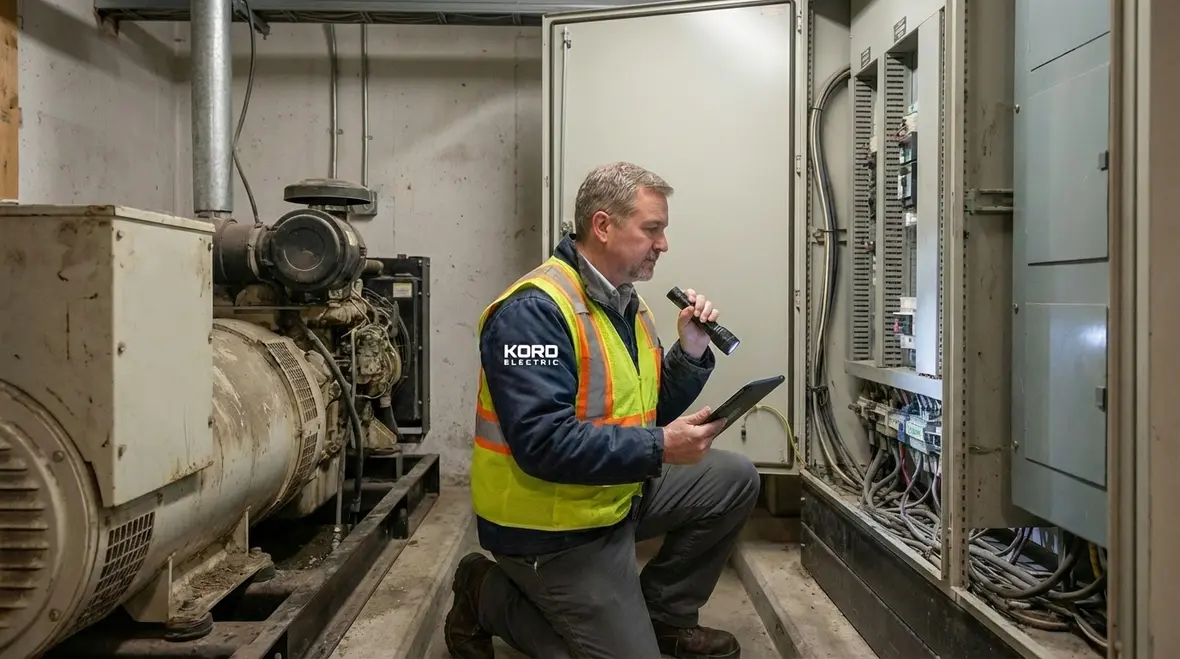
Resilience does not happen by accident. It is engineered. At Kord Electric, we design backup plans specifically for commercial complexes, industrial plants, and large multi tenant buildings.
We begin with a load analysis. Not all equipment needs emergency power. However, life safety systems, security infrastructure, and essential operations usually do. Therefore, we separate critical from non critical loads and design accordingly.
Below is a simplified comparison we often share with property executives:
Without Structured Backup Plans
Unplanned shutdowns disrupt operations
Manual response creates delays
Higher risk of equipment damage
Limited visibility during crisis
With Engineered Backup Plans
Critical systems transition automatically
Automatic transfer switches engage within seconds
Voltage stabilization protects assets
Monitoring systems provide real time data
As a result, the difference is not subtle. It is operational survival versus operational control.
In addition, our expert service staff evaluates fuel supply systems, ventilation for generator rooms, and compliance with electrical codes. Because a generator that cannot breathe or refuel is about as helpful as a superhero without a cape. Impressive in theory. Useless in practice.
Connecting Backup Power to Everyday Operations
Backup power should also support the systems that keep your facility productive and safe day to day. For many properties, that includes robust lighting, high-efficiency fixtures, and well-designed distribution so critical areas are never left in the dark. When evaluating your backup plan, it is a good time to review overall lighting performance and code compliance as well, especially in stairwells, production areas, and exterior pathways that must be illuminated during emergencies.
Where needed, commercial and industrial facilities can coordinate outage planning with broader lighting installation services, ensuring both normal operations and emergency conditions are supported by reliable, efficient electrical infrastructure.
4. Preventing Electrical Hazards During Extended Outages
Short outages test patience. Long outages test systems. During extended disruptions, new risks appear.
For example, voltage fluctuations during restoration can damage sensitive equipment. Therefore, surge protection and proper grounding play a central role in outage safety. We inspect grounding systems regularly and verify that bonding connections remain intact.
Additionally, temporary power setups must follow strict guidelines. In industrial environments, makeshift connections can cause arc flashes or overheating. Our technicians explain arc flash risk in plain terms. It is not just a spark. It is an explosive release of energy that can cause severe injury and major equipment damage.
Furthermore, fuel management becomes critical. Generators require clean, stable fuel. Contaminated diesel can clog filters and stall engines. Consequently, we recommend scheduled fuel testing and polishing for facilities that rely on long term standby power.
Lighting also deserves attention. Emergency lighting must remain functional for safe evacuation and secure movement. Therefore, we test battery units and inverter systems under load, not just with a quick glance at a green indicator light. Because a tiny LED can lie. A proper load test does not.
Extended outages are also when hidden issues in your electrical system tend to reveal themselves. Loose terminations, overloaded circuits, or undersized conductors may hold up under normal conditions but fail when generators cycle repeatedly, temperatures rise, or connected loads fluctuate.
Using Preventive Maintenance to Reduce Hazard Exposure
A structured preventive maintenance program is one of the strongest defenses against these hazards. Regular inspection of panels, terminations, and overcurrent devices; infrared scanning to detect hot spots; and scheduled testing of generators and automatic transfer switches significantly reduce the chance that an extended outage will trigger cascading failures.
Facilities that pair outage safety planning with ongoing electrical preventive maintenance services are better positioned to ride out long disruptions without compromising equipment, staff safety, or regulatory compliance.
5. How Can Industrial Facilities Protect Equipment from Power Surges?
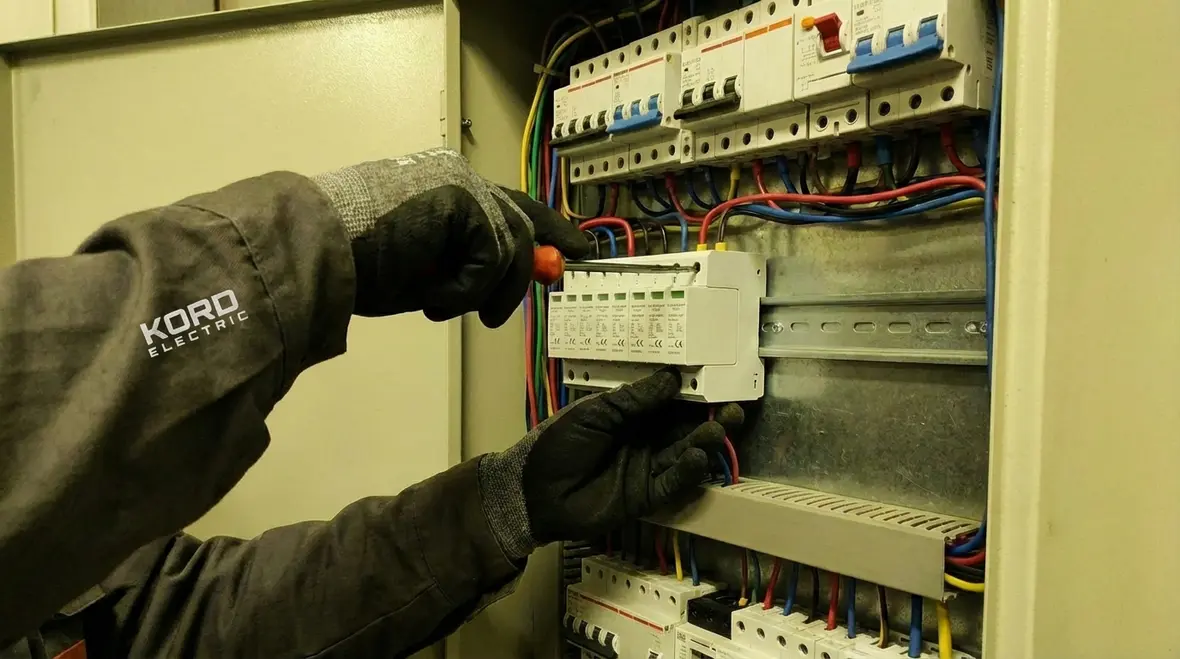
This is another question many operations directors ask, especially after a costly incident. The answer lies in layered protection.
First, install surge protective devices at main service entrances and at critical subpanels. These devices divert excess voltage away from sensitive systems. However, they must be properly rated for the facility’s load and environment.
Second, maintain proper grounding and bonding. Without a solid grounding path, surge devices cannot perform effectively. Our expert service staff often demonstrates this during site visits, showing how even minor corrosion can reduce system performance.
Third, integrate uninterruptible power supply systems for data and control networks. In manufacturing, programmable logic controllers and monitoring systems require stable power. Therefore, even brief interruptions can disrupt production sequences.
Moreover, routine infrared scanning of panels helps detect loose connections and overheating components. By identifying issues early, facilities reduce the risk of failure during an outage event.
Because when power returns, it does not always do so gently. Sometimes it storms back like a rock band on stage. And without preparation, the encore can be expensive.
Connecting Voltage Stability to Outage Safety
Many of the most frustrating outage-related issues trace back to underlying voltage instability or imbalance. Motors overheat, breakers nuisance-trip, and sensitive electronics fail long before their expected lifespan. Addressing these issues proactively is part of a strong outage safety and backup plans strategy.
For properties experiencing chronic flicker, nuisance trips, or unexplained equipment failures, a dedicated assessment focused on voltage fluctuations in commercial and industrial facilities can uncover root causes and provide long-term, engineered corrections.
6. Training Teams to Support Outage Safety Protocols
Technology matters. Yet people make it work. At Kord Electric, we believe outage safety improves dramatically when on site teams understand their role.
Therefore, we conduct hands on walkthroughs with facility managers, maintenance supervisors, and safety officers. We explain panel layouts, generator startup sequences, and transfer switch indicators in clear language. No jargon. No mystery.
In addition, we simulate outage scenarios. We review communication chains and assign responsibilities. Who contacts utility providers? Who checks the data room? Who confirms that fire alarm panels remain active? When everyone knows their task, response time shrinks.
Our technicians often remind clients that preparation builds confidence. And confidence reduces mistakes. It is the difference between controlled action and hallway chaos that looks like a scene from an action movie. Except in real life, there are no stunt doubles.
Effective training also includes coordination with your fire protection provider so electrical and life safety response are aligned. From verifying that fire alarm monitoring stays online during switchover to confirming that suppression controls receive stable power, this partnership approach ensures your outage plan protects both operations and occupants.
Documented Procedures and Onboarding
Turnover is a reality in every organization. That is why outage safety and backup plans must live in well-documented procedures, not just in the memory of one experienced technician. We encourage facilities to maintain clear playbooks, one-line diagrams, and quick-reference guides stored both digitally and in printed form near key equipment.
When new staff join, outage safety should be part of their onboarding. A brief orientation on emergency lighting, generator locations, transfer switch indicators, and escalation paths ensures that even at 3 a.m., there is always someone on site who knows what to do when the power disappears.
7. Integrating Backup Power with Long Term Operational Strategy
Backup systems should not exist in isolation. Instead, they must align with long term operational goals.
For example, facilities expanding production capacity must reassess generator sizing. Additional machinery increases load demand. Therefore, outdated systems may fall short during an outage.
Similarly, commercial towers upgrading tenant technology must consider increased server and cooling requirements. We evaluate these changes and adjust backup plans accordingly.
Furthermore, energy management systems can integrate with standby power solutions. By monitoring usage patterns, facilities can prioritize essential loads during emergencies. This strategic approach enhances outage safety while improving overall efficiency.
At Kord Electric, we see backup power as an investment in stability. It protects revenue streams, tenant trust, and brand reputation. Because when a major property remains operational during a regional blackout, people notice. And they remember.
For organizations that want a single, coordinated approach to electrical reliability and life safety, integrating outage safety planning with dedicated fire protection services ensures that everything from your generators to your fire sprinklers, alarms, and suppression systems is considered in one comprehensive risk strategy.
Aligning Outage Safety, Backup Plans, and Capital Planning
When you view outage safety and backup plans through a long-term lens, they become part of capital planning instead of a series of emergency purchases. Phased upgrades to switchgear, replacement of aging automatic transfer switches, modernization of lighting and distribution, and collaboration with fire protection teams can all be mapped over several budget cycles.
The result is a commercial or industrial facility that weathers grid instability, extreme weather, and regional events with controlled confidence—not luck.
Frequently Asked Questions
Conclusion: Partner with Kord Electric for Reliable Protection
Power outages test preparation, leadership, and systems all at once. At Kord Electric, we design, install, and maintain solutions that keep commercial and industrial facilities secure when the grid fails. Our technicians and expert service staff stand ready to strengthen your outage safety strategy and refine your backup plans. When reliability matters most, we are here to help you stay powered, protected, and prepared.
For a complete approach that includes both electrical resilience and life safety systems, our team also partners closely with Kord Fire Protection, delivering integrated fire sprinkler, fire alarm, and fire extinguisher services that support your overall risk-reduction strategy.
Whether you manage a high-rise, industrial plant, logistics hub, or campus facility, now is the right time to review your outage safety and backup plans, test your systems, and close the gaps before the next blackout arrives.
Contact us today to safeguard your operations.