Kord Electric Electrical Maintenance Checklist Guide
Kord Electric’s Electrical Maintenance Checklist Guide for Commercial and Industrial Facilities
Every reliable facility begins with a disciplined plan. At Kord Electric, their electrical maintenance checklist is not a clipboard exercise that gathers dust. Instead, it is a living system that protects production lines, data centers, distribution hubs, and large commercial buildings from costly downtime. Within the first walk through of a site, their technicians review switchgear, panels, feeders, grounding systems, emergency backups, and load performance. Because prevention always costs less than recovery, this structured inspection process sets the tone for everything that follows. And yes, while electricity may be invisible, its consequences are not. So they prefer to catch issues long before sparks decide to audition for a disaster film.
What follows is a deep look into how Kord Electric builds, applies, and refines a facility wide inspection program that keeps operations steady and leadership teams sleeping well at night.
Why a Structured Electrical Maintenance Checklist Matters for Large Facilities
Commercial and industrial buildings demand consistency. Unlike small properties, these environments operate heavy equipment, complex automation, extensive lighting grids, and high capacity HVAC systems. Therefore, minor electrical drift can quietly grow into operational shutdowns.
Kord Electric approaches each property with the understanding that power is the bloodstream of the building. If voltage fluctuates, productivity weakens. If protection systems fail, risk multiplies. Consequently, a structured inspection routine creates predictability in an otherwise high demand environment.
Their expert service staff often explains it this way to facility managers. Electricity behaves exactly as designed, not as hoped. Because of that, every breaker, relay, and conductor must perform within precise limits. Through scheduled evaluations, they identify loose connections, insulation wear, thermal irregularities, and load imbalance before those issues escalate.
Moreover, regulatory compliance adds another layer of responsibility. Industrial sites must meet safety codes and industry standards. A documented electrical maintenance checklist supports audits, reduces liability, and demonstrates due diligence. In other words, it is not just maintenance. It is risk management with a voltmeter.

Inside Kord Electric’s Electrical Maintenance Checklist Process
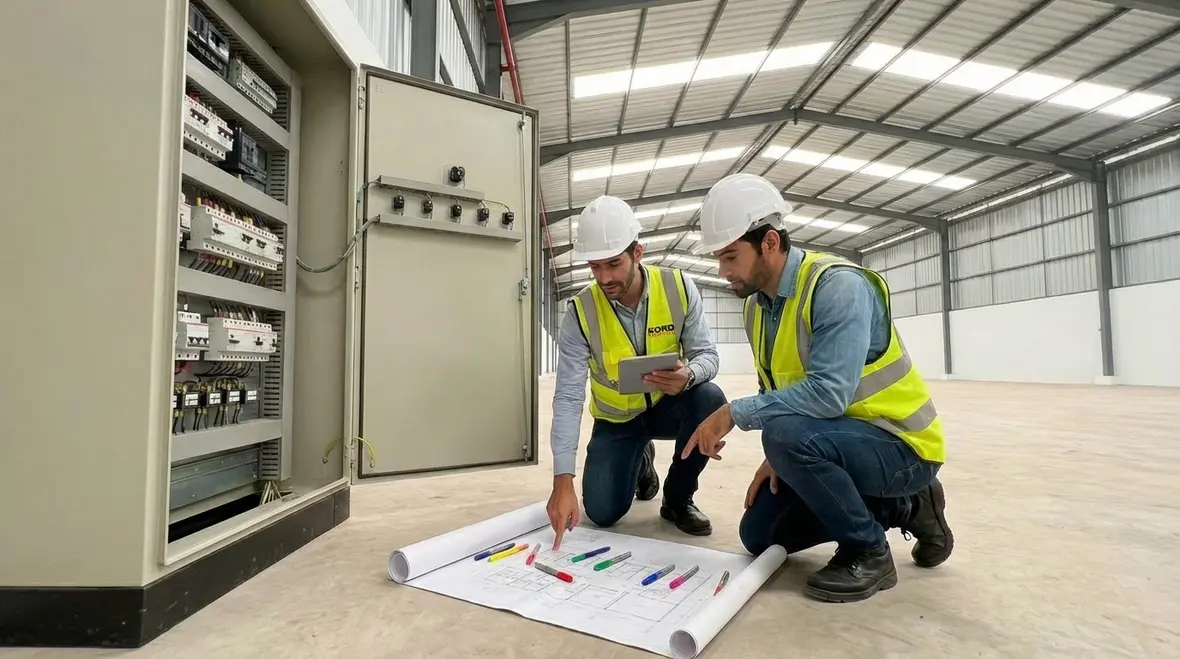
When Kord Electric develops a facility specific plan, they begin with a comprehensive site assessment. First, they map critical systems. Next, they identify high load zones. Then, they establish inspection intervals based on equipment type, age, and operating stress. Because no two facilities are identical, customization is essential.
Their process generally includes the following core components:
Primary Distribution Systems
- Inspect switchgear for overheating, corrosion, and mechanical wear
- Test protective relays and circuit breakers for proper trip function
- Verify torque settings on connections
- Review grounding integrity and bonding continuity
Panelboards and Sub Distribution
- Scan for thermal anomalies using infrared technology
- Confirm accurate labeling and circuit identification
- Check for signs of overloading or phase imbalance
- Examine enclosure integrity and environmental sealing
Backup Power and Emergency Systems
- Test generators under load conditions
- Inspect transfer switches for smooth operation
- Assess battery systems for voltage stability
- Simulate outage scenarios to verify response time
Control Systems and Automation
- Inspect motor control centers
- Validate sensor and relay calibration
- Review wiring for vibration related wear
- Evaluate surge protection devices
Meanwhile, their technicians document each observation with clarity. Photographs, load readings, and thermal images support every recommendation. As a result, facility leaders see exactly what is happening behind the panels. No guesswork. No vague warnings. Just facts.
For facilities that want to go even deeper into system behavior and resilience planning, this checklist driven approach pairs naturally with broader studies into commercial electrical systems for modern buildings, helping teams connect day to day findings with long term infrastructure strategy.
How Often Should a Commercial Building Update Its Inspection Routine?
This is the question nearly every property manager asks, and understandably so. The answer depends on load intensity, operating hours, and environmental exposure. However, Kord Electric typically recommends annual comprehensive inspections for most commercial properties and more frequent evaluations for heavy industrial sites.
For example, manufacturing plants running multiple shifts place constant demand on electrical infrastructure. Therefore, quarterly or semi annual reviews may be appropriate. On the other hand, climate controlled office towers with stable loads may follow an annual schedule supplemented by targeted checks.
Their service staff explains that frequency is not about paranoia. It is about data. When trend reports show gradual heat rise in a breaker over several inspections, action can be taken before failure. Consequently, routine attention prevents surprise outages during peak production hours. And nobody wants to explain to corporate why the assembly line stopped because of a loose lug.
In practice, many facilities tie their electrical maintenance checklist cadence to other building programs—such as lighting evaluations or electrical preventive maintenance contracts—so that shutdowns and access needs are consolidated into predictable, low impact windows.
Preventive vs Reactive Maintenance in Industrial Settings
Reactive maintenance waits for failure. Preventive maintenance anticipates it. The difference, while simple in theory, becomes dramatic in cost and safety outcomes.
When facilities rely on reactive fixes, downtime often arrives unannounced. Production halts. Shipping schedules slip. Clients call. Meanwhile, technicians scramble to diagnose a system that has already failed. That approach is stressful, expensive, and avoidable.
By contrast, a disciplined electrical maintenance checklist shifts the timeline. Instead of responding to emergencies, Kord Electric schedules planned shutdowns when necessary. As a result, repairs occur under controlled conditions. Safety improves because systems are de energized intentionally, not during crisis. Furthermore, budgets remain stable since large failures rarely appear without warning signs.
It is a bit like visiting the dentist. Preventive visits feel inconvenient, yet they are far better than an unexpected root canal. Except in this case, the tooth is a 2000 amp switchboard powering an entire distribution center.
And when an unexpected issue does surface despite best efforts, having a preventive program already in place makes it far easier to coordinate rapid response with services like emergency electrical repair, since documentation and system history are already organized.

Data Driven Inspections and Modern Diagnostic Tools
Modern commercial facilities generate data constantly. Kord Electric leverages that information to strengthen every inspection plan. Thermal imaging cameras detect minute temperature changes in conductors and breakers. Power quality analyzers record harmonics, voltage dips, and transient spikes. Meanwhile, digital torque tools confirm connection tightness with precision.
Because numbers do not lie, these diagnostics add measurable insight to the inspection process. For instance, an infrared scan may reveal a hot spot invisible to the naked eye. Therefore, technicians can retorque or replace components before insulation degrades. In addition, power quality studies may uncover harmonic distortion caused by variable frequency drives. Addressing those distortions protects sensitive automation equipment and extends asset life.
Kord Electric integrates this technology directly into their electrical maintenance checklist documentation. Consequently, facility managers receive trend reports rather than isolated snapshots. Over time, those trends reveal patterns. Patterns guide strategy. Strategy protects capital investments.
These same diagnostic insights often uncover broader power quality trouble spots—such as voltage fluctuations in commercial and industrial facilities—allowing teams to correct underlying issues that would otherwise keep reappearing as nuisance events across the site.
Common Risk Areas Found During Commercial Electrical Inspections
Although each property presents unique conditions, certain vulnerabilities appear frequently across large facilities. Recognizing these patterns allows proactive correction.
Mechanical and Connection Issues
- Loose terminations caused by vibration
- Improper torque during initial installation
- Oxidation on aluminum conductors
- Worn breaker mechanisms
Environmental and Load Concerns
- Dust accumulation inside enclosures
- Moisture intrusion in utility rooms
- Overloaded circuits due to equipment expansion
- Unbalanced three phase loads
These findings rarely appear dramatic at first glance. However, when left uncorrected, they create cascading stress across the system. Therefore, Kord Electric addresses root causes rather than surface symptoms. If expansion increased load demand, they recommend infrastructure upgrades. If moisture threatens panel integrity, they evaluate sealing and ventilation. In short, they solve problems completely.
Many of these risk areas are closely tied to lighting performance as well. An overtaxed circuit feeding aging fixtures can show up later as flicker, nuisance trips, or dim work areas—the same kinds of problems explored in their guidance on workplace lighting safety hazards that hurt productivity.

Training, Communication, and the Human Factor
Even the most thorough inspection plan relies on skilled professionals. Kord Electric invests heavily in technician training because tools alone do not create safety. Their expert service staff regularly explains findings to facility teams in clear language. Instead of technical jargon, they use relatable comparisons.
For example, they may compare electrical load balance to weight distribution on a bridge. When weight shifts unevenly, stress concentrates. Similarly, when phases carry unequal loads, components heat unevenly. That clarity builds trust and understanding. As a result, facility managers feel confident approving necessary improvements.
Communication also extends to documentation. Each completed electrical maintenance checklist includes prioritized action steps. Immediate safety issues appear first. Efficiency upgrades follow. Long term capital planning recommendations conclude the report. Consequently, leadership teams can align electrical improvements with broader operational goals.
And occasionally, yes, a technician will lighten the mood. After all, discussing arc flash boundaries does not have to feel like a scene from a disaster documentary. Professional does not mean humorless.
Integrating the Checklist into Long Term Asset Management
An effective inspection program does more than prevent failure. It informs budgeting and capital planning. Because Kord Electric tracks component age, performance trends, and repair history, they help facilities forecast replacements years in advance.
For instance, if switchgear approaches manufacturer life expectancy and thermal scans show gradual heat rise, leadership can plan upgrades during scheduled expansions. Therefore, capital expenditures align with operational strategy rather than emergency reaction.
Moreover, consistent documentation supports insurance discussions and compliance reviews. Demonstrating a structured electrical maintenance checklist shows proactive stewardship of critical infrastructure. That credibility strengthens negotiating positions and reduces uncertainty.
Ultimately, maintenance becomes part of the facility’s growth story. Instead of viewing inspections as overhead, organizations see them as investments in uptime, safety, and operational stability.
For facilities planning upgrades to lighting, distribution, or new equipment, weaving the electrical maintenance checklist into broader projects—such as lighting installation services or targeted power quality corrections—keeps asset management decisions grounded in real field data rather than guesswork.
FAQ: Commercial Electrical Inspection and Maintenance
Conclusion: Powering Performance with Confidence
At Kord Electric, disciplined inspection is not optional. It is foundational. Their structured approach protects complex commercial and industrial facilities from risk while supporting long term growth. When organizations commit to a professional electrical maintenance checklist, they choose stability over surprise. Facility leaders who value uptime, safety, and strategic planning can partner with Kord Electric and move forward with confidence, clarity, and power that performs exactly as it should.
For many organizations, the next step is to turn an informal list of “things we should probably check someday” into a formal electrical maintenance checklist supported by a dedicated service partner. Whether that means launching a new electrical preventive maintenance program, coordinating upgrades to aging infrastructure, or simply getting a baseline condition report, taking action now is almost always less expensive than waiting for the next outage to write the script.