
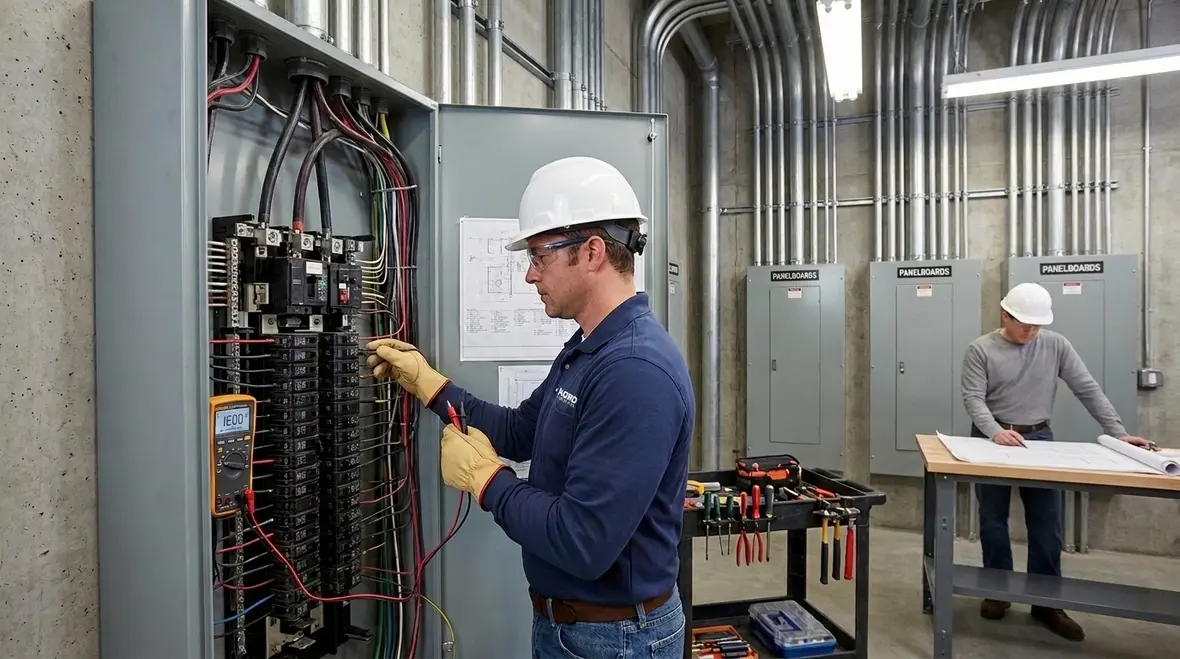
NEC 2020 Electrical Safety Requirements for Commercial Buildings
NEC 2020 electrical safety requirements for commercial buildings, and what they mean on real sites
At Kord Electric, we focus on commercial and industrial facilities, and major property buildings, so we take NEC 2020 Electrical Safety Requirements for Commercial Buildings seriously. Early on, we help our clients understand that these rules do not exist to slow projects down. Instead, they prevent hazards, reduce downtime, and keep crews and occupants safe.
In plain terms, NEC 2020 electrical safety requirements for commercial buildings push owners and contractors to design, install, inspect, and maintain systems with clear safety expectations. And yes, we know “safety expectations” can sound like a bedtime story. But when something overheats or a fault goes undetected, that story ends with smoke, alarms, and a very unhappy spreadsheet.
How NEC 2020 keeps commercial power safer, from design to inspection
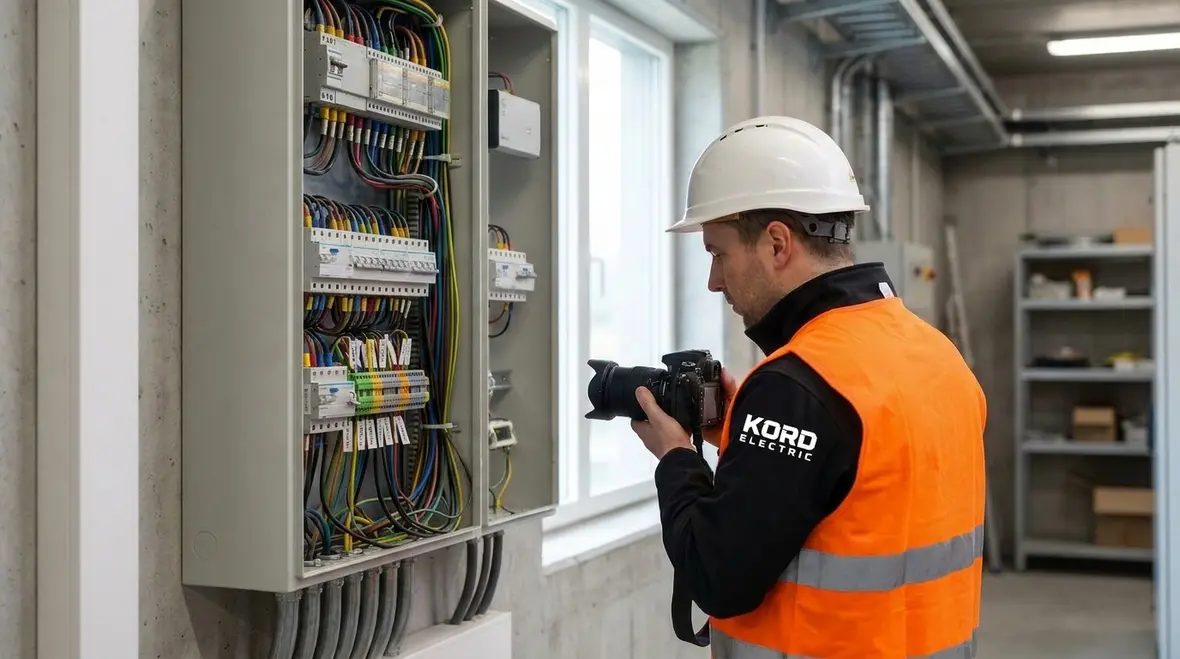
We start our conversations with a simple idea: electrical safety is a chain. Break any link, and the whole system becomes unreliable. NEC 2020 builds safety into multiple stages, and our technicians follow that logic on-site. That is how we explain requirements in a way that makes sense, not just in a way that sounds impressive.
First, NEC 2020 emphasizes proper installation practices so wiring, raceways, and equipment match the intended use and environment. Then it moves to protection methods that reduce fire risk and shock risk. Next, it expects correct labeling, verification, and inspection so problems do not wait until the “seasonal worst day” to show up.
Importantly, we do not treat this as paperwork. Our expert service staff walks through the “why” with facility teams. As we explain, codes help create repeatable outcomes across projects, which means fewer surprises during commissioning and maintenance.
- Design safety helps ensure correct selection of materials and equipment
- Installation safety helps ensure wiring methods and connections remain dependable
- Protection safety helps reduce fault impacts and limits fire spread
- Verification safety helps confirm the system performs as intended
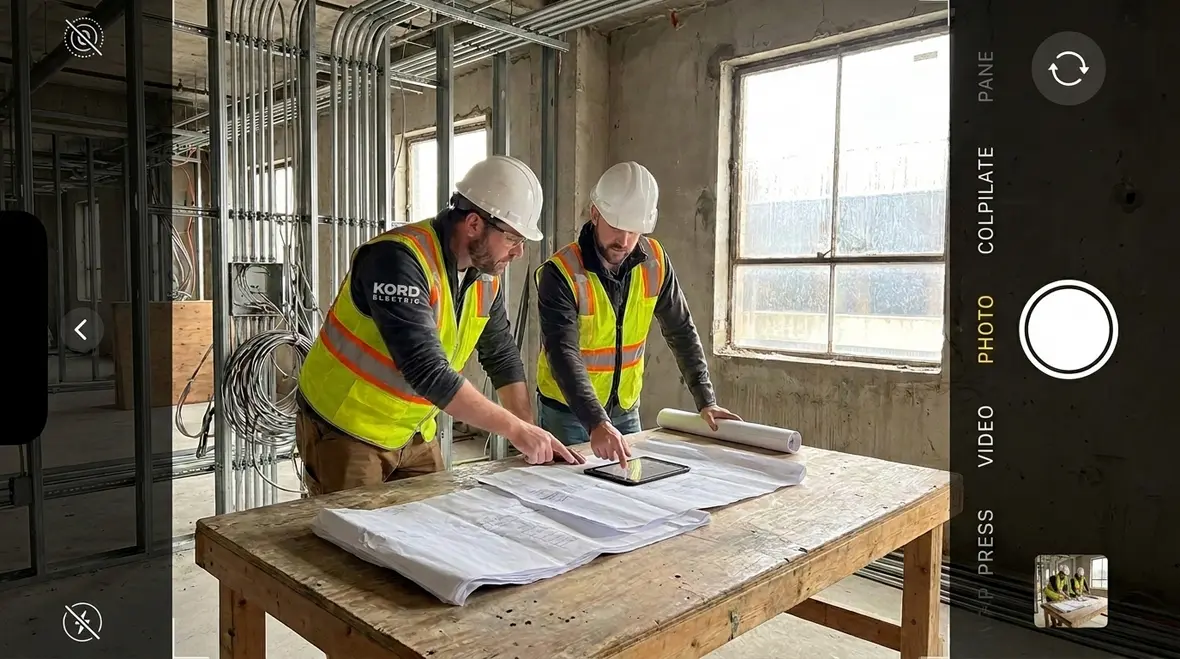
What NEC 2020 requires for grounding, bonding, and fault protection
If you want one area where safety and performance meet, you look at grounding, bonding, and fault protection. NEC 2020 leans on these concepts because they control what happens when electricity takes the wrong path. And electricity does not “take a break.” It takes a shortcut, every time.
Our technicians pay close attention to how grounding and bonding establish a controlled reference for the electrical system. They also make sure equipment frames and conductive parts are connected so fault current can travel safely to the protective device. In other words, when a fault occurs, the system should react, not “hide” the problem.
Further, we help clients understand coordination and protection device settings so trips and failures do not turn into nuisance events or, worse, delayed clearing. We often see real world issues from incomplete verification, loose termination, or mismatched components. So we explain the field checks that align with code intent, including continuity verification and inspection of terminations.
Transitioning to practical advice, our teams recommend that owners plan inspection schedules around business needs, not around guesswork. In a warehouse, a plant, or a large commercial building, systems do not stay quiet just because someone hopes. They demand ongoing confirmation.
Overcurrent protection and arc fault basics for commercial sites
Overcurrent protection is where many safety outcomes become real. NEC 2020 requirements push toward protecting conductors and equipment from overload and short circuit conditions, because those events can escalate fast. Arc faults, in particular, can create sustained heat and ignite nearby materials even when the current pattern looks “almost normal” from a distance.
In commercial and industrial environments, we see more complexity: multi-tenant spaces, shared panels, frequent tenant improvements, and upgrades that happen during business hours. Because of that, we emphasize correct device selection, correct ratings, and proper application. We also remind teams that installing a breaker is not the same thing as protecting the circuit. The full system design and verification matters.
When our expert service staff explains requirements, we focus on how people actually operate facilities. For example, we ask what type of loads exist, where sensitive equipment sits, and how often modifications occur. Then we connect those details to safety strategies, including device selection, circuit identification, and testing.
Yes, breakers can be stubborn. But stubbornness in a safety device usually means either it is doing its job or it is installed wrong. Either way, we want it addressed early, not after an incident.
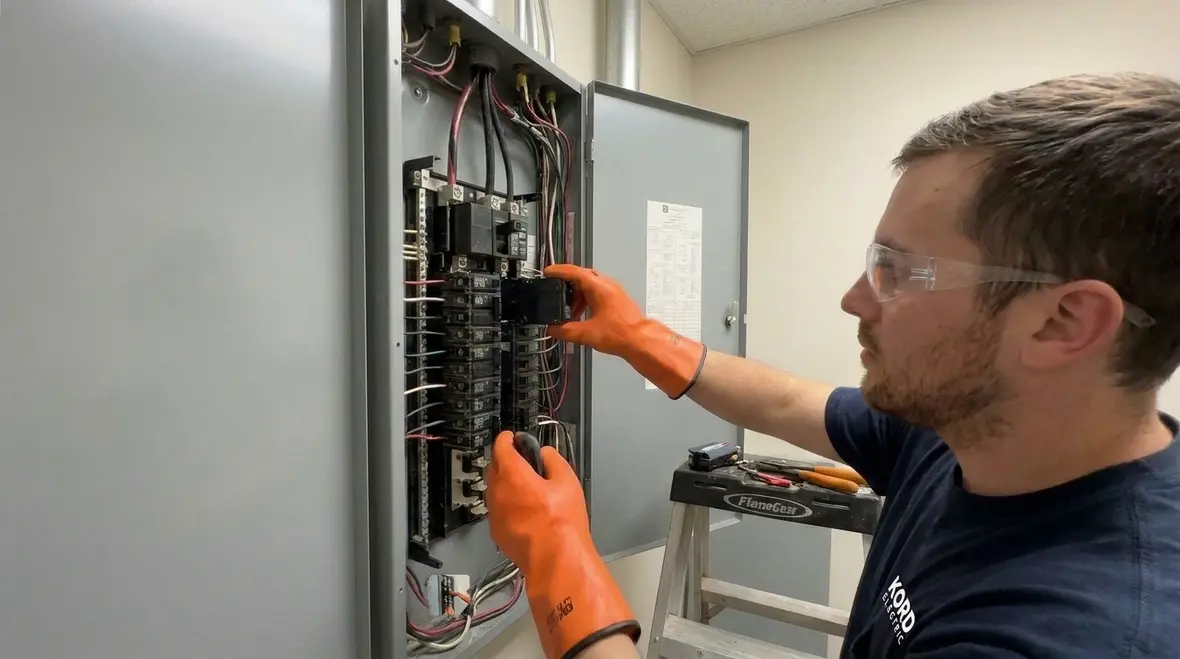
How NEC 2020 treats wiring methods, cable routing, and physical protection
Next, NEC 2020 places major emphasis on wiring methods and how cables run through a facility. This matters because damage rarely announces itself. A forklift driver might not plan to contact a conduit, and construction debris does not label itself “future risk.” So the code requires systems to resist mechanical damage when the environment calls for it.
On commercial and industrial projects, we often evaluate pathways like cable trays, conduits, sleeves, and penetrations through walls and floors. We also look at separation where needed, and we verify that routing supports safe operation and future maintenance.
Additionally, we pay attention to protection at transitions. When cables move between spaces, they face changes in temperature, moisture exposure, and physical access. Therefore, we help teams implement protection measures that stay consistent with NEC 2020 electrical safety requirements for commercial buildings, especially in areas with high traffic and equipment density.
Our technicians also work with facility managers to keep documentation accurate. That is not just administrative. Accurate as-built routing and labeling help maintenance teams avoid accidental damage during troubleshooting, which reduces downtime and prevents hazards.
Venturing into data center safety: what NEC 2020 expects of structured cabling and spaces
For major property buildings and high load facilities, data centers often become the “quiet heart” of the site. However, the electrical safety expectations around those spaces are not quiet at all. When code requirements are misunderstood, the results can be expensive.
In a recent Kord Electric blog post titled “NEC Electrical Code for Data Centers Explained,” we clarified how NEC expectations apply to these spaces, especially around power distribution, raceways, and safe routing practices. We do not just quote rules. We translate them into what a commissioning team, a facility manager, and a service technician need to do next. For readers who want a broader view of upstream infrastructure and reliability, our related guides on data center electrical infrastructure design for reliability and data center electrical requirements for uptime expand on those same principles in detail.
Here is the practical takeaway we consistently share. Data center electrical safety requires disciplined planning for power distribution, equipment locations, and cable management. As a result, crews should design for safe access, clear separation where needed, and dependable pathways that support maintenance without improvising.
Moreover, we advise owners to treat changes like an event, not like a casual tweak. Any modification to cabling pathways, power feeders, or equipment connections can affect safety performance. So our technicians follow a verification approach that matches NEC intent and supports long-term reliability.
Maintenance and testing: keeping NEC 2020 safety effective after the project closes
Now we shift to a truth that many people learn the hard way: the code does not stop at the ribbon cutting. Electrical safety lives in maintenance. NEC 2020 supports this mindset by expecting correct system performance over time, which means testing, inspection, and timely correction of issues.
We recommend that commercial and industrial facilities plan maintenance around actual operating risks. That includes periodic inspection of panels and terminations, verification of grounding systems, and testing of protective devices where applicable. Also, we encourage owners to track equipment condition and incident history, so the next inspection targets the highest risk areas first. For organizations building a structured approach, dedicated commercial and industrial electrical maintenance plans and electrical preventive maintenance programs can formalize this work instead of leaving it to chance.
Our expert service staff often hears the same phrase from property teams: “We will deal with it later.” Then later becomes a leak, a nuisance alarm, a heat discoloration, or worse. So we explain the business value of proactive work. It protects people, protects assets, and protects schedules.
And if you are thinking that maintenance can be boring, you are right. But boring is good. Boring means stable temperatures, predictable breaker behavior, and fewer “surprise emergencies” that happen right before a big customer meeting. Nobody wants to be that person on the call. We do not want you to be either.
As facilities grow, maintenance often connects directly to upgrades. When inspections reveal recurring issues, we help teams plan commercial electrical infrastructure upgrades, service capacity increases, or commercial subpanel expansions so the system remains aligned with both NEC 2020 Electrical Safety Requirements for Commercial Buildings and the building’s actual load profile.
How NEC 2020 connects to broader commercial electrical strategy
On paper, NEC 2020 looks like a set of rules. In the field, it behaves more like a strategy framework. When we help commercial and industrial clients review their systems, we do not isolate code from operations. Instead, we show how compliance, reliability, and efficiency tie together.
For example, NEC-driven decisions about grounding, conductor sizing, and overcurrent protection influence how well a facility can balance loads, control harmonics, and avoid nuisance trips. Those same decisions, when paired with data-driven electrical design and accurate modeling, help companies make smarter choices about when to upgrade equipment, when to add redundancy, and how to prepare for future demand.
In high-uptime environments like data centers, distribution centers, or process-heavy industrial plants, the connection becomes even clearer. Good NEC alignment supports the kind of redundant power paths, coordinated protection, and structured cabling that keep uptime steady instead of fragile. That is why so many of our projects blend NEC review with load studies, maintenance planning, and upgrade roadmaps rather than treating them as separate checklists.
Planning projects around NEC 2020: design, construction, and upgrades
When owners and project teams think about NEC 2020, the most productive mindset is to treat the code as a design partner rather than a last-minute reviewer. On new builds, that means starting with clear load definitions, realistic growth expectations, and early coordination between electrical design, equipment vendors, and facility operations.
During construction and commissioning, we focus on verification. Are grounding and bonding installed as designed? Do overcurrent devices coordinate properly? Are labels, arc flash warnings, and panel schedules accurate and readable? Each of these details reflects NEC 2020 Electrical Safety Requirements for Commercial Buildings, but they also reflect how smoothly the facility will run when the project team is gone and operations take over.
For existing buildings, NEC 2020 shows up whenever there is a change: tenant improvements, new equipment, additional HVAC, or expanded production. Instead of treating each project as a one-off, we help clients build upgrade plans that tie together service capacity, subpanel layouts, feeder routes, and protective device settings. That way, each step moves the facility closer to a stable long-term configuration instead of a patchwork of short-term fixes.
Across Los Angeles County and the surrounding region, our Los Angeles County electrical services bring this same NEC-focused approach to commercial and industrial properties that cannot afford guesswork. From data-driven electrical design to field-proven maintenance, we align project work and everyday operations with the safety expectations baked into NEC 2020.
FAQ: NEC 2020 electrical safety for commercial buildings
Conclusion: let Kord Electric verify your NEC 2020 safety plan
When a building runs day after day, electrical systems should run predictably and safely. At Kord Electric, we serve commercial and industrial facilities and major property buildings with disciplined installation review, practical code alignment, and ongoing expert service. If you want fewer surprises, better protection, and clear documentation your team can trust, contact us. Our technicians explain what the rules require, then we help you get it done right. Call Kord Electric today and keep your power dependable.
Whether you are planning a new commercial project, upgrading existing infrastructure, or reviewing NEC 2020 Electrical Safety Requirements for Commercial Buildings across a portfolio of sites, our team brings design expertise, field experience, and a practical mindset. From data center electrical infrastructure to everyday distribution and subpanels, we help you build a roadmap that connects safety, reliability, and budget in one clear plan.
If you are exploring how NEC 2020 ties into specialized environments like data centers, you can also review our companion article on NEC electrical code for data centers explained in the Kord Electric blog, alongside resources on data center electrical infrastructure essentials and electrical design data center efficiency. Together, these guides show how code alignment, smart design, and disciplined maintenance work as one system, not separate tasks.


