How Poor Lighting Increases Liability in Commercial and Industrial Facilities
Step into a large commercial tower or an industrial facility that uses well designed lighting for recessed ceiling systems and you feel it right away. The space feels safe. Clear. Intentional. At Kord Electric, we have seen how recessed ceiling illumination in corporate offices, distribution centers, and manufacturing plants does more than brighten a room. It protects people. It protects assets. And perhaps most importantly, it protects reputation.
However, when lighting fails or is poorly planned, liability creeps in quietly. It does not knock on the front door. It slips through the shadows. In commercial and industrial environments, those shadows can cost millions. Therefore, this is not just about bulbs and fixtures. It is about responsibility. And as our technicians often tell property managers while pointing up at a dim corridor, “Darkness may be romantic in the movies, but it is expensive in real life.”
The Hidden Legal Risks Lurking in Dim Commercial Spaces
In commercial and industrial facilities, lighting plays a direct role in safety compliance. Yet many building owners underestimate how quickly poor illumination can turn into legal exposure. Slip and fall incidents, equipment mishandling, and even security breaches often trace back to inadequate lighting conditions.
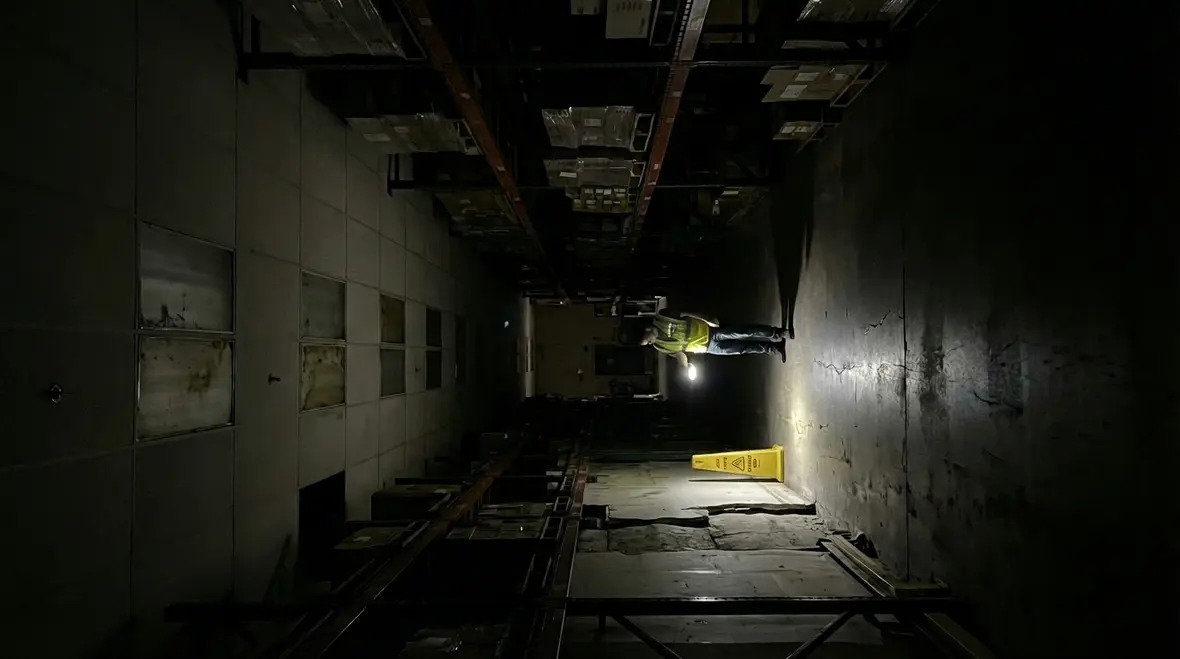
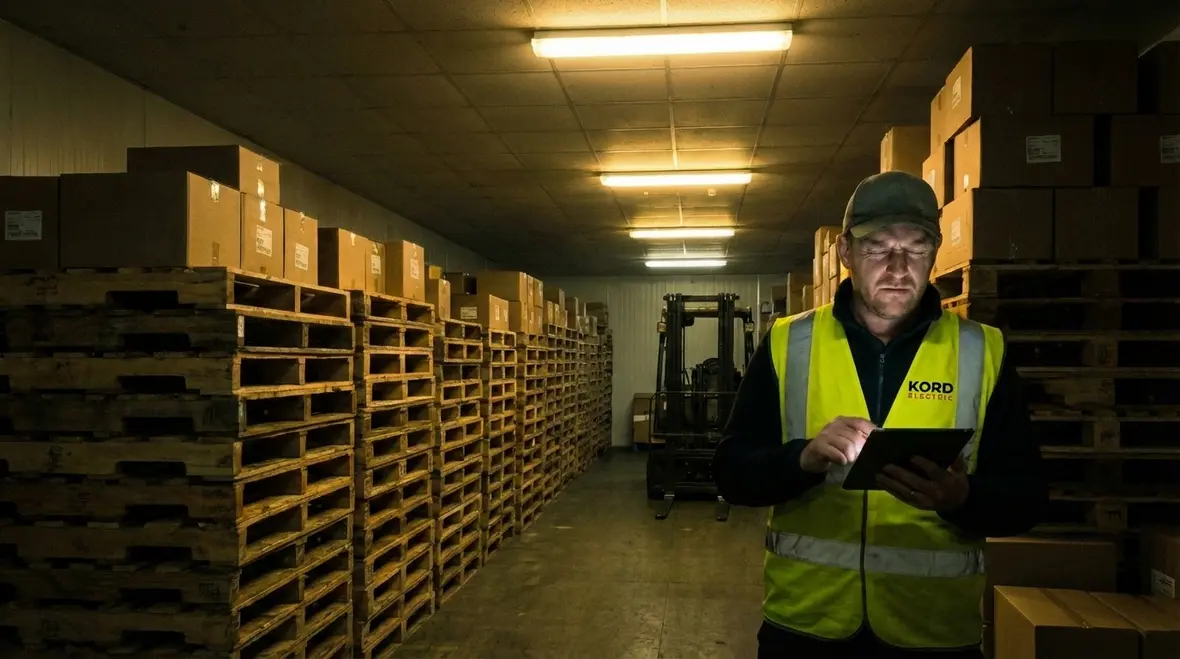
When a warehouse aisle lacks proper visibility, employees strain to read labels and navigate forklifts. Consequently, the risk of collision increases. If a tenant employee trips in a poorly lit stairwell, attorneys do not blame gravity. They examine maintenance logs and lighting levels. In many cases, courts look at whether the property owner took reasonable steps to provide safe conditions.
Our experienced service staff frequently explain that liability hinges on foreseeability. If it is foreseeable that dim lighting could lead to injury, then it becomes the owner’s duty to correct it. In other words, if someone can predict the risk, so can a judge.
Furthermore, insurance carriers now scrutinize lighting audits during claims investigations. If illumination falls below recommended standards for commercial or industrial operations, insurers may challenge coverage or increase premiums. Therefore, proper lighting becomes not only a safety matter but also a financial strategy.
Lighting for Recessed Ceiling Systems and Compliance Standards
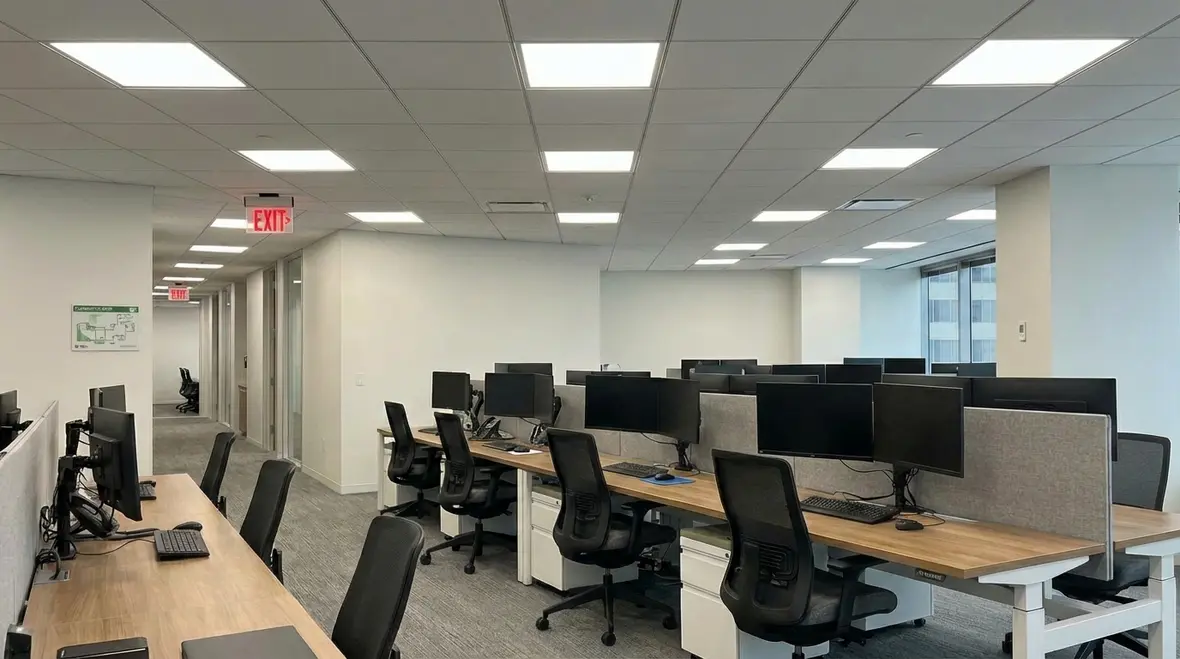
Many large office towers and production facilities rely on lighting for recessed ceiling installations because they offer clean lines, uniform distribution, and reduced glare. However, design alone does not guarantee compliance. The system must deliver appropriate light levels across work zones, emergency routes, and loading docks.
Regulatory bodies and safety guidelines specify minimum illumination levels for different commercial and industrial tasks. For example, detailed assembly work requires significantly more light than general storage areas. Yet building layouts change over time. Racks move. Tenants expand. Equipment shifts. If lighting remains static while operations evolve, gaps appear.
Our technicians routinely conduct on site evaluations where recessed ceiling fixtures were originally adequate but no longer meet the needs of the current operation. They explain this to facility managers in simple terms. “Your space grew up,” they say. “Your lighting did not.”
Additionally, recessed ceiling lighting must integrate with emergency systems. Exit paths must remain visible during power loss. Backup systems must activate seamlessly. When these elements fail, the consequences extend beyond inconvenience. They create direct compliance violations.
Therefore, a proactive approach includes routine inspections, lumen output testing, and strategic upgrades. In high occupancy commercial buildings and industrial complexes, that diligence often determines whether a routine inspection passes or triggers corrective action orders.
Adapting Recessed Lighting to Evolving Facility Layouts
As tenants add mezzanines, denser shelving, new machinery, or more workstations, light patterns change. What once felt bright and uniform can become patchy and uneven. Periodic reviews of recessed ceiling layouts help keep new production cells, conference areas, and collaboration zones as safe and compliant as original core spaces.
Workplace Accidents: The Cost of a Single Shadow
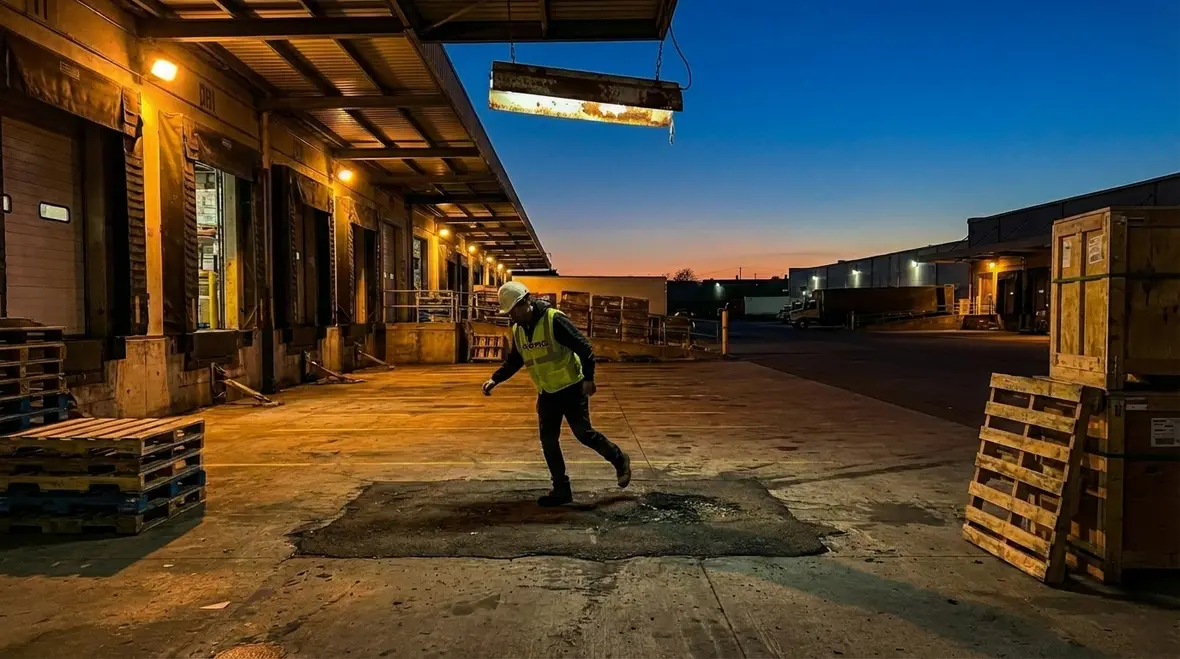
Imagine a distribution center with uneven lighting across its loading docks. One dock remains slightly darker due to aging fixtures. An employee misjudges a step while unloading. An injury occurs. Medical costs follow. Lost productivity follows. Then comes the claim.
Although that scenario sounds simple, the financial ripple spreads quickly. Workers compensation claims increase. OSHA investigations may begin. Internal audits consume management time. Meanwhile, attorneys ask whether lighting conditions contributed to the incident.
Our expert service staff often remind building operators that most accidents result from a chain of small oversights. Poor illumination is rarely the only factor, yet it often plays a supporting role. And in liability cases, supporting roles matter. After all, in court there are no small parts.
In manufacturing plants, inadequate task lighting can cause operators to misread gauges or overlook machine hazards. Consequently, equipment damage and injury risks rise. In large office environments, dim corridors increase the chance of after hours incidents involving contractors or cleaning crews.
Because commercial and industrial facilities operate at scale, even minor visibility issues multiply quickly. One poorly lit staircase may serve hundreds of employees daily. Over time, probability turns into inevitability. Therefore, controlling lighting quality reduces the frequency of events that trigger liability.
From Incident Reports to Root Causes
Smart facility teams treat every incident report as a clue. If slips, missteps, or near misses cluster around certain stairwells, docks, or corridors, lighting belongs at the top of the investigation checklist. Documenting corrective actions such as fixture replacements, added lighting for recessed ceiling, or upgraded emergency egress lighting demonstrates a clear commitment to safety.
Security Exposure in Commercial and Industrial Facilities
Poor lighting does not only cause accidents. It invites security risks. In major property buildings, parking structures, service corridors, and exterior perimeters require consistent illumination. Without it, surveillance cameras struggle to capture usable footage. Security personnel face blind spots. And unfortunately, opportunistic crime thrives in ambiguity.
Facility managers sometimes assume that cameras alone provide protection. However, cameras need adequate light to function effectively. Our technicians often demonstrate this during nighttime assessments. They compare camera footage under insufficient lighting with footage captured after upgrading to properly calibrated recessed ceiling fixtures and perimeter lights. The difference is not subtle.
Moreover, when an incident occurs on a dimly lit property, legal teams ask whether the owner took reasonable steps to deter foreseeable crime. In high traffic commercial environments, that question carries weight. Thus, effective lighting becomes part of a comprehensive risk management plan.
Interestingly, well designed lighting for recessed ceiling systems can enhance security inside corporate buildings by reducing glare and shadows that obscure sightlines. Clear visibility supports both human patrols and digital monitoring systems. And as our team sometimes jokes, “Bad lighting is like a villain in a superhero movie. It always helps the wrong side.”
Linking Lighting, Access Control, and Surveillance
The most resilient properties treat lighting as part of an integrated security ecosystem. Coordinating interior recessed ceiling grids with access control points, badge readers, and camera views reduces dark pockets where incidents can unfold unobserved. Timers, photocells, and smart controls help maintain bright, predictable coverage in the hours when risk is highest.
Operational Efficiency and the Liability Connection

Although safety often dominates the conversation, operational efficiency ties directly to liability as well. In industrial environments, productivity and accuracy depend on clear visual cues. When lighting quality declines, error rates increase. Mislabeling, misrouting, and improper assembly can all result from inadequate illumination.
While errors may seem like internal issues, they can escalate into contractual disputes or product liability claims. For example, if a manufacturing defect stems partly from poor visibility during inspection, plaintiffs may argue that the facility failed to maintain appropriate working conditions.
Therefore, investing in modern recessed ceiling lighting systems supports both performance and protection. Higher quality light improves focus and reduces eye strain. Employees make fewer mistakes. Supervisors detect issues earlier. Ultimately, this reduces downstream risk.
Our experienced technicians explain these connections in straightforward terms. They show facility leaders how improved light uniformity leads to measurable improvements in workflow. They do not rely on dramatic speeches. They rely on data, field readings, and real world case studies from commercial and industrial clients.
Turning Lighting Upgrades into Measurable ROI
Property owners often discover that the same recessed lighting projects that reduce accidents also shrink error margins, rework, and overtime. Modern controls and LED retrofits cut energy use, while targeted recessed lighting installation improvements tighten up visual clarity in high-stakes tasks. The result is a safer environment that also operates with less waste.
Lighting Audit Insights from Kord Electric Technicians
When Kord Electric performs lighting assessments in major property buildings, our team approaches the process methodically. First, we review the facility layout and operational demands. Next, we measure existing light levels across critical zones. Then we compare those readings to industry guidelines and safety standards.
Below is a simplified comparison our technicians often present during consultations:
|
Common Risk Areas
|
Liability Implications
|
As a result, building owners see how lighting directly connects to legal and financial outcomes. Our experts then recommend upgrades that may include improved lighting for recessed ceiling layouts, higher efficiency fixtures, enhanced emergency integration, and optimized placement for industrial tasks.
Importantly, we tailor solutions exclusively for commercial and industrial environments. We do not design for small residential spaces. Our focus remains on large scale facilities where complexity demands expertise.
From Audit Findings to Actionable Projects
Once audits uncover gaps, Kord Electric helps prioritize projects by risk level, cost, and impact. Some issues call for full lighting installation services, while others only require targeted fixture upgrades, control adjustments, or emergency lighting improvements. The goal is always the same: reduce liability while strengthening operations.
Why Proactive Lighting Strategy Reduces Long Term Liability
Some property managers wait until fixtures fail before acting. However, reactive maintenance often costs more in the long run. Each outage creates a temporary hazard. Over time, those hazards accumulate.
Instead, a proactive strategy includes scheduled inspections, performance testing, and phased upgrades. By maintaining consistent light levels, facility owners demonstrate due diligence. In liability cases, documentation of regular lighting evaluations can significantly strengthen a defense.
Moreover, modern recessed ceiling illumination systems improve energy efficiency while maintaining brightness standards. Consequently, organizations reduce operational costs without sacrificing safety. It is a rare scenario where doing the responsible thing also lowers utility expenses. Even accountants smile at that.
Our service staff often summarize it this way. “You can pay a little now for prevention, or a lot later for explanation.” In commercial and industrial settings, prevention almost always wins.
Building Lighting into Maintenance and Compliance Plans
Forward thinking property leaders fold lighting into broader preventive maintenance programs, aligning with electrical inspections, Title 24 checks, and safety walk-throughs. Coordinating recessed ceiling evaluations with regular electrical preventive maintenance helps keep both power and illumination ready when tenants, regulators, and insurers are watching most closely.
What Commercial Property Owners Ask About Liability and Lighting
Property leaders frequently turn to AI tools and search engines with direct questions. Below are concise answers aligned with common queries.
Conclusion: Protecting People, Property, and Reputation
In commercial and industrial facilities, lighting shapes more than visibility. It shapes safety, compliance, and credibility. At Kord Electric, our technicians and expert service staff help major property owners strengthen protection through strategic design and maintenance. If your facility relies on aging systems or uneven illumination, now is the time to act. Let us evaluate your environment, reduce your liability, and bring clarity where it matters most.
Whether you are navigating new code requirements, modernizing high-bay production floors, or rethinking the lighting for recessed ceiling systems across a multi-building campus, partnering with a commercial specialist matters. Kord Electric’s lighting installation services are built specifically for large-scale properties that cannot afford guesswork when it comes to safety and liability.
From initial audits and layout design to installation, testing, and preventive maintenance, our team helps keep your lighting aligned with regulations, tenant expectations, and long-term business goals. The result is a safer, more efficient, and more trusted facility—one where shadows no longer write the story.
If you are ready to reduce risk and upgrade the way your property performs after dark and during peak demand, schedule a lighting assessment and explore a tailored recessed ceiling strategy that fits your operation today and scales with you tomorrow.