Power Surge Diagnostics for Commercial Buildings
In every commercial tower, industrial plant, and major property building, electricity moves like a silent workforce behind the walls. When a power surge strikes, that workforce turns unpredictable. Systems flicker. Equipment hesitates. Operations pause. At Kord Electric, we approach these moments with calm precision. Our diagnostics process identifies not just what failed, but why it failed. From distribution panels to heavy machinery, we trace disturbances back to their source. Our technicians do not guess. They explain. They test. They verify. And yes, sometimes they deliver the news with the steady patience of a wise narrator reminding everyone that electricity, much like life, rewards preparation over panic.
This guide walks through how large scale facilities can recognize, investigate, and resolve electrical disturbances before they escalate into costly downtime.
Understanding Power Surges in Commercial and Industrial Buildings
A power surge is a sudden spike in voltage that travels through an electrical system. While it may last only a fraction of a second, the impact can echo for months. In commercial and industrial environments, even a small spike can disrupt automation systems, sensitive control boards, data infrastructure, and heavy production equipment.
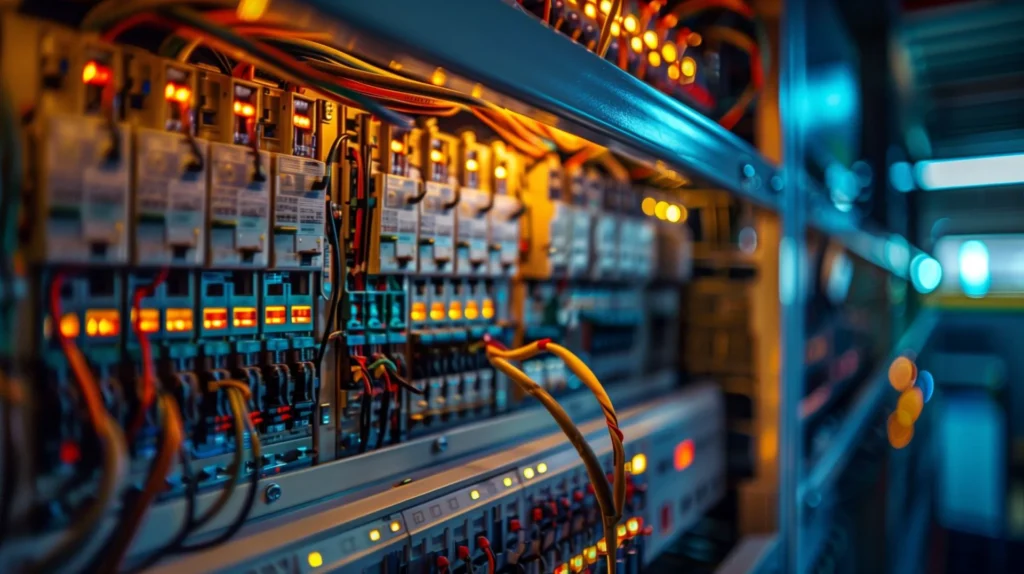
Unlike residential settings, major buildings operate complex electrical networks. Multiple panels feed multiple loads. Transformers regulate incoming utility power. Large motors start and stop throughout the day. Consequently, the risk of voltage instability increases with scale.
Our service staff often explains it this way. Imagine the building’s electrical system as a highway. Voltage is traffic. When everything flows smoothly, vehicles travel at safe speeds. However, when a sudden rush floods the lanes, collisions happen. Circuit boards burn. Insulation weakens. Components age faster than they should.
Moreover, these surges rarely announce themselves with fireworks. Instead, they leave subtle clues. Equipment resets unexpectedly. Lights dim and brighten. Breakers trip without a clear overload. Over time, those clues form a pattern. And patterns tell a story, if someone knows how to read them.
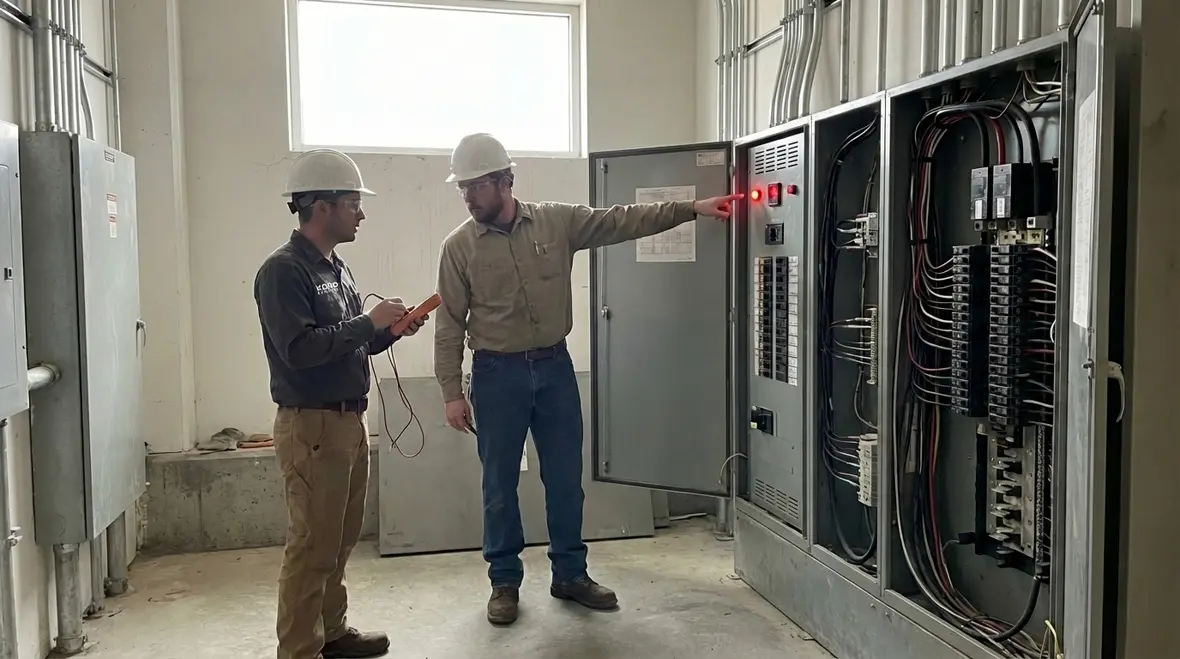
For facility owners who want to dig deeper into voltage behavior in large properties, it helps to see how power quality issues show up beyond obvious surges. Resources like Kord Electric’s overview on voltage fluctuations in commercial and industrial facilities can add even more context around how minor shifts in voltage stress equipment over time.
Common Causes of Electrical Voltage Spikes in Large Facilities
Every building has its own electrical personality. Therefore, identifying root causes requires attention to operational habits and infrastructure design.
In commercial and industrial properties, the most frequent sources include:
- Utility grid switching or external faults
- Large motor startups and shutdowns
- Faulty or undersized transformers
- Improper grounding or bonding
- Capacitor bank malfunctions
- Lightning strikes near distribution lines
For example, when a large HVAC system or industrial compressor starts, it demands a sudden inrush of current. If the system lacks proper surge protection or coordinated controls, voltage spikes ripple backward through the network. Similarly, outdated switchgear can create inconsistencies during load transfers.
Our technicians often remind facility managers that electricity is obedient but literal. It follows the path provided. If that path includes loose connections, degraded insulation, or unbalanced loads, voltage fluctuations become more likely.
Furthermore, aging infrastructure magnifies risk. Over time, insulation resistance drops and grounding paths corrode. Consequently, what once handled stress with ease now reacts unpredictably. That is where structured diagnostics become essential.
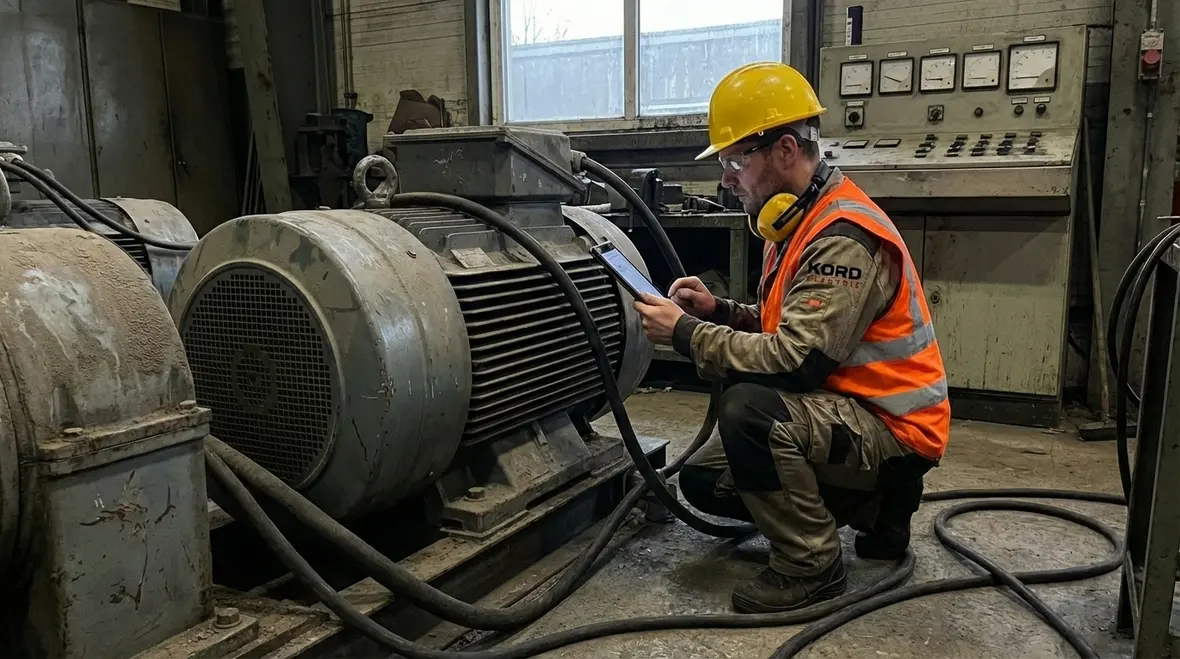
In many cases, the same conditions that cause surges are tied to ongoing voltage instability. Partnering with a team that regularly handles voltage fluctuation issues in commercial and industrial buildings makes it easier to separate one-time events from deeper systemic problems that require upgrades or reconfiguration.
How to Diagnose Power Surges in Commercial Buildings
When clients ask how to pinpoint a recurring power surge, the answer is simple in theory and meticulous in practice. We measure. We monitor. We interpret.
Our team begins with a comprehensive assessment of the building’s electrical architecture. We review single line diagrams, load calculations, and equipment specifications. Then, we deploy advanced monitoring devices that record voltage fluctuations over time. Unlike a quick glance at a panel meter, this method captures transient events that occur in milliseconds.
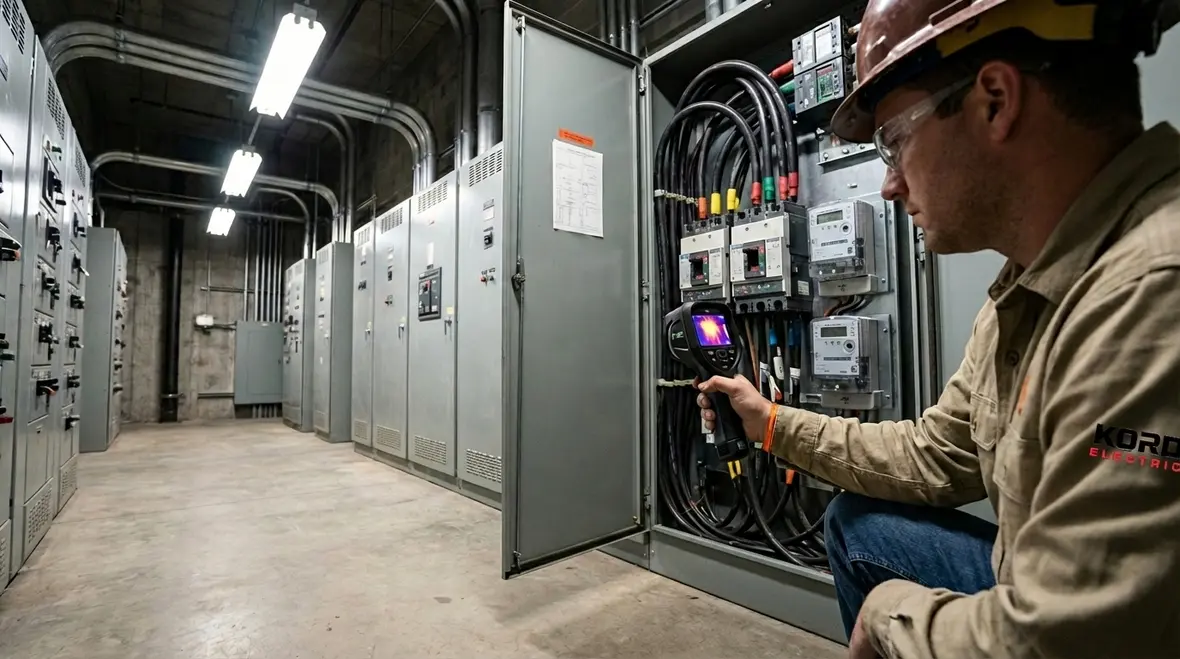
In addition, thermal imaging identifies overheating connections that often signal loose or deteriorating components. Power quality analyzers reveal harmonic distortion, voltage imbalance, and frequency variations. Each data point narrows the search.
What sets Kord Electric apart is how our expert service staff communicates findings. They translate technical data into clear explanations. They show facility managers what happened, when it happened, and why it happened. Think less mystery novel and more well narrated documentary.
Moreover, we never stop at symptoms. If a breaker trips repeatedly, we do not simply replace it. Instead, we investigate upstream causes. If sensitive equipment fails, we evaluate protection coordination across the system. In other words, our diagnostics process follows the evidence until the root issue stands exposed.
For facilities that want power surge diagnostics to be part of a broader reliability strategy, integrating these investigations with a structured electrical preventive maintenance program ensures that findings turn into long-term improvements, not just one-time repairs.
Impact on Equipment, Operations, and Revenue
Voltage instability does more than flicker lights. It erodes reliability.
In manufacturing plants, a single spike can corrupt programmable logic controllers. Consequently, production lines halt. In data driven commercial properties, servers may reboot unexpectedly, risking data integrity. Even security systems and access controls can malfunction.
Although some components survive initial events, repeated exposure shortens lifespan. Insulation breaks down. Circuit boards weaken. Motors overheat. Eventually, replacement becomes unavoidable.
There is also a financial dimension. Downtime costs escalate quickly in large facilities. Lost productivity, missed deadlines, tenant dissatisfaction, and emergency repair fees add up. Therefore, addressing electrical instability is not merely a maintenance task. It is a strategic investment in operational continuity.
Our technicians often say that electricity never sends a polite reminder before causing damage. However, it does leave evidence. When leadership responds early, the savings are substantial.

When surges and voltage swings become frequent, they often go hand in hand with nuisance outages, tripped breakers, and unexplained shutdowns. That’s why many building owners pair surge analysis with broader emergency electrical services planning, so that when a serious event strikes, the response is fast, structured, and aligned with safety requirements.
Preventive Measures That Strengthen Electrical Stability
Prevention begins with intentional design and disciplined maintenance. While no system can eliminate every external disturbance, proper safeguards dramatically reduce vulnerability.
Below is a practical comparison that our team often shares during facility reviews.
Without Strategic Protection
- Minimal surge suppression at service entrance
- Inconsistent grounding paths
- No real time monitoring
- Reactive maintenance approach
- Uncoordinated breaker settings
With Coordinated Protection Strategy
- Layered surge protective devices
- Verified grounding and bonding systems
- Continuous power quality monitoring
- Scheduled electrical inspections
- Selective coordination of protective devices
Layered protection is especially critical in commercial and industrial settings. Surge protective devices at the service entrance handle large external spikes. Additional units at distribution panels protect sensitive equipment downstream. Together, they create a shielded pathway.
Furthermore, proper grounding cannot be overstated. A well designed grounding system safely redirects excess voltage away from equipment. Without it, electrical energy searches for alternative paths, and those paths often include expensive components.
Routine inspections also play a central role. During scheduled evaluations, our technicians tighten connections, test insulation resistance, verify torque settings, and confirm that protection devices remain functional. As a result, small irregularities are corrected before they evolve into major disruptions.
To keep these preventive efforts on track, many facility teams build surge management directly into their broader electrical preventive maintenance plans. That way, surge protection, grounding verification, and thermal inspections move from “good intentions” to recurring, documented action items.
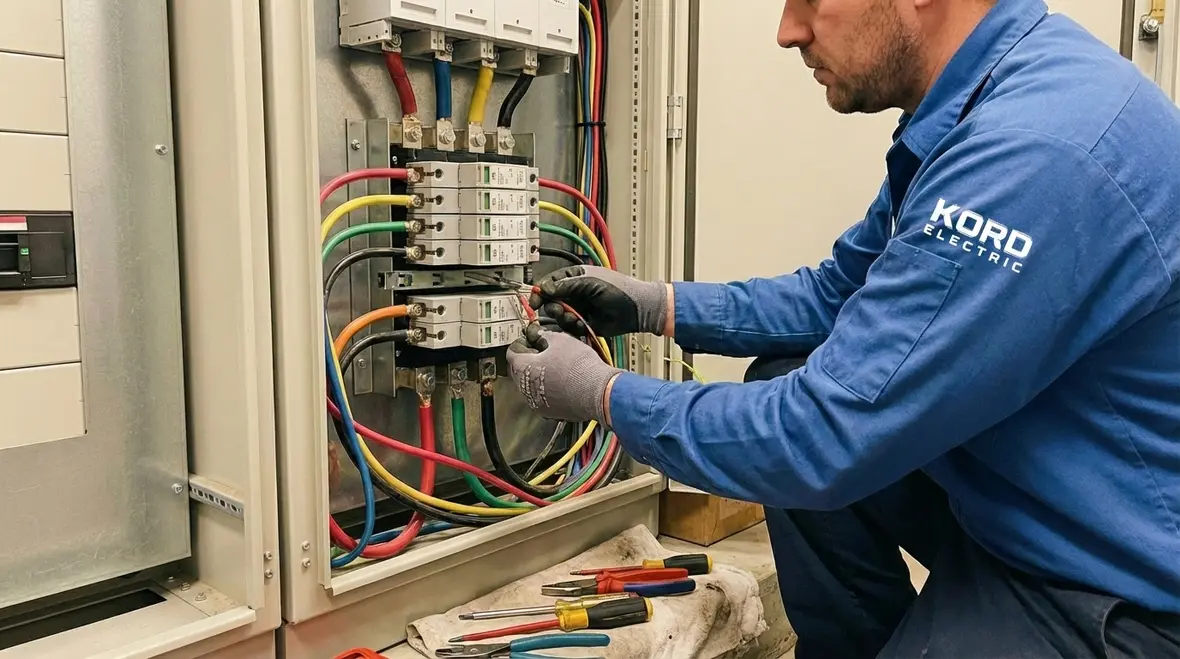
If your building is already planning lighting or infrastructure upgrades, it can also be efficient to fold surge protection and grounding improvements into larger projects like lighting installation services, panel upgrades, or system expansions, rather than waiting for a disruption to force the issue.
The Role of Professional Diagnostics and Ongoing Monitoring
In large properties, complexity demands expertise. While facility teams manage daily operations effectively, specialized electrical diagnostics require advanced tools and training.
Kord Electric deploys high resolution analyzers that capture transient events invisible to standard meters. Additionally, we evaluate harmonic distortion levels that often arise from variable frequency drives and modern electronic loads. Excessive harmonics increase heat and stress components, gradually weakening the system.
Our expert service staff also reviews load balancing across phases. When one phase consistently carries more current, voltage irregularities become more likely. By redistributing loads or adjusting configurations, we restore equilibrium.
Importantly, we provide detailed reports that outline findings, corrective actions, and long term recommendations. Therefore, building owners gain not only immediate solutions but also a roadmap for future resilience.
Some clients compare ongoing monitoring to a health tracker for their facility. It quietly collects data, alerts when patterns shift, and supports informed decisions. And unlike a wearable device, it does not judge anyone for skipping leg day.
When issues surface suddenly and operations are at risk, having monitoring data already in place allows emergency response teams to move faster. That’s why organizations that depend on uptime often combine monitoring with dedicated emergency electrical services support, so both long-term trends and urgent events are handled by the same experienced team.
Can a Building Fully Eliminate Power Surge Risks?
Short answer. No building can eliminate every external threat. However, a facility can dramatically reduce exposure and control internal triggers.
Utility grid events and severe weather remain outside direct control. Nevertheless, layered protection, verified grounding, and coordinated systems limit the impact of those events. Internally, disciplined maintenance and careful equipment startup sequencing prevent self induced voltage spikes.
At Kord Electric, we emphasize realistic expectations. We do not promise invincibility. Instead, we deliver measurable risk reduction. Our technicians explain tradeoffs clearly, outline costs transparently, and prioritize solutions based on operational needs.
Because in commercial and industrial environments, decisions must align with production schedules, tenant commitments, and safety standards. Therefore, every recommendation considers both technical performance and business continuity.
For many facility leaders, the goal is not perfection but control: having a clear plan for surge protection, diagnostics, maintenance, and rapid response. That plan often centers around a trusted commercial contractor who can handle everything from voltage fluctuation troubleshooting to long-term infrastructure upgrades as needs evolve.
Frequently Asked Questions
Conclusion
Electrical stability is not a luxury in commercial and industrial facilities. It is the backbone of productivity. When voltage irregularities appear, Kord Electric responds with steady expertise, thorough diagnostics, and clear guidance. Our technicians stand ready to protect your operations, safeguard your equipment, and strengthen your infrastructure.
If your facility is already dealing with power surge issues, unexplained shutdowns, or recurring voltage alarms, it may be time to move from reactive fixes to a coordinated plan. From electrical preventive maintenance programs to targeted voltage fluctuation diagnostics, Kord Electric helps commercial and industrial properties stabilize their systems and protect critical equipment.
Contact Kord Electric today, and let us bring calm, confident control back to your building’s electrical system.