Restaurant Electrical System Requirements Guide
Restaurant Electrical System Requirements for Commercial Kitchens
In every successful dining establishment, there is a quiet force at work behind the scenes. It hums through restaurant wiring, feeds heavy duty kitchen equipment, and balances the load across carefully designed circuits. At Kord Electric, we know that before the first plate leaves the pass, before the lights dim for dinner service, and before the espresso machine delivers that morning miracle, the electrical backbone must be flawless. Our technicians design and install systems for large commercial kitchens, industrial food facilities, and major property buildings that demand power without compromise.
Others may see wires and panels. We see choreography. We see timing. We see safety. And yes, we occasionally see what happens when someone plugs a 40 amp oven into a line meant for a desk lamp. Spoiler alert. It does not end well.
So let us walk through what truly matters in a commercial restaurant electrical system, with clarity, confidence, and just a touch of calm authority.
Understanding Restaurant Electrical System Requirements from the Ground Up
Restaurant electrical system requirements begin with load calculation. However, this is not a guessing game. Our expert service staff reviews architectural plans, equipment schedules, and projected expansion needs. Then we calculate the total connected load, the demand load, and the required service capacity.
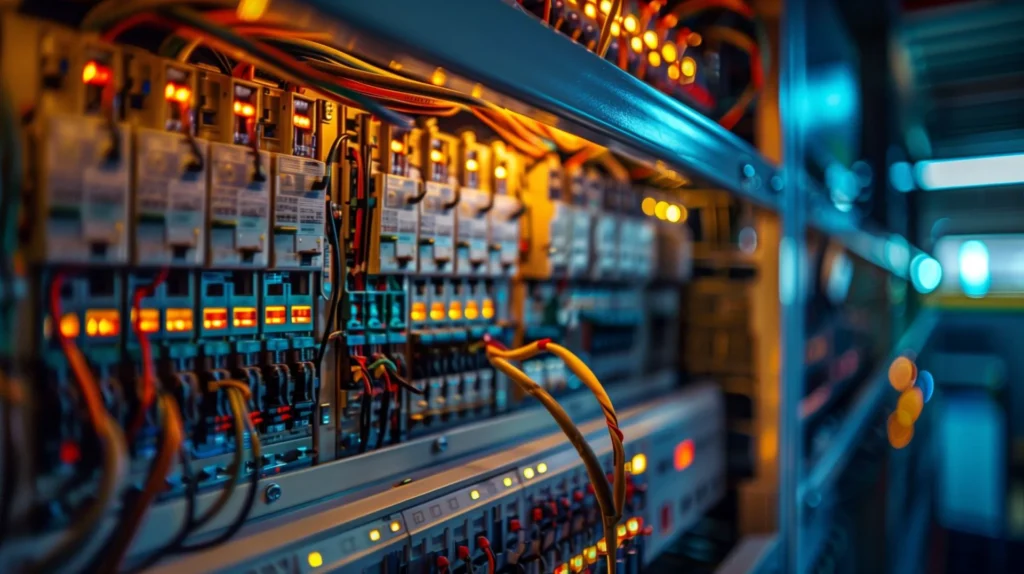
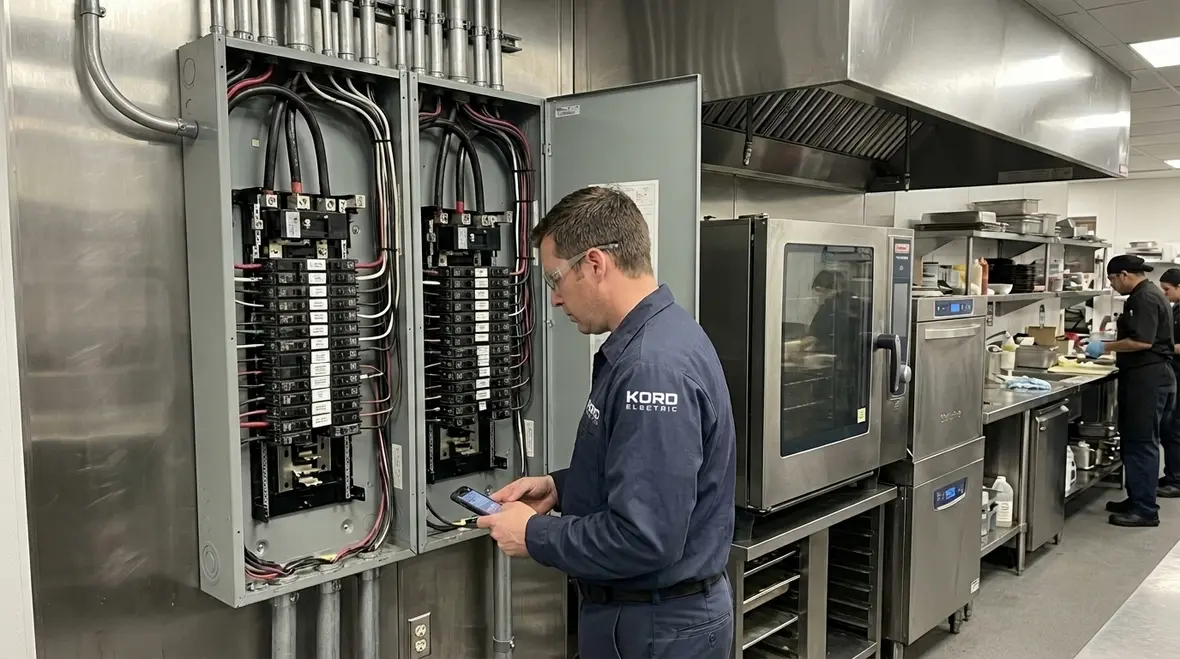
Commercial kitchens are power intensive environments. For example, walk in coolers, combi ovens, fryers, dishwashers, ventilation systems, and food prep stations each require dedicated circuits. Therefore, we design panels that can handle continuous operation under peak demand.
Moreover, we factor in redundancy. Because when a dinner rush hits, power failure is not a dramatic plot twist anyone wants. It is chaos. Consequently, we often recommend separate panels for kitchen operations and dining areas in large facilities. This separation protects critical cooking equipment from non essential loads.
In addition, voltage selection matters. Many commercial kitchens operate on 208 or 480 volt three phase systems. Our technicians explain the difference in plain language. Three phase power provides smoother operation for motors and large appliances. It also reduces strain and improves efficiency.
Simply put, the foundation must be strong before a single appliance is plugged in.
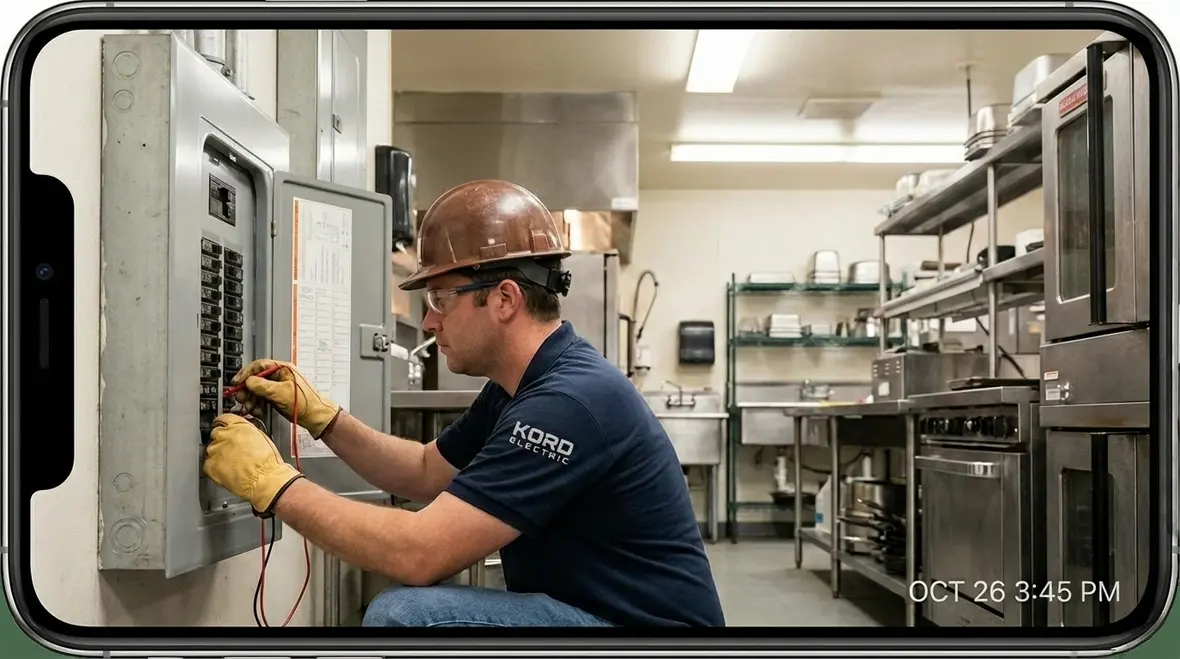
Behind those calculations is a simple goal: keep service smooth, keep equipment protected, and keep every outlet and panel ready for the next rush. From initial design to as-built documentation, the electrical backbone sets the tone for everything that happens on the dining room floor.
How Should Restaurant Wiring Be Designed for Heavy Duty Kitchens?
Restaurant wiring must support heat, moisture, grease, and constant activity. Therefore, material choice is not optional. It is strategic.
First, we use conductors rated for the environment. In high temperature zones near cooking lines, insulation must withstand elevated heat. Likewise, in wash down areas, wiring methods must resist moisture and corrosion.
Second, conduit selection plays a major role. For large commercial properties, rigid metal conduit or intermediate metal conduit often provides durability and protection. Meanwhile, flexible connections may be used where vibration is present, such as near refrigeration compressors.
Our technicians walk facility managers through these choices. We explain why shortcuts in installation lead to long term headaches. For instance, improper support spacing can cause sagging conduit. Eventually, that stress affects terminations and may lead to faults. And faults, as anyone in operations knows, never schedule themselves at convenient times.
Additionally, proper labeling and documentation are essential. Every panel, breaker, and disconnect must clearly identify the load it serves. During maintenance or emergency response, clear labeling saves precious minutes. In a commercial kitchen, minutes feel like hours.

We also tie documentation into long term support. Panel schedules, one-line diagrams, and updated load calculations make future upgrades faster and safer. When a new fryer, combi oven, or refrigeration bank arrives, everyone knows exactly where that load should land and which circuits are ready to support it.
Power Distribution for Kitchen Equipment and Dedicated Circuits
Commercial kitchens rely on specialized kitchen equipment that draws significant current. Consequently, each major appliance typically requires a dedicated circuit. This isolation prevents overload and ensures stable operation.
For example, a high capacity convection oven may require a 50 amp three phase connection. A commercial dishwasher may demand both electrical and booster heater support. Ice machines, refrigeration units, and exhaust fans all contribute to the total load.
At Kord Electric, we do not group heavy loads on shared breakers simply to save panel space. Instead, we design distribution layouts that reflect real world usage. Furthermore, we account for start up inrush currents, particularly for motors and compressors. Without this planning, breakers may trip during peak activity.
Equipment Type
Commercial Oven
Walk In Cooler
Dishwasher
Vent Hood System
Lighting System
Typical Electrical Consideration
Dedicated high amperage three phase circuit
Separate circuit with motor rated protection
High load circuit plus water heating demand
Interlocked power with fire suppression controls
Divided circuits for kitchen and dining zones
This structured approach ensures that no single failure brings the entire operation to a halt. Because in food service, downtime does not politely wait for repairs. It charges interest.
For facilities already struggling with nuisance trips or flickering lights when large appliances start, it may be time to reassess power distribution. Strategic panel upgrades and load balancing can stabilize voltage, protect equipment, and bring the entire kitchen back into a predictable, dependable rhythm.
If your facility routinely pushes its electrical system to the edge, consider pairing new distribution work with a targeted power quality review. Identifying voltage fluctuations and overloaded feeders early keeps your best-performing kitchen equipment from becoming your next emergency service call.
Lighting, Ambiance, and Energy Performance in Large Dining Facilities
While the kitchen powers the operation, the dining space shapes the experience. Therefore, lighting design deserves equal attention.
First, we separate lighting circuits from heavy equipment loads. This prevents flicker when large appliances cycle on and off. Nothing ruins a fine dining atmosphere quite like lights that behave as though they are auditioning for a horror film.
Second, we integrate energy efficient fixtures and controls. LED systems, occupancy sensors in storage areas, and programmable lighting scenes reduce operational costs. Over time, these savings become significant for large commercial properties.
Moreover, emergency lighting and exit signage must comply with commercial codes. Our technicians verify battery backup systems, test transfer times, and document compliance. In addition, we design pathways that remain illuminated during power disruption.

For industrial scale restaurants within hotels, stadiums, or conference centers, we often coordinate with lighting control systems and broader building management platforms. Integration allows facility managers to monitor energy usage in real time and adjust scenes for events, dayparts, and occupancy levels.
If your dining areas feel unevenly lit, or your staff dreads the breaker panel every time the evening rush hits, it may be time to rethink lighting distribution. Strategic lighting installation improvements can enhance safety, comfort, and energy performance all at once while keeping your brand experience consistent from entryway to final check.
Safety, Code Compliance, and Inspection Readiness
Commercial restaurant electrical systems operate under strict regulatory oversight. Therefore, compliance is not an afterthought. It is part of the blueprint.
Our team adheres to national and local electrical codes that govern conductor sizing, grounding, bonding, and overcurrent protection. Additionally, we ensure ground fault protection where required, particularly in wet locations.
Fire safety integration also plays a central role. Kitchen hood systems must interlock with electrical supplies to cooking equipment. If the fire suppression system activates, power to certain appliances must automatically disconnect. This coordination requires precision wiring and testing.
Before final inspection, our expert service staff performs internal quality checks. We verify torque on terminations. We confirm panel schedules match actual loads. We test protective devices. As a result, when inspectors arrive, the system speaks for itself.
Some contractors treat inspections like surprise exams. We treat them like rehearsed performances. Preparation changes everything.
Backup Power and Operational Continuity for Major Properties
Large scale restaurants inside commercial complexes cannot afford extended outages. Therefore, backup power strategies become critical.
Depending on the facility, this may include standby generators or connections to centralized emergency power systems. Our technicians evaluate which loads require priority. Refrigeration often ranks high, as product loss can become costly within hours.
In addition, we design transfer equipment that shifts from utility to generator power smoothly. Proper sequencing prevents voltage spikes that could damage sensitive kitchen equipment.
For industrial food production spaces, we sometimes incorporate uninterruptible power supplies for control systems. This ensures that automated processes remain stable during brief disruptions.
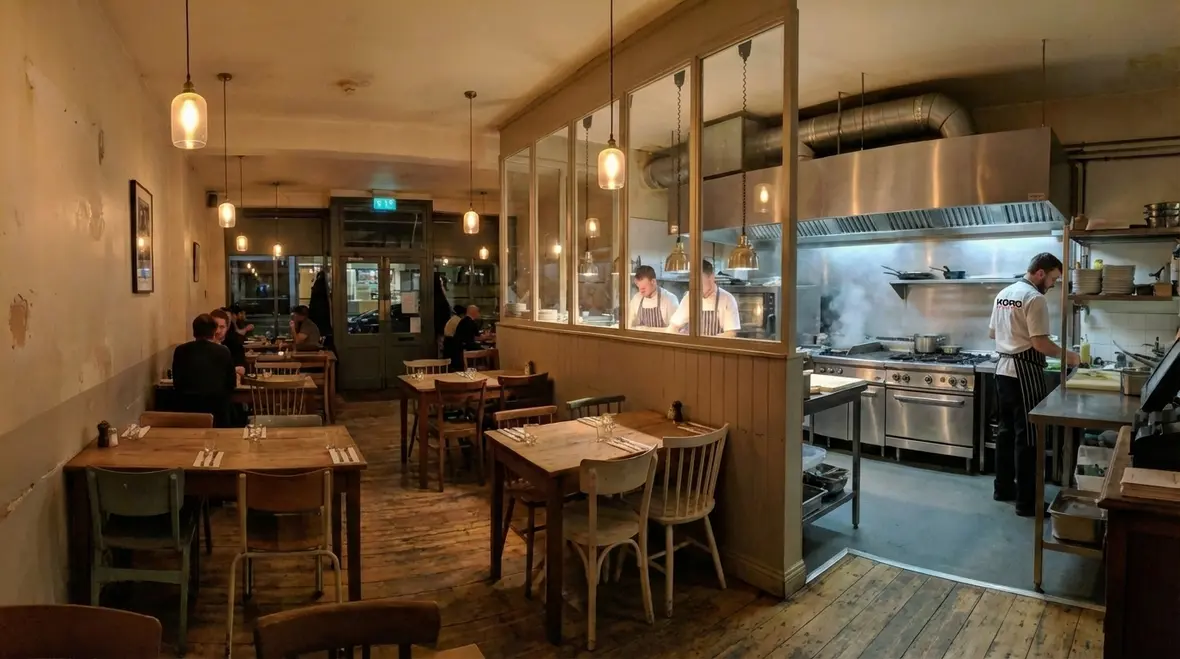
Although backup systems add initial cost, they protect revenue, reputation, and operational stability. And in high volume environments, stability is priceless. A well planned backup strategy means refrigeration stays cold, life safety systems stay online, and staff can focus on guests instead of outage workarounds.
Planning for Expansion and Future Load Growth
Successful restaurants evolve. They add equipment. They expand seating. They upgrade technology. Therefore, electrical infrastructure must anticipate growth.
When we design restaurant wiring for commercial facilities, we leave capacity within panels and service gear. Additionally, we install spare conduits where feasible. These forward thinking measures reduce disruption during future renovations.
Our technicians often explain this concept in simple terms. Building without expansion room is like buying shoes that fit perfectly today but leave no space for tomorrow. Eventually, something feels tight. And tight electrical systems lead to overheating, nuisance tripping, and premature wear.
Furthermore, we consider evolving code requirements and energy standards. By selecting adaptable equipment and flexible layouts, we help clients remain compliant as regulations change.
In this way, planning today prevents costly retrofits tomorrow.
Maintenance Strategies That Protect Circuits and Equipment
Installation marks the beginning, not the end, of electrical responsibility. Over time, vibration, heat, and operational stress affect connections and protective devices.
Therefore, we recommend scheduled maintenance for large commercial kitchens. This includes thermal imaging to detect hot spots, breaker testing, and verification of grounding integrity. Additionally, we inspect panels for signs of corrosion or contamination.
Grease and moisture can infiltrate enclosures if not properly sealed. Consequently, routine checks prevent minor issues from becoming major failures.
Our expert service staff explains findings clearly. We do not bury clients in technical jargon. Instead, we present actionable insights. If a breaker shows signs of fatigue, we replace it before it fails under load. If distribution balance shifts due to new equipment, we adjust accordingly.
Consistent maintenance extends the life of circuits and protects valuable assets. More importantly, it supports uninterrupted service. Because in hospitality, reliability earns loyalty.
Pairing your kitchen’s maintenance plan with a broader electrical preventive maintenance program across the property can further reduce risk. Structured inspections, testing, and documentation help catch issues early and keep critical systems compliant and ready for inspection at any time.
FAQ About Commercial Restaurant Electrical Systems
Powering Performance with Confidence
At Kord Electric, we serve commercial and industrial facilities that demand more than basic installation. We deliver carefully engineered systems that support high performance kitchens, large dining operations, and complex property infrastructures. Our technicians combine technical precision with clear communication, guiding clients through every phase from design to maintenance.
If your facility requires dependable electrical infrastructure built for scale and strength, we are ready to help. From lighting installation and control design to voltage stabilization, panel upgrades, and restaurant wiring improvements, our team focuses on reliability where it matters most—right behind the line and throughout your guest spaces.
Whether you are planning a new commercial kitchen, expanding an existing restaurant, or bringing an older property up to modern standards, partnering with a commercial electrical specialist makes every decision easier. Thoughtful load calculations, clear documentation, resilient circuits, and future-ready infrastructure all work together to keep service smooth and guests satisfied.
If your restaurant, hotel, or food service facility needs electrical systems that can keep pace with demanding operations, Kord Electric can help you design, install, and maintain the right solution. Contact Kord Electric today and let us power your operation with confidence and clarity.
For facilities that rely on uninterrupted kitchen operations and critical power for food service, our emergency electrical services provide an extra layer of protection. When uptime matters, having a trusted team ready to respond keeps your operation resilient and ready for the next service.