Warehouse Lighting Controls: Sensors, Automation & Energy Savings
Warehouses do not need dramatic lighting to get work done. They need lighting that pays attention, stays calm, and cuts costs quietly in the background. That is where Warehouse Lighting Controls: Sensors, Automation & Energy Savings systems from Kord Electric step in. When controls match how people and forklifts actually move, the building stops acting like a stage show and starts behaving like a reliable tool that supports every shift.
In this guide, we walk through how modern controls, sensors, and automation support warehouses and industrial facilities across Los Angeles County and beyond. You will see how zoning, motion sensing, daylight harvesting, and data all fit together, and how Kord Electric designs, installs, and maintains systems that feel predictable for your team. Along the way, we connect these ideas to related resources like Kord Electric’s Warehouse LED Lighting Benefits and ROI guide, so you can see how controls layer onto LED upgrades for even stronger performance over time.
Warehouse lighting controls that quietly save money
At Kord Electric, we design Warehouse Lighting Controls: Sensors, Automation & Energy Savings systems that help commercial and industrial facilities run brighter when they need to, and calmer when they do not. We do it with sensors, smart scheduling, and practical automation that fits real warehouse life. In the first few weeks, most teams notice two things: fewer lights left on “just in case,” and better comfort for workers who deserve reliable visibility. Meanwhile, our experts explain the setup in plain language, because confusing wiring diagrams are not a team-building exercise. If you have ever watched a warehouse go from “dark cave” to “spotlight stage” at random, you already know why control matters.
In this guide, we lay out how modern warehouse lighting control works, where it performs best, and how our technicians help you plan, install, and maintain a system that supports your operations, not fights them. When you pair these controls with the kind of LED strategies outlined in Kord Electric’s Warehouse LED Lighting Benefits and ROI resource, you are not just cutting kilowatts. You are tightening the whole operation so every shift runs smoother.
How smart controls adapt to real warehouse work
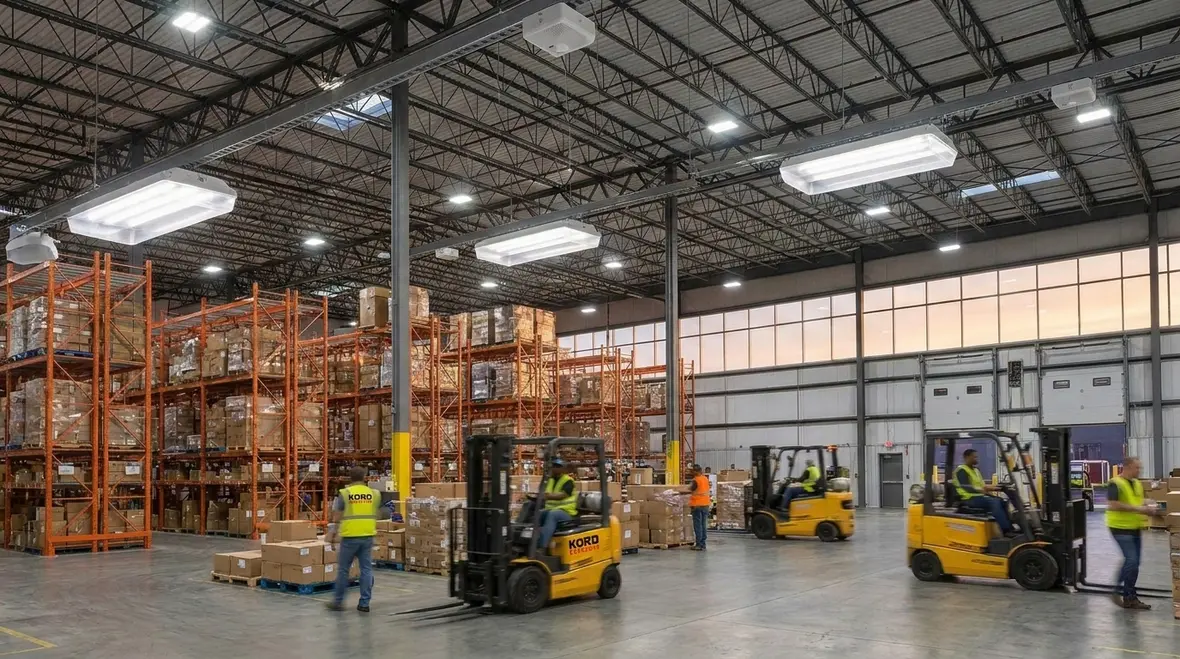
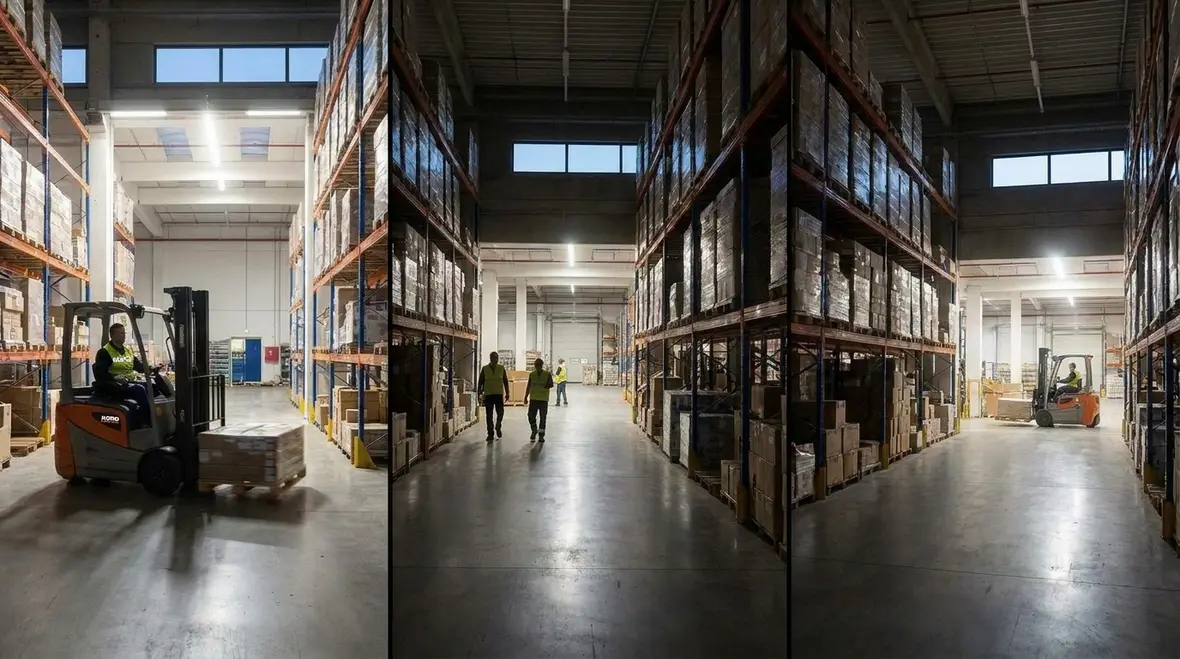
Warehouse work changes through the day. So we stop using one-size-fits-all lighting schedules. Instead, we use sensing and automation so fixtures respond to actual conditions. For example, motion sensing helps areas used in short bursts, like loading docks, mezzanines, and pick zones. Daylight harvesting supports zones near skylights and dock openings, where sun levels rise and fall. As a result, lighting stays steady for safety and task needs, but it avoids wasting energy when ambient light already does the job.
Further, our approach supports zoning. Warehouses rarely share the same usage pattern across the building. Therefore, we divide control into areas such as receiving, packing, aisle staging, and storage racks. Then automation handles the rest. When activity stops, light output can step down smoothly rather than snapping off. That calm behavior matters for productivity. Nobody wants a “lights out, now panic” moment. Honestly, that is a horror movie plot, not an industrial workflow.
Our team also calibrates control logic so it matches your site. We consider ceiling height, reflectance, dock traffic timing, and seasonal shifts. Then we help your staff understand what the system does and why, because good controls should feel predictable. When these strategies align with broader warehouse control concepts like those in Kord Electric’s Warehouse LED Lighting Controls Optimization guide, your facility gains a control layer that works hard without drawing attention to itself.
What warehouse lighting sensors should cover
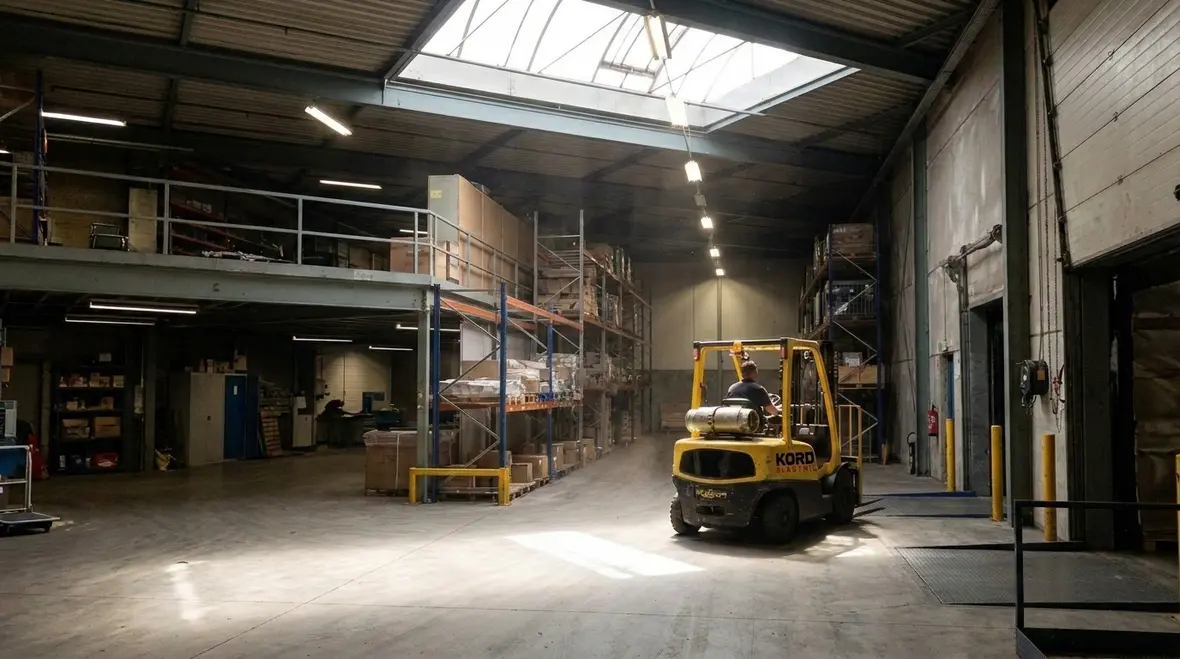
To make warehouse lighting controls truly useful, sensors must cover the right jobs. We see three common gaps: incomplete detection, poor placement, and controls that do not fit the workflow. Our technicians handle these with a structured plan that looks at the warehouse like an operations map.
Key sensor types typically include:
Motion sensors for areas with intermittent traffic, including aisles near pallet staging and offices inside or near warehouse bays
Occupancy sensors for spaces where people remain longer, such as inventory processing and maintenance rooms
Ambient light sensors for areas influenced by daylight from skylights, roll up doors, or exterior openings
Optional utility sensors like power monitoring when a facility wants deeper reporting for audits and energy targets
Next, we focus on placement. A sensor that sees only empty floor space will make decisions that feel random. Therefore, we align sensor fields of view with where people and forklifts actually move. At the same time, we avoid placing sensors where glare, high shelving, or airflow changes can confuse detection.
Finally, we set response timing. We help you choose fade down and hold times that support safety without constant full brightness. In practice, that means fewer lights run at maximum output for no reason, while workers still see what they need. Together with smart lighting strategies like those covered in Kord Electric’s Warehouse Smart Lighting Controls for Safety article, a well-designed sensor layout becomes a quiet safety net for every shift.
Automation strategies that cut waste without disrupting work
Once sensors detect activity and light levels, automation turns signals into consistent control. In warehouses, this is where savings become real. We typically implement control scenes that follow how the building runs. For instance, morning startup schedules can bring lighting to a safe level before workers arrive. Then activity-based control takes over for day shift movement and task areas.
Additionally, many sites benefit from staged control. Instead of flooding the whole building with maximum output, we step through zones. Receiving areas may need brighter lighting early, while deep storage bays may not. As workers move materials, other zones brighten. When activity shifts again, the lighting follows the pattern. This keeps you from paying for brightness in empty corners.
We also support gradual dimming. Sudden changes draw complaints and slow people down. So we set smooth transitions. That behavior keeps visibility stable and makes the system feel like a helpful teammate, not a fickle automaton. If you have ever had a chat bot change its answers mid sentence, you already know why consistency matters.
To keep operations smooth, our technicians test control behavior on-site. We verify how zones respond during real movement. Then we adjust settings so the system matches your building, not a generic default. For facilities exploring controls in offices, campuses, or mixed-use portfolios as well, Kord Electric’s Commercial Lighting Automation ROI and Payback guide shows how similar automation principles increase savings outside the warehouse too.
Energy savings and reporting for commercial facilities
Energy savings start with less runtime at full output, but they get stronger when you can track results. We help major property buildings and industrial facilities plan controls that support both operational needs and reporting goals. Because when leadership asks for proof, you should not answer with guesswork.
In many facilities, savings come from three levers working together:
Reduced lighting hours through occupancy and schedule control
Lower output when daylight is enough using ambient light sensing
Zone-based control so only active areas stay bright
Moreover, our expert service staff helps you understand how to interpret performance data. We explain what the system logs, how to review trends, and what changes usually drive improvements. That means your team can spot patterns, such as zones that stay too bright after shifts or areas where sensor placement needs tuning.
In addition, reporting can support energy management plans and internal audits. We focus on practical outputs that help teams make decisions, not dashboards that look impressive but never get used. For warehouses moving toward broader retrofits, the Commercial Lighting Control Retrofit: Costs, Benefits & Energy Savings resource from Kord Electric shows how to frame these savings alongside retrofit costs and long-term maintenance benefits.
Planning and installation: what Kord Electric handles best
Smart lighting only works when the plan fits the building. That is where Kord Electric earns trust. We do not treat warehouse control like a plug-and-play accessory. We start with site walkthroughs and workflow review, then we design zoning and control logic around your operations. Next, we match sensor coverage to ceiling height, aisle layout, and equipment movement patterns. Then we coordinate installation with your site schedule so the process does not stall receiving and shipping.
Our technicians also pay attention to safety and reliability, because a warehouse runs on uptime. So we follow best practices for commissioning, verify device performance, and test each zone under real conditions. Finally, we train your team.
Our experts explain how to use the system and what to do when conditions change, like new rack layouts or seasonal daylight changes. If you have ever seen a new control system get ignored because nobody understood it, that becomes a avoidable cost. We make sure it does not happen to you.
As a last step, we offer guidance on ongoing maintenance. Smart systems still need human eyes now and then, and we help your staff know what to watch. For facilities planning broader electrical upgrades as well, Kord Electric’s Advanced Power Distribution for Warehouse Efficiency and related blog resources show how controls, power distribution, and lighting upgrades can be sequenced so each project supports the next instead of creating surprises.
How controls fit into your wider warehouse strategy
Warehouse Lighting Controls: Sensors, Automation & Energy Savings work best when they sit inside a larger warehouse strategy. That may include LED retrofits, power distribution upgrades, or smarter layouts that reduce travel distance for workers and forklifts. From there, controls fine-tune when and how light shows up so you get the most value from each watt.
For example, after upgrading fixtures, you might use controls to reduce light levels in low-traffic storage aisles while keeping pick modules and docks at higher output. Or you might use time-based scenes that prepare the building for peak inbound or outbound windows, then gently dim areas as activity drops. When you match this behavior to the design principles in Kord Electric’s Warehouse LED Lighting Benefits and ROI guide, the result is a building that feels brighter, calmer, and more predictable for every shift.
Because many facilities operate across Los Angeles County with mixed-use buildings, Kord Electric also supports broader Los Angeles County electrical services that tie together warehouse bays, offices, loading areas, and exterior lighting. That unified approach helps prevent conflicts between smart lighting controls, panel capacity, and other electrical projects happening on the same site.
FAQ: fast answers about warehouse lighting controls
Warehouse teams have similar questions when they first explore Warehouse Lighting Controls: Sensors, Automation & Energy Savings. Below are quick answers to the ones we hear most often, organized in a way that keeps both operations and finance on the same page.
Ready to bring order to warehouse lighting?
If your warehouse lighting runs on guesswork, Kord Electric can help you switch to reliable Warehouse Lighting Controls: Sensors, Automation & Energy Savings that match how your facility actually operates. Our technicians design zoning, install with care, and explain everything in clear terms so your team can manage the system confidently. Stop paying for brightness in empty areas and start building steadier visibility where it matters most.
For facilities balancing controls with broader lighting and electrical decisions, you can also compare your project vision with Kord Electric resources like their commercial lighting control retrofit and automated lighting control benefits guides. Together, they show how smart scheduling, zoning, and sensing turn “lights on” into a strategic tool for cost control, safety, and comfort across your portfolio.
When you are ready to connect Warehouse Lighting Controls: Sensors, Automation & Energy Savings with a complete design and installation plan, Kord Electric’s team of commercial and industrial specialists can help. From warehouse LED lighting benefits and ROI planning to smart controls that respond to real work, we build systems that support every shift. Contact Kord Electric today to plan a site assessment and a control strategy made for commercial and industrial facilities.