Workplace Lighting Safety Hazards That Hurt Productivity
Imagine walking into a commercial facility that’s lit like it’s hosting a séance or perhaps a 70s disco revival—but without any of the fun. It’s not just eerie—it’s hazardous. Poor workplace lighting safety hazards aren’t just minor inconveniences; they’re serious threats to worker safety and productivity, especially in industrial settings and large-scale commercial properties. Kord Electric technicians have seen it all—from flickering fluorescents to dark corners that seem like portals to another dimension. And trust us, no one wants to write a workers’ compensation claim because someone tripped into the shadow realm.
Let’s peel back the lampshade and shed some real light on how bad lighting affects your workspace, the safety of your people, and your bottom line. So settle in, pour yourself a cup of coffee—preferably in a well-lit room—and let’s illuminate the facts.
The Shadow Factor: More Than Just a Bad Mood
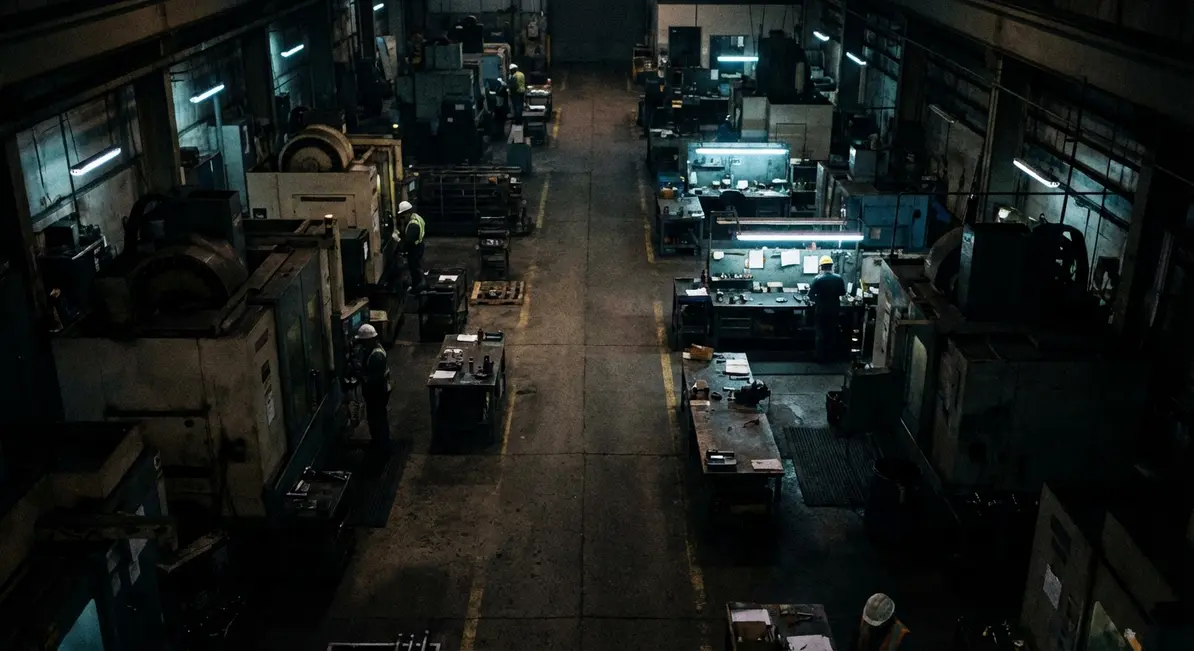
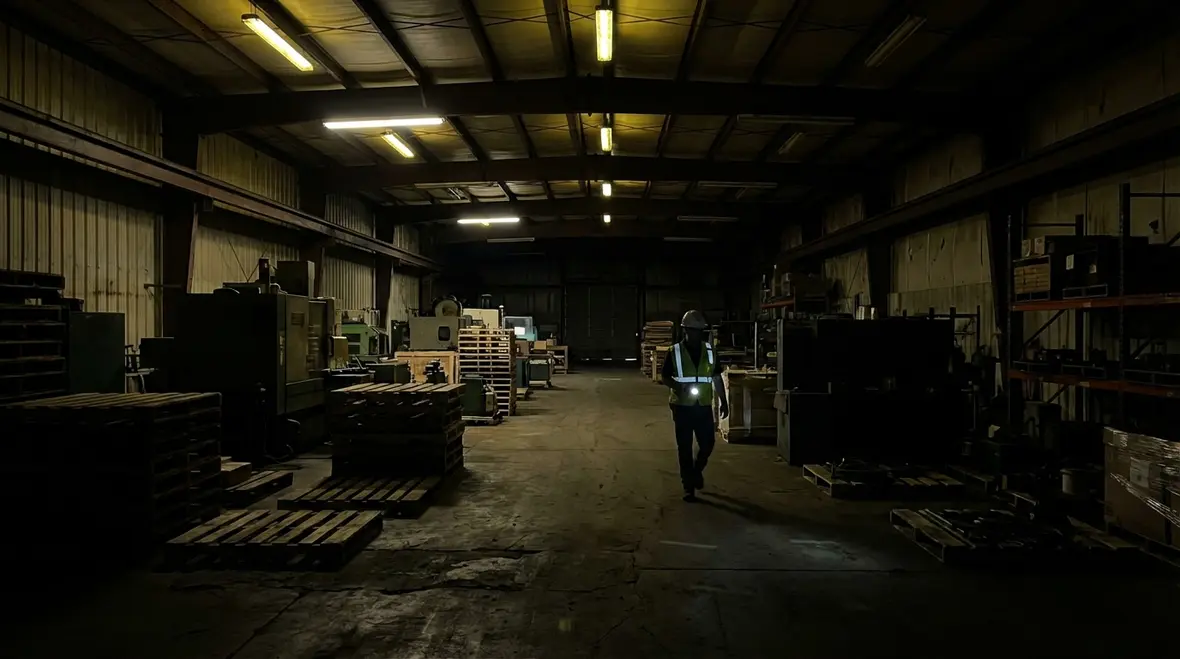
Dim lighting in an industrial facility doesn’t just create a moody atmosphere—it also creates blind spots, where accidents wait patiently to happen like background characters in a horror movie. Your forklift driver? Can’t see that someone’s foot is just inches from his wheel. The ladder near the supply shelf? Suddenly looks like it’s floating in mid-air. Poor lighting slows reaction time, affects perception, and increases the risk of collisions, trips, and falls.
According to the Kord Electric technicians who’ve serviced countless large-building facilities, the most common lighting-related safety problems include:
- Inconsistent lighting levels across different rooms or sections
- Glare from improperly positioned lighting units
- Flickering fixtures that mess with your eyes (and sanity)
- Outdated bulbs that take longer to “warm up” than your coffee machine
It’s more than inconvenient—it’s a silent threat that creeps in from the ceiling.
When Your Lights Go Dim, So Does Productivity
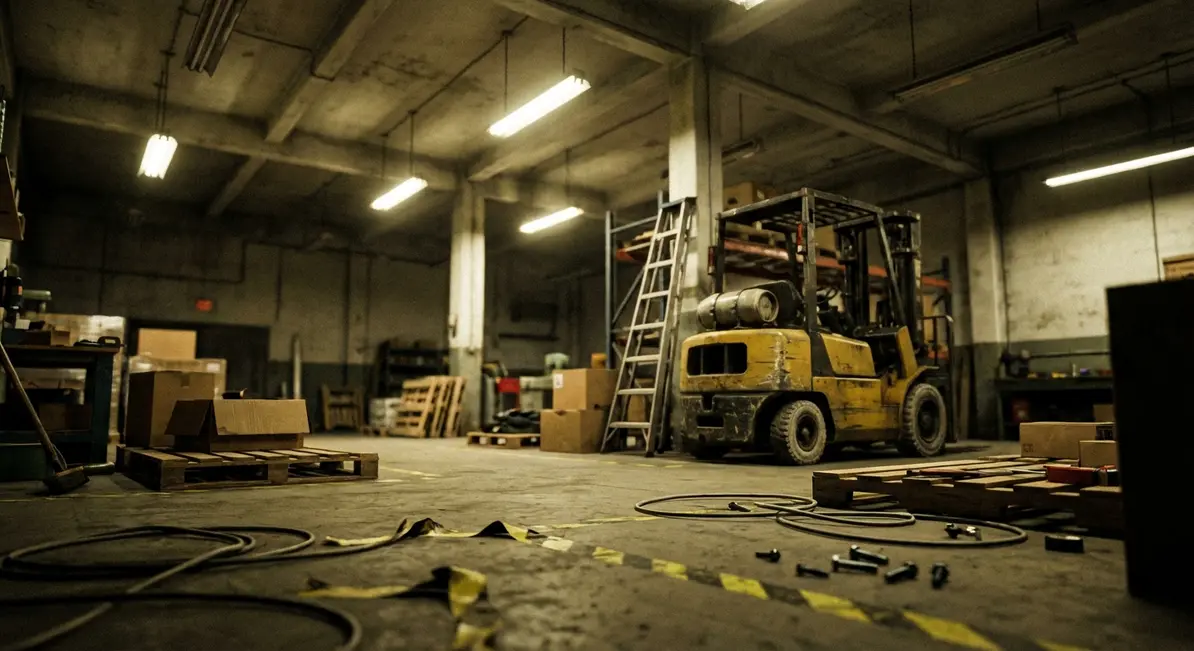
Let’s get one thing straight: no one does their best work while squinting. If your warehouse looks like the Batcave, you’re not giving your team the tools they need to shine. Literally. Dim environments cause mental fatigue, reduce accuracy, and kick productivity down a notch—or five. Workers become slower, make more mistakes, and suffer higher levels of fatigue. Apparently, nobody works well in conditions that make them feel like extras on The Walking Dead.
Not to mention, eye strain isn’t just uncomfortable—it can lead to persistent headaches and loss of focus. So if Gary in Assembly seems cranky, check the lumens before blaming his morning commute.
Proper Lighting Prevents Injury and Keeps OSHA Off Your Back
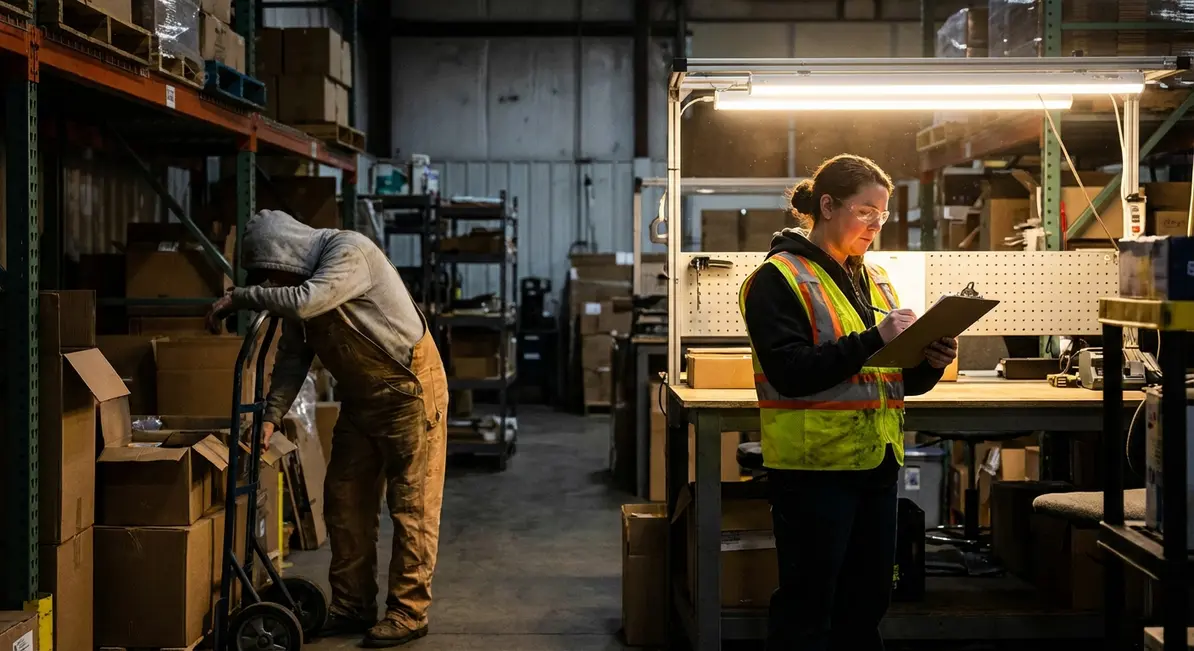
Yes, OSHA. The three-syllable acronym that has sent more facility managers into cold sweats than any horror film ever could. OSHA standards don’t just suggest sufficient lighting— they mandate it. Inadequate lighting can contribute directly to accidents, and once an incident occurs, you may find yourself explaining to a very stern inspector why your backroom feels like a cave.
Kord Electric’s licensed commercial electricians often encounter facilities breaking lighting codes without even knowing it. Whether it’s emergency exit lighting that’s mysteriously gone rogue or insufficient lux levels in work zones, these oversights can be costly. Not only in fines, but in reputation. Your safety record isn’t just a badge—it’s a business asset.
Two Columns of Trouble: Physical and Psychological Impacts

Physical Effects
- Increased accident rates
- Eye strain and related headaches
- Muscle fatigue from awkward postures under poor light
- Disorientation in emergency situations due to poor visibility
Psychological Effects
- Reduced morale and motivation
- Higher stress levels
- Lowered job satisfaction
- Impaired concentration and decision-making
The human brain is basically a light-powered machine: starve it of photons, and it goes into “meh” mode. Whether it’s errors in counting inventory or moments of zoning out when a machine needs monitoring, it all ties back to lighting.
Industrial Facilities Aren’t One-Size-Fits-All—Neither is Lighting
Nothing says “I didn’t plan this” like a high-bay factory floor lit with basic office bulbs. Each facility has unique requirements—warehouses require powerful, broad-spectrum lighting while data centers need precision task lighting with zero flicker. That’s why Kord Electric’s team doesn’t just replace a bulb and call it a day. They assess facility needs, lighting patterns, and even ceiling height to ensure the final solution is functional, efficient, and safely compliant.
Let’s put it this way: Apple wouldn’t use Android chargers. You shouldn’t light a concrete plant with rounded desk lamps from aisle nine at a big-box store. Commercial and industrial lighting requires expert engineering—and maybe just a sprinkle of common sense.
How to Know You’ve Got a Workplace Lighting Safety Hazard
Think you’re in the clear? Maybe. But here’s how to call out the red flags before someone calls an ambulance:
- Uneven brightness between workstations or floor sections
- Persistent shadows near machinery or shelving
- Flickering or buzzing lights that make the office feel haunted
- Reports of eye strain or frequent squinting from the staff
- Complaints of fatigue around mid-day, even with coffee flowing
If any of the above sound familiar, you probably have workplace lighting safety hazards waiting to stage a comeback. Or worse, star in tomorrow’s accident report.
Fixing the Problem: It’s Not Just About Replacing a Bulb
Unlike changing a lightbulb at home (which may cause shouting and mild injuries), fixing lighting safety hazards in commercial buildings requires pros who know the game. Kord Electric’s certified technicians start with a complete lighting audit to identify risks, replace outdated systems, and design lighting plans built for productivity and code compliance.
Here’s what that looks like:
- Installing proper emergency lighting (with battery backup included—no D-cells here)
- Mapping lux levels across work zones to eliminate dark patches
- Glare control and directional lighting for task-heavy environments
- Upgrades to energy-efficient LEDs that save money while reducing risk
And yes, they’ll explain everything in simple terms. No techno-babble, no guessing, and certainly no “surprise” outages after installation.
Cost of Ignoring the Issue: Spoiler—It’s Not Cheap
Turning a blind eye to lighting safety issues might not cost you today, but it will eventually—like that gym membership you forgot about until 12 drafts deep. The repercussions of bad lighting include:
- Costly medical claims and legal liability from preventable accidents
- Fines for non-compliance with safety regulations
- Lost productivity due to fatigue and absenteeism
- Damaged equipment, misread instruments, and more frequent errors
Proactive lighting upgrades may seem like an up-front investment, but compared to a lawsuit or a massive OSHA fine? It’s pocket change. Kord Electric even helps optimize costs by advising on long-lasting, low-maintenance options that keep your facility well-lit—and your accountant stress-free.
The Bright Future: Long-Term Benefits of Proper Lighting
Once you’ve got your lighting issues sorted, the shift in environment is noticeable within days. Employees work more efficiently, errors reduce dramatically, and morale improves like someone just installed a new coffee machine in the break room. Facility managers suddenly have one less fire to put out—and everyone looks a little less like they walked out of a Tim Burton film.
Here’s what long-term lighting upgrades bring to the table:
- Enhanced safety across all workstations
- Stronger productivity and reduced downtime
- Decreased operational costs with efficient lighting systems
- Compliance bragging rights (you’re basically OSHA’s favorite now)
It’s a game-changer, and one with immediate ROI. Not just in dollars, but in smiles, work quality, and peace of mind.
Frequently Asked Questions (FAQ)
What are the risks of bad lighting in a commercial facility?
Poor lighting can lead to accidents, increased eye strain, and reduced staff productivity.
How do you identify poor lighting conditions?
Look for uneven brightness, shadows, flickering fixtures, and employee complaints of fatigue or eye discomfort.
What lighting standards should be followed in workplaces?
OSHA and IES provide guidelines based on task type and industry. Each facility needs tailored lighting depending on its function.
Can upgraded lighting really boost productivity?
Absolutely. Proper lighting reduces errors, eye strain, and fatigue, which significantly improves output.
Who should handle lighting upgrades in large facilities?
Certified commercial electricians, like those from Kord Electric, who specialize in industrial and commercial systems.
Let Kord Electric Brighten Your Business
If your facility feels more dungeon than workspace, consider this your sign. Kord Electric’s experienced technicians are here to boost visibility, safety, and productivity with lighting systems built to last. Don’t wait for an accident to flip the switch—call today and see your facility in a whole new light.