Automated Lighting Maintenance for Commercial and Industrial Facilities
At Kord Electric, we build and manage Automated Lighting Maintenance for Commercial & Industrial Facilities that keeps important spaces bright, safe, and ready for business. We automate the things that usually slip through the cracks, like aging fixtures, hidden failures, and “we will fix it next week” downtime. Then, we back that automation with our experienced technicians and expert service staff who explain what is happening in plain terms, not tech riddles.
In other words, we help facility managers stop chasing light problems and start preventing them. And yes, that means fewer late-night calls, fewer hallway “mystery flickers,” and fewer moments where a site team feels like they are starring in a horror movie titled The Case of the Dim Corridor. We keep it calm, steady, and predictable.
Why automated lighting maintenance matters for C and I sites
Commercial and industrial facilities run on schedules, production cycles, and safety rules. When lighting fails, it does not stay local to one room. It affects visibility, operations, compliance, and staff confidence. Therefore, we treat lighting as an uptime system, not a simple utility cost.
Automated lighting maintenance for commercial and industrial facilities helps because it reduces guesswork. Instead of relying on random inspections or complaints, our approach monitors lighting performance patterns and helps prioritize attention based on real signals. As a result, technicians respond faster and with better context. In addition, our staff confirms the findings on site, so you do not get an automated system that talks loudly and means nothing.
Also, many facilities have mixed wiring, different fixture ages, and frequent changes in use. Even when the building “looks fine,” light output can drift, sensors can degrade, and components can fail early. We design automation to handle those realities with a practical, facilities-first mindset.
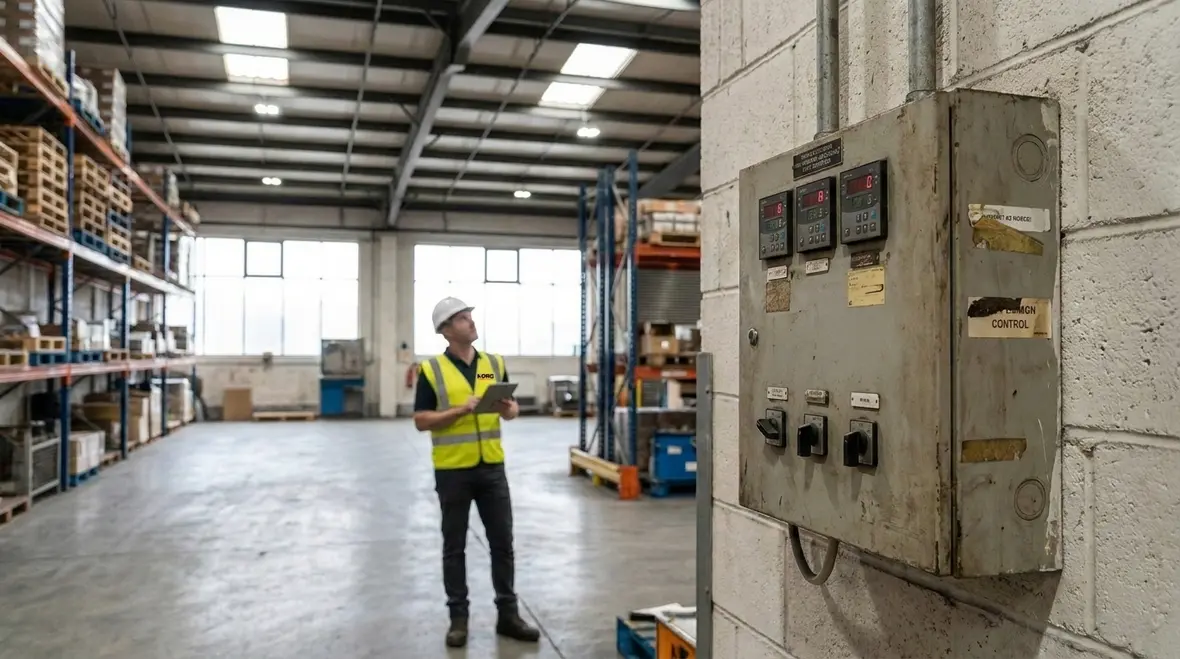
How we automate the detection, reporting, and response flow
Automation works best when it does not create more work. So we build a clear flow: detect issues, log them, route them to the right team, and track results until the fix is complete. Then, we explain each step so your team knows what to expect.
Here is the path our technicians typically follow, using the same principles described in our guidance on automated lighting control benefits for facilities:
- Continuous monitoring: We track key signals like control performance, fixture behavior, and patterns that point to component aging.
- Issue grouping: Instead of one-off surprises, we group likely related faults so maintenance stays efficient.
- Priority tagging: We focus on safety zones, high traffic areas, and production-critical spaces first.
- Action planning: Our expert service staff coordinates what gets inspected, what gets replaced, and when.
- Verification: After work, we confirm output and control behavior so the system stays stable.
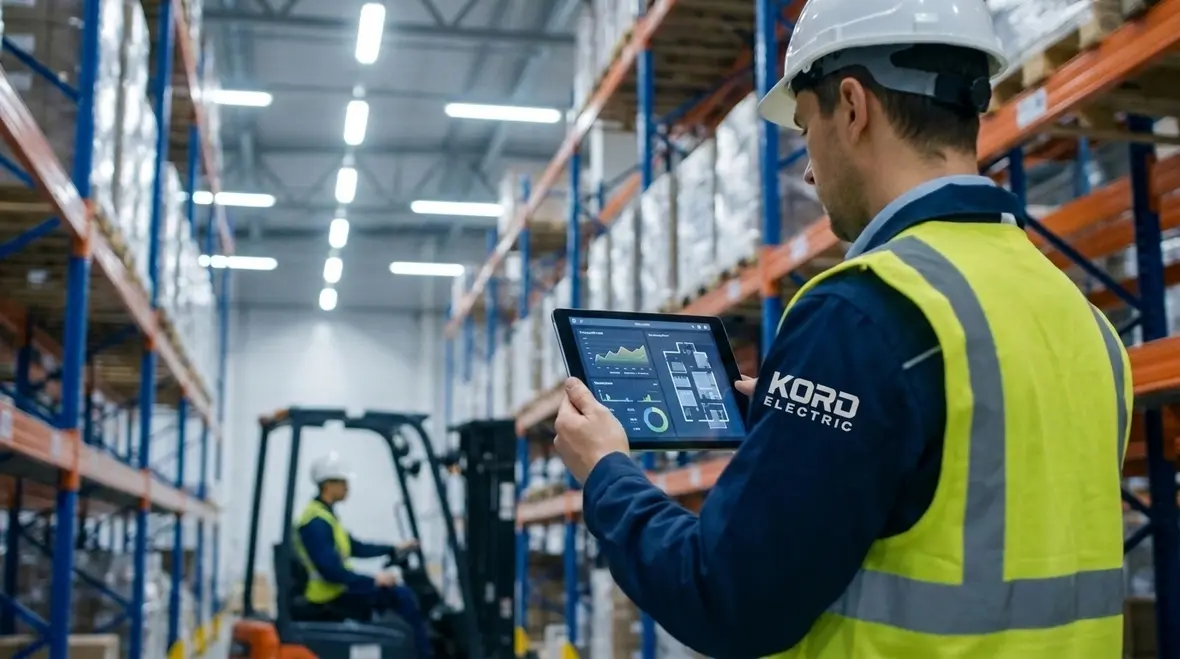
To make it concrete, if a portion of a warehouse starts dimming in a way that fits early component decline, we can flag it before it becomes an outage. Then we route the task so your team does not lose time dealing with “unknown causes.” The goal is simple: reduce downtime and reduce confusion.
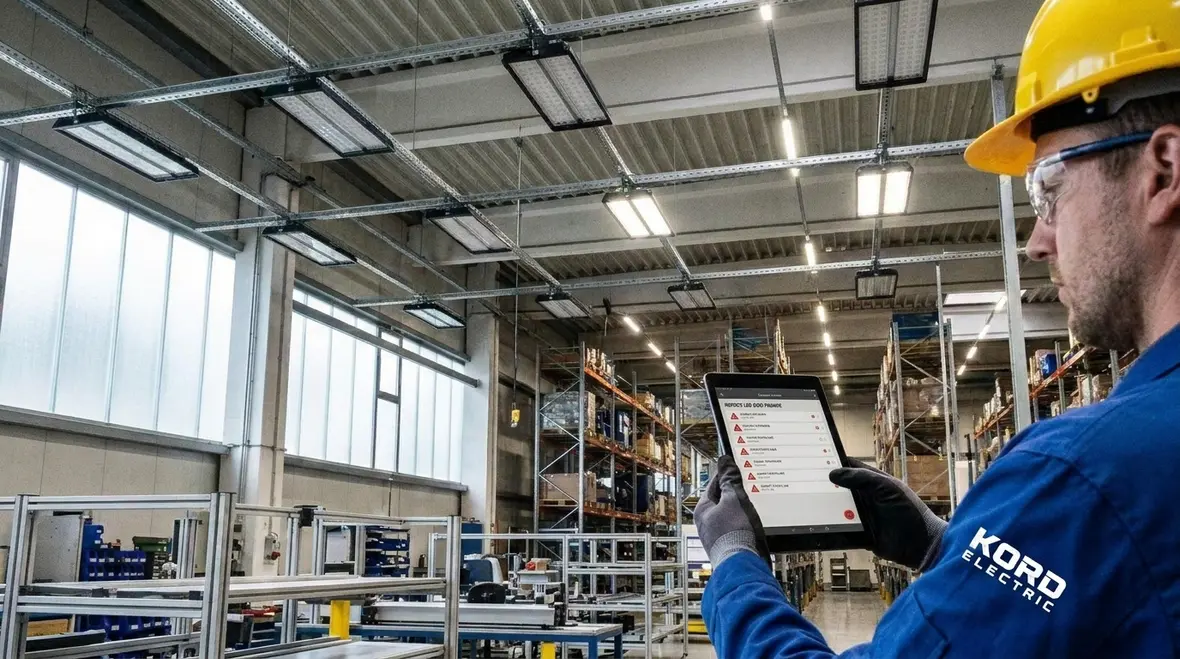
What benefits show up in real operations
Automation changes results in ways facility teams can measure. However, those benefits go beyond “less work.” We see practical improvements that help commercial and industrial buildings run more smoothly, especially when sites are large or complex.
First, automated lighting maintenance for commercial and industrial facilities improves reliability. Instead of waiting for failures, we help identify early signs of trouble and schedule fixes. Then, safety becomes easier to manage because lighting performance stays more consistent across shifts.
Second, we reduce wasted labor. When a technician arrives without the right context, you get extra trips and longer troubleshooting. In contrast, our system highlights what likely matters most, and our technicians verify on site.
Third, energy performance tends to stabilize. Controls that manage output correctly can reduce unnecessary operation while keeping spaces adequately lit. Of course, energy savings depend on how the system matches building use, so we tune it for the real schedule of your facility.
Finally, you get stronger reporting. Facility leaders need documentation for internal reviews and vendor management. Our approach supports that with organized maintenance records, so decisions do not rely on memory or guesswork. And no, nobody should have to remember which fixture died last winter like it is a plot point from a TV drama.
Common failure patterns we prevent with proactive service
Even well-built properties develop problems over time. Yet many lighting issues follow predictable patterns. Because of that, we use automation to spot those trends early and to keep maintenance smarter.
Here are frequent patterns we help address in commercial and industrial settings:
- Gradual output loss: Fixtures can dim before they fully fail, which impacts visibility and can violate internal standards.
- Control and sensor drift: Occupancy or daylight controls can behave less accurately after long use, and then lights stay on too long or too short.
- Zone instability: Large areas can mask localized issues until a wider change becomes obvious.
- Network or wiring faults: Intermittent behavior often appears as pattern changes rather than total shutdown.
- Maintenance aftereffects: Replacements and upgrades can leave mismatched settings unless we standardize controls.
As our expert service staff explains during onboarding, we do not automate to replace your team. We automate to reduce the number of surprises. Then we let your property run with less disruption, fewer emergency calls, and faster turnaround when service is needed.
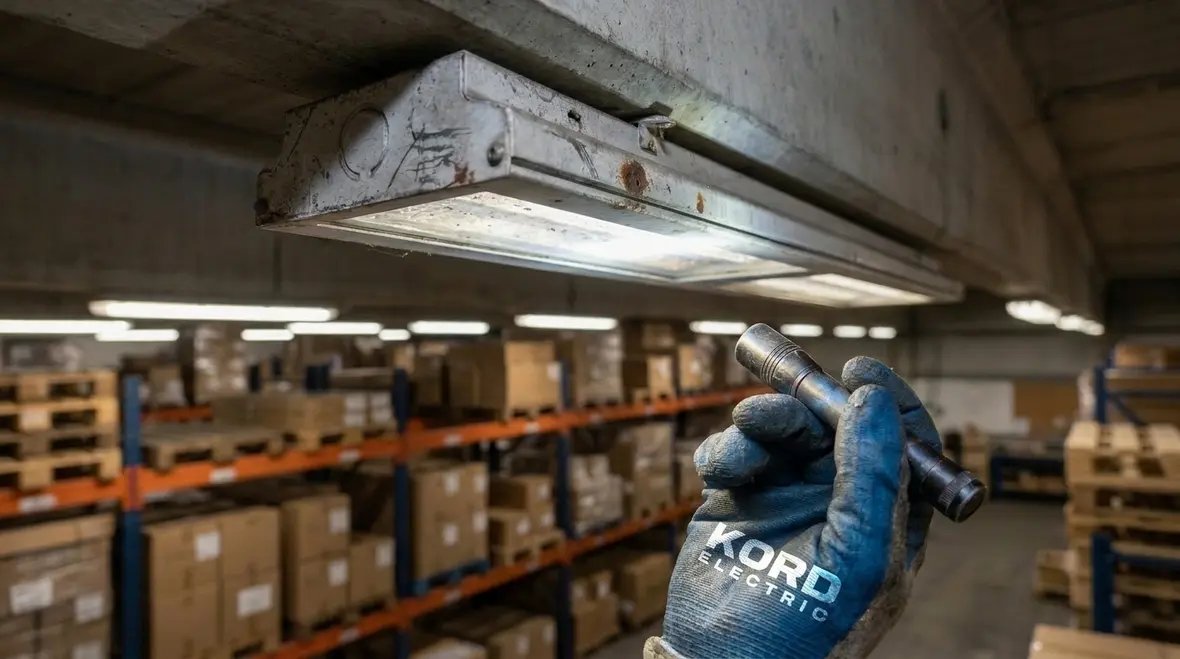
Integration with your building workflow and stakeholders
Automation succeeds when it fits into how your facility already operates. So we coordinate with site leaders and maintenance staff to match responsibilities, access windows, and reporting needs.
First, we identify the priority areas. Then we align maintenance tasks with shift timing and safety requirements. For example, we avoid disruptive work during peak production if we can schedule verification and replacement around safe access.
Next, we align communication. Our goal is to keep your team informed without overwhelming them. Therefore, we provide clear updates that describe what we found, what we changed, and what we will watch next.
Also, we plan for change. Major properties often undergo renovations, equipment additions, and layout adjustments. Our staff helps ensure the lighting control approach stays consistent as spaces evolve.
And when stakeholders ask, we answer. Our technicians take time to explain the “why” behind automation readings. That means a facility manager can understand the issue without needing a degree in lighting engineering. We keep it business casual, not boss casual.
Choosing a partner like Kord Electric for large properties
Not every lighting program supports large commercial and industrial facilities equally. We designed our process for properties where uptime, safety, and coordination matter. So when you choose us, you get a service team that thinks like operators, not just installers.
We focus on practical planning, which means:
- Clear service scope: We define what automation covers and what technicians handle directly.
- Site specific tuning: We match control logic to real occupancy patterns and production needs.
- Repeatable maintenance: We standardize workflows so results stay consistent across campuses and buildings.
- Expert verification: Our technicians confirm performance after any action, so your spaces stay properly lit.
In addition, our approach supports long-term upgrades. As lighting technology changes, we help keep the system aligned with your facility goals and compliance needs. Think of it like upgrading an engine while you are still driving. We do not guess, and we do not improvise chaos.
Because lighting connects directly to overall reliability, many facilities also explore how our broader Los Angeles County electrical services for commercial and industrial properties can support distribution, backup power, and system uptime alongside automated lighting maintenance.
FAQ
Conclusion and call to action
If your facility operates like a machine, your lighting should too. Kord Electric helps you run calmer, safer sites with Automated Lighting Maintenance for Commercial & Industrial Facilities that detects issues early, prioritizes the right work, and keeps technicians focused. We then verify outcomes on site and explain everything in plain language, because your team deserves clarity, not confusion. If you want a lighting maintenance plan built for major properties, contact us today for an assessment and a practical roadmap forward.
To keep exploring related strategies for smarter facilities, you can also review our insights on automated lighting control benefits for facilities, which pair naturally with Automated Lighting Maintenance for Commercial & Industrial Facilities when you are ready to modernize controls and maintenance together.
When you are ready to move from putting out lighting fires to preventing them, our team can connect automated maintenance with broader electrical reliability planning so your lighting, distribution, and backup systems all support the same uptime goals.