Automated Lighting Control Benefits for Facilities
Kord Electric knows that lighting should not feel like a coin flip. When we install automated lighting control benefits into commercial and industrial facilities, the systems do the thinking. They manage schedules, respond to real occupancy, and keep light levels steady without constant manual adjustments. That means fewer wasted hours, steadier output across shifts, and less “who left the lights on” drama that no one wants to blame on the intern.
As our expert service staff explains on site, automated control also supports safer operations. In other words, we help buildings run smoother, and we help teams avoid the kind of lighting behavior that looks great in a sitcom but fails in real operations. And yes, we do explain everything in plain terms, because confusing controls do not make a facility smarter.
What automated lighting control systems actually do in commercial spaces
In large facilities, lighting involves far more than turning lights on and off. Kord Electric deploys control strategies that match how people and processes move. First, systems use sensors and time schedules to understand when areas need light. Then they apply dimming levels so brightness stays consistent as daylight changes.

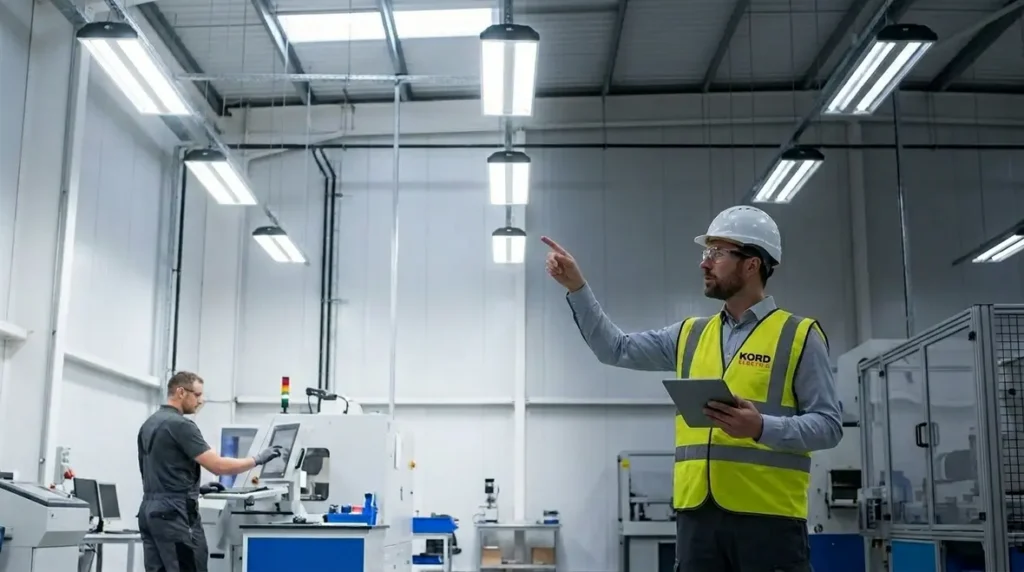
Additionally, advanced panels and networked controllers can group zones by function. For example, loading areas, offices, corridors, and warehouse bays each receive a different lighting “behavior,” rather than one setting meant for everything. As our technicians walk teams through the layout, we show how each zone responds under real conditions, not just in a brochure.
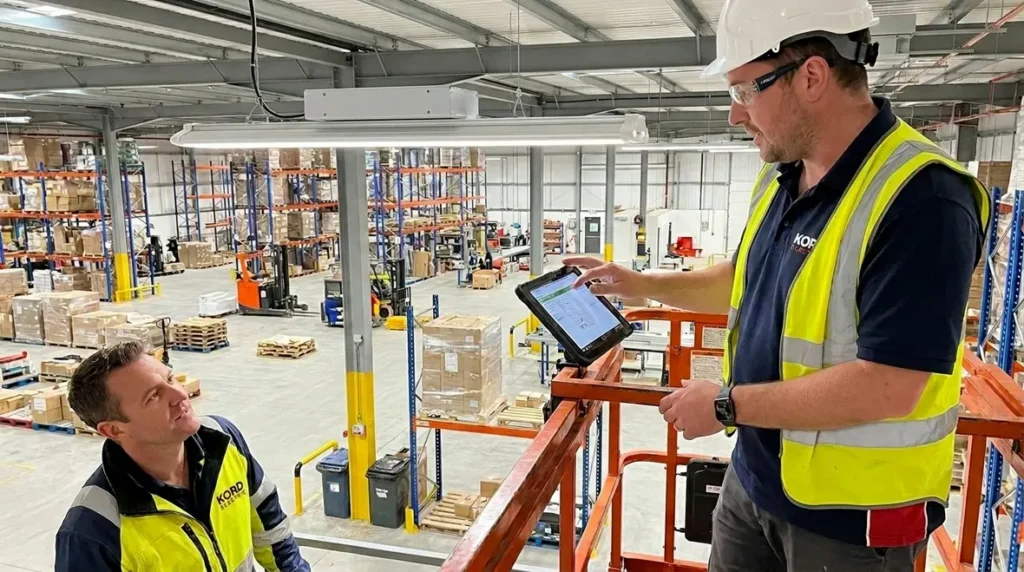
To keep operations smooth, we also support commissioning. That means we verify the system responds correctly during testing. As our service team likes to say, we do not ship a system and hope. We test, adjust, and document, because downtime is expensive and guessing is even more so. And unlike some pop culture villains, we prefer prevention over dramatic fixes.
Lower operating costs through smarter schedules and steady dimming
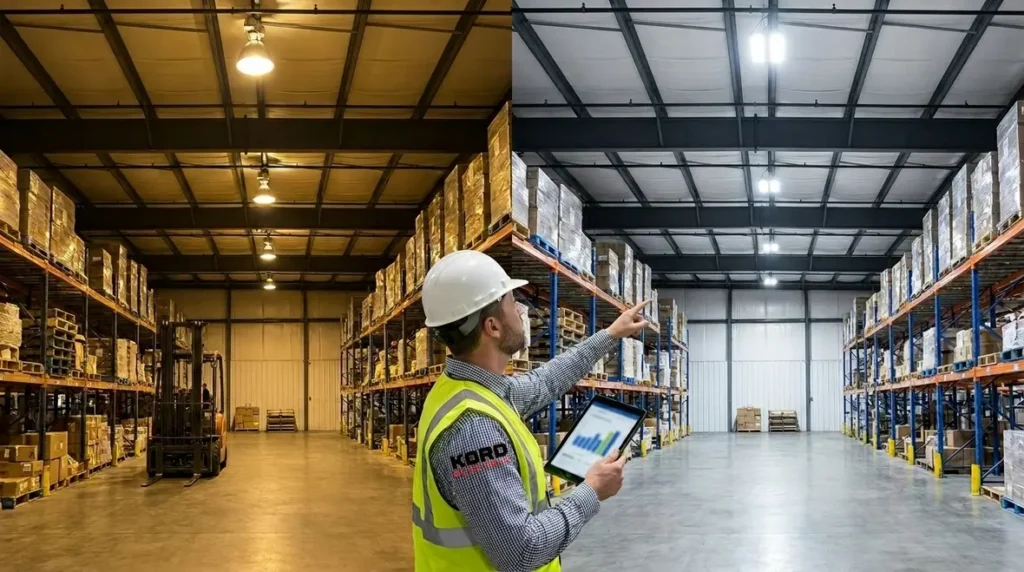
The simplest version of savings comes from reducing unnecessary lighting time. However, the best version comes from how lighting levels are managed. Automated systems can dim lights when spaces do not need full output, then restore brightness when people arrive or tasks begin.
As facilities run through shift changes, schedules can remain accurate without supervisors needing to patrol switches all day. Moreover, daylight harvesting reduces artificial lighting when natural light covers the work area. Consequently, a window line in a corporate wing can get less electric light than a windowless aisle, while both remain properly lit. For teams comparing control strategies with broader upgrades like LED retrofits, pairing automation with the kind of planning outlined in Kord Electric’s commercial lighting upgrade cost guide can sharpen both payback and performance over time.
Our technicians also consider operational patterns. For instance, a warehouse may have consistent motion zones but predictable quiet zones. Then we set control logic so lighting follows the actual workflow. This approach cuts energy waste without creating an “intermittent light show” that confuses staff or disrupts production. In short, it keeps comfort and productivity aligned with cost control.
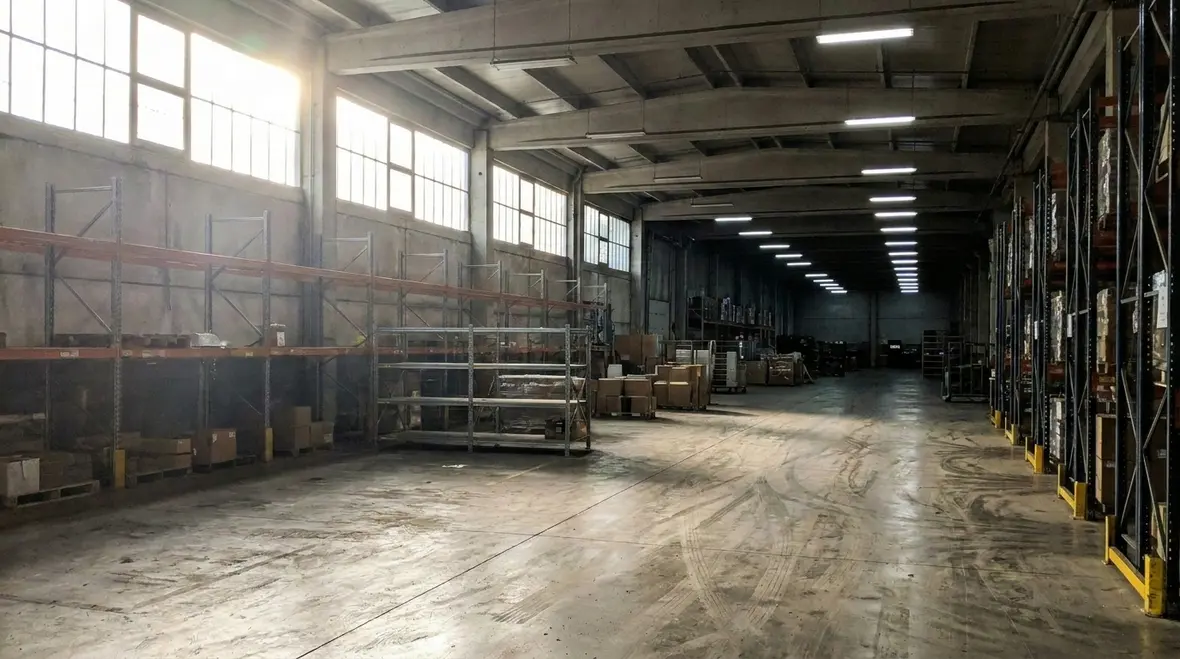
How occupancy sensing improves safety and reduces unnecessary runtime
Occupancy sensors serve a practical role. They help facilities avoid lighting areas that stay empty, yet they react quickly enough for real work conditions. Kord Electric integrates occupancy detection with zoning so the system illuminates where people are, not where they were an hour ago.
In commercial and industrial environments, this matters for both safety and workflow. When lighting ramps up promptly for a person entering a corridor, stairwell, or maintenance bay, staff and visitors move with more confidence. Meanwhile, when spaces remain vacant, sensors prevent lights from running at full output for no reason.
To make sure the system fits the building, our expert service staff evaluates sensor placement and coverage. For example, sensor height, mounting angle, and ceiling obstacles can change detection behavior. Therefore, we verify performance during walkthrough tests. And yes, we explain the logic so facility teams know what to expect. Confusing controls create support calls, and we would rather help once than explain twice.
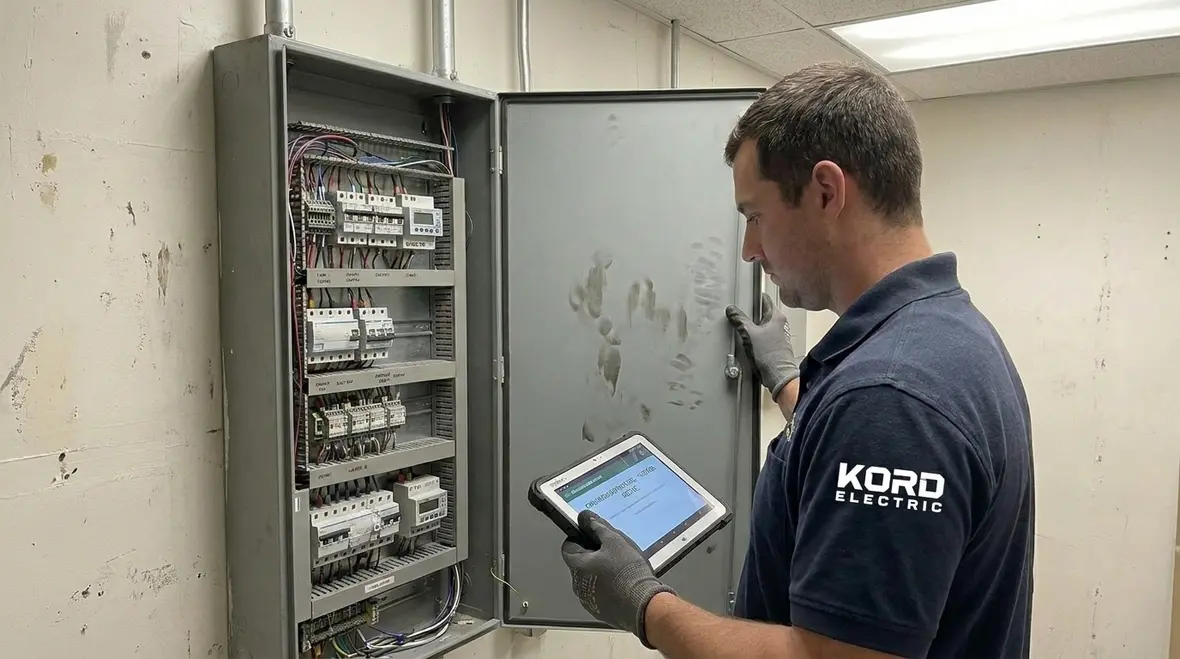
Maintenance wins: fewer lamp cycles, better life span, and easier troubleshooting
Automated control can support maintenance planning in ways that teams notice quickly. When lights run for the right amount of time and dim instead of staying at maximum output, wear and stress reduce over the long run. As a result, lamps and drivers often see longer usable life, and replacement schedules become easier to manage.
Just as important, modern control systems improve troubleshooting. Instead of walking circuit by circuit during a complaint, building teams can review system logs and status. That means Kord Electric can help connect a site issue to a zone response or sensor condition, rather than treating it like a mystery box.
Our technicians also help facilities keep documentation clean. We label zones, map devices, and ensure control settings remain accessible for future service. Then, when changes happen, we can update the configuration without starting from scratch. In short, the building does not just save energy. It also saves time, and time is the only resource everyone spends even when they do not mean to.

Integration with building systems for real operational control
Lighting should not act alone. When we design automated lighting control benefits into a broader system strategy, lighting can coordinate with controls that already exist in many commercial and industrial buildings. That can include time management, HVAC schedules, and building automation platforms.
In practice, integration supports more consistent building behavior. For example, when an after-hours schedule changes, the lighting system can transition to a lower mode or standby levels in the same window. Likewise, if a process area shifts operating states, lighting can follow the workflow rather than lag behind.
Because major property buildings often involve multiple tenants and shared corridors, the control strategy must stay clear and manageable. Our expert service staff works with facility managers to align zoning boundaries, ensure permissions are correct, and prevent unwanted overrides. Then we train the right people so the system remains usable after installation.
Think of it like a well-run orchestra. Each instrument matters, but they must play on the same score. We make sure the lighting performance matches the building rhythm. For facilities working through Title 24 requirements, integrating controls the right way also supports smoother inspections and cleaner documentation, especially when paired with resources like Kord Electric’s California commercial lighting code and compliance guides.
Commissioning, training, and tuning that keeps performance stable
We often hear teams ask, “Will it stay correct?” The answer depends on whether the system gets tuned and verified. That is why Kord Electric treats commissioning as a real phase, not a rushed checklist. Our technicians verify that sensors detect occupancy correctly, dimming curves behave as expected, and schedules align with operational hours.
Then, we tune settings based on the building. Light levels must support the work, not just “look bright enough.” We adjust thresholds for occupancy, confirm daylight harvesting response near windows, and ensure zones do not flicker or overreact. Transitioning from one state to another should feel smooth, not chaotic.
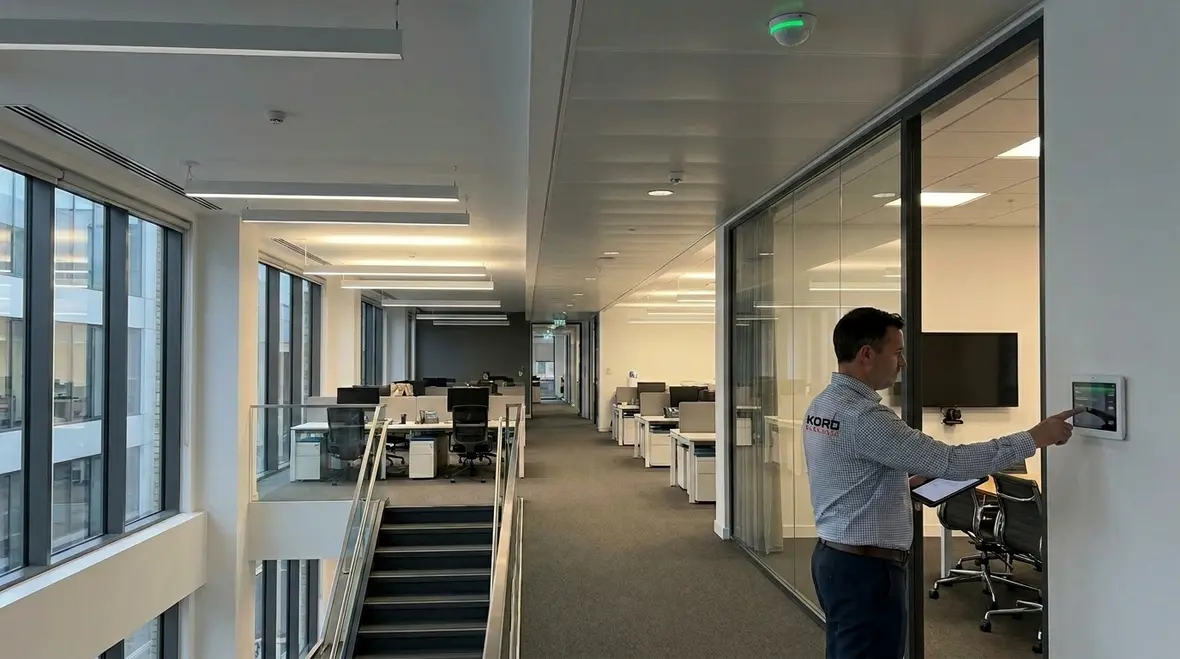
Finally, we train facility staff. Our service staff explains what each control mode does, how to interpret status indicators, and what actions to take when something needs attention. In business, training prevents the “power outage panic” that turns into a weekly ritual. With the right guidance, staff can handle minor issues quickly, and we can address bigger needs through proper service channels.
FAQ about automated lighting control in commercial and industrial buildings
Call Kord Electric for a facility lighting control plan
If your facility still handles lighting with manual switches and guesswork, it is time to tighten the process. Kord Electric designs automated control strategies for commercial and industrial environments, then commissions and trains your team so performance stays steady. We help cut unnecessary runtime, support safety with occupancy sensing, and improve maintenance through better system visibility. Reach out now to discuss your building layout and operational goals, and let us build a lighting plan that works like clockwork, minus the drama.
For facilities planning broader electrical work alongside controls, our commercial and industrial lighting services — including projects like recessed lighting installation and industrial lighting layout optimization for production efficiency — can be combined into a single coordinated upgrade. That way, load planning, code compliance, and automated lighting control benefits all move forward together instead of in separate, disruptive rounds of work.
When you are ready to formalize a project, our team can align your lighting control plan with California commercial lighting compliance requirements so schedules, sensors, and documentation support both daily operations and inspections. Start the conversation now, and let Kord Electric turn “who left the lights on” into “the system already handled it.”
To take the next step, explore our dedicated service options or connect directly with our team for a walkthrough of your facility and a tailored control strategy.
Learn more about our commercial recessed lighting installation services and how they pair with automated controls to deliver long-term savings and safer, more consistent illumination across your building.