Business Power Outage Prevention for Facilities
Business Power Outage Prevention: A calm plan for loud realities
At Kord Electric, we treat business power outage prevention like a business continuity tool, not a yearly wish. We help commercial and industrial facilities and major property buildings reduce risk before the first flicker happens. That means we do more than “fix it later.” We design, inspect, and maintain the electrical systems that keep operations steady, staff safe, and processes moving when the grid gets unpredictable. And yes, we also tell our clients the truth: no one enjoys outages, but most businesses only notice them when their uptime starts walking like a tired celebrity on a red carpet. We prefer you skip that drama.
How outages actually start inside commercial buildings

Power loss rarely begins with one dramatic event. In most cases, the cause shows up through a chain of problems: a stressed component, a slow fault, a wiring issue that gets worse, or an overload that rides the line until it breaks. Therefore, we focus on what happens before failure. Our technicians and expert service staff explain these patterns in plain language during site walks, so decision makers can connect symptoms to root causes.
For example, a partial connection can heat up under load. Over time, that heat damages insulation and increases resistance. Then the system becomes more sensitive to voltage dips and temporary disturbances. Next, protection devices may trip more often, or worse, fail to act as designed. Meanwhile, critical loads such as HVAC, data networks, refrigeration, elevators, and process equipment keep drawing power that the system cannot deliver reliably. Eventually, the outage arrives, and everyone scrambles like they just discovered their phone is at 3% battery.
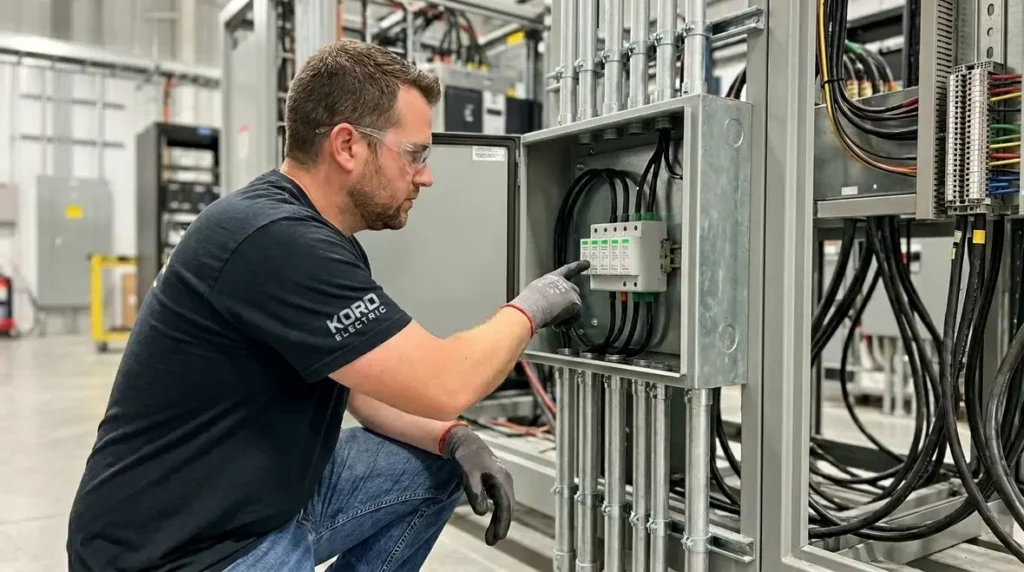
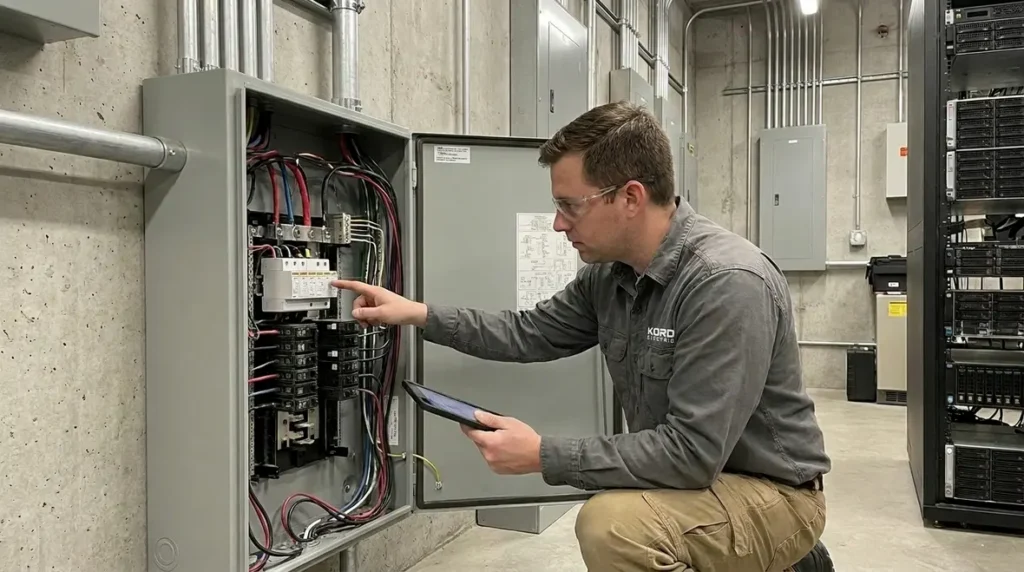
Inside large commercial properties, these “slow-burn” problems often hide behind closed panels or above ceilings. That is why many facility teams pair outage prevention efforts with structured inspection programs. When you combine targeted risk checks with ongoing electrical preventive maintenance, hidden issues are more likely to be found while they are still small and inexpensive to correct.
Risk mapping and load planning that prevents surprises
We start with a clear look at how your building uses power across the day and across seasons. Consequently, our team gathers information on connected loads, operating schedules, starting currents, and any equipment that draws a heavy inrush, such as motors and large drives. Then we map these needs to the electrical one line, panel schedules, and upstream feeds.
Why does this matter? Because many outages come from mismatched expectations. A system that was fine during “normal” usage can fail under realistic load conditions. Additionally, tenants or operational changes can add equipment without updating the electrical design. We help clients avoid that slow drift by reviewing future load growth and documenting power limits that do not depend on luck.
Our approach is practical: we identify what must stay powered, what can tolerate brief interruption, and what should run on backup. After that, we align protection settings and transfer strategies so the right parts of the system respond in the right way, instead of everything reacting like it is guilty until proven innocent.
For multi-building campuses and major property portfolios, this kind of risk mapping also connects well with structured commercial and industrial electrical plans. When leadership combines outage prevention with commercial and industrial electrical maintenance plans, power limits, upgrade priorities, and capital projects stop being guesswork.
Maintenance routines that catch weak links early

When facilities skip maintenance, the electrical system still ages, and it does not ask permission. For that reason, we build preventive schedules that target the points where failure typically begins. Our expert service staff often explain what they find during inspections: the difference between an issue that is “cosmetic” and one that signals an overheating risk.
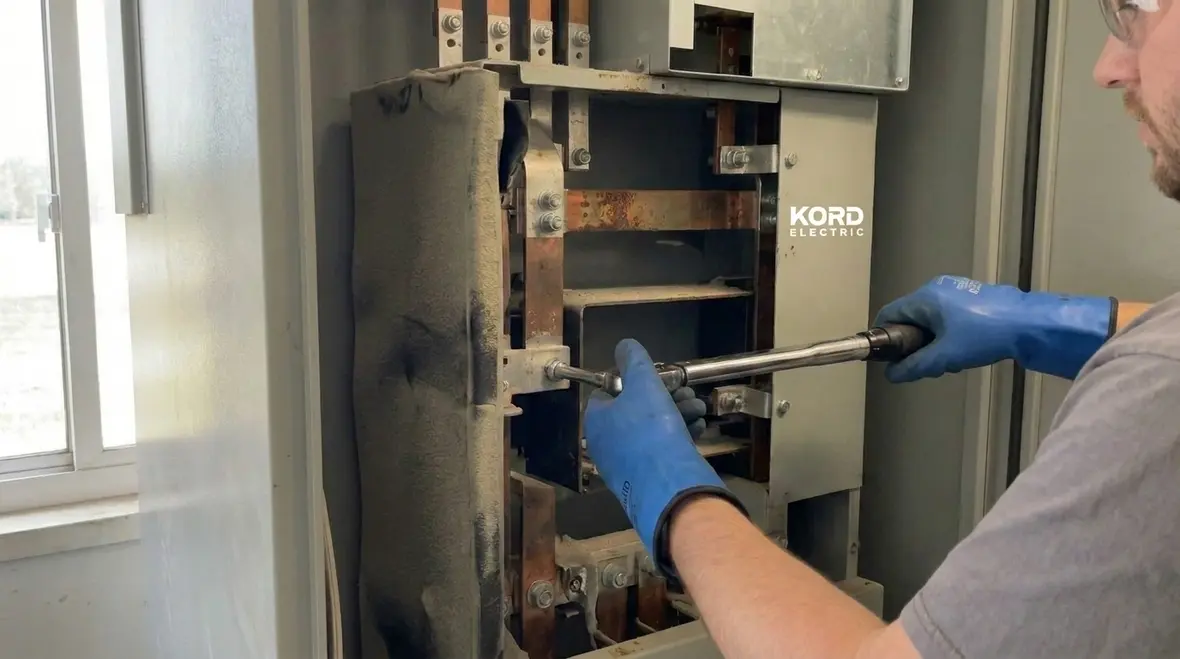
We commonly address items such as breaker condition, torque integrity on terminations, insulation health, contact wear, and signs of moisture intrusion. We also review grounding and bonding because a weak foundation can turn small disturbances into major problems. Furthermore, we check for issues that cause nuisance trips, because nuisance trips often hide a deeper problem. If a protective device trips repeatedly, it means the system already has something it is trying to protect you from.
We also pay attention to cables and bus systems, especially where heat and vibration can reduce performance over time. And since clients do not always want a lesson, we keep our explanations short, relevant, and tied to risk. If we say something needs action, we explain what it prevents and how soon it tends to show up again.
On many sites, this work runs alongside formal NFPA 70B practices and broader reliability strategies. Facilities that want to go deeper into panel and switchgear care often explore topics like NFPA 70B electrical panels and switchgear maintenance to align their internal procedures with modern maintenance guidance.
Backup power, transfer systems, and uptime you can trust
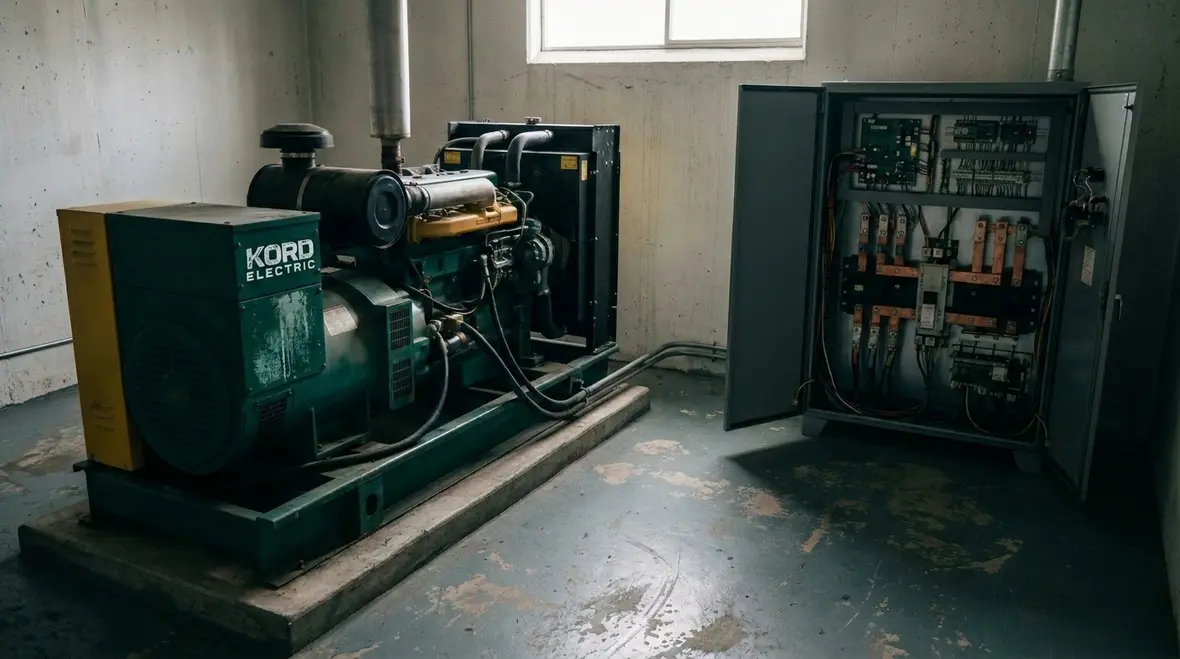
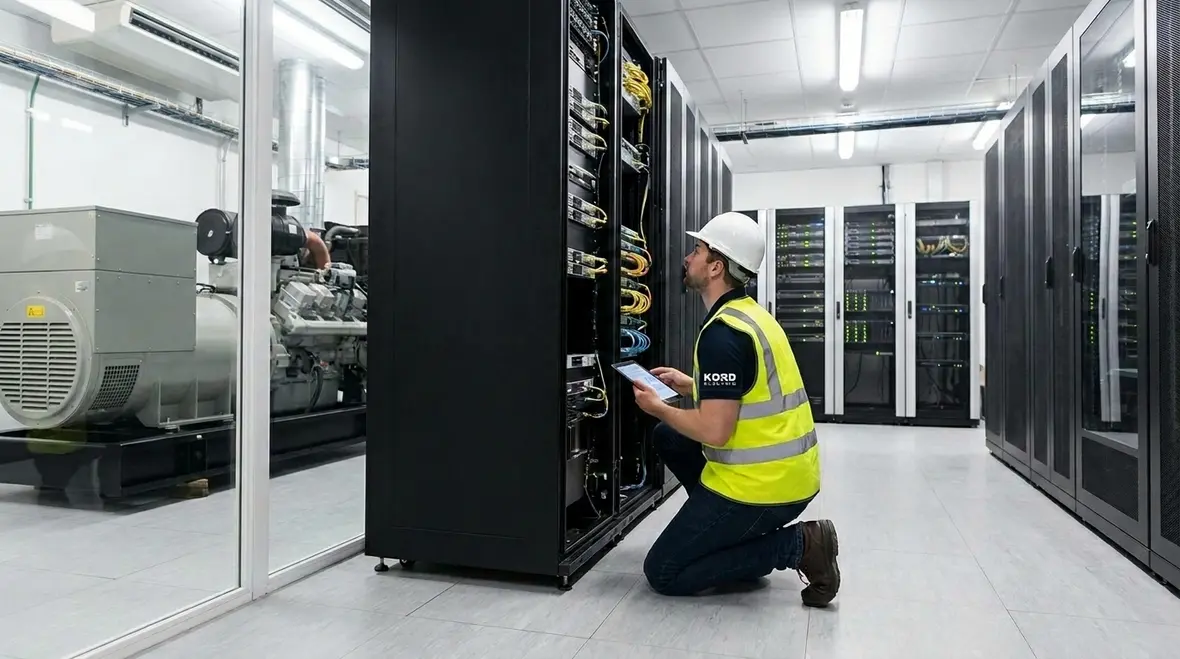
Backup power helps, but only if it works when called. Therefore, business power outage prevention includes verifying the backup system as a system, not as a pile of equipment. We review how generators, UPS units, ATS or transfer switches, and related controls interact under real conditions.
Our technicians check transfer reliability because the transfer moment can create the highest stress. If the transfer delays are wrong, if sensing logic is inconsistent, or if controls experience nuisance faults, the building might lose power just when it needs the smoothest ride. We also examine fuel readiness, block heater operation, ventilation, exhaust routing, and battery health for UPS systems.
Then we help clients set testing practices that match their risk profile. Instead of random testing that proves nothing, we aim for tests that validate performance. Think of it like rehearsals before a show, not a random walk into the theater and hoping for the best.
For mission critical spaces such as data centers or process control rooms, that rehearsal mindset becomes non-negotiable. Teams often layer generator testing, UPS verification, and distribution checks with guidance from resources that focus on uptime, like Kord Electric’s insights on data center electrical requirements for uptime and electrical distribution design for reliability.
Protection settings, surge control, and coordination for stability
Even with strong hardware, outages can happen when protection devices do not coordinate. Coordination means upstream devices allow downstream faults to clear properly while the rest of the system keeps running. Consequently, we analyze settings and grading so breakers and relays act in the intended order.
We also focus on surge control and transient protection. Utility events and switching operations can create voltage spikes that shorten equipment life and cause intermittent faults. When protection and surge control align, the system absorbs disturbances instead of handing them to sensitive equipment.
Our expert service staff often describe this topic with a simple analogy during walkthroughs. Protection is the bouncer at the door. If the bouncer is sleepy or positioned wrong, the wrong people get in, and then chaos happens inside. Proper coordination keeps the “bad events” contained and makes the building feel less like a sitcom and more like a well-run production.
For facilities that have already experienced unexplained trips or sensitive equipment failures, this is often where deeper diagnostics begin. Pairing coordination studies with broader reviews of hidden electrical risks in commercial buildings helps connect the dots between nuisance problems and the upstream protection decisions that quietly shaped them.
Monitoring, inspections, and emergency response that fit real operations
Prevention gets stronger when you can see what is happening before it becomes a problem. We help commercial and industrial facilities adopt monitoring practices that capture power quality, load trends, abnormal currents, and alarms that matter. Therefore, when a fault develops, the team has time to act with clear information, instead of guessing based on what lights went out.
We also support inspection workflows that respect your staff and your schedule. Many major property buildings cannot shut down just because an electrician wants to look. So we coordinate work windows, control access to equipment spaces, and keep disruption low. Then we document findings in a way that helps owners and operations teams plan next steps.
Emergency response matters too. When an outage happens despite prevention, your recovery speed becomes the real uptime metric. We help clients prepare response playbooks, escalation paths, and equipment checklist procedures so technicians can act fast and safely. And yes, we tell clients to avoid the classic move of pressing every button until something works. That strategy works great in video games, not in switchgear rooms.
Many organizations connect this real-world planning with formalized service programs, so emergency response is not left to chance. When outage playbooks live alongside ongoing electrical preventive maintenance, teams gain both early warning and faster recovery options, instead of hoping that experience alone will cover every scenario.
Featured FAQ on outage prevention for commercial facilities
Facility managers and operations leaders ask similar questions when they begin building a calm, structured path toward business power outage prevention. The most useful answers focus on schedules, scope, and where to start without overwhelming staff or budgets.
Call Kord Electric for a reliability plan that holds up
If you operate a commercial or industrial facility, reliability is not optional. Kord Electric builds business power outage prevention into practical plans: risk mapping, preventive maintenance, backup validation, and protection coordination that keeps your building running. Our technicians and expert service staff walk you through findings in clear terms, then we help you schedule the work that reduces future downtime. Contact us today to schedule an assessment and protect your uptime before the next disturbance shows up uninvited.
For facilities that want a structured path from “we should do more about outages” to “we have a clear plan,” pairing this strategy with dedicated service pages makes the next step simple. Kord Electric’s Electrical Preventive Maintenance services are built specifically for commercial and industrial properties that need reliable, documented support rather than one-time fixes.
Whether you are planning upgrades after a close call, formalizing a maintenance program for a major property building, or building redundancy for mission critical spaces, the next move is the same: connect with a team that treats uptime as a design target, not a lucky outcome.
Kord Electric can help you map risks, set priorities, and implement a calm, realistic roadmap for stronger power reliability across your facilities.