Data Center Electrical Requirements for Uptime
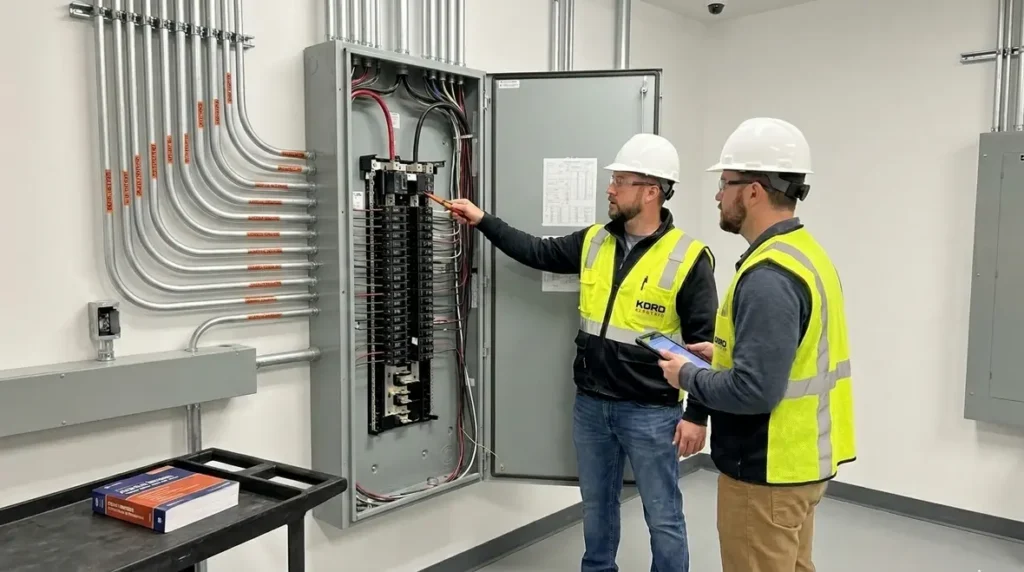
At Kord Electric, we design and support data center electrical requirements for commercial and industrial facilities and major property buildings because reliable power is not a “nice to have.” It is the foundation that keeps servers alive, cooling systems running, and operations steady when the world gets noisy. In the field, we see the same pattern again and again: one small gap in design, testing, or coordination turns into a downtime story that no one wants to tell, unless they are writing a thriller. And nobody at your organization wants to be the side character in that plot. So we explain what the power system must do, how it must do it, and how our technicians verify it, step by step, with calm, clear guidance.
What power reliability actually means for mission critical uptime
Data centers do not just need electricity. They need data center electrical requirements to match the real behavior of modern IT loads, including fast changes, high inrush, and the simple truth that equipment does not care about excuses. When a UPS, switchgear, or feeder system fails to perform as planned, the load rides the loss of quality. That is where reliability gets defined in practice: voltage stability, frequency accuracy, ride-through time, and graceful transfer between power sources.
To keep that promise, others often focus on one piece of the chain and forget the rest. However, our team approaches the whole system. First, we map the critical loads and their power needs. Next, we align protective devices, conductor sizing, and grounding with the actual operating conditions. Then we confirm the performance through testing and inspections. Because power quality is not a poster on the wall; it is a measurable outcome.

Design the electrical chain with redundancy that makes sense
Redundancy sounds good on paper, yet it can fail in reality if the architecture does not match the risk. Therefore, Kord Electric helps clients design an electrical chain that supports sustained operation during failures, including equipment outages and maintenance events. We focus on how power moves from utility to distribution, from distribution to UPS and critical branches, and from UPS to the IT loads.
We also help teams avoid the classic trap: assuming “extra equipment” automatically equals resilience. It does not. The design must coordinate loads, transfer logic, and protective clearing times. So we review single points of failure, examine how bypass paths operate, and verify that maintenance does not accidentally break availability. In other words, we build systems that keep running, not just systems that look impressive during a walkthrough.

UPS, generators, and transfer schemes that prevent ugly surprises
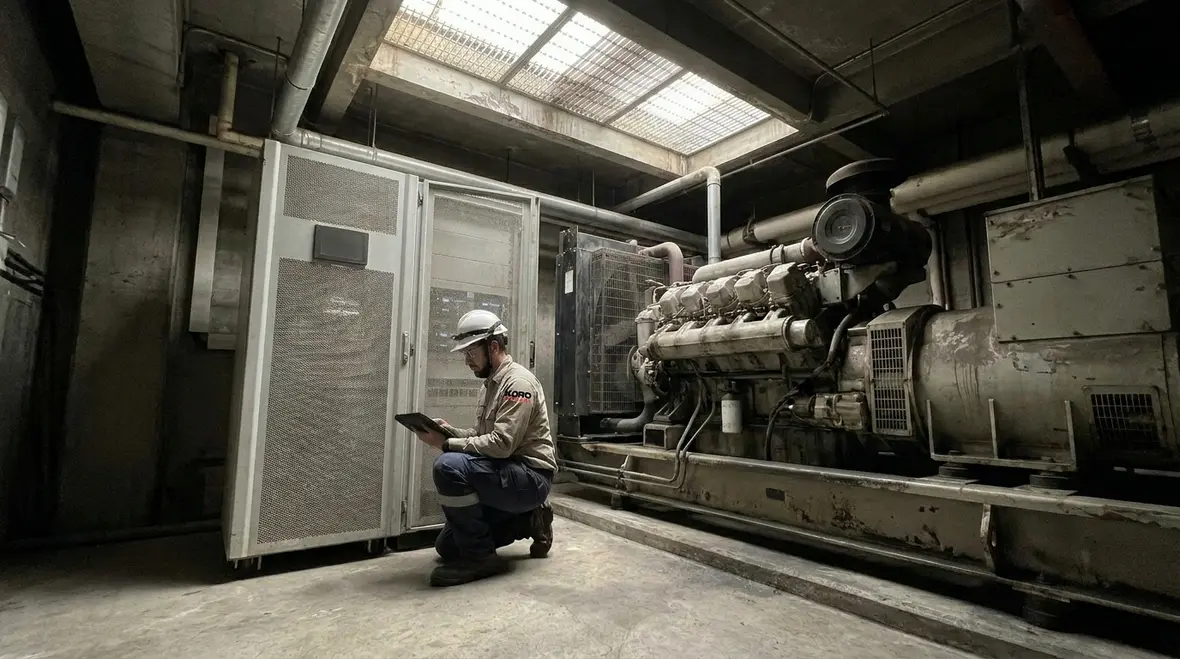
When a facility relies on UPS and generators, the transfer scheme decides whether the system behaves like a pro or like a prank show. Our expert service staff explains this clearly to facility teams, not with complicated jargon, but with real-world cause and effect. For instance, a poorly coordinated transfer can cause unnecessary load interruptions, while a mis-set UPS configuration can reduce ride-through performance under certain load conditions.
We typically evaluate:
- UPS sizing and runtime for the actual load profile, including future growth
- Generator startup and transfer timing, so critical loads do not see unacceptable dips
- Breaker and switch coordination across parallel paths to limit disturbances
- Operational testing to confirm real behavior under controlled scenarios
As we do this, we keep a practical view. Because a data center is not a museum piece. It is a machine that runs every day, and it deserves an electrical system designed for that responsibility.
Power quality, coordination, and grounding for stable operation
Even when the system stays on, poor power quality can still hurt uptime. Voltage sags, harmonics, and grounding faults can cause nuisance alarms, degrade equipment, and shorten the life of sensitive components. So, we help clients control the “invisible issues” that create visible problems later.
Our approach includes reviewing:
- Harmonic impact from rectifiers and electronic loads, then applying mitigation where needed
- Voltage regulation through appropriate transformer and distribution settings
- Overcurrent and fault protection coordination so the right device clears the fault
- Grounding and bonding to support stable reference points and safe operation
Additionally, we make sure coordination supports both normal operation and abnormal events. That means selecting devices that respond predictably, setting protective curves properly, and verifying that selective coordination holds up across the system.
Fire and power must coordinate, not compete
Electrical systems and fire protection systems live in the same building, and they must work like a team. If they fight each other during an incident, the result can be delayed response and unsafe conditions. For that reason, we use our review process to connect electrical design to fire and life safety planning.
If you have ever watched a sitcom where two characters argue right in the middle of an emergency, you already understand what we mean. In real life, that conflict is costly. Therefore, we coordinate power routing, equipment placement, and protection logic with the facility’s fire protection needs, including guidance drawn from industry best practices like NFPA 75 topics and related considerations described in our reference materials. For teams who need a deeper dive into those topics, our partners at Kord Fire Protection walk through key concepts in their Data Center Fire Protection and NFPA 75 Guide, which explores how IT environments approach detection, suppression, and risk management.
Our technicians and expert service staff explain how electrical layouts affect fire detection and suppression strategies. We also help teams understand how equipment behavior during smoke control, alarm events, or suppression sequences can impact power availability. And yes, we keep it clear enough that facility managers can make decisions without needing a second degree in electrical mythology.
When the design aligns, you get a system where power stays available when it should, and where fire safety measures operate as intended without creating avoidable conflicts.
Testing, commissioning, and continuous monitoring that keeps reliability real
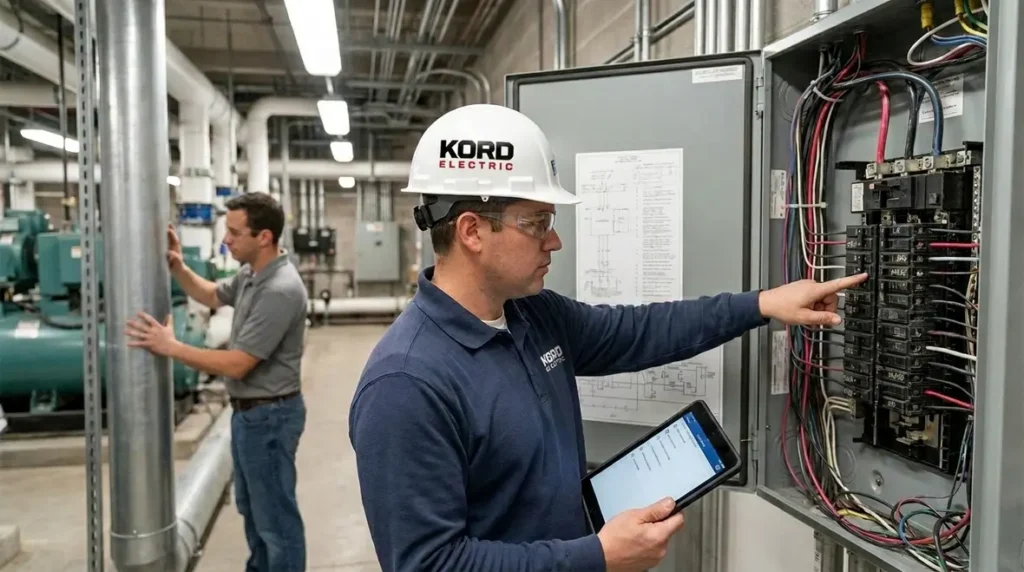
Plans and drawings do not carry the load. The system does. Therefore, Kord Electric emphasizes testing and commissioning so the electrical performance matches the design intent. After installation, we verify that switchgear, UPS systems, transfer paths, protective devices, and distribution components operate in the way the facility needs during both normal and upset conditions.
We also support practical ongoing practices. For example, we help teams define what to check after changes, how to schedule maintenance without reducing availability, and how to capture data points that reveal trends before they become failures. Transitioning from one-time setup to continuous reliability is where most organizations gain lasting value.
We approach monitoring with a steady mindset: if something trends abnormal, we investigate early. If something changes after a renovation or equipment swap, we confirm coordination still holds. Because the best time to fix a weakness is before the building tests it for you.
In major property buildings and commercial and industrial facilities, this discipline protects not only IT equipment, but also power distribution, life safety systems, and the people who depend on the site to function.
Service delivery for commercial and industrial facilities
Many vendors show up only when something breaks. We show up to prevent the break in the first place. Our expert service staff works closely with facility leadership, electrical contractors, and operations teams, and we keep the communication clear and calm. Then, during delivery, we follow a process that respects your downtime limits and your safety requirements.
We also tailor our guidance to the reality of each site. Some clients need upgrades in stages. Others need coordination across multiple floors or zones. Additionally, we recognize that major property buildings often include shared systems, so we map dependencies and define safe work boundaries. Our goal is simple: deliver solutions that fit the facility and keep operations steady.
And yes, we still laugh at a joke now and then, because even serious power work can feel less heavy when people actually talk to each other like humans.
FAQ
Final word from Kord Electric
When teams treat data center electrical requirements as a design checkbox, reliability suffers later. When they treat it as a tested system goal, uptime becomes far more predictable. At Kord Electric, our technicians and expert service staff build, commission, and support commercial and industrial facilities and major property buildings with clear guidance and real verification. If your facility needs a reliability refresh, a coordinated upgrade, or a stability review, contact us. We will help you power with confidence, not hope.
If your data center strategy also needs a coordinated fire and life safety plan to match the electrical backbone, our sister company Kord Fire Protection provides full fire protection services for facilities that rely on continuous uptime, from data halls to major property buildings.