Commercial EV Charging Stations and NEC Requirements
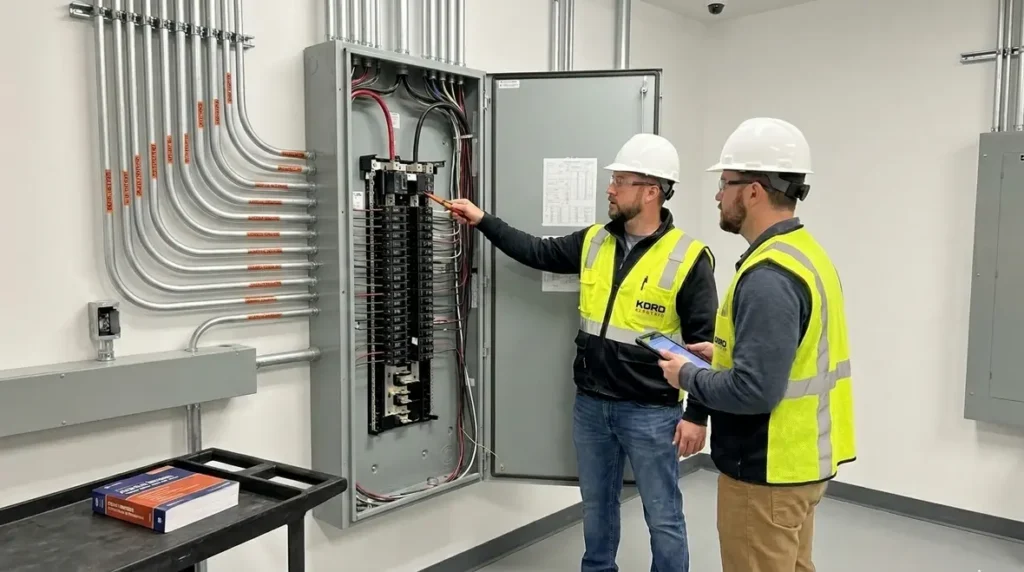
Kord Electric designs and installs commercial EV charging stations for businesses, warehouses, offices, and major property buildings, because our customers do not want “temporary solutions.” From the moment we walk the site, we plan for real-world power demand, code compliance, and smooth operation for staff, guests, and fleet drivers. And yes, we make sure the chargers work without tripping breakers like a bad joke that refuses to end. In the sections ahead, we explain the NEC requirements that govern commercial installations, what inspectors usually look for, and how our technicians and expert service team guide facility managers through the details step by step.
What NEC rules apply to commercial EV charging stations?
When a property owner asks what the National Electrical Code requires, we answer plainly: commercial EV charging station projects must follow the NEC chapters and articles that cover electric vehicle supply equipment, wiring methods, grounding, overcurrent protection, and equipment location. Then we tie those rules back to real job sites, because the NEC is one thing on paper and another when concrete, parking layouts, and service panels all have opinions.
Most commercial builds involve hardwired connections, conduit runs, properly sized conductors, and clear labeling. Therefore, Kord Electric plans the electrical path early, including where the conduit goes, how the load grows, and how the charger communicates with the building’s electrical system. In addition, we consider the typical facility realities: shared parking, multiple access points, and demand that can spike during shift changes or special events. In other words, we do not install chargers that look good in photos; we install chargers that survive everyday use.
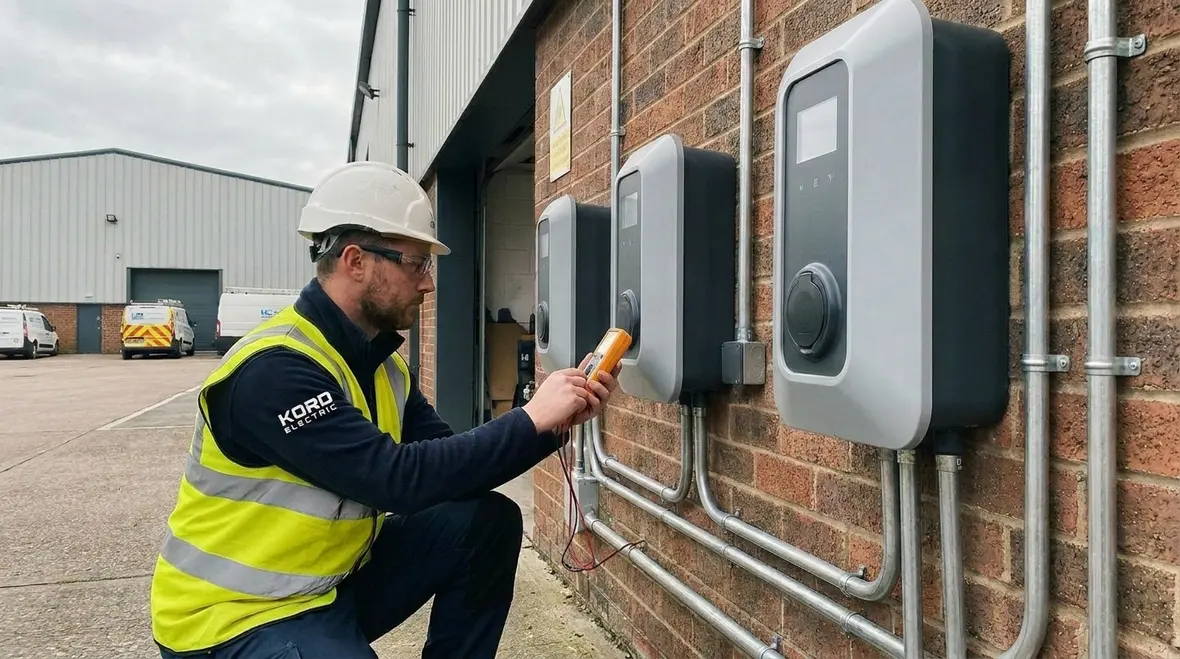
To explore how EV infrastructure fits into a broader power strategy for your property, you can also review our overview of modern commercial electrical systems, which covers how EV charging ties into power distribution, panels, and building automation in a practical way. That big-picture planning helps keep both compliance officers and tenants happy over the long term.
Power sizing and wiring methods that keep inspectors calm
First, we size power like a grown-up. That means we evaluate service capacity, upstream panel ratings, and the number of chargers a facility intends to run. Next, we calculate the conductor size and decide on appropriate wiring methods that match the environment. The goal stays consistent: safe current carrying, secure installation, and protection from physical damage.
Then we address the practical parts that can cause delays. Where chargers mount, we verify mounting supports and keep clearances that allow maintenance and safe access. Where conduit crosses walkways, we select installation methods that hold up over time. And where the wiring runs near other systems, we plan separation and routing so installation stays neat and code friendly.
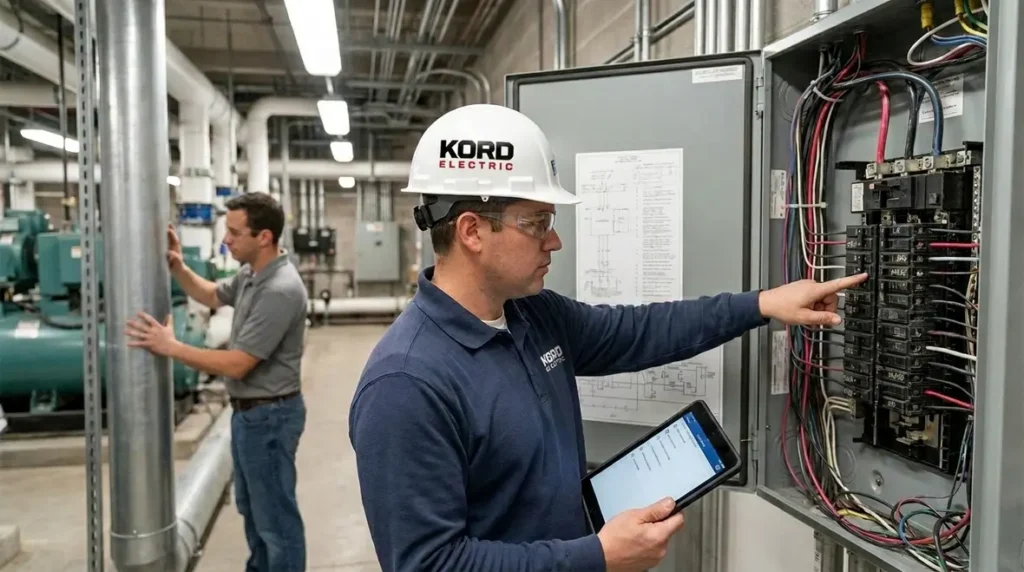
Our technicians also check details that inspectors often notice. For example, we make sure bending radius and conduit fill requirements align with the installation. Also, we ensure the termination quality and lugs are correct for the conductor type. Finally, we verify labeling at both the equipment and the panel so the next person who checks the job does not feel like they are trying to decode a fortune cookie.
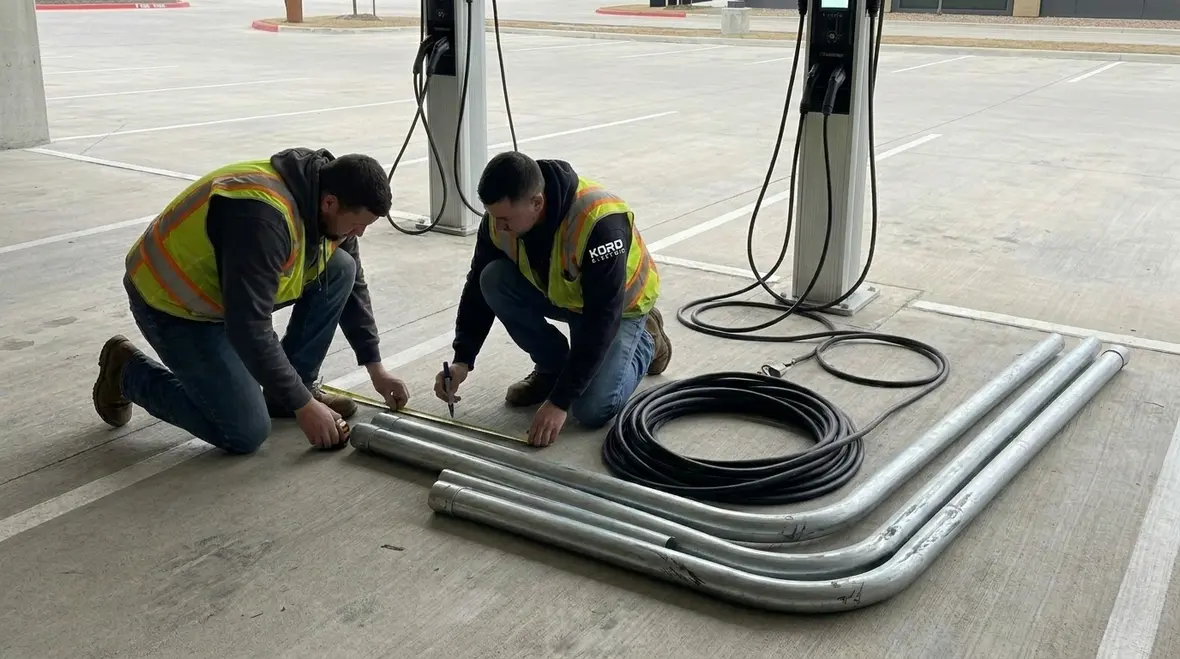
Because commercial EV charging stations often become part of a facility’s long-term electrical strategy, we coordinate our design with wider upgrades such as power quality corrections or panel improvements. When paired with structured electrical maintenance plans and voltage-stability work, that wiring design helps the whole system run smoother instead of creating new weak spots.
Grounding, bonding, and fault protection for real facilities
Charging equipment operates in a harsh world: damp pavement, frequent vehicle movement, and long conduit paths. Because of that, grounding and bonding matter more than people expect. If grounding gets sloppy, the risk grows. If bonding gets missed, the protective system may not work the way it should. Therefore, Kord Electric treats bonding and grounding as core work, not a “later” task.
We also plan the fault protection strategy with care. That includes overcurrent protection, proper device ratings, and the coordination of protective equipment. In addition, we verify that disconnecting means and circuit routing meet NEC expectations, so facility operators can service chargers safely. This protects the equipment, and it protects the people who maintain it.
And yes, we explain it in plain language. Our expert service staff tells the facility manager what the system does, what it does not do, and what to watch for when conditions change, such as adding more chargers later. In a commercial setting, “future expansion” is not a fantasy, so we design with the growth plan in mind.
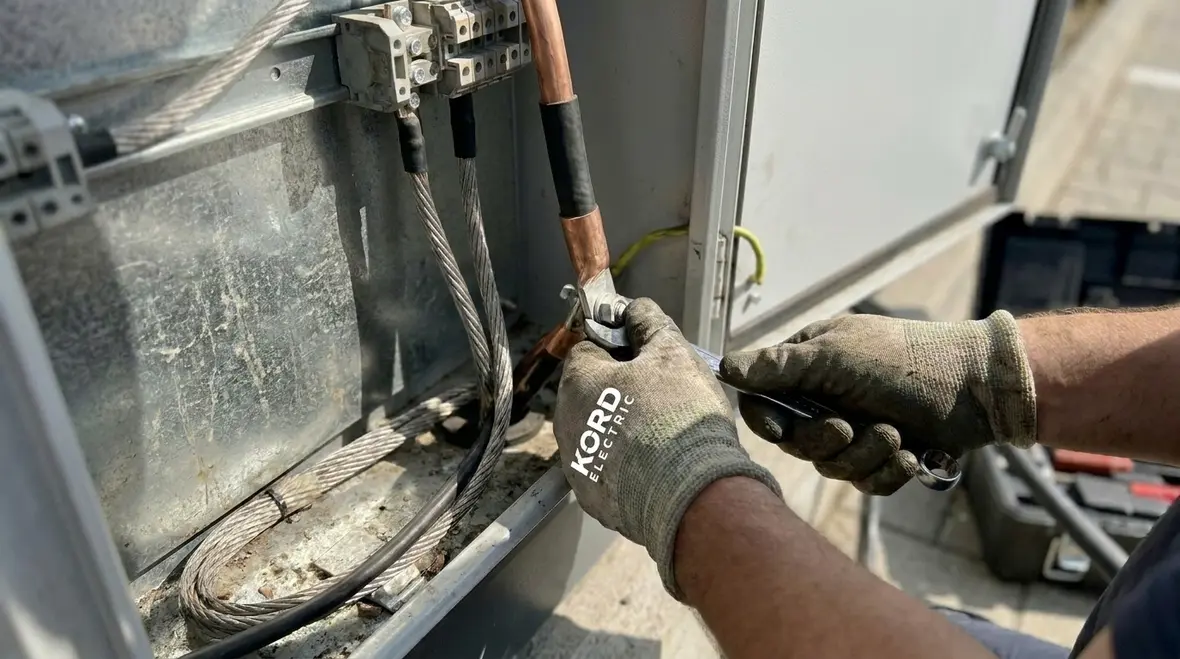
Our teams also pay close attention to how grounding and bonding for commercial EV charging stations interact with other building systems. When a facility already relies on sensitive equipment, backup power, or advanced controls, we coordinate fault protection so that one protective device does not unexpectedly shut down half the property when a single charger misbehaves.
NEC requirements for locations, enclosures, and accessibility
Commercial buildings vary widely, yet NEC location rules stay consistent in purpose: reduce shock risk, protect equipment, and keep access safe. So we confirm the charger location based on the parking layout, site grading, and where personnel and vehicles travel. Then we plan clearances for vehicles to avoid hits that damage hardware and disrupt service.
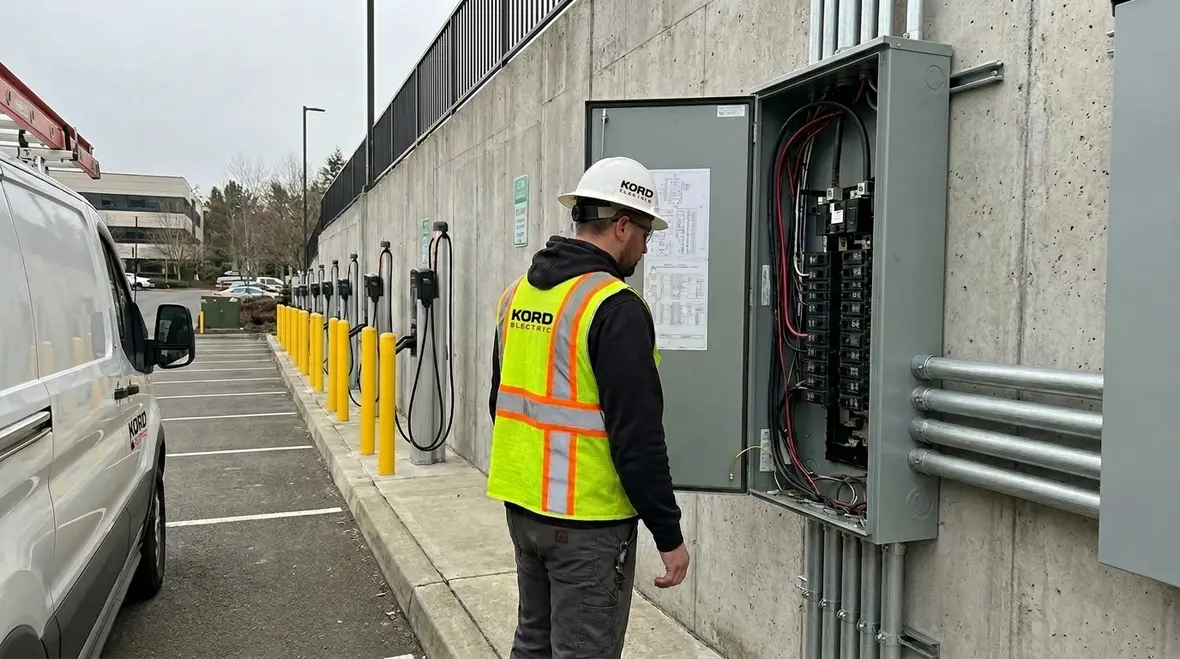
Next, we address enclosure and weather protection. Outdoors, commercial EV charging stations need proper protection from moisture and physical impact. Indoors, we still verify required clearances and installation methods. For major property buildings, we coordinate with site standards and property rules so the installation does not fight the building’s design.
Also, we think about accessibility for maintenance. Our technicians place equipment where qualified personnel can safely reach it without climbing through unsafe areas or removing unnecessary barriers. Then, we confirm signage and identification so users and staff can operate the equipment correctly.
If a facility manager asks, “Will this look clean and still pass inspection?” we answer: yes, because clean wiring and labeled equipment usually help more than they hurt. It is like organizing a closet. It feels boring, but it makes everything easier later, especially when someone needs to find the one thing that always goes missing.

Thoughtful placement also helps when the unexpected happens. In the rare event that a vehicle bumps a pedestal or an enclosure needs emergency service, clear working space and accessible disconnects let licensed electricians restore safety and operation faster, without turning a single fault into a site-wide shutdown.
Load management, demand planning, and service upgrades
Here is where many commercial projects stumble: they assume power is infinite. It is not. Therefore, we evaluate whether the facility can support the additional load from commercial EV charging stations without violating NEC requirements or creating nuisance trips. We do this by reviewing service size, panel capacity, existing loads, and expected charging behavior.
Depending on the site, we may recommend load management options, smart controls, or additional electrical upgrades. Load management can reduce peak demand by regulating how much power each charger receives, especially during busy periods. However, we still design the electrical system so it stays compliant even under realistic operating conditions.
For businesses with fleets or high uptime goals, we plan for performance and reliability. We also coordinate installation steps so the facility can continue operations during construction. Our goal stays practical: minimize downtime, avoid surprises, and deliver a system that works as the business expects, not just as the engineer hoped.
When upgrades are necessary, our technicians explain the path clearly. They tell others what equipment changes may be required, how long each step may take, and what facility staff should expect. In short, we treat the project like a partnership, not a mystery show.
Because EV charging demand often grows faster than people expect, we also coordinate long-term planning with other services such as voltage fluctuation mitigation and structured electrical maintenance. That way, each upgrade supports a more resilient system instead of creating patchwork fixes that will need to be revisited a year later.
How our technicians handle inspections and documentation
Commercial electrical inspections can feel intense. However, we approach them with structure. First, we build the plan around code needs, then we execute with quality checks during installation. After that, we prepare documentation that supports the job. That includes labeling, circuit identification, and any relevant test results that help confirm the installation meets requirements.
Our expert service staff also supports facility teams after the install. Therefore, when questions arrive, we answer quickly and accurately. Some people expect a charger to behave like a vending machine. Yet chargers operate as electrical equipment, and electrical equipment needs correct procedures. We teach those procedures and we stand behind the system.
And if something changes, like a new tenant or an expanded parking plan, we help plan how to add or adjust capacity without turning the building into a science fair experiment.
If an issue ever does rise to the level of an electrical emergency, our team coordinates with emergency electrical services to resolve problems quickly, restore power safely, and protect both people and equipment while keeping your project aligned with NEC and local requirements.
Steps we follow for a compliant commercial installation
To keep projects smooth for major property buildings and commercial facilities, we follow a proven flow. Then we customize it based on site conditions and power realities.
- Site review: We inspect electrical access points, parking layouts, equipment placement, and environmental factors.
- Electrical design: We size conductors and protections, plan conduit routing, and map upstream connections.
- Permits and coordination: We align the plan with local requirements and help manage the path through approval.
- Installation: Our technicians install chargers, conduit, wiring, and safety components using code aligned methods.
- Testing and verification: We confirm proper operation, safety checks, and correct labeling.
- Handoff and support: Our expert service staff explains use, maintenance expectations, and next steps.
For more specifics, we recommend reviewing the details on our EV charger installation page at https://kordelectric.com/ev-charger-installation/. We designed that guide to help facility owners understand how the process stays organized from start to finish, from the first site evaluation through testing and commissioning.
Commercial EV charging projects also benefit from being tied into a broader maintenance and reliability plan. By coordinating with services that address voltage stability, preventive maintenance, and emergency response, facility managers get a roadmap that supports chargers, panels, and critical loads as one connected system instead of isolated projects.
FAQ: NEC and commercial EV charging stations
Ready to power up, the compliant way?
If your business or major property building needs commercial EV charging stations that meet NEC requirements and stand up to real use, Kord Electric is ready. We design the electrical plan, install with code aligned care, and support your team with clear explanations from our technicians and expert service staff. Contact us for a site review and a practical roadmap tailored to your facility’s power, layout, and growth goals. Let us handle the heavy lifting while your chargers work on day one.
If your property also needs broader electrical support—such as panel work, lighting improvements, power quality corrections, or emergency response—we can integrate your EV charging project with related services so everything works together. That way, your charging infrastructure, commercial electrical system, and maintenance strategy all pull in the same direction instead of competing for capacity and attention.
To take the next step, explore our dedicated EV charger installation services and related commercial solutions, then schedule a walkthrough so we can align NEC requirements, real-world usage, and your long-term plans into one clear design.
When you are ready to move from ideas to a defined project plan, our team will walk the site, review your existing electrical infrastructure, and turn those plans into a compliant installation schedule that fits how your facility actually operates.
From the first load calculation to the last inspection sign-off, we treat your commercial EV charging stations as mission-critical infrastructure, not just a convenience feature. That mindset keeps your drivers happy, your inspectors satisfied, and your operations on schedule.