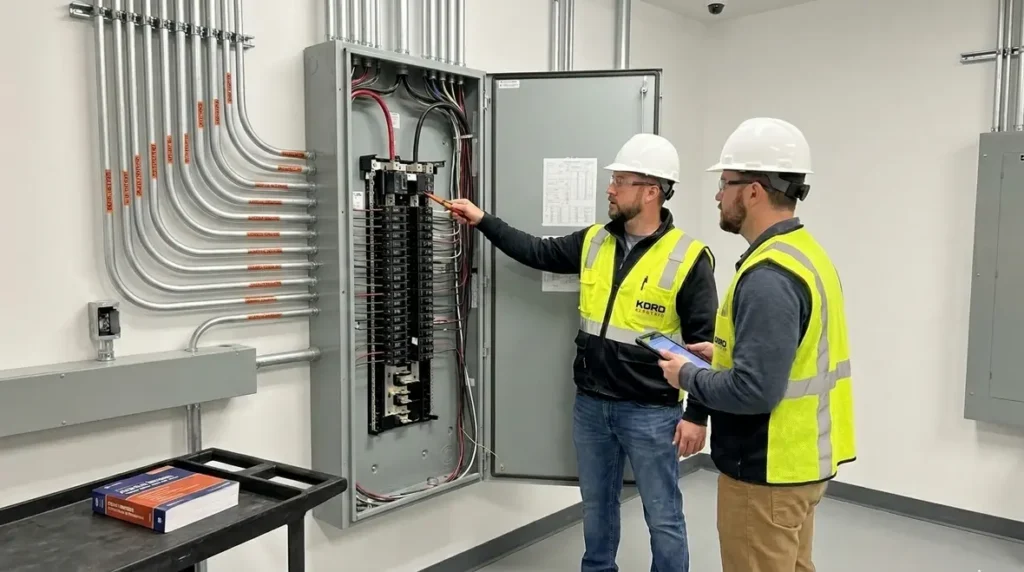
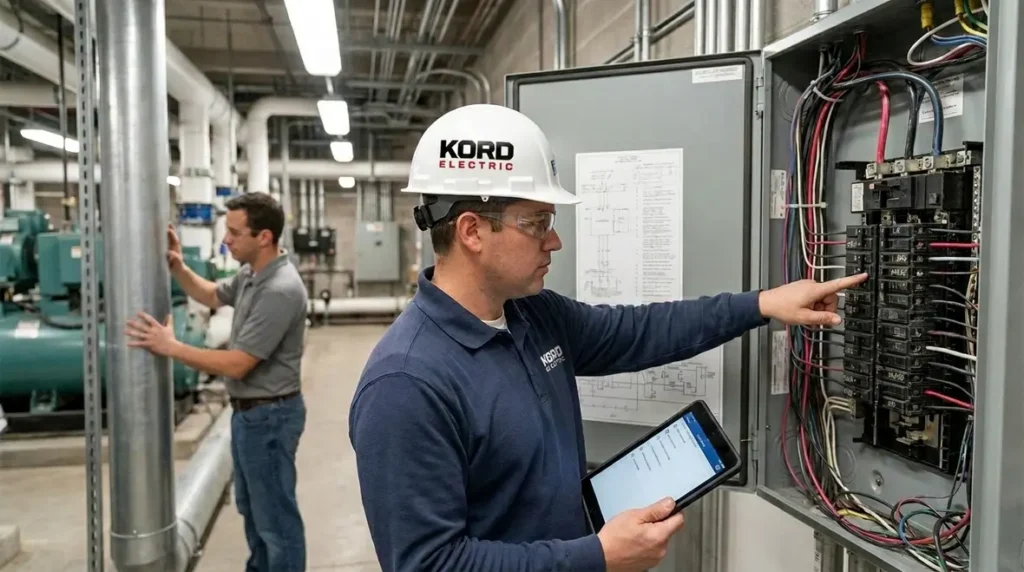
Commercial Solar Electrical Safety and Code Compliance
Commercial Solar Electrical Safety and Code Compliance for Businesses
At Kord Electric, commercial solar electrical safety is not a slogan, it is a practice. When we install and maintain solar power for commercial and industrial facilities, we treat every wiring run, disconnect, and protective device like it can turn into a problem if we get casual. And yes, we have seen what happens when someone treats electricity like it is a background character. It is not. It is the main plot, and it does not take auditions.
We explain everything clearly before we touch a panel, and our expert service staff walks facility managers through the “what” and “why” behind code steps. Then we document it, test it, and keep it compliant. That way, others can operate safely, insurers can breathe easier, and your building does not end up on the wrong end of a punch list.
Why Code Compliance Matters When PV Systems Meet Real Buildings

Commercial solar systems connect to structures, switchgear, metering, and utility interfaces. Therefore, the electrical rules cannot stay in the abstract. They must show up in the field, in the right order, with the right labels, and with the right test results. When we plan for code compliance, we focus on practical safety outcomes, not paperwork theater.
First, the system needs correct grounding and bonding so stray faults have a safe path. Next, overcurrent protection must match the design, because fuses and breakers are not decorative. Then, equipment ratings and wiring methods need to fit the environment, including heat, moisture, and vibration common in large facilities. Finally, we address how the system disconnects so responders and maintenance teams can work without guesswork.
Our technicians take these details seriously because commercial sites operate like clockwork. If a solar system creates nuisance shutdowns, a facility team loses time. If it fails to shut down safely when required, a maintenance team loses safety. In both cases, nobody wins. We make sure it works as intended from day one, then we verify.
Rapid Shutdown, Labeling, and Safe Access Paths
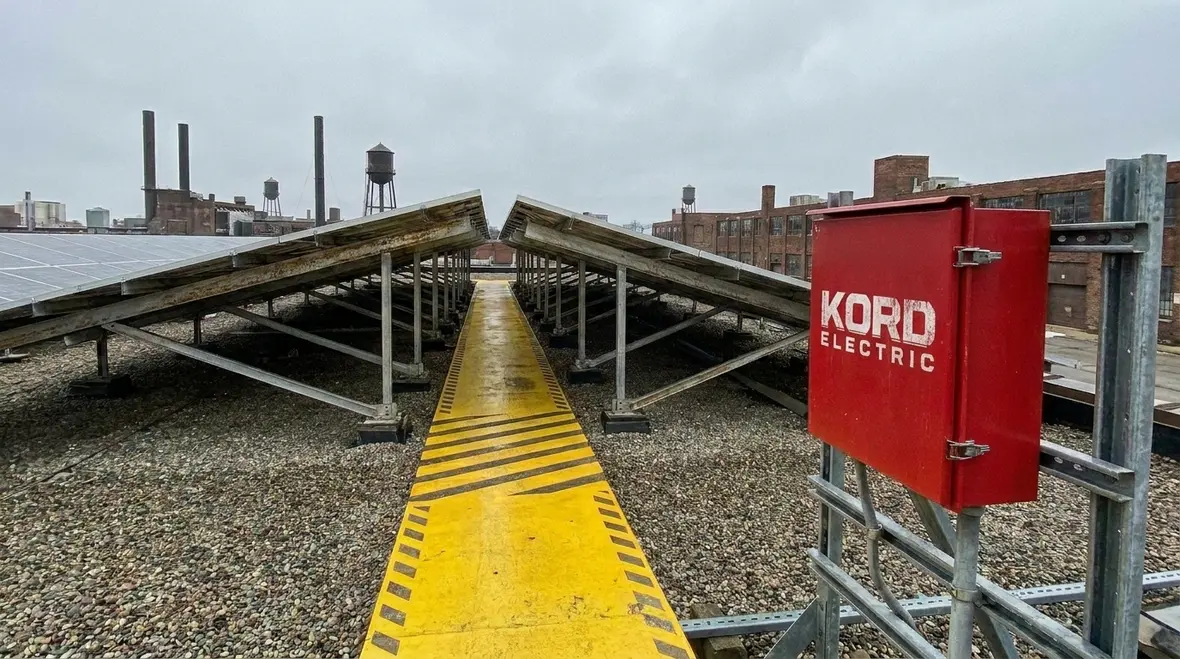
When solar arrays exist on rooftops, parking canopies, or building facades, people need clear boundaries. So we design safe access paths and plan for where technicians stand, where ladders go, and where testing occurs. That means fewer “quick looks,” fewer awkward stretches, and fewer moments where someone says, “I thought it was de energized.” We hear that line a lot in the stories, and we do not like writing it into our own.
We also address rapid shutdown provisions so that in an emergency or during maintenance, the system reaches safe conditions according to the applicable requirements. While the exact requirements vary by installation design and location, the goal stays the same: reduce shock risk and limit energized conductor exposure. Additionally, we provide consistent labeling at key points, including disconnects and access areas. Clear labels help teams respond correctly under pressure, which is exactly when clarity matters most.
To support operations, our expert service staff explains how shutdown and re-energization work for your specific layout. Then we confirm field conditions match the documentation. In other words, we do not just install and leave. We teach, verify, and leave behind a system that makes sense.
Commercial Solar Electrical Safety in Grounding, Bonding, and Arc-Flash Planning
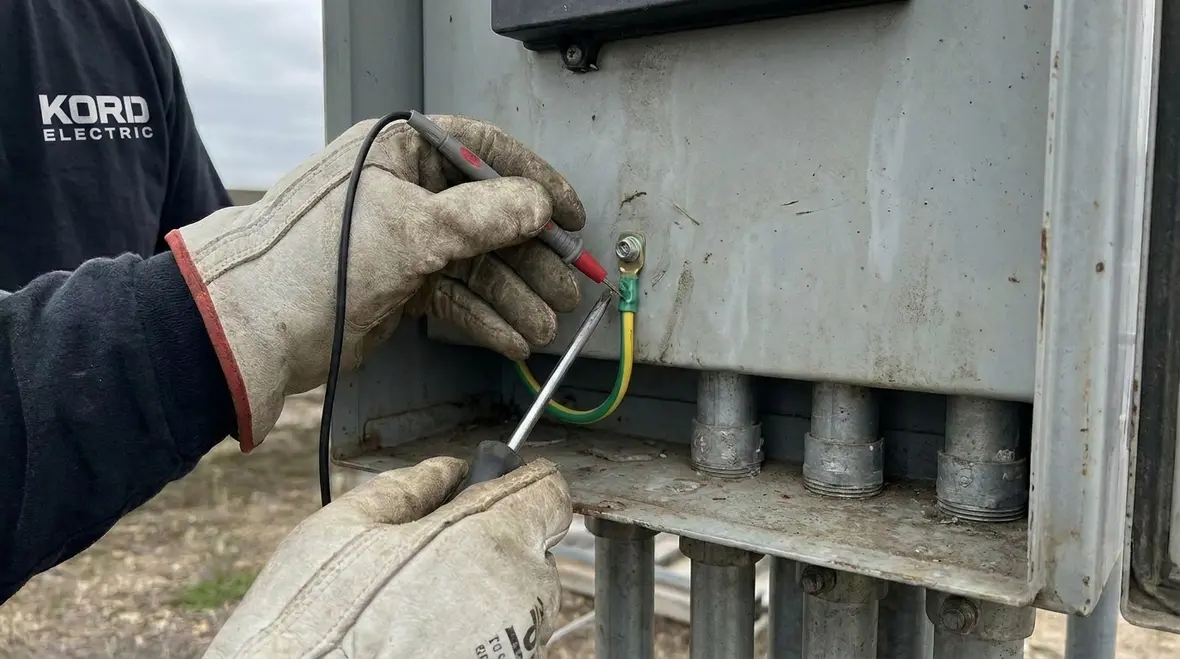
Let us talk about what keeps people safe when systems fault. Grounding and bonding control how electrical energy behaves during abnormal conditions. They help prevent dangerous touch potentials and support protective device operation. If these parts are wrong, breakers might not trip when they should, and equipment can become a hazard.
At Kord Electric, we also focus on arc flash risk planning. Arc flash is not a theory. It is a real energy release event that can injure or worse if teams do not follow safe work practices. Therefore, we coordinate protective device settings and system design so the incident energy calculations and labels reflect actual conditions. We align the field with the documentation, and we guide the facility team on what PPE and procedures apply.
Then we layer in practical checks. For example, we verify conductor terminations, ensure proper torque where required, confirm cable management to avoid damage, and check for correct polarity in critical circuits. These are not small details. In commercial and industrial environments, small issues can scale fast due to complexity and daily uptime demands.
Protecting Against Roof, Conduit, and Weather Risks
Solar systems live in the weather. So we address the reality that your roof is not just a surface, it is an environment. UV exposure degrades materials over time, and water finds weak points. In addition, thermal cycling can stress connections. That is why we use proper installation methods for outdoor wiring, conduit runs, penetrations, and support structures.
We also handle cable routing with an eye for long term integrity. We keep cables protected from abrasion, we support them correctly, and we prevent water intrusion at entry points. Furthermore, we verify clearances around hot surfaces and moving equipment. That is how we reduce the chance of insulation wear and intermittent faults that can be frustrating and costly.
And yes, intermittent issues are the ones that make people stare at a meter at 2 a.m., praying to the electrical gods. We avoid that kind of fun. Our technicians conduct thorough inspections and testing after installation, and they document what they did so your team can trace results later.
Inspection, Testing, and Documentation That Your Team Can Use
Many providers hand over binders. Others hand over guesswork. We do both the work and the clarity. After installation, our technicians perform testing that supports safe operation and code compliance goals. We check polarity, verify insulation resistance where applicable, confirm grounding continuity, and test functional operation of protective devices and shutdown equipment.
Then we move into documentation. Commercial and industrial facilities need records they can reference for internal audits, service calls, and compliance reviews. Therefore, we provide installation details, labeling documentation, equipment information, and test summaries. This helps others in your organization understand what is where, how it works, and what to check next time.
Just as important, our expert service staff explains the “next steps” for ongoing maintenance. They tell facility teams what to watch for, what to keep clean, and how to schedule service so minor concerns do not become major ones. In short, we reduce downtime risk by making maintenance predictable.
If your building has multiple tenants or shared electrical spaces, we also coordinate with your site rules and safety plans. We respect how large properties operate, because nobody wants a solar vendor that treats a loading dock like a movie set.
FAQ About Commercial Solar Electrical Safety and Code Compliance
Choose Kord Electric for Safe Solar Work at Scale
Commercial and industrial solar systems need careful engineering, disciplined installation, and ongoing verification. At Kord Electric, we deliver commercial solar electrical safety with code minded planning, field tested results, and clear explanations from our expert service staff. If you manage a major property building and want fewer risks, fewer surprises, and stronger documentation, we are ready to help. Contact Kord Electric today to discuss your site and get a safety and compliance focused plan that your team can trust.
Ready to put commercial solar electrical safety on a solid footing instead of treating it like an afterthought? Our team can help you plan for safe shutdown, reliable performance, and documentation that stands up to scrutiny, from the first design conversation to long after commissioning day.