NEC Solar Electrical Requirements for Commercial
When a commercial building adds solar, the electrical side can’t be treated like a weekend DIY project. In the U.S., the NEC solar electrical requirements shape how engineers and electricians design safe wiring, grounding, disconnects, and protection for the entire system. And yes, the National Electrical Code can feel a little like a rulebook written by someone who never met a deadline. Still, we do it carefully because people, equipment, and rooftops matter.
At Kord Electric, we support commercial and industrial facilities, as well as major property buildings. We rely on proven practices, and our technicians and expert service staff explain what they are doing in plain language, so our clients understand the why, not just the final result. Now, let’s break down the NEC solar electrical requirements that matter most for commercial projects, step by step.
Commercial solar safety starts with code planning
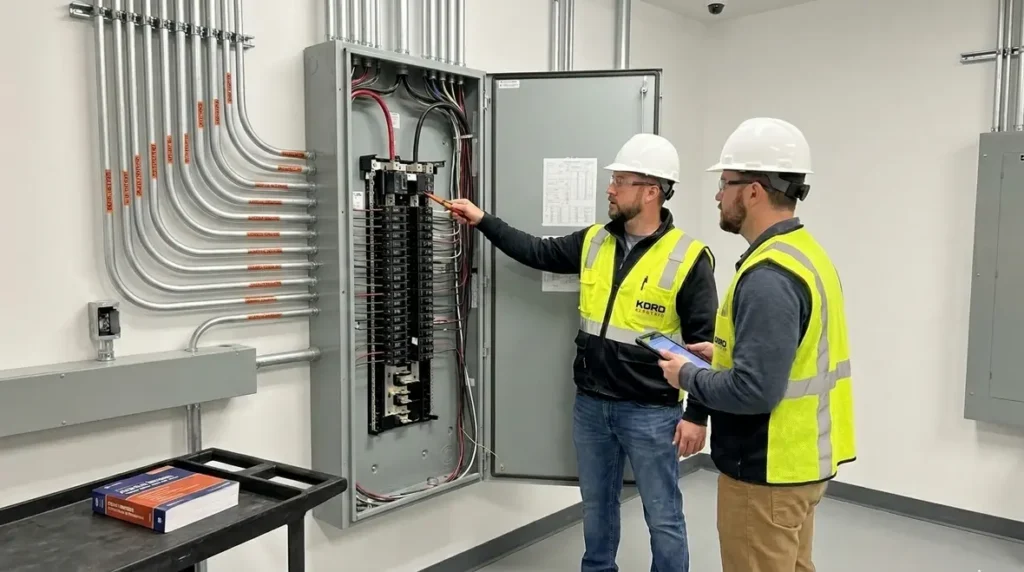
In commercial and industrial work, we treat solar electrical planning like a system, not a collection of parts. First, we review the utility connection approach, the service size, and the existing electrical distribution. Then we map the path from PV source circuits through inverters and on to the building’s service gear.
After that, our team checks how the NEC solar electrical requirements apply to commercial settings. For example, we verify that conductor ampacity, overcurrent protection, and insulation ratings match the operating conditions. We also confirm that labeling, raceways, and routing meet the needs of a real facility, not a showroom demo. And while some folks think code is “just paperwork,” we see it as a safety framework that keeps failures from turning into outages.
Our technicians take the time to explain these steps. If you ever wondered why a cable route matters, we will show you how heat, sunlight exposure, and physical damage risk can change the whole story.
How we handle PV disconnects, rapid shutdown, and access
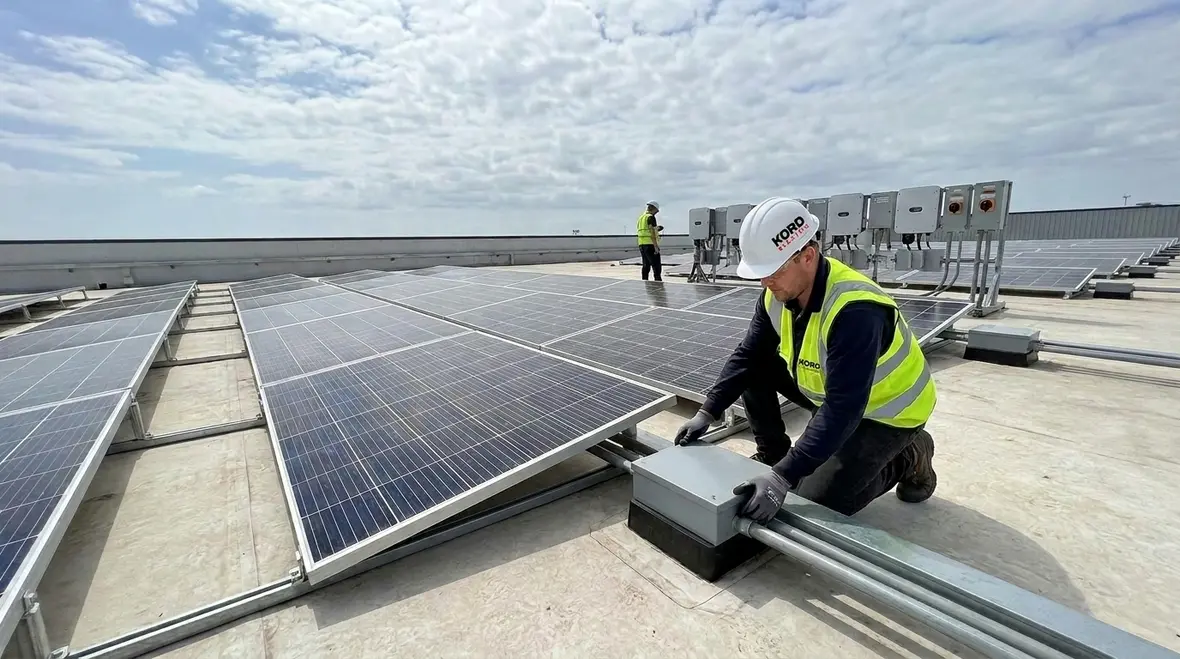
Commercial systems often serve multiple roof areas, canopy structures, and parking decks. Therefore, accessibility becomes a real issue for firefighters, maintenance teams, and electrical responders. We make sure PV disconnects and required shutdown pathways are installed where they can be found and operated safely.
Next, we consider rapid shutdown requirements where they apply. Because in practice, responders need predictable behavior during emergencies. Additionally, we coordinate with project stakeholders so shutdown controls align with building layout and emergency procedures. That means fewer surprises during commissioning and fewer rushed conversations with the inspector.
To keep things calm, our expert service staff walks clients through the equipment locations before final sign off. We might say something like, “We will not bury the emergency controls where only a professional contortionist can reach them.” Then we back it up by verifying access clearance, labeling, and wiring identification.

Grounding and bonding: we build for long-term stability
Grounding and bonding do not look exciting on a permit drawing, but they drive safe performance. In commercial and industrial environments, electrical noise, lightning exposure, and equipment aging can all create stress over time. So we design grounding systems that stay stable as conditions change.
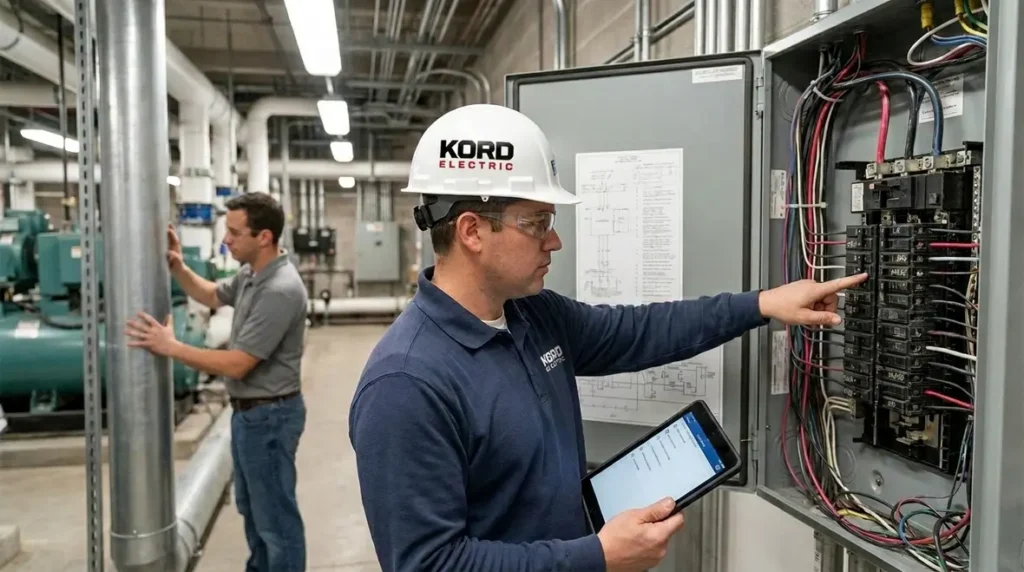
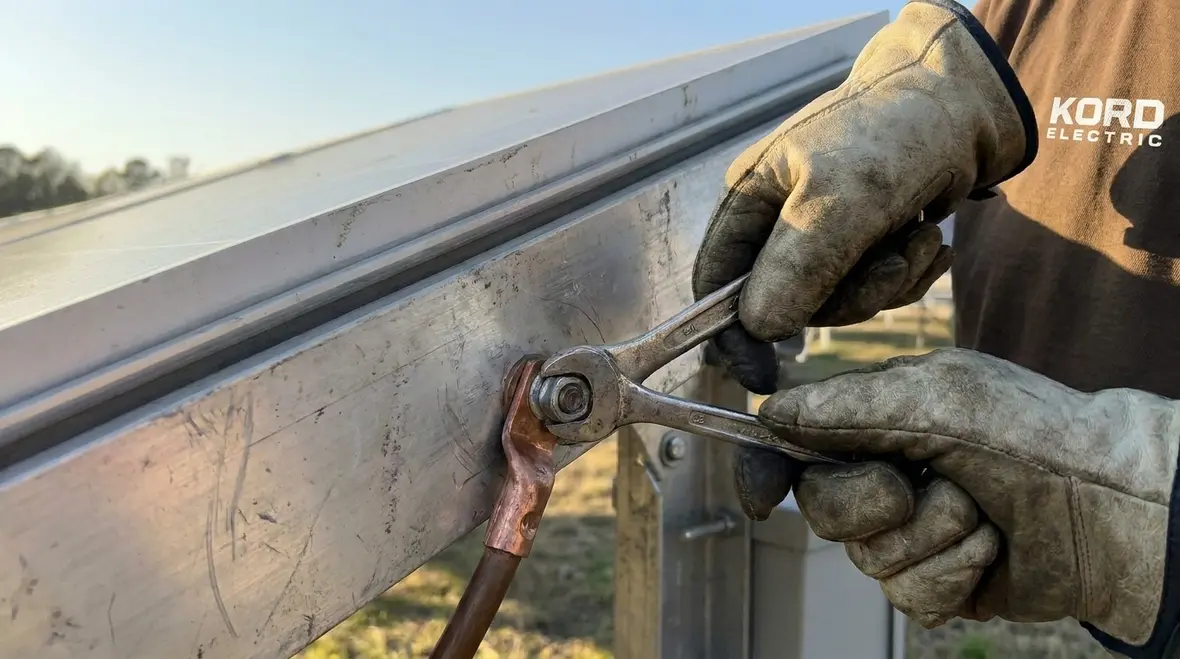
We verify bonding between conductive parts, ensure proper equipment grounding conductor sizing, and confirm that PV modules and frames connect correctly. Also, we check that the system uses the right grounding methods for the inverter and overcurrent devices involved. When we do this right, we reduce the chance of nuisance tripping, abnormal voltages, and unsafe fault conditions.
Most importantly, we document the results clearly. That way, facility managers and electrical teams can maintain the system without guessing. And yes, maintenance staff appreciate documentation. They do not want a scavenger hunt just to find where the grounding conductor goes.
Overcurrent protection and conductor sizing for demanding sites
Commercial electrical rooms carry real loads. Meanwhile, solar arrays add their own electrical pathways. As a result, conductor sizing and overcurrent protection must match the actual design, not the default assumptions people sometimes use.
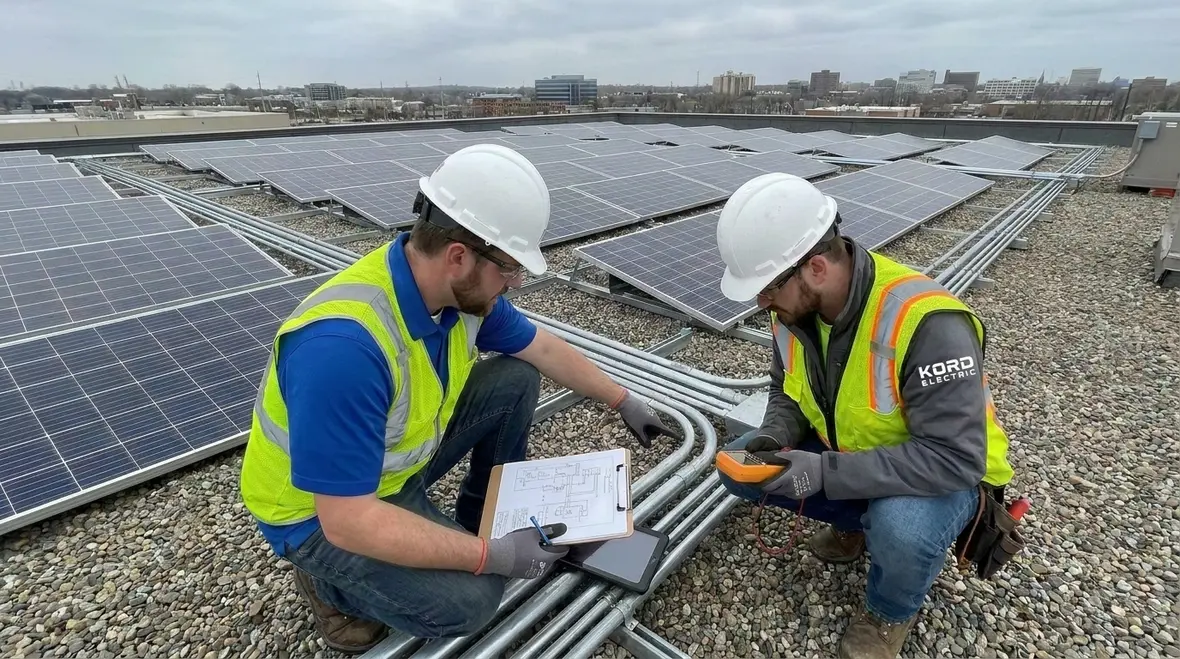
First, we confirm that PV source circuit conductors and wiring methods follow the NEC solar electrical requirements for ampacity and temperature considerations. We account for how rooftop surfaces heat up and how conduit fill limits affect safe installation. Then we verify that disconnects and overcurrent protective devices protect the conductors appropriately.
After that, we review the design for selectivity. Selectivity means the fault clears at the right point, not everywhere at once. For facilities that need uptime, selectivity can be the difference between a short repair and a day-long problem. Our technicians also check torque specs, termination quality, and labeling so the system performs through normal operations and future inspections.
In plain terms, we aim for a design that protects people first, equipment second, and budgets third, in that order. Because if you skip the first two, the third one starts crying.

Wiring methods, routing, and labeling that survive real life
In major property buildings, the solar electrical layout must fit around mechanical equipment, fire access paths, and safety constraints. Therefore, we pay close attention to routing, support, and physical protection of PV wiring.
We also verify appropriate wiring methods, including where conduit, cable type, and UV exposure protection apply. Since solar installations operate under sunlight, wind, and weather cycles, the right method reduces long-term degradation. Next, we ensure separation from other building conductors when the design requires it, and we confirm that pathways allow safe maintenance.
Labeling is another key area. We label DC circuits, identification at disconnects, and marking that supports safe troubleshooting. Moreover, we coordinate labeling so facility staff and service contractors can quickly find what they need. Our expert service staff teaches clients how to read the labels, which saves time later when a system needs inspection or a component replacement.
We know labeling can feel tedious. Yet, in a commercial building, it is often the difference between “we found the issue” and “we spent three hours looking for the problem like it owed us money.”
If you are interested in seeing how this same level of discipline shows up in other building systems, Kord Electric’s guide to hidden electrical risks in commercial buildings walks through what can hide behind panels, ceilings, and walls when electrical work is not planned with the whole facility in mind.
Commercial utility interconnection and power system coordination
Solar does not stand alone. It works with utility requirements and the building’s power system. So we coordinate interconnection details, metering layout, and protective devices with the project’s electrical engineer and utility process.
In many commercial settings, the PV system interacts with switchgear, switchboards, and existing protective coordination plans. Therefore, we confirm that inverter outputs integrate safely with the service and distribution equipment. We also ensure anti-islanding and protective settings align with the design and local utility expectations.
Next, we validate that the equipment room and installation environment meet the manufacturer requirements. Since airflow, temperature, and access paths affect performance, we treat the surroundings like part of the electrical system. Additionally, we review shutdown and isolation methods so the building can respond to events without chaos.
Our technicians explain how power flows during normal operation and during abnormal events. That way, the client can plan operations, maintenance, and response procedures with confidence.
For properties planning broader upgrades around their power infrastructure, pairing solar work with structured electrical preventive maintenance can help keep panels, switchgear, and distribution equipment aligned with both NEC expectations and real-world operating demands.
Commissioning, testing, and inspections that make engineers breathe easier
After installation, we do not call it complete just because the panels look neat from the sidewalk. We commission and test the electrical performance so the system operates as designed.
We verify polarity, correct terminations, proper grounding continuity, and insulation resistance as applicable. Then we test protective functions and confirm that the system follows the intended behavior under fault and shutdown conditions. We also check that labels match the final one-line and that equipment identification supports field maintenance.
Because commercial and industrial facilities need dependable uptime, we focus on repeatable processes. Our expert service staff schedules testing in a way that supports your building operations, not your building downtime. And if you are thinking, “Yes, we want the boring stuff done right,” we agree. Boring in the right way prevents expensive drama later.
If your facility is also reviewing how the broader National Electrical Code affects existing infrastructure, Kord Electric’s overview of NFPA 70 and the national electrical code for 2026 can provide additional context while you plan future solar, lighting, or power system projects.
FAQ
Ready for a commercial solar electrical plan that holds up?
Commercial solar should feel solid, not mysterious. At Kord Electric, we help commercial and industrial facilities follow the NEC solar electrical requirements through planning, installation, testing, and clear explanations from our technicians and expert service staff. If you want a system that supports uptime and passes inspection with less stress, we are ready. Contact us to discuss your project scope, roof conditions, and power design needs, and we will map the safest path forward.
If your project includes broader upgrades to lighting or distribution equipment alongside solar, our lighting installation services can be coordinated with NEC-compliant solar work so your building’s power, lighting, and generation systems move forward together instead of in isolated steps.