NEC Emergency Power Requirements for Building Owners
NEC Emergency Power Requirements: What Building Owners Need to Know
When a power outage hits, the spotlight lands on the NEC emergency power requirements. In our experience at Kord Electric, building owners often learn the rules the hard way, usually while the lights flicker and the alarms act like they just heard a bad joke. Early understanding matters because these NEC emergency power requirements set clear expectations for emergency lighting, life safety circuits, and standby power systems. In fact, we often help owners and facility managers turn “panic mode” into a calm, planned response.
At Kord Electric, our technicians and expert service staff explain the requirements in plain language, then map them to the real equipment in the building. And yes, we do point out the common gaps we see during inspections, commissioning, and trouble calls. Let’s get into the details, step by step, so you can protect people, operations, and your compliance posture without guessing.
Start With Life Safety Goals and Code Intent
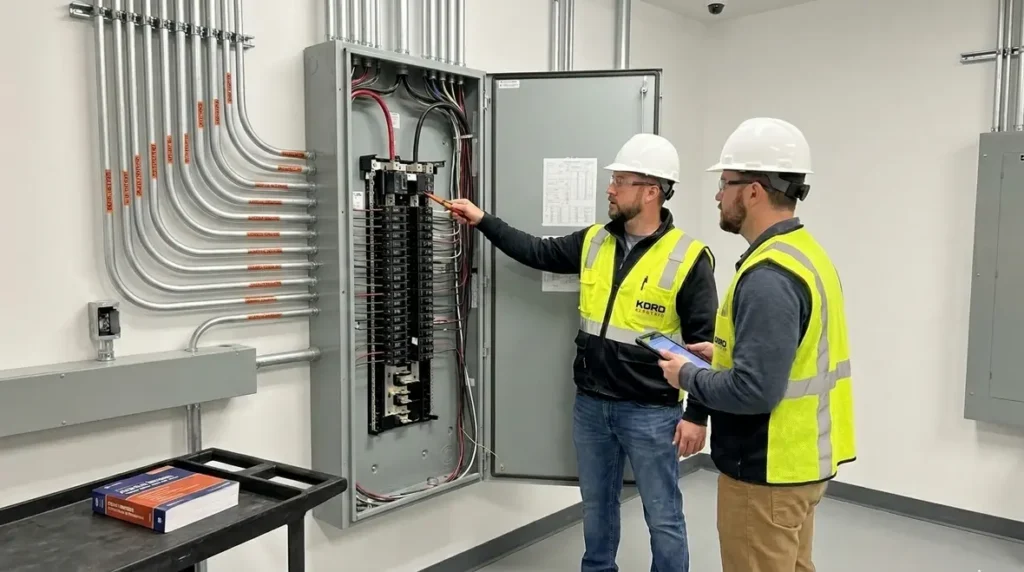
First, building owners should understand that the NEC emergency standards are not written to create paperwork. They exist to support life safety and safe building function during failures. Therefore, the design focuses on circuits that keep key systems operating long enough for evacuation, emergency response, and safe shutdown.
Next, Kord Electric approaches each project with a simple mindset: we treat every emergency load like it has a job, a time window, and a risk profile. For commercial and industrial facilities, that means we look at what keeps people safe and what keeps critical processes from turning into expensive problems. Then we compare that to what the code expects for emergency power behavior.
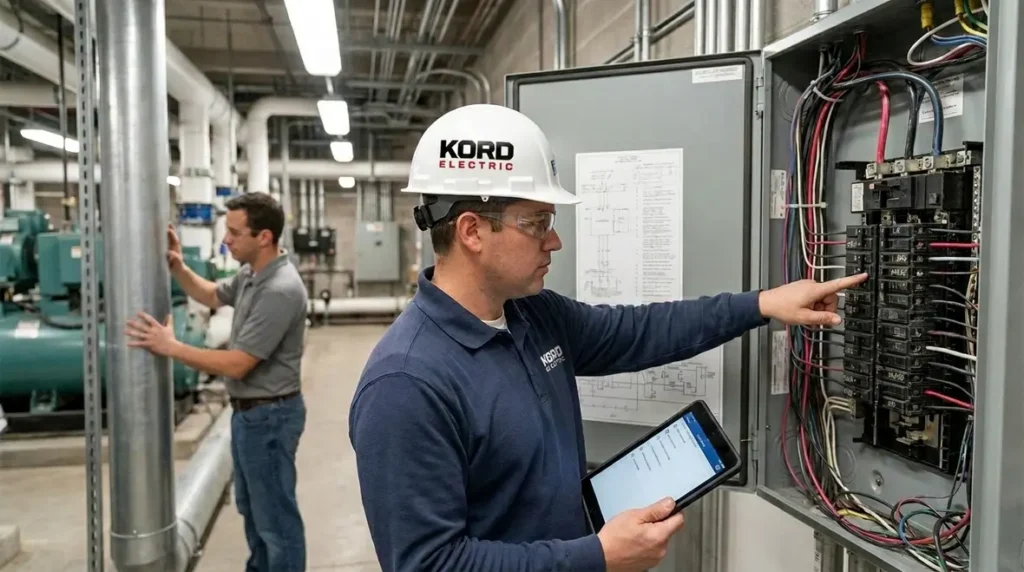
In practice, our technicians review the electrical one line, verify equipment classifications, and confirm that emergency loads connect where they should. If your standby system can run the wrong loads, it can also fail at the right ones, which is like bringing a salad to a steak dinner and calling it “close enough.”
How Emergency Circuits Are Defined and Selected
To meet NEC emergency expectations, the electrical system must identify and supply emergency loads correctly. Typically, facilities separate loads into categories like emergency circuits and legally required standby, then ensure automatic transfer happens as required.
We explain this with a grounded, practical view. Emergency circuits usually support lighting and life safety functions that help people exit and stay oriented. Legally required standby often supports systems that must run to maintain safety and protect property, even when normal power fails. These selections affect system sizing, transfer equipment, and testing plans.
Then we ask a set of questions our expert service staff repeats because they prevent surprises later. Which panels carry emergency loads? How are devices labeled? Does the building’s sequence of operations match the installed wiring? Are transfer switches configured and commissioned with the right logic?
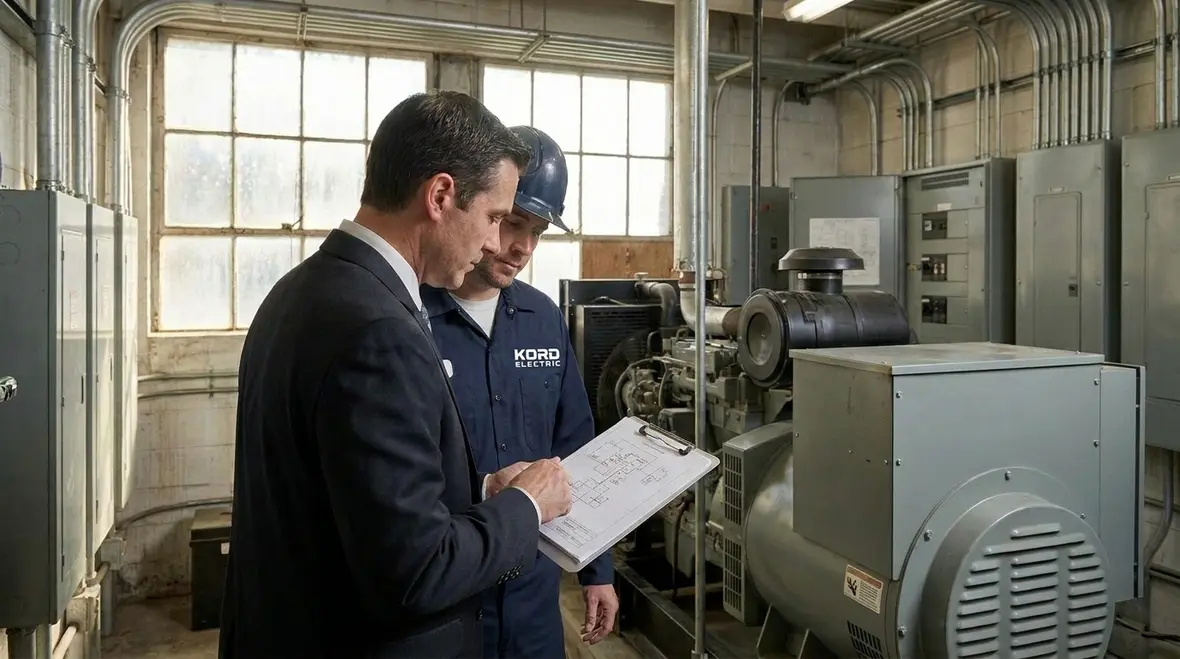
Because you cannot manage what you cannot verify, we also check documentation alignment. If the drawings say one thing and the field says another, the system may still “work,” but it will not work correctly when it matters most.

Standby Generators and Transfer Equipment: The Real Story
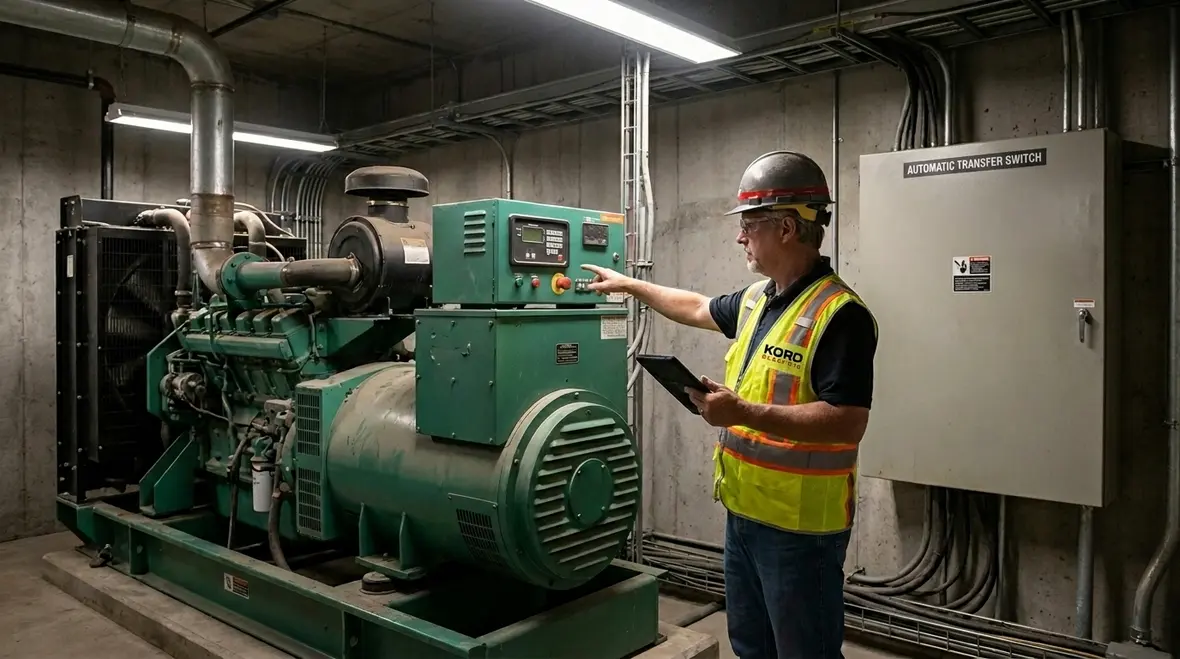
Now we move to the heart of many commercial and industrial buildings: generator systems and transfer equipment. The NEC emergency power requirements connect to how the system starts, how it transfers, and how long it supplies power.
For example, standby systems must be reliable and properly connected to the correct loads. In many facilities, owners choose between solutions like automatic transfer switches for specific circuits and more complex distribution schemes for larger loads. Either way, the transfer path must behave as designed during simulated events.
Kord Electric technicians focus on three areas during field verification. First, we confirm the transfer equipment operates on the proper signal and at the proper threshold. Second, we verify load shedding or sequencing logic, when used, so critical items stay online. Third, we confirm wiring and terminations are correct and durable, since loose connections can cause failure under stress.
And yes, transfer switches can “act fine” during tests and still fail in real events if calibration and commissioning were rushed. We have seen it. We prevent it by verifying performance and documenting outcomes clearly.
Emergency Lighting and Exit Sign Systems That Actually Hold Up
Emergency lighting deserves more than a cursory check. It has to provide safe illumination during the outage and meet the intended coverage for the building layout. Likewise, exit signs must remain powered so people can find routes without guessing.
In most major property buildings, we help owners review fixture types, placement, circuit paths, and whether emergency drivers or battery units comply with intended operation. Then we evaluate how the emergency mode behaves when normal power drops.
At Kord Electric, our expert service staff also checks practical issues that impact performance. We verify that emergency circuits do not feed non emergency loads. We ensure that labels match field conditions. We confirm that testing produces stable lighting levels and does not create flicker or dropout.
It may sound obvious, but lighting systems fail in boring ways: miswired circuits, mislabeled panels, or units that were never properly commissioned. The building does not care if the mistake came from an old change order or a hurried installer. It only cares when the lights go out.
If you are already reviewing emergency lighting, it often makes sense to coordinate that work with broader lighting installation services and retrofit plans so life safety circuits, efficiency upgrades, and control strategies all move in the same direction instead of competing for the same panels and breakers.
Testing, Maintenance, and Documentation That Survive Scrutiny
Even the best system can drift over time. Therefore, owners need a maintenance plan that includes testing, inspection, and recordkeeping. The NEC emergency power requirements connect to how systems prove that they work when needed.
Our approach at Kord Electric is to make compliance practical. We guide owners and facility teams to set testing schedules aligned with their equipment and use patterns. Then we help ensure records remain organized and accessible. When inspectors show up, we want your documentation to look like it came from a calm, organized team, not from a desk drawer that also holds random pens and a mystery cable.
We also recommend maintenance that looks beyond checkboxes. For standby generators, that means confirming fuel readiness, verifying battery condition for control systems, and checking that protective settings remain correct. For transfer equipment, it means confirming contacts, mechanisms, and control operation. For emergency lighting, it means verifying output, coverage, and proper return to normal mode.
Because many facilities run multiple shifts, we plan work to reduce downtime and avoid interfering with production. We coordinate with operators so tests happen when the building can safely support them. Many owners pair this work with structured electrical preventive maintenance, which keeps everyday operations and emergency systems aligned instead of treating them as separate projects.
Common Gaps We See in Commercial and Industrial Facilities
We have walked through enough mechanical rooms and electrical closets to know the typical patterns. First, emergency and standby loads sometimes change after renovations, tenant improvements, or new process equipment. Then the electrical system gets updated, but labeling and panel schedules lag behind.
Second, some buildings add equipment that draws power but does not fit the intended emergency load plan. The result is a generator that “technically runs” but does not power the right circuits, or it overloads during transfer.
Third, testing can become inconsistent. One season you test everything; the next season, testing becomes “we will get to it,” and the system quietly loses its reliability. That is like skipping oil changes and then acting shocked when the engine makes a new sound. It was going to happen; the only question was when.
Finally, documentation sometimes fails to reflect field conditions. When we compare one lines, panel schedules, and control wiring against what we see in the room, we often find discrepancies. Kord Electric closes those gaps through verification, correction, and clear reporting.
Frequently Asked Questions About NEC Emergency Power Requirements
Bottom Line: Get Emergency Power Right Before the Lights Go Out
Power outages never announce themselves, and inspectors do not accept “we thought it would be fine” as a compliance strategy. Kord Electric helps commercial and industrial facilities protect life safety systems by verifying electrical design, commissioning performance, and supporting maintenance that stands up to real scrutiny. If you want a calm plan instead of a last minute scramble, reach out to us. We will review your emergency setup, explain any gaps in plain language, and map next steps you can execute confidently.
For facilities that want to go a step further, pairing NEC emergency power requirements with structured emergency electrical services gives you a single partner for both preparedness and rapid response when the unexpected actually happens.
If you are planning upgrades or new construction that will impact emergency and standby systems, coordinating early with Kord Electric ensures your design, installation, and long-term maintenance strategy stay aligned with code, operations, and risk tolerance—not just for today, but for the entire life of the building.