NEC Compliance Checklist for Commercial Buildings
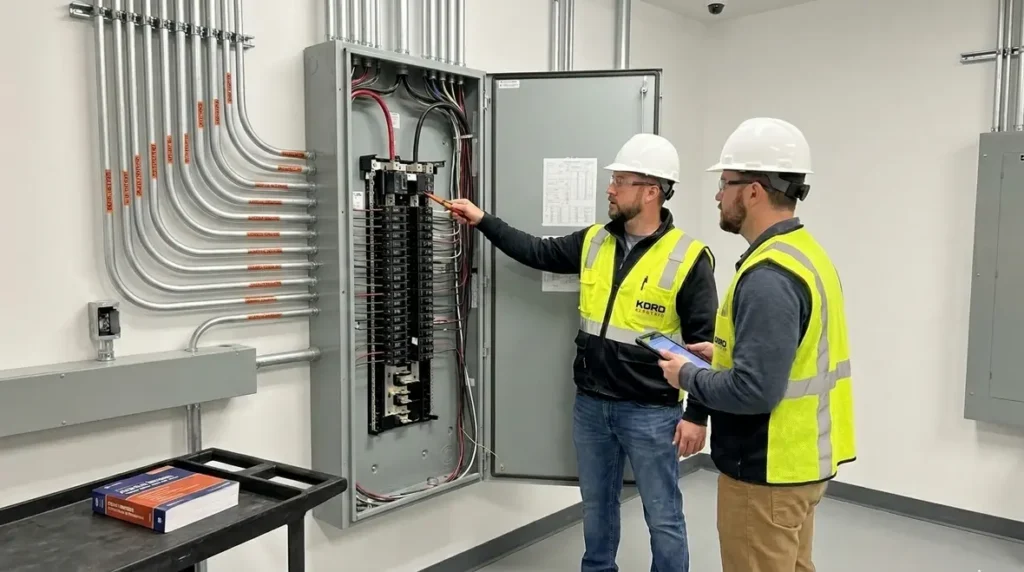
Commercial and industrial buildings do not get to “wing it” with electrical safety. In fact, the best time to think about code is before the inspector shows up, armed with a clipboard and the calm smile of someone who loves paperwork. At Kord Electric, we rely on an NEC compliance checklist to guide our field work, and we use that same checklist to help others avoid common failures. In the first pass, we verify grounding and bonding, conductor sizing, panel labeling, overcurrent protection, conductor routing, and documentation. Then, we confirm that the installation matches the NEC requirements for commercial and industrial facilities, so the system performs as intended when the building is busy, hot, and definitely not looking for surprises.
What an NEC compliance checklist covers in commercial and industrial electrical systems
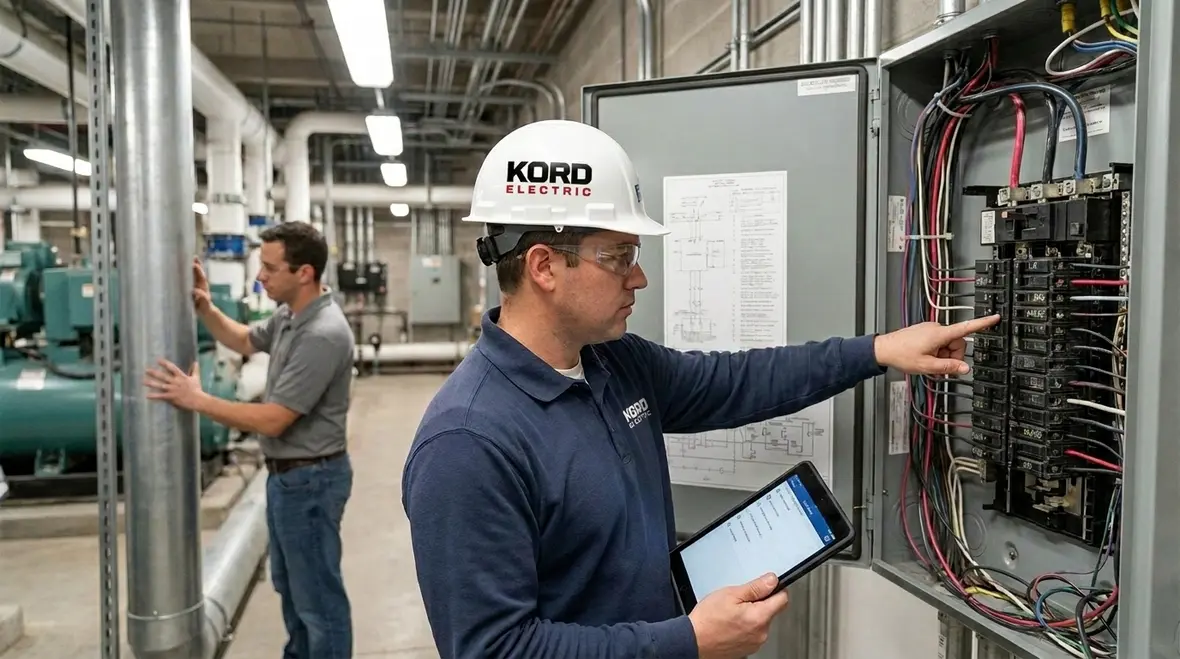
When we build or upgrade electrical systems for major property buildings, we treat the NEC as the rulebook that keeps people safe and equipment alive. Our process starts with the parts that inspectors and owners care about most. First, we confirm that wiring methods and conductor types match the environment. For example, a system in a dusty manufacturing space needs different thinking than one in a clean office corridor. Next, we verify that service conductors, feeders, and branch circuits follow proper sizing rules and that overcurrent devices protect every segment where required.
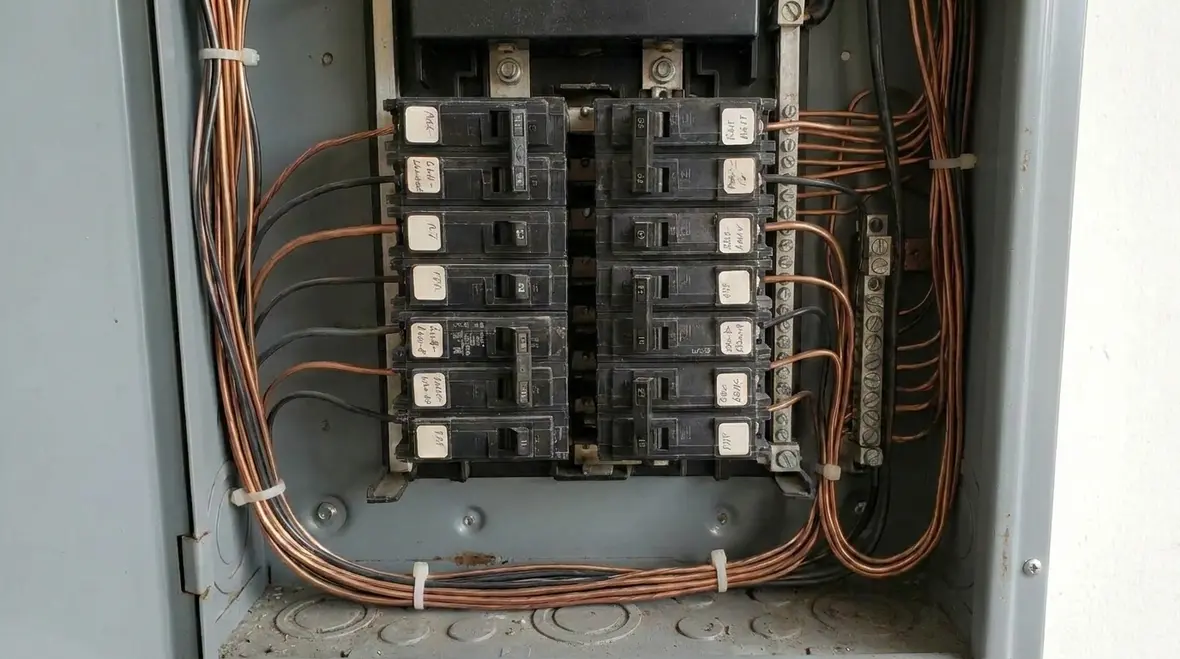
Then, we move to grounding and bonding because this is where a lot of real world problems begin. If the grounding system does not meet NEC requirements, you can still get power, but you might also get nuisance trips, damaged equipment, or unsafe fault conditions. After that, we check electrical distribution components such as switchboards, panelboards, and disconnects. We also confirm that equipment ratings, wire connections, and terminals meet the installation rules.
Finally, we validate labeling and access. And yes, labeling sounds boring, but it saves time during maintenance and prevents “mystery circuits.” If you have ever chased a phantom breaker at 2 a m, you already understand why this matters.
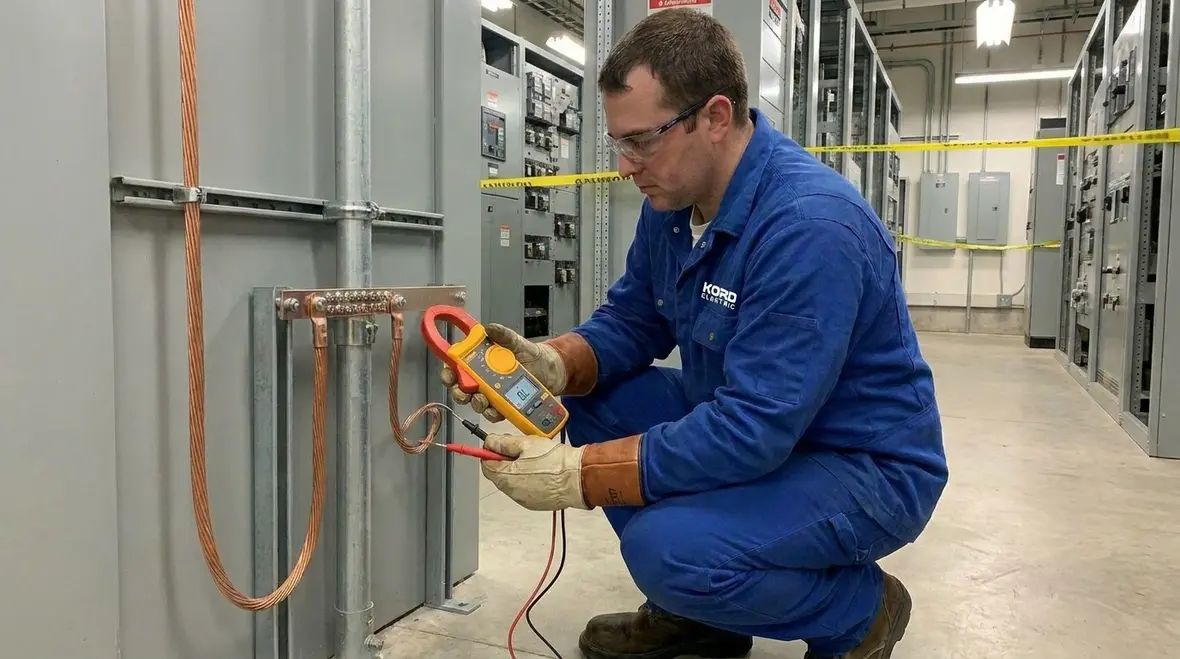
Rapid site review: how we verify grounding, bonding, and conductor rules
Once we arrive for a compliance focused review, we do it the way our technicians like to work: slow where it counts, fast where it does not. To begin, we inspect the main service and grounding electrode system. We look for proper connection methods, correct bonding points, and continuity that matches NEC requirements. Then, we verify that bonding exists between metallic raceways, enclosures, and equipment frames where required.
After that, we focus on conductor routing and termination quality. We check whether conductors run in appropriate raceways, whether they stay protected from damage, and whether they land correctly in terminals. Moreover, we confirm that conductor sizes support the intended load and that insulation types match the conditions in the building.
Then comes the part many people rush, and that is terminal torque and connection integrity. In commercial and industrial settings, loads shift throughout the day. Therefore, good terminations reduce heat buildup and prevent premature failure. Our team documents findings and, when needed, we plan corrective work that avoids downtime wherever possible.
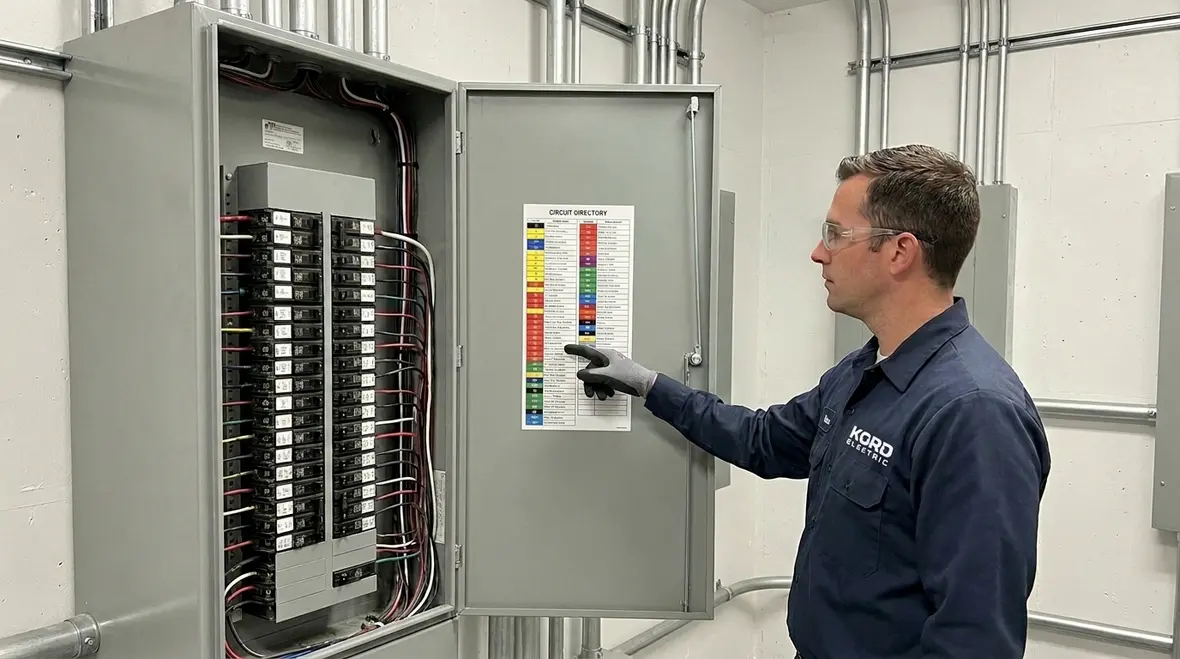
Panelboards, disconnects, and labeling that pass inspection the first time
Inspectors often look for patterns. When things follow the rules, the system stays predictable. So we focus on panelboards, disconnects, and the details that make the whole installation readable. First, we confirm that the panel schedule matches the actual circuits. Next, we check that each disconnect and breaker aligns with NEC requirements for identification.
Then, we inspect working clearances. In commercial and industrial buildings, access is not a suggestion. If storage or construction materials block the required clearance, you will not like the results, and the inspector will not either. After that, we verify that enclosures remain suitable for the environment. For example, wet locations and corrosive areas demand correct equipment ratings.
Finally, we check circuit directory legibility and placement. We also confirm that labeling includes enough detail for maintenance staff to act quickly. We explain the why behind each change, and our expert service staff walks owners through how the label system supports safe troubleshooting. Think of it as giving the building a map, not a scavenger hunt.
Overcurrent protection and conductor fill: where failures hide
Overcurrent protection works like security. It does not stop every problem from happening, but it prevents the problem from turning into a fire, a shutdown, or a damaged asset. In the compliance review, we confirm that breakers and fuses match the ampacity and application rules. Then, we verify that equipment is protected in a way that follows NEC requirements, including proper coordination for the operating conditions.
At the same time, conductor fill matters more than people think. When raceways fill beyond allowed limits, conductors run hotter than expected. Over time, that heat stress shortens component life. Therefore, we verify cable and raceway fill based on the installation method and conductor count. Additionally, we check that derating rules get applied correctly where ambient temperature or other factors affect ampacity.
Now, here is the playful truth. A lot of electrical failures start with an installer thinking, “It looks fine.” But in the electrical world, “looks fine” often means “wait until the next summer heat wave.” Our team prevents that by running the numbers and confirming the installation aligns with code.
We handle commercial fire alarm and life safety interfaces with care
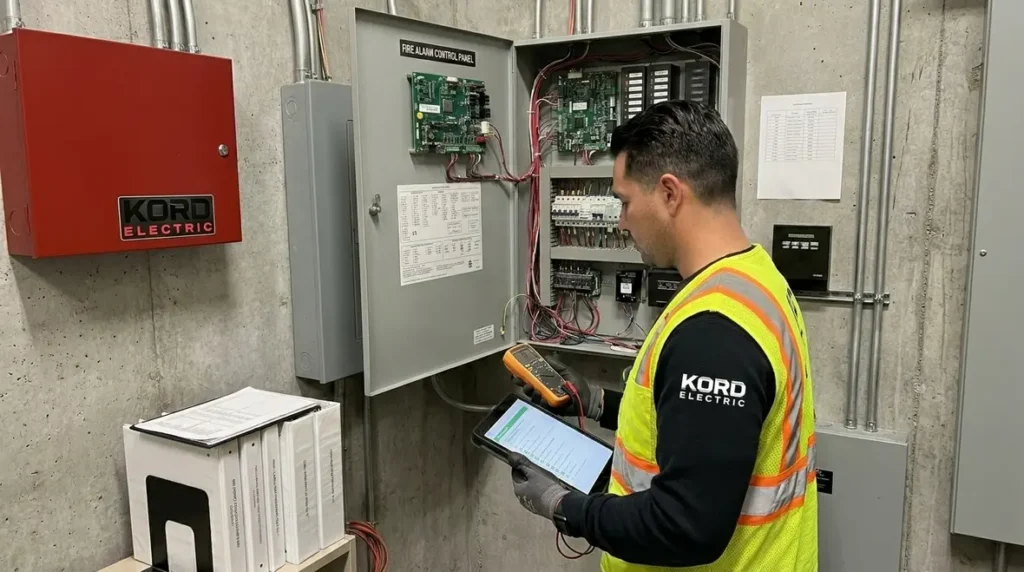
Commercial and industrial properties often tie electrical systems to life safety equipment. Although this article focuses on NEC compliance in general, we know that power distribution and life safety systems live in the same building reality. Therefore, our approach includes checks that support safe operation of emergency power circuits and proper installation practices near life safety devices.
We also coordinate how power feeds equipment that serves occupants and first responders. Next, we verify that routing, equipment protection, and labeling support emergency response needs. Moreover, we ensure that the installation does not create confusion that slows troubleshooting. When our expert service staff explains what they find, they use clear language and provide a direct path to correction.
And when questions come up, we answer them in the field rather than in a vague email that takes longer than the repair itself. That is how we keep compliance from becoming an expensive mystery.
Documentation, testing, and inspection readiness for major property buildings
Compliance does not end at the wiring. It continues into documentation and readiness. First, we collect as built information and confirm that it matches what the installation actually does. Then, we add or update schedules, labeling, and circuit directories so the system remains traceable. After that, we plan testing steps based on the building type, system configuration, and the requirements tied to the inspection process.
Next, we confirm that equipment installation supports safe operation during maintenance. For example, we verify that access panels stay reachable and that systems remain serviceable without unsafe workarounds. Additionally, we ensure that our corrective actions include documentation that helps the next technician in line, the one who might not share your optimism.
Kord Electric inspection readiness focus
- Grounding and bonding verification aligned with NEC rules
- Proper labeling, circuit directories, and panel schedules
- Overcurrent protection checks for correct sizing and coordination
- Conductor routing, raceway fill, and termination quality
- Working clearances and equipment environment ratings
How our technicians support owners
- They explain findings in plain terms
- They outline corrective steps and timing
- They document before and after conditions
- They reduce downtime by planning around operations
- They help staff understand safe maintenance workflows
For owners and facility teams who want to go deeper on risk reduction beyond an NEC compliance checklist, Kord Electric shares additional context in their article on hidden electrical risks in commercial buildings and their guide to lighting installation code compliance. Both resources complement a structured NEC compliance checklist approach, especially in larger commercial and industrial facilities.
FAQ: NEC compliance checklist for commercial and industrial buildings
Commercial inspection success looks simple when the work is done right
When the system meets NEC requirements, the building runs cleaner, maintenance runs faster, and inspections tend to go smoother. At Kord Electric, we plan compliance work with a practical mindset for commercial and industrial facilities and major property buildings. First, we use our NEC compliance checklist to spot risks before they become delays. Then, our technicians and expert service staff explain every finding and correction step, so your team understands what changed and why.
For organizations that want to pair their NEC compliance checklist with a broader reliability strategy, Kord Electric offers structured electrical preventive maintenance services for commercial and industrial facilities. This combination helps keep systems code-compliant, reduces downtime, and gives owners a clearer long-term view of their infrastructure.
Ready to protect your operation and your schedule? Contact Kord Electric for a compliance focused electrical review. We will walk your facility through risks, upgrades, and inspection readiness, and we will help you move forward with confidence. Because in the electrical world, prevention costs less than scrambling.
If you would like to keep reading before scheduling a visit, you can explore more perspectives on large-facility power systems in Kord Electric’s broader insights hub at the Kord Electric Blog, including topics such as commercial electrical systems, hidden risks, and long-term maintenance planning.