
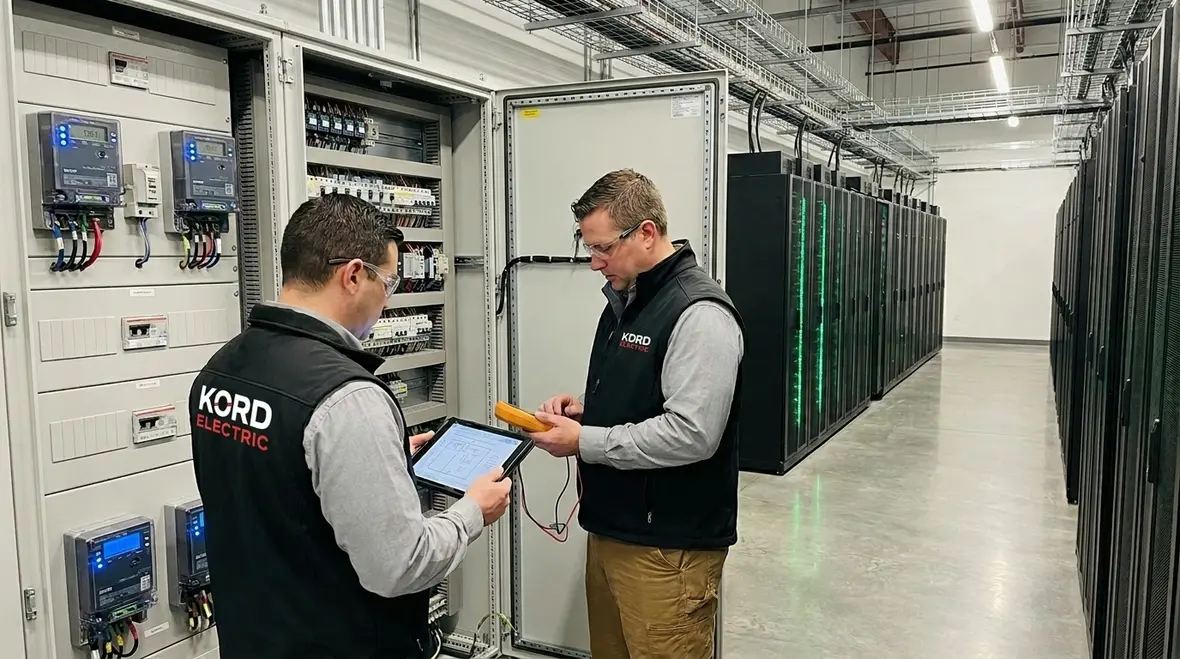
Data Center Electrical Distribution Design for Reliability
Commercial Electrical Distribution Design for Data Centers: Reliability Starts Before the First Server Is Powered
At Kord Electric, we build and optimize commercial electrical distribution design for data centers with one goal in mind: power reliability that holds up when the workload gets serious. Our approach starts with how we design the distribution system, how we coordinate protective devices, and how we plan for maintenance without causing downtime. Then we back it up with expert technicians and service staff who explain each step in plain language, so others on site understand what matters and why. In other words, we do not just install equipment and hope for the best. We engineer the path so the data center can keep running, even when nature, age, or Murphy’s Law shows up to “help.”
Power reliability that data centers can actually trust

Third party outages rarely announce themselves. Instead, they arrive like a surprise pop quiz, except the grade is measured in lost revenue and customer trust. Data centers need a distribution plan that anticipates stress points: load swings, harmonic distortion, heat buildup, and equipment aging. We focus on distribution topology and power quality, because reliability is not only about having backup power. It is also about keeping voltage steady, limiting disruptive transients, and preventing single points of failure from quietly stacking up.
Our technicians typically begin by mapping how power flows through the facility. Then we identify where protection should act fast, where redundancy should take over cleanly, and where monitoring should catch issues before they escalate. As we refine the design, we also plan for growth. A data center rarely stays the same size. Loads expand, racks multiply, and cooling needs shift. If the electrical distribution cannot scale, the whole operation becomes a series of compromises.
If you want a deeper dive into the broader electrical backbone that feeds your servers, you can also explore how we approach overall infrastructure in our companion guide on data center electrical infrastructure essentials. It pairs well with a reliability-focused commercial electrical distribution design for data centers, especially when you are planning upgrades across an entire property portfolio.
Design targets for uptime: redundancy, selectivity, and fast restoration
When others talk about “redundancy,” they often mean two things exist. We focus on whether redundancy actually works under real fault conditions. That means design targets like selectivity, where protective devices isolate only the faulty section. It also means coordination, so upstream devices do not trip when downstream should clear the problem. When selectivity and coordination align, the facility keeps power where it is needed, and the system recovers without turning every room into a dark hallway.
In our commercial and industrial work for major property buildings, we also pay attention to restoration logic. We plan for automatic transfer sequences and verify that switching events do not cause unacceptable voltage dips. Further, we design with maintenance in mind, because planned work should not become accidental downtime. If a staff needs to service a component, the design should support safe isolation without dropping critical loads.
And yes, we know people sometimes think “fuses will handle it.” Fuses can help, but a data center requires more than a basic protection concept. It needs engineered coordination so faults clear quickly and the right parts stay energized.
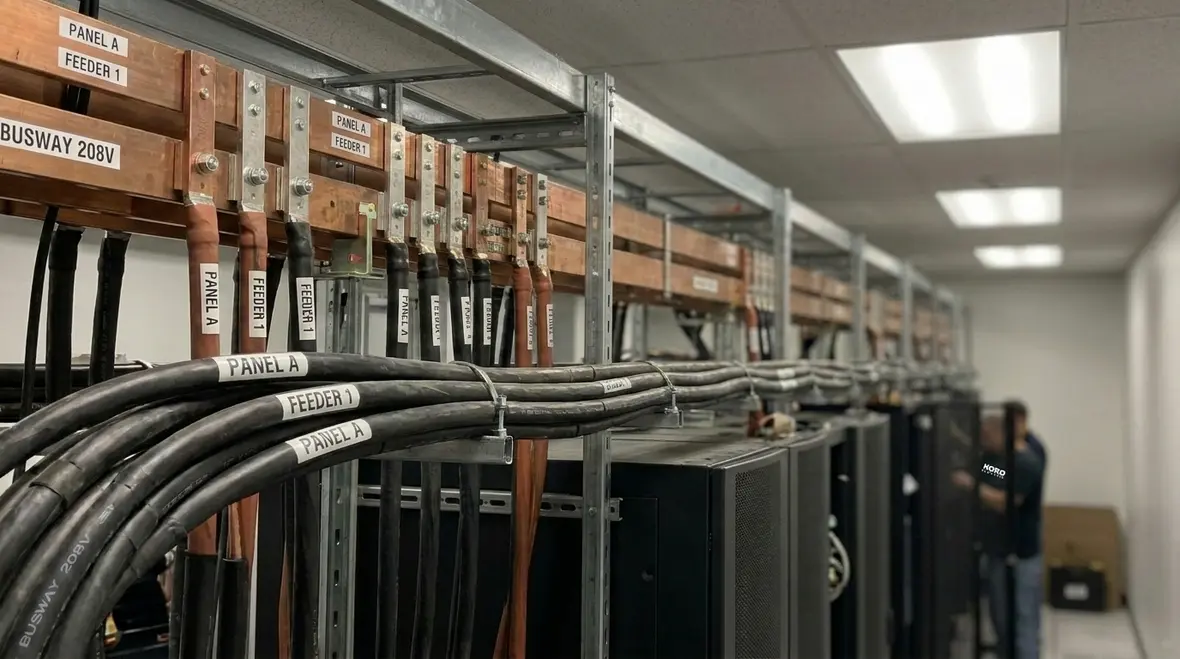
Improve fault management with protection coordination and monitoring
Good fault management begins with good protection coordination. In practice, this means we choose protective devices that match expected fault current levels and select curves that work together. Then we set trip thresholds so a device clears faults at the right time, without nuisance trips that interrupt operations. If the coordination is wrong, the “fastest” protection might be the one that shuts down too much.
Next, we add monitoring where it counts. We support metering strategies that help operators track load, identify abnormal trends, and spot early warning signs. For example, monitoring can reveal rising neutral current, unusual temperature patterns indirectly tied to electrical load, or events that hint at insulation degradation. When others review these signals, they can respond before the system reaches a failure point.
Our expert service staff also helps teams translate readings into action. We explain what the data likely means and which maintenance steps reduce risk. That is how we keep power reliable: not only by building systems, but by supporting the people who run them day after day.
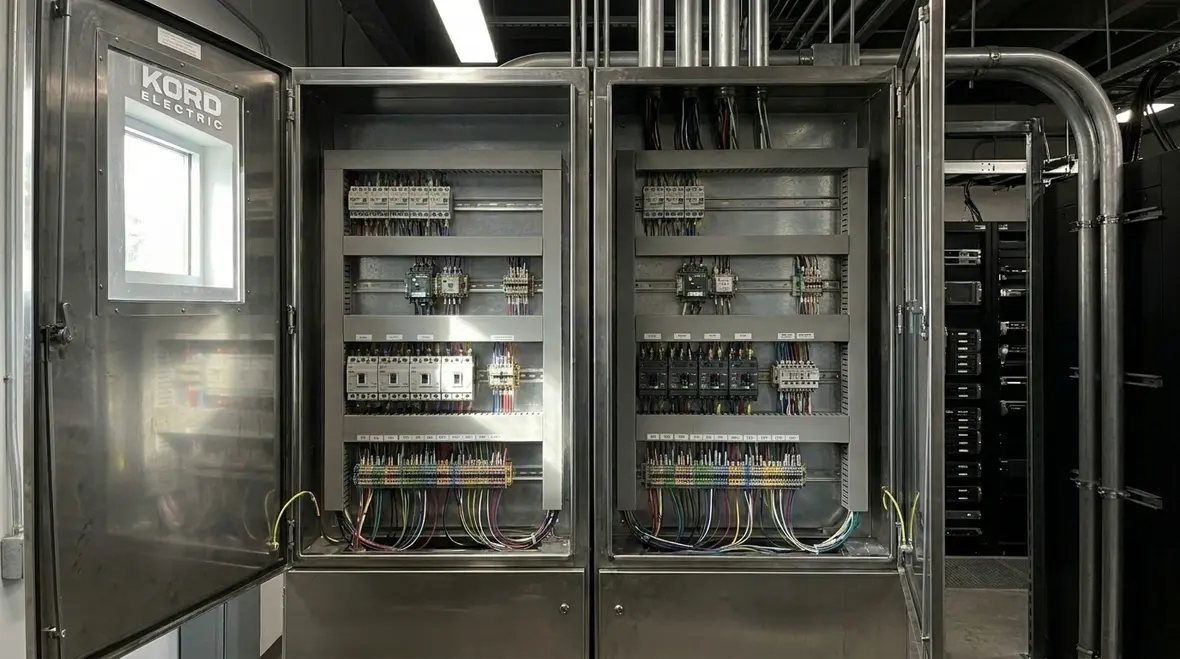
Power quality, harmonics, and thermal effects in distribution
Even with redundant sources, a facility can still suffer disruptions if power quality fails. Nonlinear loads, variable frequency drives, and modern IT equipment can create harmonics. Those harmonics can overheat transformers, stress conductors, and reduce the effectiveness of protective schemes. Therefore, we address power quality during the design phase rather than treating it as a problem you only notice after something breaks.
At Kord Electric, we evaluate how distribution interacts with the real load profile. We consider transformer sizing, conductor ratings, and grounding design so the system can handle current in a stable way. We also account for thermal effects in enclosures and distribution panels, because heat quietly degrades components over time. A distribution system that runs hot can degrade insulation and connections, which increases the chance of faults later.
To keep operations calm, we also plan maintenance-friendly layouts. When components are accessible and labeling is clear, technicians can inspect, tighten, and test without turning every task into a scavenger hunt. If you have ever tried to troubleshoot a loose connection while standing on a ladder in a dark mechanical room, you already understand why this matters.
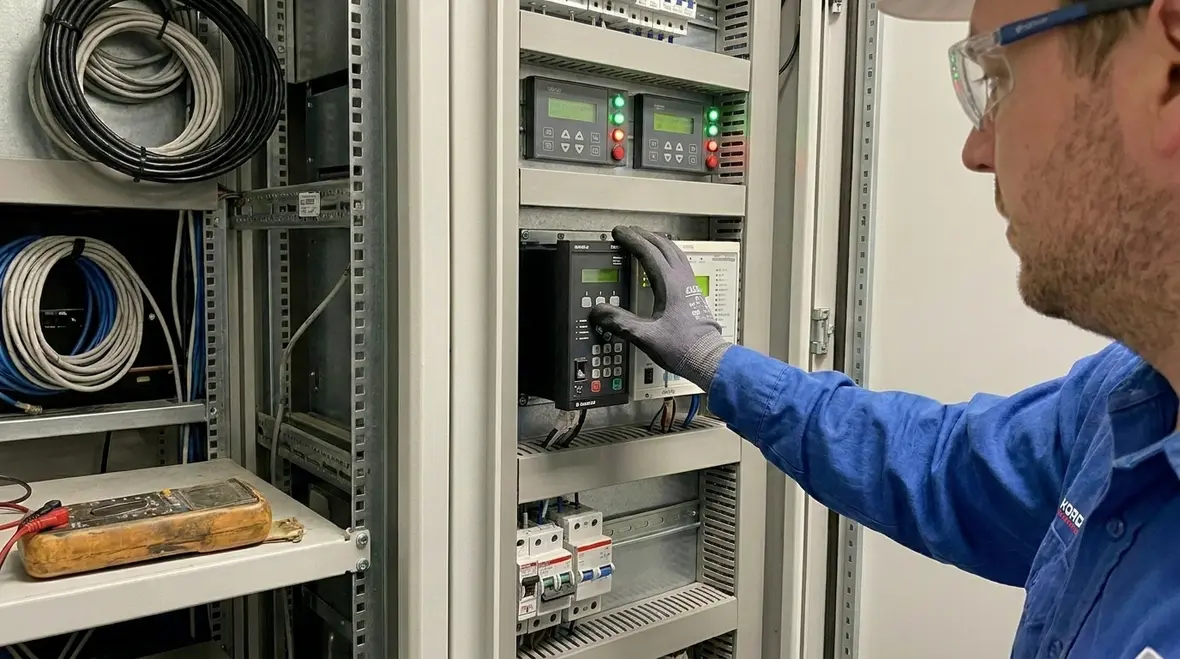
Planning for growth: scalable distribution layouts for expanding racks
Data centers grow in ways that no one fully predicts. A new customer may require more power, a new cluster may increase peak demand, and a new cooling strategy may shift load timing. So, we design distribution with growth in mind. That means we create layouts that can add capacity without tearing up existing systems or changing upstream protection every time the facility adds a few rows of cabinets.
In our commercial electrical distribution work, we consider how busways, switchgear, and feeder circuits will be expanded. We also support structured upgrade paths, so others can phase improvements while keeping operations stable. When we plan for future expansion, we also review physical routing, access, and clearance, because cable management and bend radius rules do not become more relaxed just because the project is “small.”
Additionally, we coordinate the distribution plan with the backup architecture and any standby generators or UPS strategies. That coordination helps ensure that when the facility transitions between sources, the system behaves as expected. Reliability is not only about generation. It is about how the entire distribution system responds when the power source changes.
Commissioning and testing: how we verify reliability before handover
Design is the blueprint, but commissioning proves whether it works in the real world. Therefore, we test and verify protective settings, phasing, torque, insulation condition, continuity, and operational sequences. We also confirm that monitoring points provide meaningful data, not just pretty screens. When we coordinate testing with the operational schedule, we reduce the chances that the first major evaluation happens during peak production windows.
Our technicians and expert service staff also explain the results clearly. They walk others through what was tested, what passed, and what needs follow up. Then they provide maintenance guidance that fits the facility’s operational reality. This matters for major property buildings and commercial and industrial facilities because the maintenance team may not live in the electrical room. They need information that supports fast, correct action.
And if you are wondering whether this extra work slows delivery, the answer is: it prevents delays later. Nothing delays a project like discovering a coordination mistake after equipment is already energized.
Dual column guide to key reliability actions
| Action | Why it improves uptime |
Protection selectivity and coordination |
It isolates faults and reduces the chance of full site shutdown. |
Power quality assessment |
It helps prevent overheating, nuisance trips, and equipment stress. |
Monitoring and metering strategy |
It enables early detection and faster corrective action. |
Scalable distribution design |
It supports rack and load growth without major redesign. |
Commissioning and verification |
It confirms settings, sequences, and performance before handover. |
FAQ: Commercial electrical distribution design for data centers
Request a reliability-focused electrical plan from Kord Electric
If your data center, commercial facility, or major property building needs power reliability that stands up to real life, we can help. Kord Electric designs and optimizes distribution systems with coordinated protection, power quality planning, and commissioning you can trust. Then our technicians and expert service staff support the handover with clear guidance for long term maintenance. Reach out to us for a reliability review and next step proposal. Let’s build power systems that do not quit when the stakes rise.
For mission-critical environments that cannot afford unplanned outages, pairing this kind of commercial electrical distribution design for data centers with a structured service program is the next step. Our dedicated electrical preventive maintenance services help keep breakers, switchgear, and distribution paths operating the way they were designed, year after year.


