Commercial Electrical Safety Protocols Guide
Commercial and industrial facilities run on more than breakers, bus bars, and panels. They run on decisions, habits, and safety rules that either prevent incidents—or quietly invite them in. When you build commercial electrical safety protocols for manufacturing facilities around real conditions and real schedules, you protect people, uptime, and equipment without turning every shift into a lecture.
This guide walks through how facility managers can turn “we should really look at that” into a structured commercial electrical safety approach that holds up under pressure. From lockout and tagout to maintenance planning, panel inspections, and training, each section is designed for the way teams actually work on busy floors—not in a quiet conference room far from the noise.
Commercial Electrical Safety Protocols Start With the Facility Manager
At Kord Electric, we help commercial and industrial facilities stay safe by using clear commercial electrical safety protocols for manufacturing facilities from the first day a site opens. We also support major property buildings where uptime matters and risk cannot hide behind “we will look at it later.” In our world, electrical safety is not a sticker on a panel door, it is a working system. And yes, we know, facility life can be busy. Still, when safety steps get skipped, the bill shows up later, and it rarely arrives with a payment plan.
Our technicians and expert service staff explain what matters in plain terms, because confusion is how small faults become big incidents. Now let us walk through the protocols a facility manager needs, in a way that fits how teams actually operate on real floors, real shifts, and real schedules.
The facility manager sets the tone. When leadership treats electrical safety as a real operational requirement—not a “check the box” exercise—technicians take procedures seriously, contractors follow the rules, and near misses get reported instead of ignored. That is how risk starts shrinking instead of quietly expanding in the background.
Set the Safety Baseline Before the First Work Order

To manage electrical risk, we start with a baseline. First, we confirm the site’s one line diagrams, panel schedules, and equipment labels match the real world. Then we verify that protective devices are sized correctly for the load. After that, we align the facility’s operating procedures with what the electrical system actually supports.
Facility managers should also require documented access rules. That means only trained staff open enclosures, and only for approved tasks. If a contractor wants in, the site has a clear path: permit process, lockout and tag steps, and a supervisor check. In the end, good paperwork is not red tape. It is the difference between “handled it” and “mystery problem.”
Our approach reflects what we see during commercial electrical maintenance planning. When records are current, maintenance becomes faster and safer, not guesswork. And guesswork, like pop quiz day, always shows up when the schedule is already tight.
A solid baseline also makes it easier to integrate a formal program like commercial and industrial electrical maintenance plans into daily operations. When documentation, labeling, and real conditions already match, advanced preventive strategies plug in smoothly instead of causing confusion.
Why Lockout and Tagout Cannot Be Optional
Any serious commercial electrical safety program lives or dies by lockout and tagout. We tell facility teams this directly. When workers isolate circuits, they must control energy sources, verify de energized status, and keep control until the task finishes.
We also advise managers to test the process, not just write it. For example, supervisors should observe the steps at least during the initial adoption and after any change in staff or procedures. Meanwhile, our expert service staff can help review where gaps appear, such as missing verification steps, tags that are hard to read, or unclear boundaries for affected equipment.
Here is the calm truth: lockout and tagout saves lives, but it also prevents downtime. A controlled shutdown beats a rushed restart every time. Besides, electrical faults love chaos. Give them chaos, and they will show you a power outage that makes everyone stare at the ceiling.
That is why commercial electrical safety protocols for manufacturing facilities should spell out, in writing, who places locks, who verifies absence of voltage, who removes devices, and how exceptions are handled. “We thought someone checked it” is not a defensive statement you want to test in a post-incident review.
Build a Maintenance Plan That Works for Manufacturing and Heavy Loads

In manufacturing facilities, electrical stress builds from heat, vibration, dust, and constant cycling. Therefore, the maintenance plan must match the real operating conditions. Kord Electric supports commercial and industrial electrical maintenance plans that focus on inspection, testing, and correction based on risk, not vibes.
- Preventive inspections for panels, bus bars, breakers, and terminations
- Testing for insulation, connections, and protective device function
- Thermal checks for hot spots before they become failures
- Corrective action with documented repairs and updated labels
- Coordination with operations so shutdown windows stay realistic
To keep the plan usable, we recommend clear ownership. Facilities should name who approves work, who records results, and who decides when to escalate. In addition, we encourage managers to track trends. When a breaker repeatedly runs warm or a connection area shows repeated wear, the plan should respond before the next production week.
If a maintenance plan feels like a calendar you forgot about, it will behave like one. We help teams turn it into a living tool, so the system gets safer over time, not just checked. When you layer that with a dedicated electrical preventive maintenance program, you get a framework that covers both routine care and higher risk equipment in a way auditors, insurers, and production schedules all appreciate.
Training, Competency, and Clear Rules on Who Can Do What

Training works best when it matches the job role. Therefore, facility managers should define competency levels for electricians, technicians, operators, and outside contractors. Our technicians explain this in the shop, during walkthroughs, and during service calls where real conditions show up fast.
At a practical level, training should cover:
- Electrical hazard awareness including shock and arc flash risks
- Site-specific labeling and how to confirm equipment identity
- Safe work practices for energized work where it is truly approved
- Emergency response steps including when to stop work and escalate
Also, we recommend simple rules that staff can repeat under stress. For instance, “verify, then proceed” should mean more than a slogan. And yes, we have heard variations. One team joked that their verification step involved looking at the panel and hoping for the best. We do not allow hope in electrical work. We allow procedures.
To improve consistency, facilities can schedule refresher training and review incidents or near misses. As time passes, people forget details. Training keeps the safety layer intact. When commercial electrical safety protocols for manufacturing facilities are backed by current training, the gap between “policy on paper” and “what actually happens at 2 a.m. on a Sunday” gets much smaller.
Inspecting Panels, Cables, and Grounding Like You Mean It
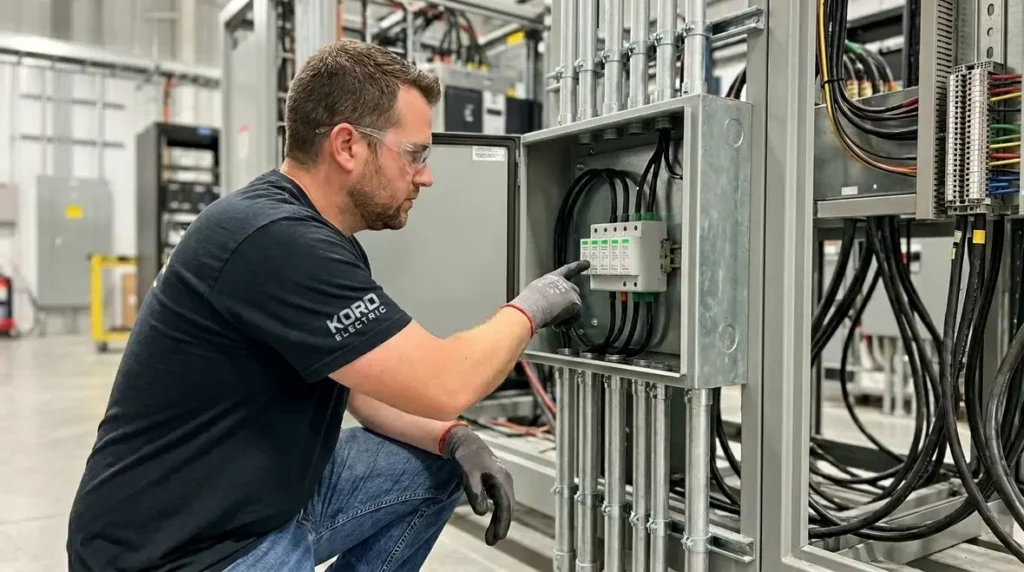
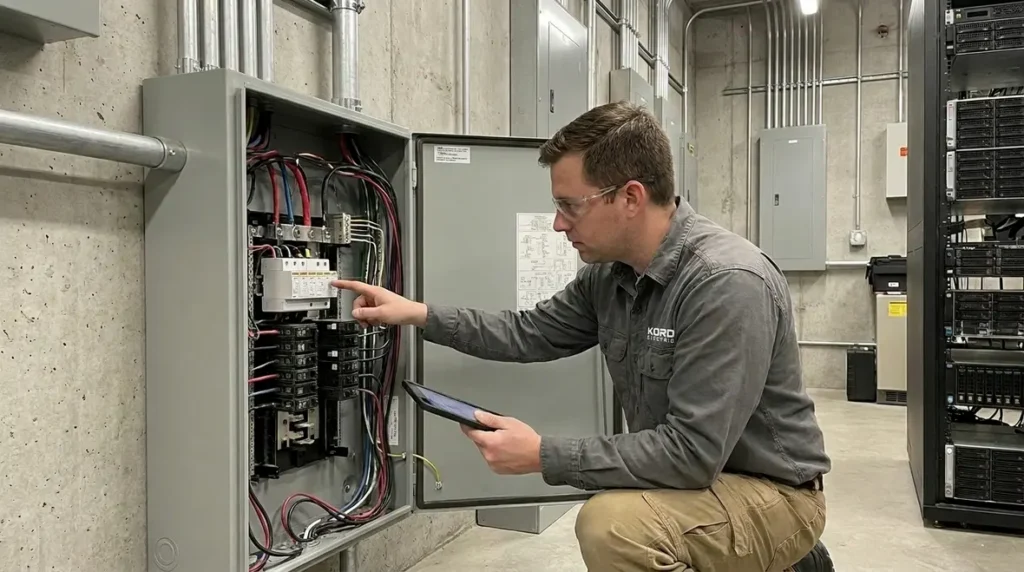
When facilities handle maintenance, the most common failures often start in predictable places: panel interiors, cable terminations, and grounding paths. For that reason, managers should require consistent inspection criteria. Our expert service staff often finds loose terminations, worn insulation, corroded grounding points, and damaged identification labels during routine checks.
Grounding gets special attention because it protects people and equipment during faults. However, grounding can fail quietly when connections loosen, coatings trap moisture, or upgrades do not match the original system. Therefore, inspection should not be a quick glance. It should include verification of connection integrity, corrosion control, and correct bonding.
Next, we focus on terminations. Heat and vibration loosen connections. Then resistance rises. Finally, you get hot spots and failures. Transition from “no issue yet” to “safe to operate” happens through careful inspection and testing. In the long run, this reduces emergency repairs, which always cost more and disrupt operations.
On top of that, facilities should document findings and label updates. When teams return months later, updated labeling prevents the “wrong breaker” problem, and that problem can make even calm workers jump like a sitcom character hearing a smoke alarm. Add in targeted services such as voltage fluctuation diagnostics and repair, and you gain another layer of protection against nuisance trips and unexplained equipment behavior.
Use Planning Tools to Reduce Downtime and Increase Safety
Many managers try to solve safety problems with reactive fixes. That is understandable. Yet it usually leads to repeated downtime and higher risk. Instead, Kord Electric encourages a planning model built around commercial electrical maintenance plans for industrial sites and major property buildings.
These plans help by turning safety checks into scheduled work. First, managers can coordinate shutdown windows with production needs. Then they can group tasks so crews work faster and fewer times interrupt critical processes. After that, they can forecast materials, labor, and test equipment needs.
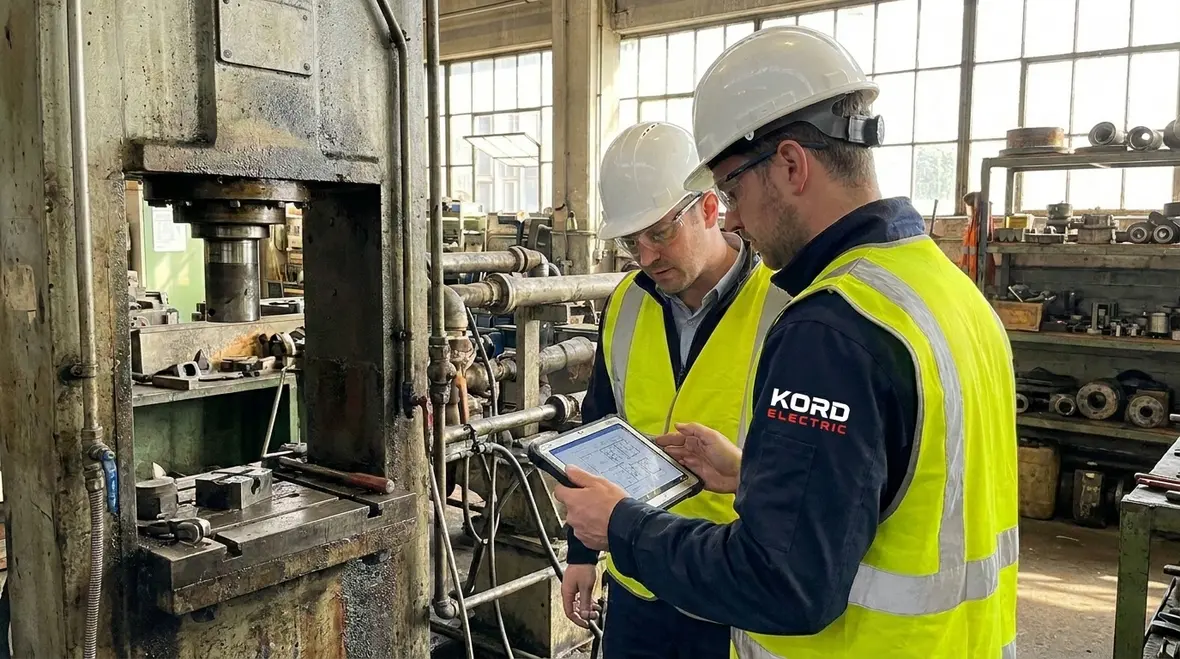
We also help teams align service scope with system complexity. Large feeders, motor control centers, critical loads, and life safety circuits require different care. Therefore, our technicians and expert service staff evaluate what is important, then recommend the right work sequence. The result is safer systems and fewer “surprise” failures.
When safety planning gets done right, everyone wins. The maintenance team stays busy in a controlled way, operations stays stable, and the facility manager avoids the kind of meeting nobody wants, the one where they ask why the lights went out and nobody knows why.
Planning also connects your in-house protocols to outside support. When your site already follows structured commercial electrical safety protocols for manufacturing facilities and maintains clean records, service partners can step in quickly, read the history, and focus directly on risk instead of playing detective.
FAQ: Commercial Electrical Safety Protocols for Manufacturing Facilities
Conclusion: Get a Safety Plan That Holds Up Under Real Pressure
Electrical safety must stay strong when production gets loud and schedules get tight. Kord Electric helps commercial and industrial facilities build and maintain practical safety systems, including lockout and tagout discipline, panel and cable inspection, and maintenance plans that fit heavy loads. Our technicians and expert service staff explain findings clearly and help you act fast, without guesswork. If you want fewer surprises and safer operations, contact Kord Electric today to review your electrical safety protocols and maintenance plan.
If you are formalizing your maintenance strategy, consider pairing your internal protocols with Kord Electric’s dedicated electrical preventive maintenance services. Together, they turn commercial electrical safety protocols for manufacturing facilities into an integrated system that protects uptime, supports compliance, and keeps equipment running the way your production schedule expects.
For facilities facing recurring electrical issues—from voltage swings to aging infrastructure—Kord Electric can also support targeted upgrades and diagnostics beyond preventive maintenance. Whether you are planning a major retrofit, addressing unstable voltage, or expanding capacity, a structured plan that starts with safety will always be easier to execute and easier to defend.
When you are ready to move from “we will look at it later” to a clear, documented path forward, partner with a commercial and industrial electrical team that works in your world every day. Your panels, production lines, and people will all feel the difference.