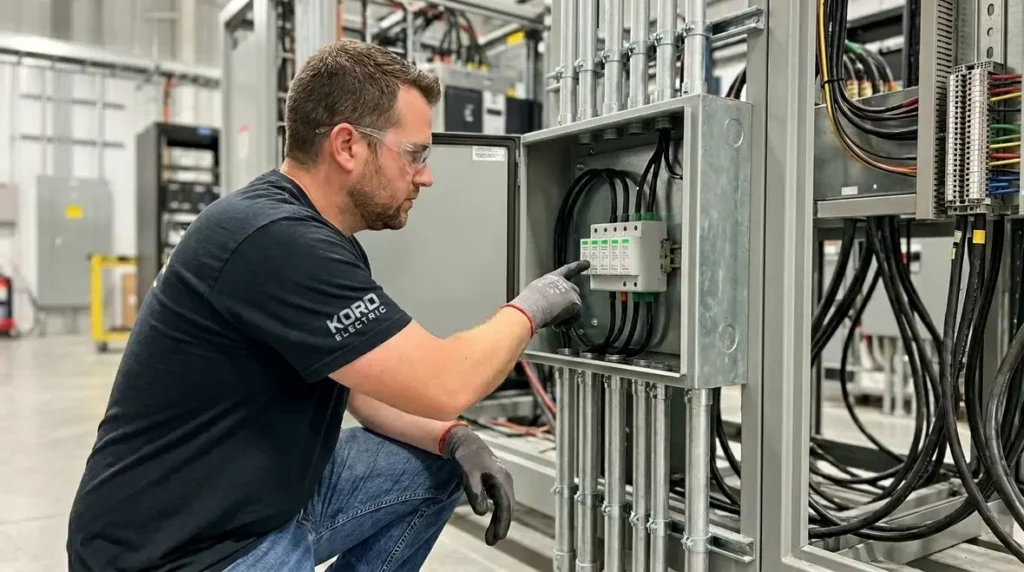
Emergency Power Recovery for Business Continuity
Emergency Recovery First: How Kord Electric Builds Business Continuity for Electrical Power
When a commercial or industrial site loses power, the clock starts ticking right away. That is why emergency electrical power recovery for business continuity matters. At Kord Electric, we help facilities plan for fast, safe restoration so operations can continue, systems can protect themselves, and damage stays limited. Our approach uses practical steps, clear roles, and real field experience. Our technicians also take the time to explain what matters, in plain language, not a jargon parade. Yes, power failures are dramatic enough without us turning the meeting into a mystery novel.
In the sections ahead, we lay out essential electrical emergency recovery strategies, based on what we routinely see in commercial and industrial environments, and we connect them to maintenance planning for long term resilience.
What a Business Continuity Electrical Plan Must Cover

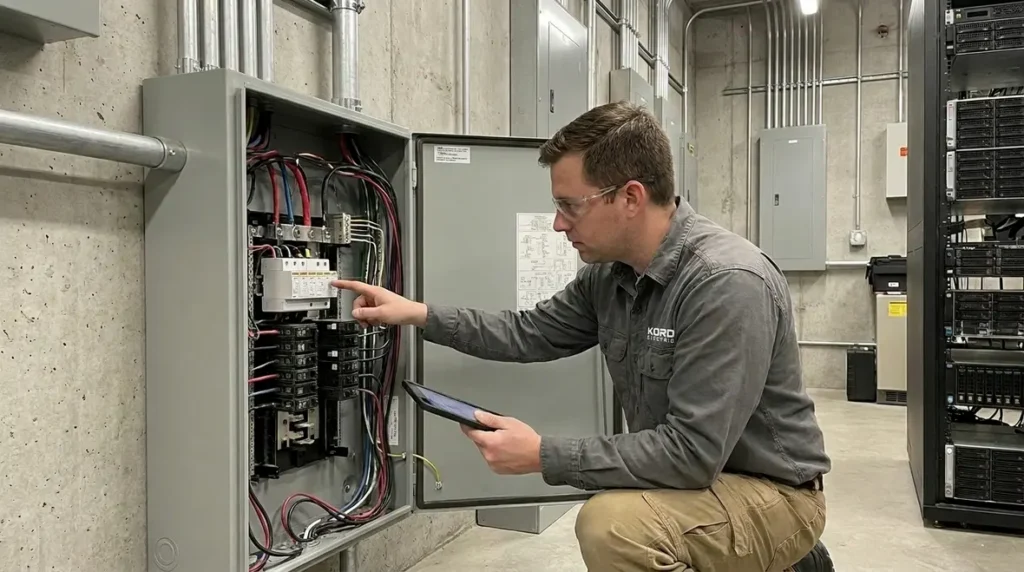
Most continuity plans fail because they treat electricity like a single event instead of a chain of events. Therefore, we build the plan around scenarios that actually happen in the real world. Our experienced service staff starts by mapping critical loads such as life safety systems, process equipment, refrigeration, servers, controls, and communications. Then we link those loads to the equipment that feeds them.
Next, we define what “success” looks like during recovery. Some businesses need partial uptime fast. Others can tolerate delays for non critical circuits but require immediate protection for safety and loss prevention. Then we document how operators and maintenance teams will act, step by step.
At this point, we also include decision rules. For instance, if a transformer trips during peak load, we do not just “wait and hope.” We identify likely causes, isolate safely, and restore in a way that reduces repeat failures. That approach keeps recovery from turning into round two of the same problem.
Risk Mapping and Priorities for Commercial Electrical Systems

Every facility has its own rhythm. And every electrical system has its own weak points. So we start by reviewing single line diagrams, panel schedules, last service history, and load changes from renovations or new tenants. In addition, we look at how often certain alarms appear, which equipment runs hot, and where nuisance trips happen.
After that, we classify risks into practical tiers. Critical loads go into the highest tier, followed by loads that support short term operations, then non critical loads. We also define the “handoff” between emergency power sources, such as transfer switches, parallel systems, or alternative feeds where the site design allows it.
Now the soothing part. A good plan reduces panic. Instead of scrambling, staff can follow a known path. And if someone says, “We will figure it out when it fails,” we politely remind them that the failure is already figuring it out for them.
Maintenance That Supports Emergency Electrical Power Recovery for Business Continuity
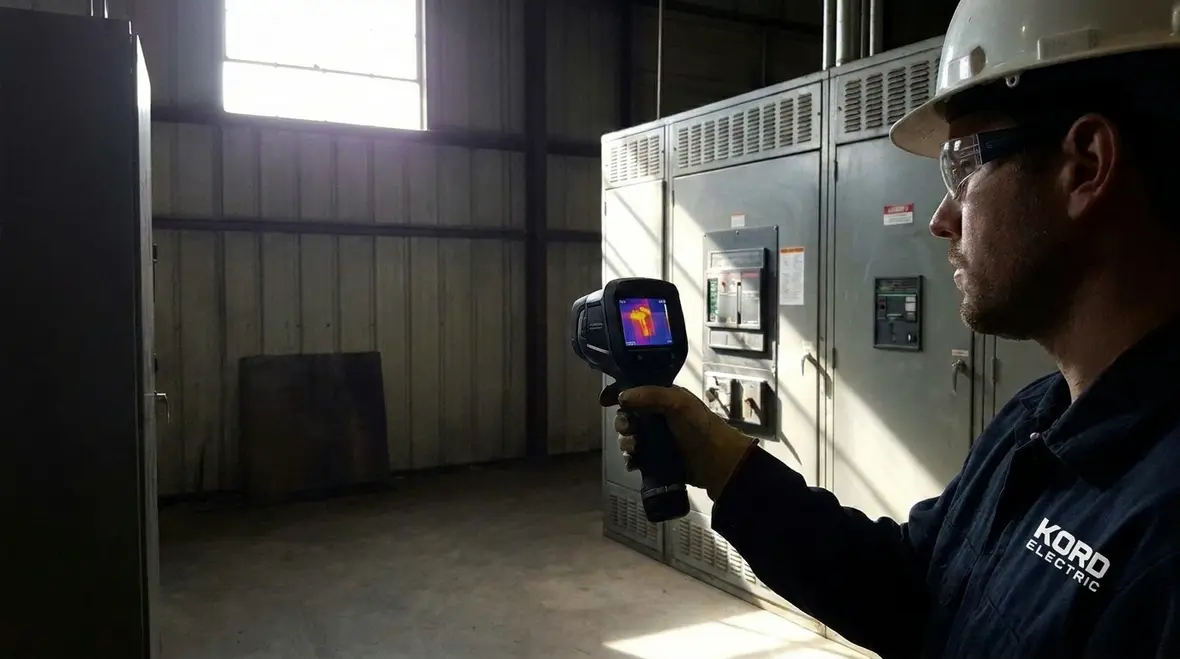
Emergency recovery does not come from wishful thinking. It comes from maintenance that keeps critical equipment ready. Our team aligns electrical maintenance tasks with the exact needs of commercial and industrial facilities, not generic checklists.
We often reference the same planning principles laid out in our commercial and industrial electrical maintenance plans column, including how planned work prevents surprise downtime and how routine inspections catch early signs of trouble. Therefore, we schedule inspections for connections, breakers, switchgear components, battery backed systems, and protective devices, based on equipment type and operating conditions.
Also, we verify that control wiring and interlocks still behave as intended. A transfer switch that looks fine can still misoperate under a real load scenario. So we test in a way that supports operational readiness and safe switching. In short, maintenance becomes a support system for recovery, not a paper exercise.
And yes, we know some businesses treat maintenance like a “later” problem. Later is where downtime grows, like a bad houseplant that everyone keeps watering with optimism.
Designing Fast, Safe Restoration Pathways
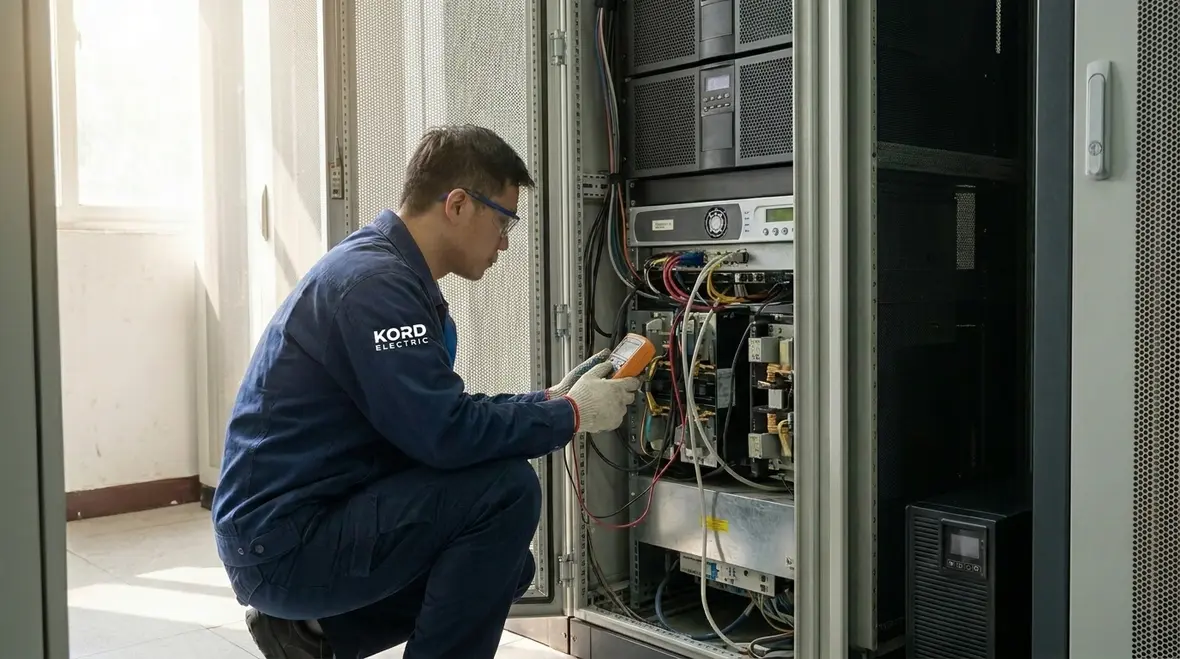
When an outage hits, time matters. But safety matters more. Our technicians help facilities design restoration pathways that prioritize safe isolation, controlled energization, and clear sequencing. This is where we get very specific about how power should return.
First, we document the normal operating state and the emergency operating state. Then we identify which breakers, feeders, and control paths must lock out or stay locked out until checks complete. Next, we define sequence timing so critical systems come back in the right order.
For example, we account for systems that need stable voltage and frequency before they can run correctly. Meanwhile, we prevent overloads by staggering loads and controlling start currents for motors and process equipment. As a result, the restored power supply does not immediately trip again.
Finally, we make the plan usable. We provide easy references for staff who may not touch power gear every day. Our service staff explains the process in meetings and training sessions so people do not feel lost when the lights go out and the phones start lighting up.
Training, Roles, and Communication During Outages
Even the best plan fails if the right people do not know their role. Therefore, we build training and communication into the recovery strategy. Our goal is simple: when an electrical emergency occurs, staff move with purpose.
We help define an incident command style workflow for electrical restoration, including who approves isolation steps, who coordinates with the facility manager, and who authorizes testing or switching. We also set communication templates for internal updates and external coordination with utilities, contractors, and building stakeholders.
In addition, we train staff on how to report symptoms without guessing. For instance, instead of “the power is weird,” we teach them to note whether specific panels dropped, whether alarms triggered, and what equipment lost operation. That detail saves hours because technicians can narrow root causes faster.
And if you are thinking, “We will train after the first outage,” we have bad news. The first outage trains you whether you want it or not. Better to steer the lesson.
Testing and Drills That Prove the System Works
Plans must be proven, not just printed. To support emergency readiness, we recommend testing and drills that reflect real operations at commercial and industrial sites. That includes reviewing how emergency power sources start, transfer, and carry load.
We also verify that monitoring alarms reach the right people and that reset steps follow safe procedures. Then we confirm that any critical control logic responds properly. After each test, we capture results and update the plan to reflect lessons learned.
Importantly, we coordinate testing times to reduce disruption. Facilities care about uptime, and we respect that. So we plan test windows around operations, and we communicate clearly before any switching activities begin.
In this way, emergency electrical power recovery for business continuity becomes a measured capability, not a hope dressed up as a strategy. And when the real emergency arrives, the team already knows what to do.
FAQs: Emergency Electrical Power Recovery and Business Continuity
Final Word: Get Your Recovery Plan Built With Kord Electric
If your facility can not afford extended downtime, a recovery plan should not live only in a binder. We help commercial and industrial sites strengthen electrical continuity with maintenance, restoration pathways, and practical training that your team can use under pressure. So when power events happen, you recover with less chaos and more control. Contact Kord Electric to assess your current setup and build an emergency readiness plan that fits how your facility actually runs. Let us handle the serious part. You keep running.
To go even deeper on the preventive side of your strategy, explore how our dedicated electrical preventive maintenance services support safer, faster emergency recovery and long term reliability across commercial and industrial facilities.
And when a critical event does happen after hours or without warning, our structured emergency electrical services give your team a direct path to licensed support for emergency electrical power recovery for business continuity, from first call through full restoration and post-incident recommendations.