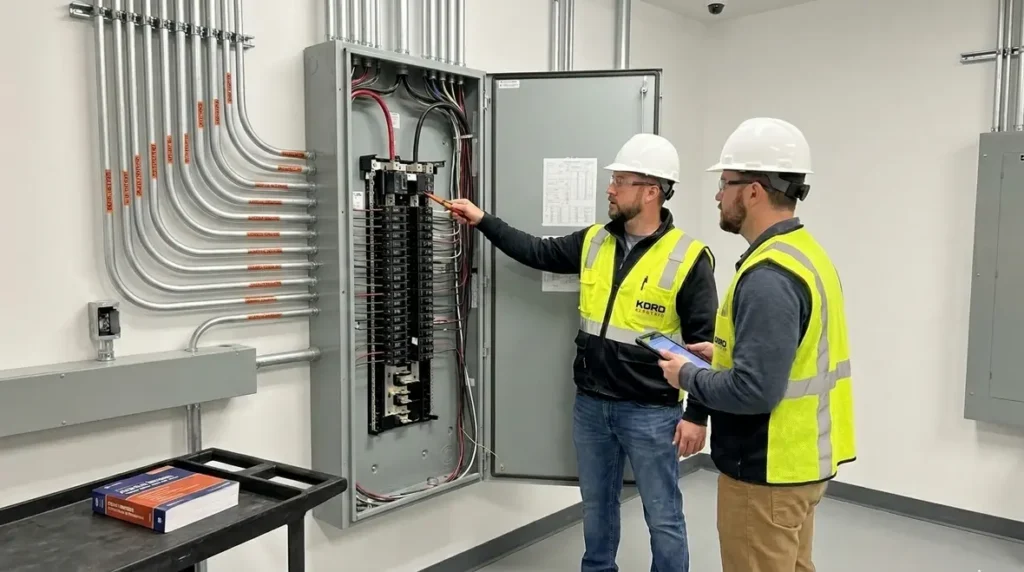
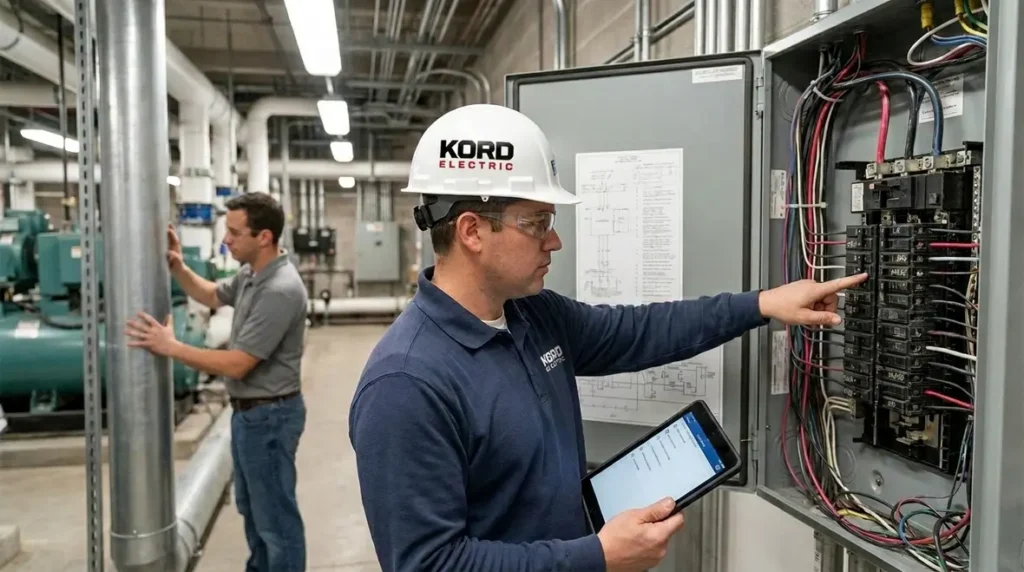
NFPA 70B Electrical Panels and Switchgear Maintenance
Why NFPA 70B electrical panels should stay on your radar
In commercial and industrial life, equipment cannot afford to run like a sitcom that never ends. At Kord Electric, we focus on the places where uptime matters, from major property buildings to switchgear rooms that hold real responsibility. That is why NFPA 70B electrical panels matter. We follow the maintenance ideas in NFPA 70B electrical equipment maintenance so our clients get safer operation, fewer surprises, and better longevity for switchgear and panelboards.
Now, we know some folks treat maintenance like paperwork. It feels boring until the day something fails. Then suddenly everyone becomes an expert. So, we explain it clearly, and we do the work carefully, guided by NFPA 70B electrical equipment maintenance best practices.
What NFPA 70B covers for switchgear and panelboards

NFPA 70B does not focus on how to install electrical equipment. Instead, it focuses on what happens after installation, and that is the part many teams skip until a problem shows up. In practice, NFPA 70B supports a maintenance approach that reduces risk while improving performance.
For NFPA 70B electrical panels, the goal is simple. We help keep components within safe limits by managing conditions over time. That includes preventive tasks like inspections, cleaning, and tightening where needed, as well as more systematic checks that help catch wear before it becomes damage.
Switchgear adds another layer of importance. Because switchgear often connects to essential loads, a failure can disrupt entire operations. Therefore, we treat maintenance as a controlled process. Even so, we do not just “look and hope.” Our technicians document findings, recommend actions, and verify that corrective steps actually address the condition.
If your team wants a broader grounding in how NFPA 70B electrical equipment maintenance fits into modern code expectations, you can explore the NFPA 70B electrical equipment maintenance overview that Kord Fire Protection shares as part of the NFPA codes resource center. It connects day-to-day maintenance choices to the larger picture of compliance, documentation, and electrical system reliability across facilities.
How NFPA 70B electrical equipment maintenance reduces risk
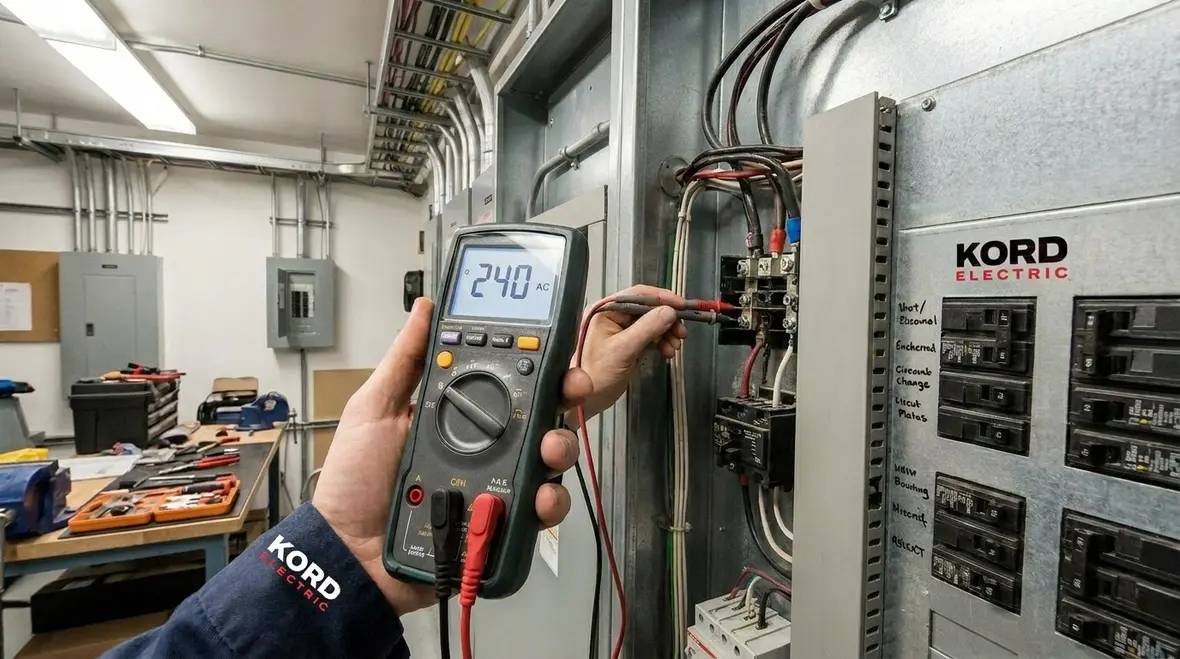
When people ask us why NFPA 70B matters, we answer with real outcomes. Electrical problems tend to start small. However, when the small issue spreads, the cost grows fast. NFPA 70B electrical equipment maintenance principles aim to stop that growth by focusing on deterioration mechanisms such as loose connections, contamination, moisture effects, and insulation aging.
For example, thermal stress can build over time. Eventually, it can lead to hot spots at terminations. Furthermore, these hot spots can accelerate further breakdown and create arc risk. A maintenance program that follows NFPA 70B ideas helps identify warning signs early and supports timely corrective action.
We also recognize that facilities operate differently. Therefore, we help commercial and industrial teams match maintenance tasks to the equipment, the environment, and the operating schedule. This matters for large property buildings, where tenant activity, HVAC cycles, and construction activity can all affect electrical rooms.
And yes, the “electrical room smell” some people ignore is not a personality trait. It is often a clue. Our expert service staff explains what we find, why it matters, and what we recommend next, in plain language that stays calm under pressure.
Inspection and testing that actually makes sense
Many organizations schedule inspections, then they stop there. At Kord Electric, we move beyond the box check. We apply a structured routine that helps keep NFPA 70B electrical panels reliable. Our team follows a maintenance mindset that uses observation, documentation, and verification.
First, we inspect the equipment condition and look for changes from prior records. Next, we evaluate operational indicators and physical evidence such as signs of overheating, corrosion, or insulation stress. Then, where appropriate, we support testing and measurement approaches that align with the condition we observe.
To keep the process practical for major property buildings, we coordinate access and work timing. We plan around operations so facilities do not lose critical power during low tolerance windows. Moreover, we help stakeholders understand the difference between “service soon” issues and “service now” issues, so decisions stay clear.
Our technicians also explain the “why” behind each step. They walk through findings with facility managers and building leadership. If a connection looks marginal, they tell you what to watch, what to fix, and how to avoid repeating the same problem next cycle.
What we do when conditions look different than expected
Electrical equipment rarely stays static. Dust, humidity, vibration, and even recent renovations can shift the environment around your switchgear and panelboards. Therefore, we treat maintenance as responsive, not reactive.
When we see conditions outside expected norms, we recommend corrective actions that match the risk level. That means we can tighten and inspect connections, address contamination sources, and support component replacement when deterioration reaches a point where repair will not hold. In many cases, we help prevent repeat failures by identifying the cause, not just the symptom.
Our expert service staff uses experience to interpret what the equipment shows. At the same time, we document and explain findings so others in the facility understand the rationale. In other words, we do not leave you with a mystery report that reads like a ransom note. We provide a clear path forward.
And if you are wondering whether all this effort is overkill, here is the simple truth. If your facility can afford downtime like it is a hobby, you might skip maintenance. Most commercial and industrial operators cannot. So we build maintenance practices that support stable operations.
Service planning for commercial and industrial buildings
We know major property buildings and industrial facilities carry unique schedules, equipment loads, and risk tolerance. So we help teams plan around reality. That includes aligning maintenance visits with operational needs, coordinating access in electrical rooms, and setting a clear timeline for inspection and corrective work.
Kord Electric supports ongoing electrical maintenance inspection services for the equipment that keeps your operation moving. We structure our approach so your maintenance program stays consistent, while still adapting to changing conditions. As a result, your NFPA 70B electrical equipment maintenance efforts become a managed system rather than a series of one off tasks.
If your facilities team wants to see how that connects to a broader maintenance and inspection strategy, Kord Electric also offers a dedicated look at electrical maintenance inspection services. That service perspective pairs well with the NFPA 70B electrical panels focus here, giving decision makers a practical “big picture plus details” view of how everything fits together over the life of the equipment.
Dual column view: how we plan the work
Our process Inspection and baseline documentation Condition review and risk prioritization Targeted service and corrective action Follow up documentation and next steps | Your benefit Clear equipment condition history Smarter decisions based on risk Repairs that address root causes Better readiness for audits and planning |
Costs, compliance expectations, and long term value
Maintenance costs money. So does failure. And no one budgets for that second bill until it shows up like an unexpected guest at a corporate meeting. NFPA 70B electrical panels support a maintenance strategy that reduces the chance of costly breakdowns by addressing issues while they remain manageable.
For commercial and industrial facilities, the value shows up in uptime, safety, and equipment life. In addition, maintenance documentation supports internal reviews and helps many teams align with the expectations of insurers, corporate standards, and audit readiness practices. We also help facility teams understand the difference between routine checks and maintenance actions that require urgency.
Our technicians do not treat compliance as a checkbox. They treat it as a performance standard. So they explain what they see, why the finding matters, and what the recommended service accomplishes.
In the end, long term value comes from consistent attention. Equipment does not reward neglect. It rewards maintenance with steadier operation and fewer interruptions.
FAQ
Need an NFPA 70B focused maintenance plan for your facility?
If you operate a commercial or industrial facility, major property building, or critical electrical room, Kord Electric can help you build a calm, organized maintenance process grounded in NFPA 70B electrical equipment maintenance ideas. Our technicians and expert service staff inspect, document, and service your electrical equipment with clear next steps. Contact us to schedule an assessment and get a plan that supports safety, reliability, and fewer disruptions. We will bring the practical steps and the real results your team can trust.
When you are ready to turn planning into action, our electrical maintenance inspection services provide a straightforward path to scheduling NFPA 70B electrical panels and switchgear maintenance, organizing documentation, and coordinating service windows that respect how your building actually runs day to day.
If your organization manages both fire protection and electrical assets, Kord Fire Protection’s NFPA 70B electrical equipment maintenance overview offers additional context on how electrical maintenance fits alongside fire systems, life safety codes, and NFPA guidelines across your portfolio.