
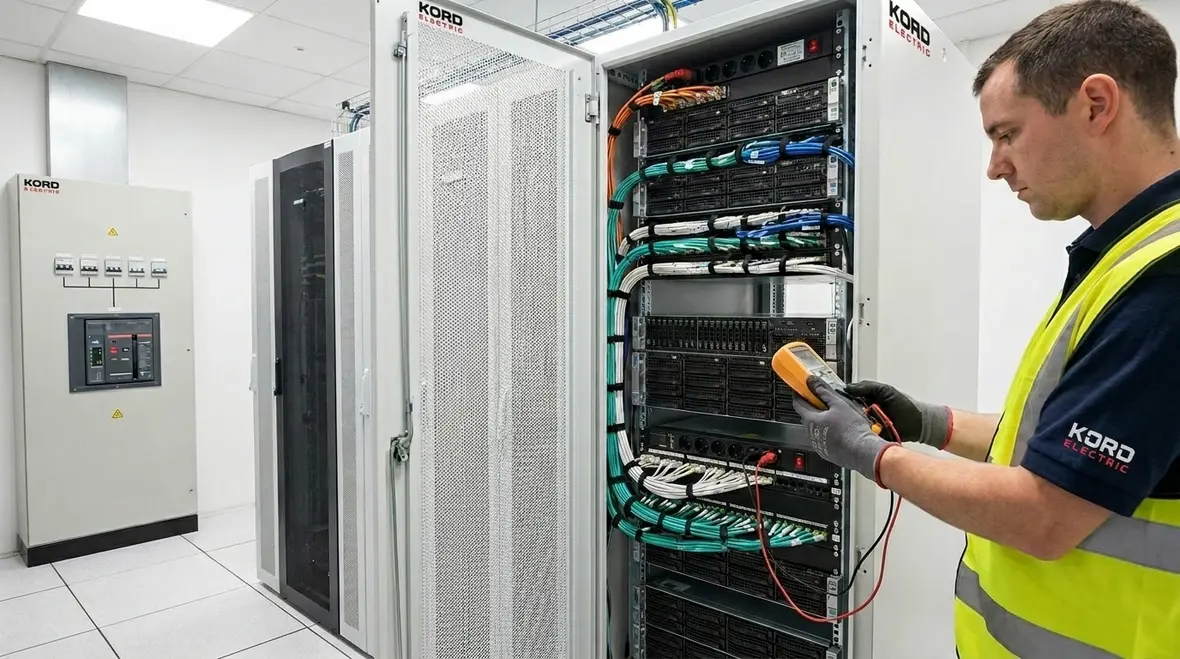
Data Center Rack Power Distribution Best Practices
Kord Electric helps commercial and industrial facilities keep data center rack power steady, safe, and ready for real workloads, not fantasy uptime charts. When power reaches each rack the right way, technicians waste less time troubleshooting, and operations teams stop playing the “guess which circuit failed” game. In this guide, we explain best practices for distributing power to data center racks, focusing on practical design choices that hold up under demand, heat, and growth. And yes, we will mention what our experienced service staff tells customers, because sometimes the best truth comes from the people who’ve been on the floor with the meter in hand.
How we plan data center rack power distribution without surprises
First, we treat rack power like a system, not a collection of wires. That means we plan for the whole path from utility or generator to the rack level, then we design controls that match how facilities actually operate. As a result, data center rack power remains predictable as cabinets fill up, as loads change, and as future upgrades arrive.
Our technicians start by mapping equipment types and typical load profiles. Then they align distribution stages to those profiles. For instance, servers and storage do not consume power like lighting does. Instead, they draw in ways that can spike, shift, and repeat across the day. Therefore, Kord Electric prioritizes real measurement and realistic assumptions over vague estimates that sound good in meetings but fail in the field.
Next, we define how failure should behave. Some owners accept a brief interruption for maintenance windows. Others want near zero interruption. Either way, we make the intent clear in the design, because “we will figure it out later” is a phrase that always returns with a receipt.
Designing power paths: UPS, PDU, and feeder choices

After planning the goal, we select the architecture. Many facilities rely on UPS systems to bridge utility events, and those UPS outputs then feed distribution at higher levels. From there, power goes to PDUs, which finally supply rack circuits. However, a clean architecture does not automatically mean good performance. So we focus on the details that matter.
Our expert service staff often explains it like this: if UPS feeds are stable but PDUs are poorly chosen, the system still struggles at the rack. For example, PDUs need proper current ratings, correct output configuration, and safe breaker coordination. Additionally, we account for power factor and load behavior, so the facility does not end up with protective devices that trip at the wrong time.
We also recommend thinking in stages: upstream protection protects the upstream gear, while downstream protection protects the rack circuits. When stages overlap incorrectly, troubleshooting becomes harder and outages last longer. In contrast, when coordination is correct, the system isolates faults without punishing healthy equipment. That is how you get stability, not heroics.
Finally, we consider redundancy. For commercial and industrial customers, redundancy should match the business risk. Therefore, Kord Electric helps property teams choose redundancy levels that fit operations budgets while still supporting mission critical services. For larger data environments that rely on a broader electrical backbone, many teams also review how overall data center electrical distribution design for reliability supports what happens at each rack.
Best practices for rack level distribution layout
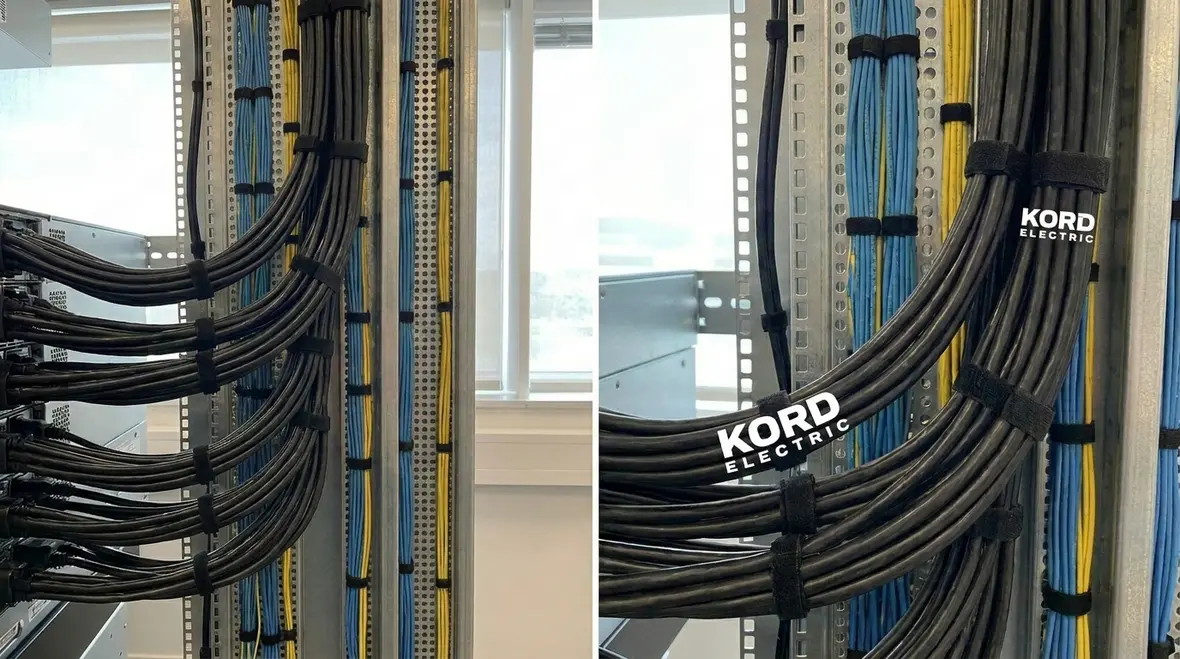
Now we move from architecture to physical layout. Power distribution inside the rack area must support airflow, access, and safe maintenance. If wiring and raceways crowd airflow paths, cooling works harder and the whole room climbs toward thermal stress. Likewise, if cables route in ways that block service access, technicians lose time and increase the chance of mistakes.
When we design rack level distribution, we emphasize separation and organization. We route power cables away from signal paths when the facility layout calls for it. In many cases, this reduces noise issues and improves overall reliability. Moreover, we build with labeling that technicians can read quickly under pressure. Nobody wants to hunt for a tag while alarms scream like a bad action movie soundtrack.
We also balance load across phases or bus systems where applicable. When loads cluster on one phase, heat rises and protection devices work harder. Therefore, Kord Electric checks distribution math early, rather than after the first thermal event.
Another practical best practice is planning for change. Data halls evolve. Racks get added, power needs increase, and equipment gets replaced. So we design distribution with spare capacity and clear pathways so others can expand without tearing up the whole environment. For facilities already planning broader upgrades, articles like Kord Electric’s guide on rewiring cost for commercial electrical systems can help frame long term investment decisions.
Correct sizing and breaker coordination for reliable uptime
Sizing and coordination determine whether faults get isolated fast or whether they spread into bigger outages. This is where many “works on paper” designs stumble. So our approach stays methodical.
First, we verify current draw, planned expansion, and transient loads. We then size conductors and protective devices to handle both normal operation and worst case conditions. After that, we coordinate overcurrent protection settings so selectivity works as intended. In simple terms, the closest protective device to the fault clears first.
Our technicians share a calm but firm message on site: if protective devices are not coordinated, the system becomes unpredictable. That unpredictability costs time, and time is the one resource that never comes back. Besides, a breaker that trips too easily turns into a prankster. A breaker that trips too late can damage equipment. Neither outcome supports steady data center rack power.
We also check grounding and bonding practices. Safe grounding controls fault conditions and supports equipment protection. Meanwhile, proper bonding keeps electrical systems stable and reduces the risk of stray voltage surprises.
Thermal management and power quality: what racks feel
Power distribution does not live in isolation. It interacts with cooling, humidity, and power quality. Therefore, Kord Electric designs with the assumption that heat rises where people least want it.
We evaluate cable sizing and conductor temperature rise, because undersized conductors can run hotter and lower reliability. Also, we consider how power density changes as new gear arrives. If a room plans for one load level today but grows tomorrow, we help plan distribution upgrades that won’t force sudden downtime.
Next, we address power quality. Harmonics, voltage distortion, and frequency variation can stress power supplies and create extra losses. So we include checks that align with the facility’s equipment type and UPS configuration. In addition, we maintain clean labeling and documentation, which matters when future technicians need to understand why certain parameters were selected.
Our expert service staff walks customers through how power quality and thermal performance connect. Then they show how rack level circuits behave under realistic operating conditions. When customers hear the explanation from people who’ve actually measured the system, the whole topic stops sounding like technical wallpaper. For facilities already seeing flickering, nuisance trips, or sensitive equipment acting up, Kord’s service guide on voltage fluctuations in commercial and industrial facilities offers a deeper look at diagnosing and correcting instability.
Installation, testing, and documentation that keep teams confident
Even a strong design can fail if installation and acceptance testing miss key steps. So Kord Electric uses disciplined field practices for commercial and industrial data halls, especially major property buildings where uptime expectations stay high.
During installation, we enforce correct torque, routing, separation, and safe cable management. We also ensure that labeling matches the as built plan. Then we perform testing that verifies continuity, insulation resistance, polarity, and protective device function. After that, we document results so operations teams can reference history during audits and maintenance.
Documentation also supports change. When new racks come online, teams should not guess where power routes originate. Instead, they should trace the right circuit quickly. Therefore, our approach includes clear circuit maps and updated schedules.
Finally, we train and explain. We do not just hand over binders. Our technicians and experienced service staff show how to interpret the system, how to spot warning signs, and how to respond when something acts unusual. That training reduces downtime and makes troubleshooting less stressful for everyone involved. Many facilities pair this mindset with ongoing electrical preventive maintenance so that inspections, testing, and documentation continue long after the first turn up.
FAQ
What Kord Electric does next for your rack power system
When we work with commercial and industrial facilities, we bring structure, field experience, and clear communication to data center rack power planning and execution. Our technicians evaluate your current power path, recommend practical improvements, and support installation and testing with documentation your team can actually use. If you want fewer surprises and steadier uptime, contact Kord Electric for a site review and a rack power distribution plan built for real operations.
For teams looking at broader infrastructure changes beyond the rack, it can also be helpful to review how hidden electrical risks in commercial buildings or emerging projects like commercial solar panel electrical integration affect the same electrical backbone that feeds your data center.
If your facility is preparing for new loads, higher density hardware, or expanded data center rack power usage, Kord Electric’s dedicated electrical preventive maintenance services help keep breakers, switchgear, and distribution paths operating the way they were designed, year after year.
When you are ready to upgrade, expand, or stabilize your data center rack power systems, their commercial and industrial specialists can coordinate design, installation, testing, and long term support so your operations team stays focused on workloads instead of wondering what is happening behind the panels.


