
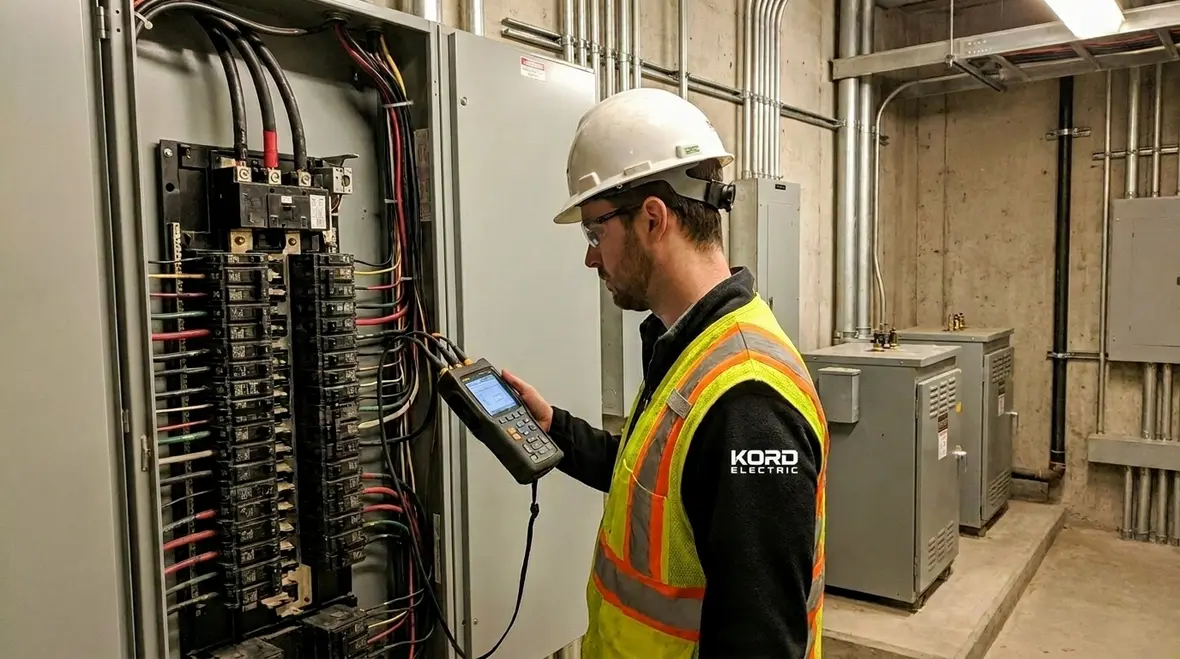
Commercial Building Power Quality Solutions
Commercial building power quality shapes how reliably your equipment runs, how long it lasts, and whether your facility avoids annoying shutdowns. At Kord Electric, we help teams improve power quality in commercial building electrical systems so lights stay steady, motors start smoothly, and sensitive controls stop acting like they are haunted. And yes, we have seen “mysterious” issues that disappear the moment the electrical problem is fixed. Others blame the software, the weather, or a full moon, but we stick to what the data says.
In this article, our expert service staff explains what usually causes poor performance in commercial and industrial facilities, what checks we run, and which solutions actually hold up in the real world. If your building is a major property asset with serious loads, this is the kind of care you want.
Commercial buildings deserve cleaner electricity, not constant surprises
Commercial building power quality shapes how reliably your equipment runs, how long it lasts, and whether your facility avoids annoying shutdowns. At Kord Electric, we help teams improve power quality in commercial building electrical systems so lights stay steady, motors start smoothly, and sensitive controls stop acting like they are haunted. And yes, we have seen “mysterious” issues that disappear the moment the electrical problem is fixed. Others blame the software, the weather, or a full moon, but we stick to what the data says.
In this article, our expert service staff explains what usually causes poor performance in commercial and industrial facilities, what checks we run, and which solutions actually hold up in the real world. If your building is a major property asset with serious loads, this is the kind of care you want.
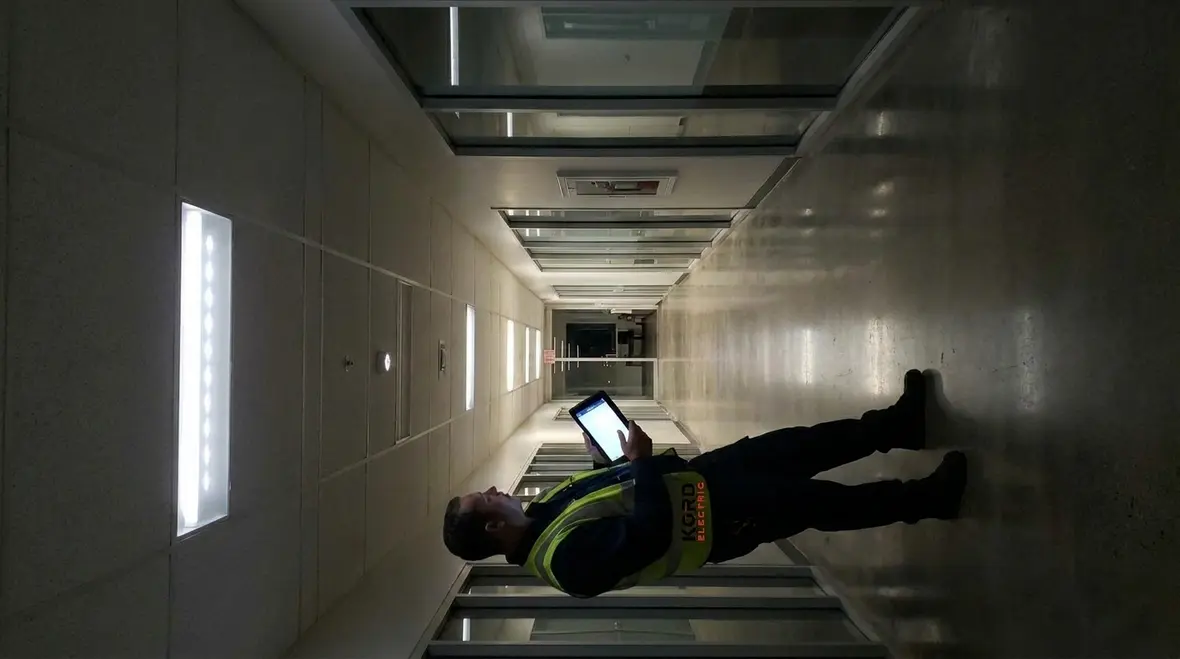
Know what power quality problems look like in the field
When power quality slips, the symptoms rarely show up in a neat spreadsheet. Instead, they appear as small failures that add up. First, your maintenance team may notice flickering lights near certain HVAC cycles. Then, production or lab staff may report that equipment resets during starting events. Finally, building managers often hear complaints about “random” tripping, overheating, or shortened equipment life.
Our technicians approach these issues like careful mechanics. They ask what changed, when it changed, and which loads caused it. For example, a new chiller can increase voltage dips. A generator transfer can create short interruptions. A lot of variable speed drives can inject harmonics. Therefore, the goal is not guesswork. We measure, we verify, and we explain.
We also help others understand that power problems do not always come from the utility. Sometimes the utility delivers fine power, and the building’s internal wiring, grounding, transformers, or load mix amplifies issues. It is like blaming the whole restaurant for one chef’s burnt toast. The toast matters, but so does the oven.

Commercial building power quality starts at the electrical source and path
For commercial and industrial buildings, we treat power quality as a chain. If any link weakens, the entire system feels it. That chain includes incoming utility service, switchgear, transformers, feeders, distribution panels, grounding, and load equipment. So when a team says “our power is bad,” we dig into where the distortion begins and where it ends.
Our service staff explains the common offenders in plain terms. Voltage sags and swells can stress drives, PLCs, and power supplies. Harmonics can overheat transformers and neutral conductors, especially where non linear loads exist. Transients can come from switching devices, lightning events, or motor starts. In addition, unbalanced phases can cause negative sequence currents that quietly harm motors and cables.
Once we map the path, we decide what to measure and what to fix. Because if we only address symptoms, the next event will find the next weak link. And trust us, the next event always shows up. Electrical systems love continuity, just not the fun kind.
For teams who want to go deeper into how instability shows up in day-to-day operations, Kord Electric’s guide on voltage fluctuations in commercial and industrial facilities walks through how small swings turn into real downtime and equipment stress.

Assess and measure before you buy solutions
Good power quality work begins with real measurement, not vibes. We use structured testing so the findings match the problem. First, we review one line diagrams and load schedules. Then, we capture event data and power metrics while the building operates under normal conditions and during key cycles such as chiller startup, pump switching, and production load changes.
Our technicians focus on key signals that directly affect commercial building electrical performance. We look at voltage variations, dips, swells, harmonics, and unbalance. We also examine frequency stability, transient activity, and neutral currents. When the data shows distortion, we identify whether harmonics originate from drives, UPS systems, rectifiers, lighting drivers, or other non linear equipment.
Next, we compare readings across locations. We do not just test one panel and declare victory. Therefore, we verify whether the issue rises from a specific feeder, transformer, or switchgear section. That step matters in major property buildings where loads vary by floor, wing, and tenancy.
Finally, we help others understand what the numbers mean in a business context. We translate measurements into risk: downtime likelihood, equipment wear, warranty impact, and maintenance frequency. For many facilities, that same mindset carries into broader commercial and industrial electrical maintenance plans that protect systems long after the first assessment is complete.
Fix power disturbances with targeted upgrades, not random patches
After measurement, we recommend solutions that match the specific disturbance, not every problem at once. This is where our planning earns its keep. Because buying a device without knowing the cause is like installing a new brake pad on a car that is overheating due to a coolant leak. It might help, but it does not solve the real root.
One common approach involves addressing harmonic distortion. If non linear loads dominate the facility, we may recommend harmonic mitigation strategies such as properly sized filters or detuned reactors. We also consider how the building’s electrical system handles neutral currents and whether cable sizing and grounding details support safe operation.
To reduce voltage dips during motor starts or large chiller inrush, we may recommend soft starters, variable speed drive settings, or coordinated starting methods. In some cases, transformer upgrades or feeder reinforcement help stabilize voltage at sensitive loads.
For transient control, we focus on surge protection and proper coordination of protective devices. We also verify grounding and bonding. When grounding is weak or inconsistent, sensitive equipment becomes the lightning rod for everyday electrical noise.
Throughout these upgrades, our expert service staff explains why each change helps. We outline expected outcomes such as fewer nuisance trips, improved equipment uptime, and reduced heat stress in transformers and bus bars. For buildings facing broader reliability concerns, pairing these improvements with structured electrical preventive maintenance helps keep results steady year after year.

Improve reliability with coordination, grounding, and smart protection
Upgrades alone do not guarantee better results. Coordination matters. Therefore, Kord Electric works on the protection plan so devices clear faults without creating unnecessary interruptions for healthy loads. We help facilities improve selectivity between breakers, fuses, and downstream protection. That way, a problem does not shut down the entire wing like a bad group chat.
We also review grounding systems, because grounding supports both safety and power quality. A properly bonded system reduces noise and helps limit voltage rise during faults. In addition, it supports consistent reference points for equipment controls and communications.
Where appropriate, we examine the full power system for issues that create repeating events. For example, a poorly maintained switch contact can create arcing and micro interruptions. A loose connection can cause intermittent heating. A misconfigured UPS or transfer path can create short breaks during mode changes.
Our technicians take a calm, methodical approach. They test, verify, and then tune. In other words, we do not just “install and hope.” We document findings, confirm performance, and set expectations for what the building will experience after correction.
FAQ for commercial and industrial facilities
What Kord Electric delivers for major property owners
Commercial and industrial buildings face real business pressure: keep tenants satisfied, avoid unplanned outages, and protect expensive equipment. Therefore, Kord Electric builds power quality improvements around operational goals, not just technical checkboxes. Our approach blends measurement, targeted corrections, and clear communication.
Our technicians explain what they see in the field and why it matters. If a client needs a straightforward summary for leadership, we provide it. If a team needs detailed recommendations for engineering review, we deliver that too. We help others understand tradeoffs, schedules, and the expected impact on reliability. That same clarity applies whether we are improving commercial building power quality usage, planning a rewiring project for a commercial electrical system, or guiding a team through long term maintenance planning.
And just to keep things human, we remind teams that electrical systems are not mind readers. They respond to what you feed them. When we improve commercial building electrical performance, the building stops sending mystery emails at 2 a.m. Like a sitcom ending, the plot finally makes sense.
Take the next step toward stable, dependable power
If your commercial or industrial facility shows signs of flicker, nuisance trips, overheating, or equipment resets, do not let it drift into “normal.” Kord Electric can assess your system, measure the real causes, and recommend targeted upgrades that improve power stability and equipment life. Contact us to schedule a power quality assessment and get a plan your engineering team can trust. Let’s make your electrical system calm, consistent, and ready for every startup event ahead.
For facilities that want to connect power quality improvements with long term reliability, Kord Electric’s dedicated electrical preventive maintenance services provide a structured way to monitor conditions, prioritize upgrades, and keep critical systems ready for whatever tomorrow’s load profile brings.


