California Commercial Lighting Code and Title 24
In California, lighting is never just about flipping a switch and hoping for the best. It is about compliance, safety, energy efficiency, and long term savings. At Kord Electric, our team works every day with property managers, facility directors, and commercial developers who need clarity on the Commercial Lighting Code and how it applies to their buildings. From Title 24 requirements to local inspection standards, the rules shape how large facilities operate. In the sections ahead, we walk through what commercial and industrial property leaders need to know, how regulations affect daily operations, and how our expert service staff guide clients through the process with calm confidence and maybe the occasional well timed joke.
Understanding Commercial Lighting Code Requirements in California
California does not treat lighting as an afterthought. Instead, the state sets strict energy standards through Title 24 of the California Code of Regulations. These rules define how lighting systems must perform in commercial and industrial facilities. They cover everything from allowable wattage to control systems and occupancy sensors.
Because energy consumption drives operating costs, the state focuses heavily on reducing waste. Therefore, new construction and major renovations must meet precise lighting power density limits. In addition, automatic shutoff controls are required in most spaces. Conference rooms, warehouses, parking garages, and office floors must all follow different standards.
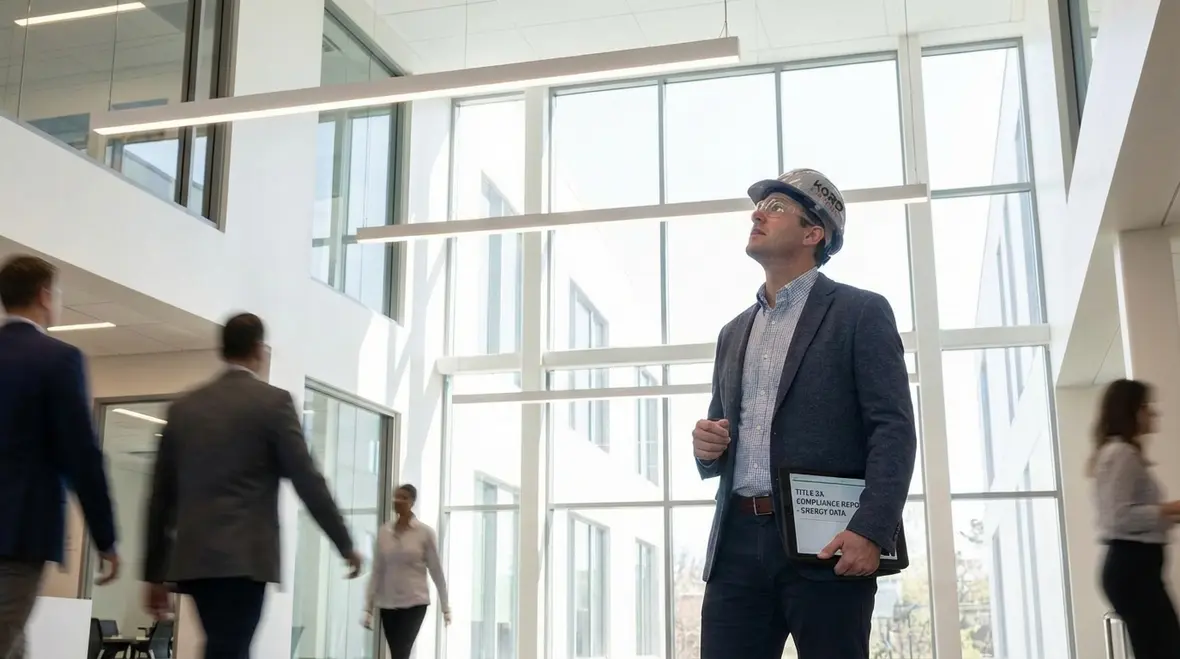
Our technicians often explain it this way. The code is not trying to make life harder. It is trying to make buildings smarter. And frankly, a smart building saves money faster than a superhero sequel racks up box office numbers.
Moreover, compliance does not stop at installation. Inspections verify that lighting systems perform exactly as designed. If documentation does not match the field installation, delays happen. That is where experienced professionals matter. We help large property owners avoid surprises that feel less like a plot twist and more like a paperwork avalanche.
For a deeper dive into how these requirements play out in the real world, many facility leaders also review Kord Electric’s California Commercial Lighting Code Guide for 2026, which expands on common Title 24 scenarios and practical examples for large buildings.
What Do Property Managers Need to Know Before a Lighting Upgrade?
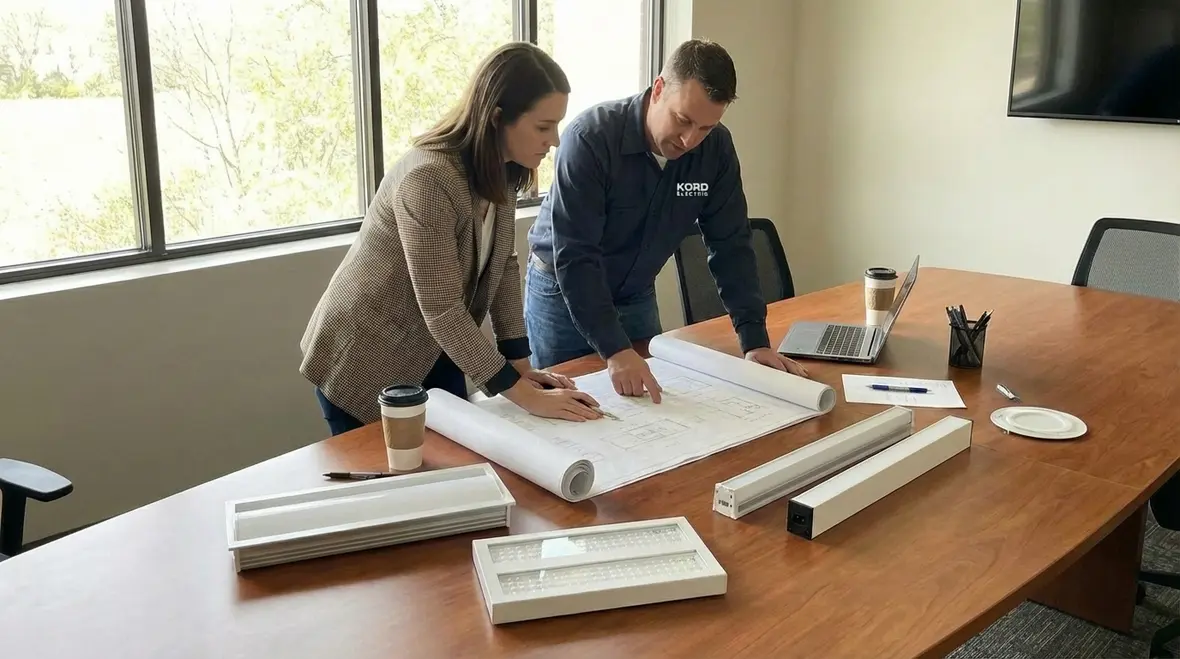
Property managers often ask what steps they should take before upgrading lighting in a commercial facility. The answer begins with understanding scope. Are you replacing fixtures? Retrofitting to LED? Expanding floor space? Each scenario triggers different requirements under California’s energy standards.
First, wattage limits apply to most indoor spaces. Second, control systems must meet current standards. For example, daylight harvesting controls may be required in areas with natural light. Furthermore, occupancy sensors are mandatory in many rooms. Third, documentation must be submitted through approved compliance forms.
At Kord Electric, our service staff walk clients through each step in clear language. They explain why certain fixtures qualify and others do not. They also clarify timelines. As a result, facility managers can plan budgets and avoid last minute compliance panic.
Additionally, we conduct site evaluations to confirm existing conditions. This matters because older buildings often have legacy systems that do not align with current regulations. Rather than guessing, our technicians verify each detail. After all, assumptions in construction projects tend to age poorly.
For many properties, a Title 24 lighting upgrade is also the perfect moment to address workplace safety and visibility concerns. Articles like Workplace Lighting Safety Hazards That Hurt Productivity help managers connect code compliance with day to day performance and employee well being.
Title 24 and Energy Efficiency Standards for Large Facilities
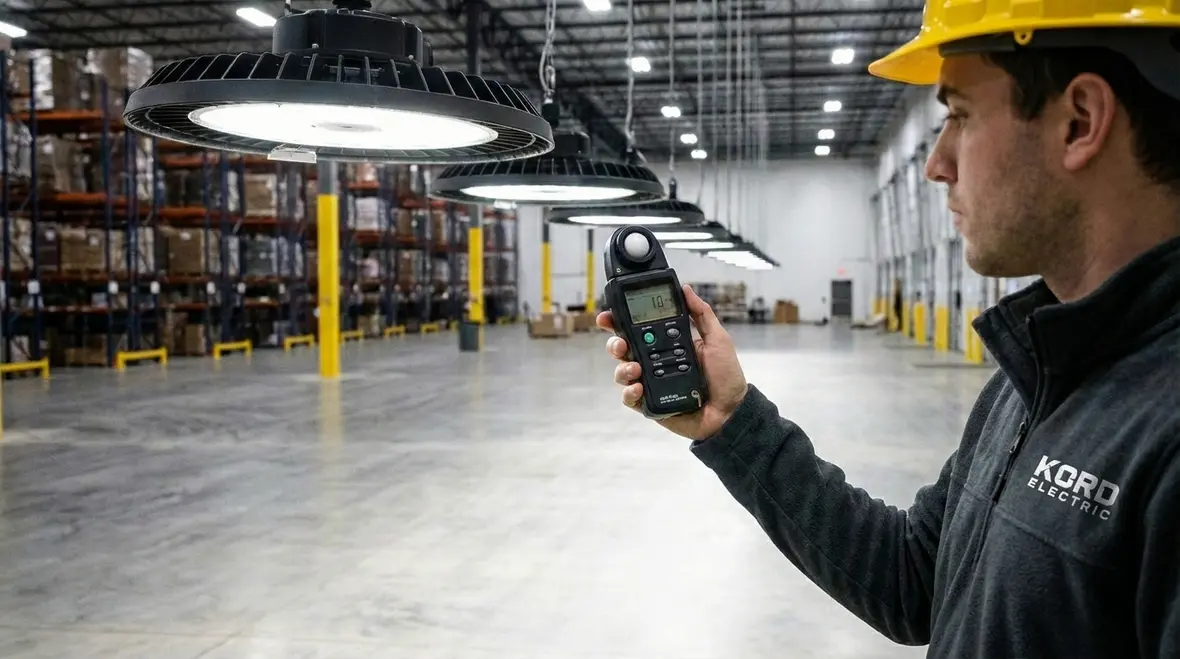
Title 24 functions as the backbone of California’s energy policy. While it covers multiple building systems, lighting receives significant attention. The state updates these standards regularly to reflect advances in technology.
For commercial and industrial buildings, lighting power density limits define how much energy lighting systems may consume per square foot. Consequently, engineers must design systems that deliver adequate illumination without exceeding thresholds.
Space Type Common Requirements
Office Areas Lighting power density limits, occupancy sensors, daylight controls
Warehouses High bay efficiency standards, automatic shutoff, area zoning
Parking Structures Motion sensors, reduced wattage allowances, scheduling controls
Retail and Large Lobbies Accent lighting limits, automatic dimming systems
Although the rules may look technical, they serve a clear goal. They reduce energy waste while maintaining safety and comfort. Therefore, investing in compliant systems often lowers long term operating costs.
Our experts routinely coordinate with engineers and inspectors to ensure every specification meets current standards. Because regulations change, staying informed matters. We make it our job to track updates so our clients do not have to memorize code revisions like trivia night contestants.
For facilities looking beyond a single project, pairing Title 24 planning with structured electrical preventive maintenance can keep lighting systems efficient, compliant, and reliable year after year.
Controls, Sensors, and Smart Systems That Keep You Compliant
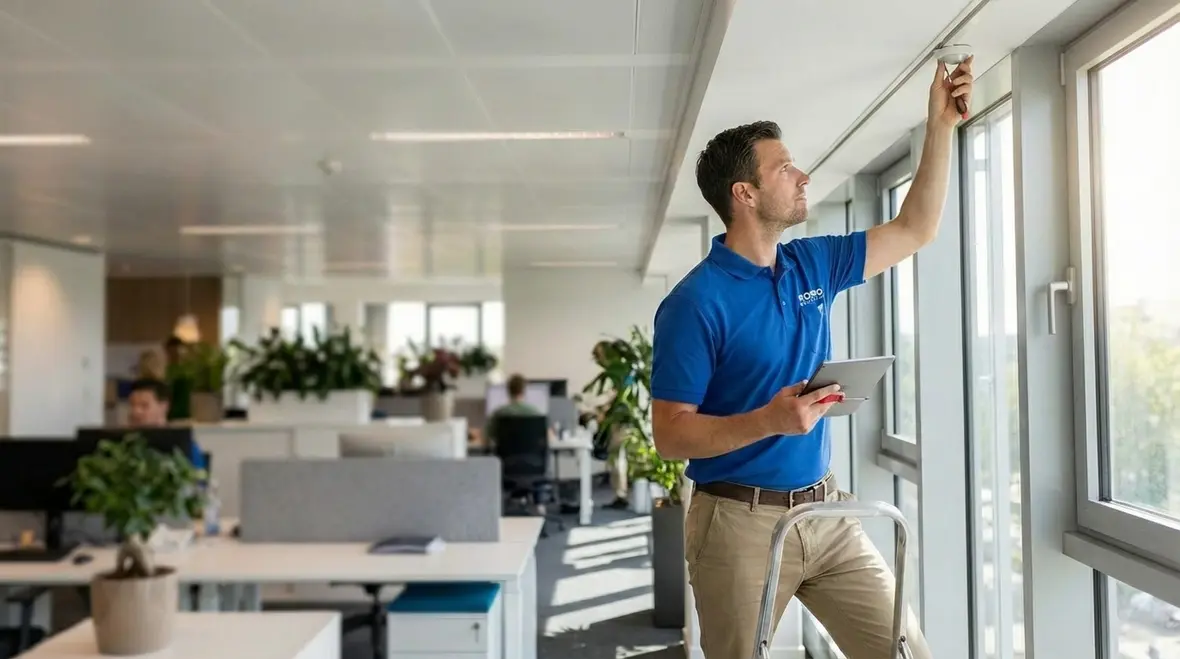
Modern lighting compliance goes beyond fixture selection. Controls now play a central role in meeting California requirements. In fact, many violations occur not because of poor fixtures but because of missing or misconfigured control systems.
Automatic shutoff mechanisms are required in most commercial buildings. This means lighting must turn off when spaces are unoccupied. Additionally, multi level lighting controls allow occupants to adjust light output based on need.
Daylight harvesting systems reduce artificial lighting when sunlight provides enough illumination. Consequently, energy use drops without sacrificing visibility. In large office towers and industrial plants, these systems create measurable savings over time.
Our technicians program and test these systems carefully. They do not simply install devices and walk away. Instead, they confirm sensor coverage, response times, and integration with building management systems. Because even the best equipment fails if not calibrated properly.
Furthermore, we educate facility teams on system operation. When staff understand how controls function, they avoid accidental overrides that could compromise compliance. Knowledge, after all, is cheaper than a reinspection.
Inspection, Documentation, and Avoiding Costly Delays
Meeting California lighting regulations requires more than hardware. Documentation must support every installation. Compliance forms, acceptance testing, and inspector approvals complete the process.
First, certified acceptance testing technicians verify that systems perform as required. They test occupancy sensors, dimming controls, and shutoff mechanisms. Next, proper forms must be submitted to local authorities. Without these forms, projects stall.
At Kord Electric, we manage this paperwork alongside installation. Our service staff coordinate with project managers to ensure timelines stay intact. Moreover, we prepare facilities for inspection by reviewing each system in advance.
This proactive approach prevents common setbacks. For example, mislabeled circuits or incorrect sensor placement can trigger reinspection fees. Therefore, attention to detail saves both time and money.
Large commercial and industrial properties often operate on tight schedules. Delays disrupt tenants, production lines, and revenue. Consequently, we treat compliance as a strategic priority rather than a box to check at the end.
How Kord Electric Supports Major Commercial and Industrial Buildings
Kord Electric focuses exclusively on commercial and industrial facilities and major property buildings. We do not spread ourselves thin across residential work. Instead, we dedicate our expertise to complex environments that demand precision.
Our technicians bring hands on experience with high rise offices, distribution centers, manufacturing plants, and multi building campuses. Because each property type presents unique lighting challenges, we tailor solutions accordingly.
When clients ask about the Commercial Lighting Code, we respond with clarity rather than jargon. We explain how upgrades affect energy budgets, tenant satisfaction, and long term asset value. Additionally, we provide strategic recommendations that align with capital improvement plans.
We believe authority does not require arrogance. Instead, it requires consistency, accuracy, and calm communication. Therefore, our team approaches every project with steady confidence. Think less dramatic action movie electrician and more seasoned guide who has walked this trail many times before.
Through detailed assessments, compliant installations, and thorough documentation, we help clients meet state requirements without stress. Because when lighting systems work properly, facilities run smoothly. And smooth operations keep everyone sleeping better at night.
FAQ: Commercial Lighting Compliance in California
Move Forward with Confidence and Compliance
California sets high standards for commercial lighting, and rightly so. However, meeting those standards does not have to feel overwhelming. With the right guidance, compliance becomes an opportunity to improve efficiency and protect your investment. Kord Electric stands ready to support your commercial or industrial facility with expert insight, precise installations, and steady leadership. Contact us today, and let our experienced team bring clarity, confidence, and compliant performance to your lighting systems.
If your facility is planning new construction, a major retrofit, or a complex multi building upgrade, Kord Electric’s dedicated lighting installation services team can design and deliver Commercial Lighting Code compliant systems that align with your schedule, your budget, and your long term operational goals.
From initial code review to final commissioning, our commercial and industrial lighting specialists help you translate California’s Title 24 requirements into real world solutions that keep tenants comfortable, auditors satisfied, and energy use under control.