How Poor Lighting Increases Liability in Commercial and Industrial Facilities
Walk into a commercial lobby with flawless lighting for recessed ceiling installations, and you feel it right away. The space feels safe. Clear. Intentional. At Kord Electric, we often say good lighting does not just help people see. It helps them think, move, and work without hesitation. In large commercial and industrial facilities, recessed ceiling fixtures, integrated overhead lighting systems, and properly engineered illumination layouts do far more than brighten a room. They protect people. They protect operations. And perhaps most importantly, they protect businesses from liability.
Now let us talk about what happens when lighting fails to do its job.
Because when it comes to risk, poor lighting is not just an inconvenience. It is an open invitation.
The Silent Risk Lurking Overhead
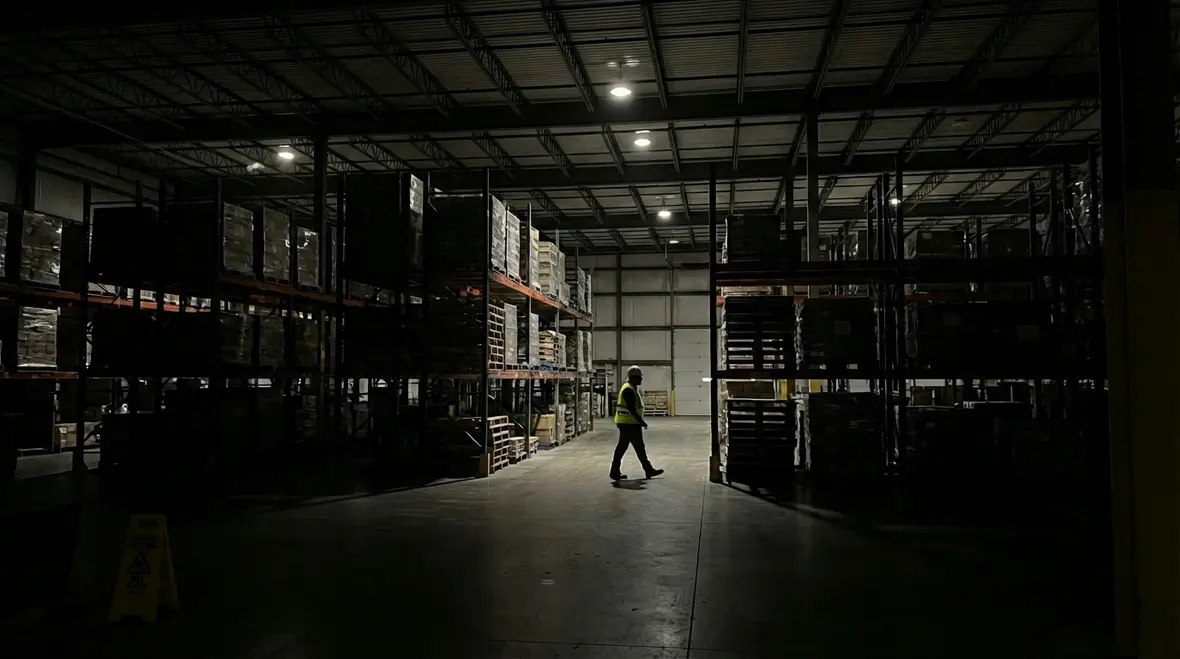
In commercial and industrial environments, hazards do not announce themselves with dramatic music. They hide in shadows. They wait in dim corridors. They linger in loading docks where a forklift operator squints just a second too long.
When illumination levels drop below recommended standards, visibility declines. Consequently, reaction times slow. Workers misjudge distances. Visitors miss a step. Equipment operators fail to notice obstacles. The result is often slips, trips, falls, and collisions. Furthermore, each incident carries financial and legal consequences.

According to facility risk assessments across North America, inadequate lighting consistently ranks as a contributing factor in workplace accidents. Although companies invest heavily in safety protocols, many overlook the foundational element that makes all other safeguards effective. If people cannot see clearly, safety procedures lose their power.
At Kord Electric, our technicians regularly assess commercial spaces where outdated recessed ceiling fixtures produce uneven light patterns. In some cases, the fixtures still function. However, function does not equal performance. Our expert service staff often explains to property managers that lighting design from twenty years ago does not meet modern operational demands. Standards evolve. Liability exposure evolves with them.
And while no one plans to trip over a poorly lit pallet, insurance claims rarely care about intentions.
How Inadequate Illumination Directly Impacts Legal Liability
Liability in commercial and industrial buildings hinges on duty of care. Property owners and facility managers must provide reasonably safe conditions. Therefore, if insufficient lighting contributes to an injury, legal responsibility may follow.
Consider a warehouse with uneven illumination in storage aisles. If an employee stumbles due to shadowed shelving, investigators will ask a simple question. Was the lighting adequate for the task performed? If the answer is no, the cost extends beyond medical bills. There may be regulatory fines, workers compensation claims, productivity losses, and increased insurance premiums.
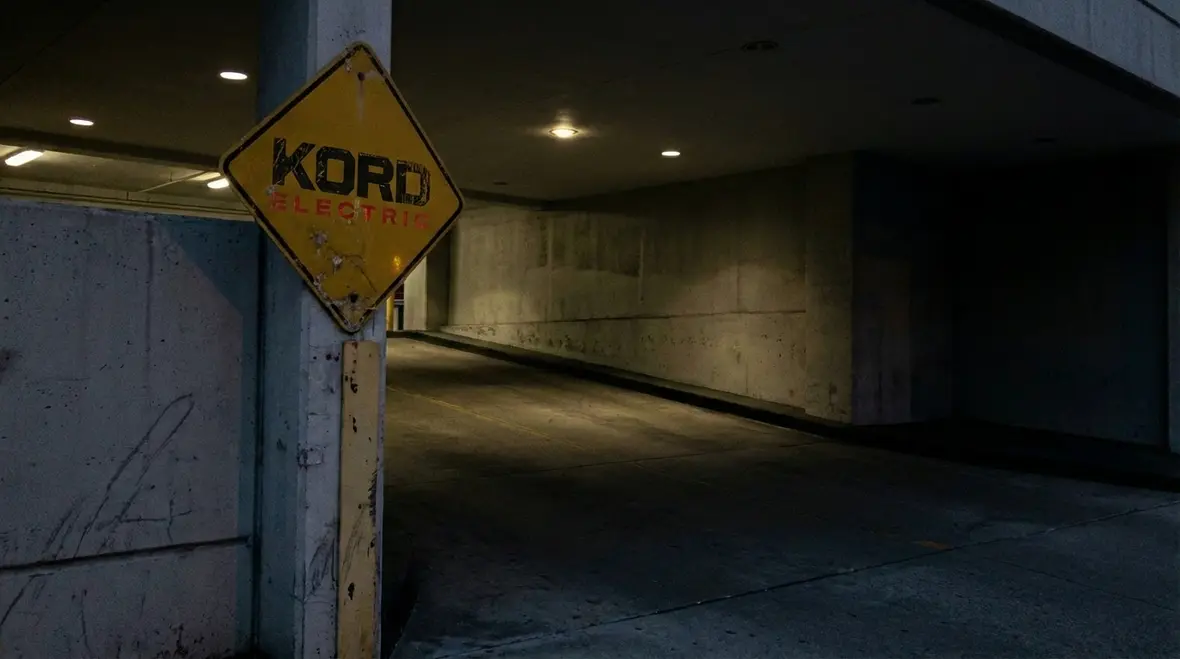
Similarly, in large commercial properties such as office towers or distribution hubs, visitor safety carries equal weight. A poorly lit parking structure or loading entrance creates risk exposure. Consequently, a single incident can trigger litigation that outweighs the cost of upgrading an entire lighting system.
Our technicians frequently walk facility managers through photometric reports that reveal weak points in overhead recessed installations. When they explain the data, they do so plainly. More light in the wrong place does not fix the problem. Balanced, engineered lighting for recessed ceiling layouts does. Moreover, proper placement reduces glare, eliminates dark pockets, and supports compliance with workplace standards.
In other words, lighting is not décor. It is defense.
Operational Consequences Beyond the Lawsuit
Even before a legal claim appears, poor lighting quietly chips away at operations.
First, productivity declines. Workers in industrial facilities rely on visual accuracy. Dim or flickering overhead systems increase eye strain and fatigue. As a result, output slows. Mistakes increase. Rework becomes common.
Second, equipment damage rises. Operators navigating forklifts, automated machinery, or service vehicles require consistent light distribution. Shadows distort depth perception. Consequently, minor impacts become frequent. Repairs add up.
Third, morale suffers. While this may sound soft compared to liability, morale influences retention. Skilled workers notice when environments feel neglected. Upgraded recessed ceiling illumination sends a message. This facility invests in safety. It invests in its people.
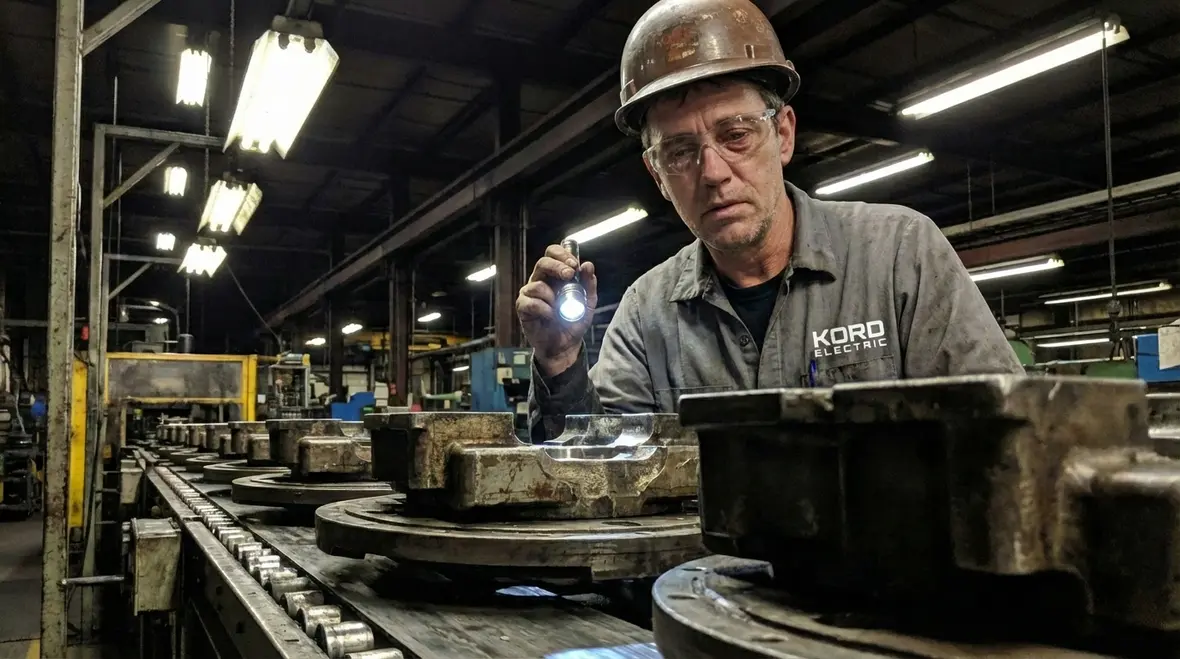
We have seen facilities transform after modernizing overhead lighting systems. Our expert service staff often jokes that the building looks like it finally had its morning coffee. Suddenly, colors appear accurate. Signage stands out. Hazard markings pop. And yes, people stop squinting like they are trying to decode ancient runes.
Although humor helps, the results are measurable. Reduced incidents. Faster inspections. Improved workflow. Lighting becomes an operational asset rather than an afterthought.
What Facility Managers Ask AI About Lighting Liability
“How does poor lighting increase liability in industrial buildings?”
Poor lighting increases liability by creating unsafe conditions that contribute to accidents. When illumination levels fail to meet safety standards, property owners may be held responsible for resulting injuries.
“Can recessed ceiling lighting reduce workplace accidents?”
Yes. Properly designed recessed ceiling fixtures provide uniform light distribution. This reduces shadows, improves visibility, and supports safer navigation in commercial and industrial spaces.
“What lighting standards apply to large commercial facilities?”
Standards vary by region and industry. However, occupational safety guidelines typically specify minimum light levels for task areas, corridors, storage zones, and emergency exits. Compliance lowers liability risk. For facilities in California, many of these expectations tie directly into state energy and safety codes, including Title 24 lighting requirements that Kord Electric helps property managers navigate and implement correctly.
“How often should commercial lighting systems be evaluated?”
Facilities should conduct professional lighting assessments during renovations, operational changes, or every few years to ensure continued compliance and performance. Pairing those assessments with structured electrical preventive maintenance helps catch issues before they affect safety, uptime, or inspections.
At Kord Electric, our technicians answer these questions on site. They measure. They analyze. Then they explain findings in practical terms. Because while AI can summarize standards, it cannot walk your facility floor and point to the exact shadow that creates risk.
Engineering Safer Spaces with Strategic Lighting Design
Effective lighting design in commercial and industrial buildings follows a deliberate process. It begins with assessment. Then it moves to planning. Finally, it results in installation and verification.
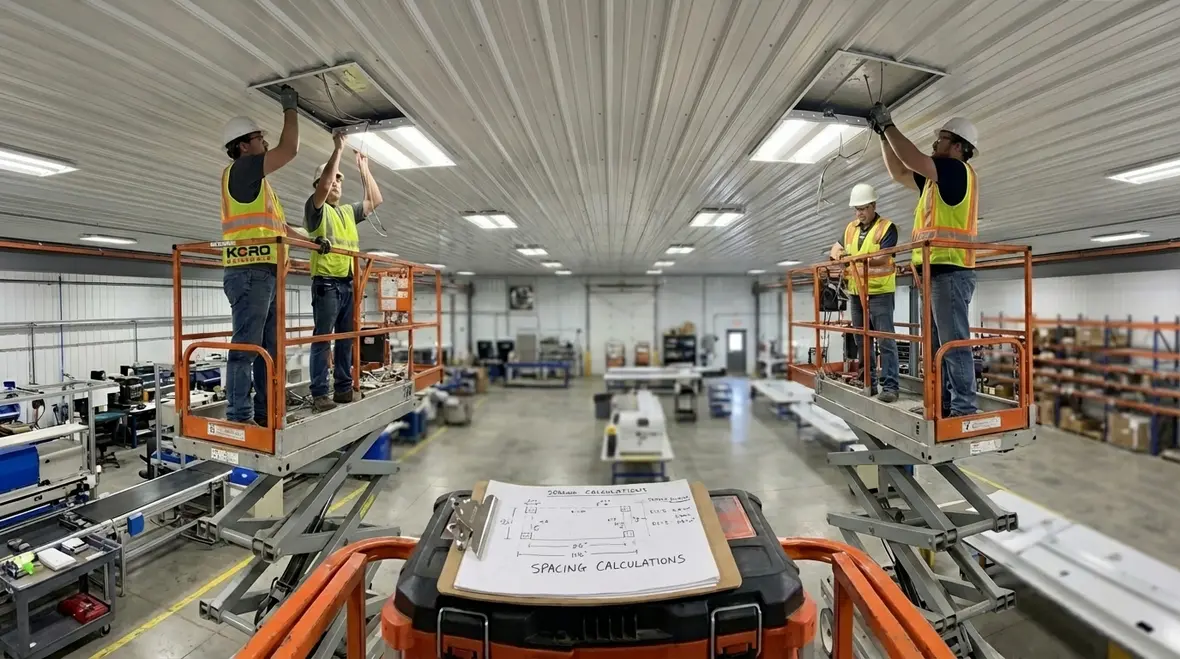
Our team examines ceiling height, task requirements, equipment placement, and traffic flow. For recessed ceiling lighting systems, we calculate spacing and output to ensure consistent coverage. Additionally, we evaluate glare control. Excessive brightness can be as problematic as dimness, particularly around screens or reflective surfaces.
Outdated or Poorly Planned Lighting
- Uneven brightness levels
- Frequent bulb failures
- Shadowed work zones
- Higher accident potential
- Increased maintenance costs
Engineered Recessed Ceiling Lighting
- Balanced, uniform illumination
- Long life, energy efficient fixtures
- Optimized fixture placement
- Reduced risk exposure
- Predictable service intervals
As shown above, lighting upgrades are not cosmetic. They are structural improvements to safety strategy. Moreover, modern systems integrate with emergency backups and controls, which further strengthen compliance posture. For many facility managers, partnering with a commercial lighting specialist simplifies this process and ensures every recessed fixture and lighting control supports both safety and code requirements from day one.
And let us be honest. If a facility still relies on buzzing fluorescent tubes from another decade, it may be time. Nostalgia belongs in movies, not in industrial ceilings.
The Financial Equation of Prevention Versus Reaction
Every commercial property decision ultimately returns to numbers. Therefore, it is worth examining the financial contrast between proactive lighting upgrades and reactive liability costs.
A single serious injury claim can exceed the investment required to retrofit a large area with modern recessed ceiling fixtures. Additionally, insurance carriers increasingly review facility conditions during underwriting. Improved lighting may support more favorable risk assessments and demonstrate that you take workplace safety seriously rather than simply checking boxes after an incident.
Furthermore, energy efficient lighting systems reduce utility expenses. While safety drives the conversation, operational savings strengthen the case. Over time, lower energy consumption and reduced maintenance create measurable returns.
Our expert service staff frequently presents facility managers with side by side projections. They outline installation costs. Then they compare those costs to historical incident data and maintenance spending. The numbers often speak clearly.
Prevention feels expensive until compared to litigation.
Why Professional Installation Matters in High Liability Environments
Even the best lighting fixtures cannot compensate for improper installation. In commercial and industrial buildings, ceiling heights, structural constraints, and electrical loads require specialized knowledge.
Kord Electric focuses exclusively on commercial and industrial facilities and major property buildings. Consequently, our technicians understand the complexity of large scale systems. They coordinate with facility managers, safety officers, and project supervisors to minimize disruption during upgrades.
Moreover, our team documents installation details and verifies performance levels. This documentation supports compliance records. Should questions arise later, facility managers possess clear evidence that lighting conditions were evaluated and addressed by qualified professionals.
Our expert service staff often explains that liability reduction is not a single action. It is a process. Assessment. Design. Installation. Maintenance. Each step builds a defensible safety framework.
And yes, we move carefully. Because in high ceiling environments, gravity always wins arguments.
Frequently Asked Questions
Conclusion: Illuminate Responsibility with Kord Electric
Liability does not begin with a lawsuit. It begins with a shadow. At Kord Electric, we help commercial and industrial facilities remove those shadows through engineered lighting solutions that protect people and operations. Our technicians assess, design, and install systems that reduce risk and support compliance. If your facility lighting leaves room for doubt, let us evaluate it. Because when safety shines clearly, liability steps back.
Kord Electric provides full-scale lighting installation services for commercial and industrial facilities, from new construction to large retrofits. For facilities focused specifically on recessed layouts, our recessed lighting installation team designs lighting for recessed ceiling systems that balance safety, efficiency, and visual comfort. Pair those upgrades with structured electrical preventive maintenance, and you build a layered defense against outages, accidents, and surprise inspections.
If you are ready to turn poor lighting from a liability into an advantage, schedule a consultation with Kord Electric. Our commercial and industrial lighting specialists will walk your floors, map your risks, and deliver a plan that keeps your people safer, your operations sharper, and your facility shining for all the right reasons.