Commercial Electrical Troubleshooting Common Problems Solutions
In commercial electrical troubleshooting, we deal with issues that can shut down operations fast. At Kord Electric, we help building managers, facility teams, and property owners when circuits trip, lights flicker, motors stall, breakers run hot, or power quality turns into a daily mystery. Our Commercial Electrical Troubleshooting: Common Problems & Solutions approach starts with what others often skip: careful observation, safe testing, and clean documentation. That is how we find the real cause, not just the loud symptom. Yes, sometimes the breaker “sounds” like the problem, but we check deeper than that. Because like any good plot twist, the culprit is usually not who you first suspect.
Commercial Electrical Troubleshooting: Common Problems & Solutions (What we see in the field)
First, we start with safety and a calm plan
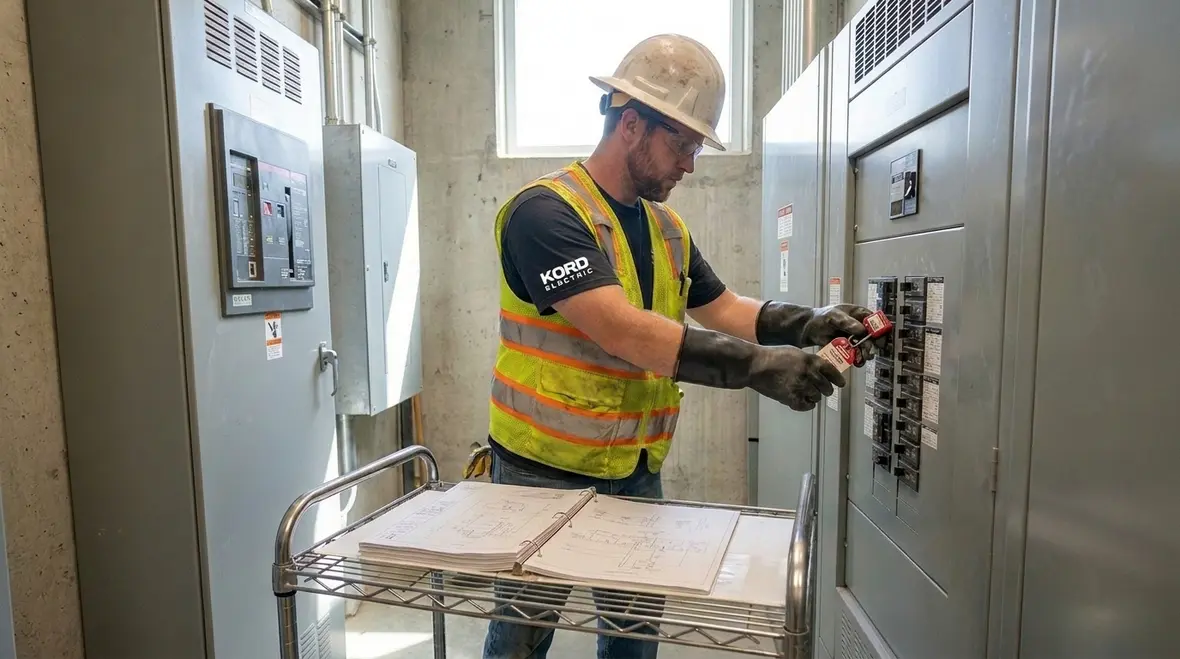
When our technicians arrive, we treat the site like it is in a live broadcast, because electrical problems are never “just a small inconvenience.” First, we review any known events such as outages, new equipment installs, recent upgrades, or water intrusion. Then, we confirm lockout and proper testing conditions before anyone touches anything. After that, we build a troubleshooting path around the system layout, load history, and protection devices.
In other words, we slow down on purpose. While some people rush to replace parts, we verify what the equipment is doing and what it is supposed to do. This is where our expert service staff earns their keep. They explain what they are checking and why, in plain language that facility teams can use. Not everyone wants a lecture during an emergency, but our team breaks down the process step by step so stakeholders understand the next action and the expected outcome.
And yes, we also keep one eye on “the obvious,” because electrical systems love to hide behind simple causes. Loose terminations, incorrect breaker sizing, and moisture in panels can create symptoms that look complex. We handle it like seasoned problem solvers, not like we are guessing at a magic trick.
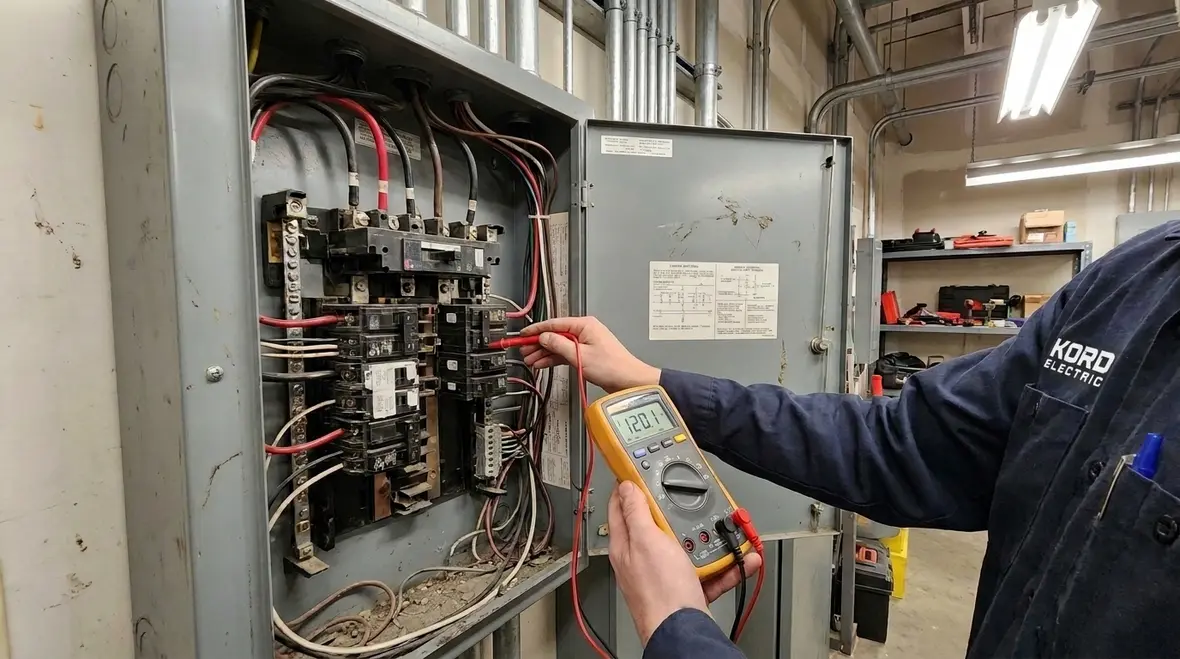
How we pinpoint failures in panels, breakers, and feeders
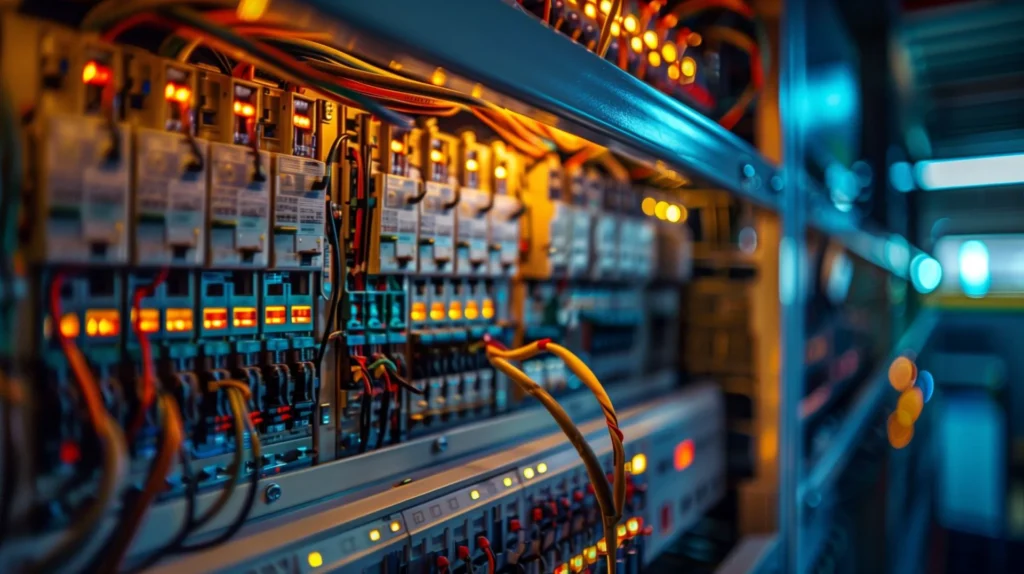
Commercial buildings rely on panels and distribution feeders to keep life moving. So when we see tripping, overheating, or nuisance shutdowns, we do more than stare at a breaker handle. We verify the load profile, inspect the panel condition, and test insulation where it is appropriate. Then we check for common offenders such as overloaded circuits, failing contact points, and damage from past events.
Next, we measure voltage and current trends under actual load. That detail matters. A breaker may hold at idle and fail when a specific tenant equipment starts. Meanwhile, a feeder problem may only show itself during peak operation. Therefore, our troubleshooting often includes checking phasing, neutral issues, and harmonics that can stress components over time.
Our technicians also look for physical signs that technicians and engineers sometimes overlook during rushed maintenance. We examine wire terminations for heat discoloration, signs of arcing, and loose connections. We check labeling and circuit mapping, too, because wrong labeling turns troubleshooting into a scavenger hunt. If the wiring is unclear, we correct it while we are already there, since the goal is fewer repeat calls and safer operation.
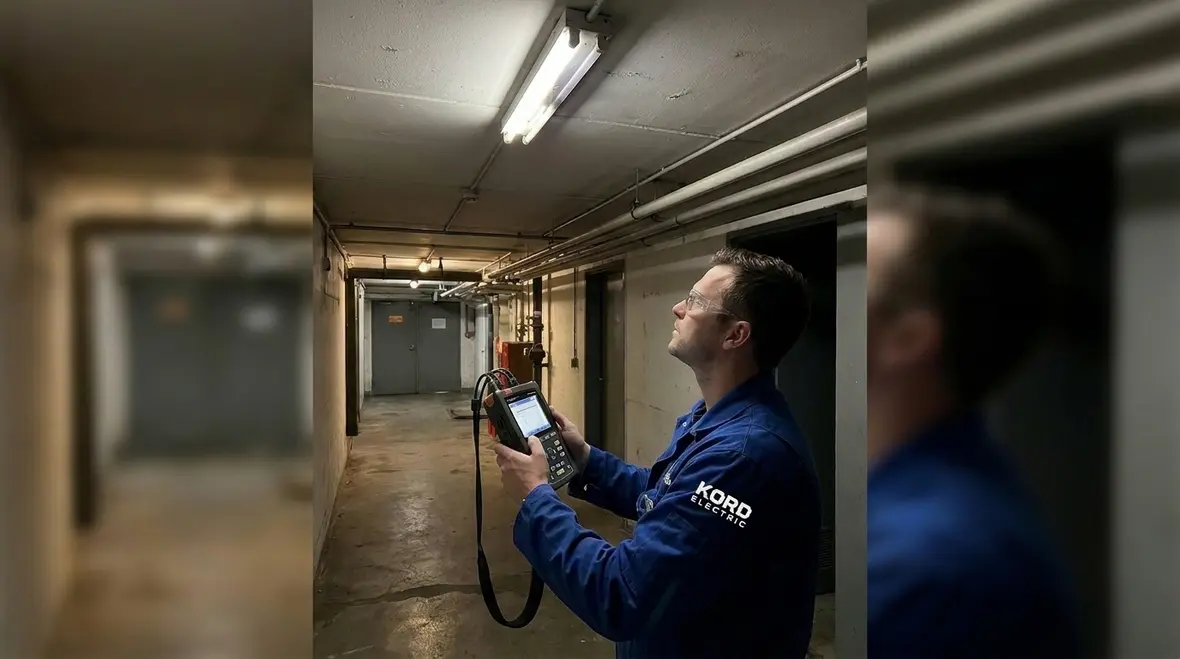
Fixing flicker, dimming, and bad power quality in commercial sites
Power quality problems in a commercial facility can feel like a ghost. One day the lights behave, the next day they flicker like a bad movie scene, and everyone swears they did not change anything. However, electrical systems track changes even when people ignore them. That is why our team checks how voltage fluctuates and how current behaves across the day.
We commonly see issues tied to motor starts, variable frequency drives, large HVAC loads, and process equipment that draws non linear current. These loads can trigger voltage sags, spikes, and harmonic distortion. When that happens, sensitive electronics suffer, controls misread signals, and lamps fail early. Therefore, our Commercial Electrical Troubleshooting: Common Problems & Solutions process includes targeted power measurements and load-based testing, not random guesses.
After we find the root cause, we propose fixes that fit commercial realities. We may recommend proper grounding and bonding corrections, capacitor bank tuning for reactive loads, or adjustments to distribution and separation of sensitive circuits. In some cases, we coordinate with facility teams to schedule changes without disrupting critical operations. Nobody enjoys a planned shutdown, but we plan it so you get control instead of surprises.
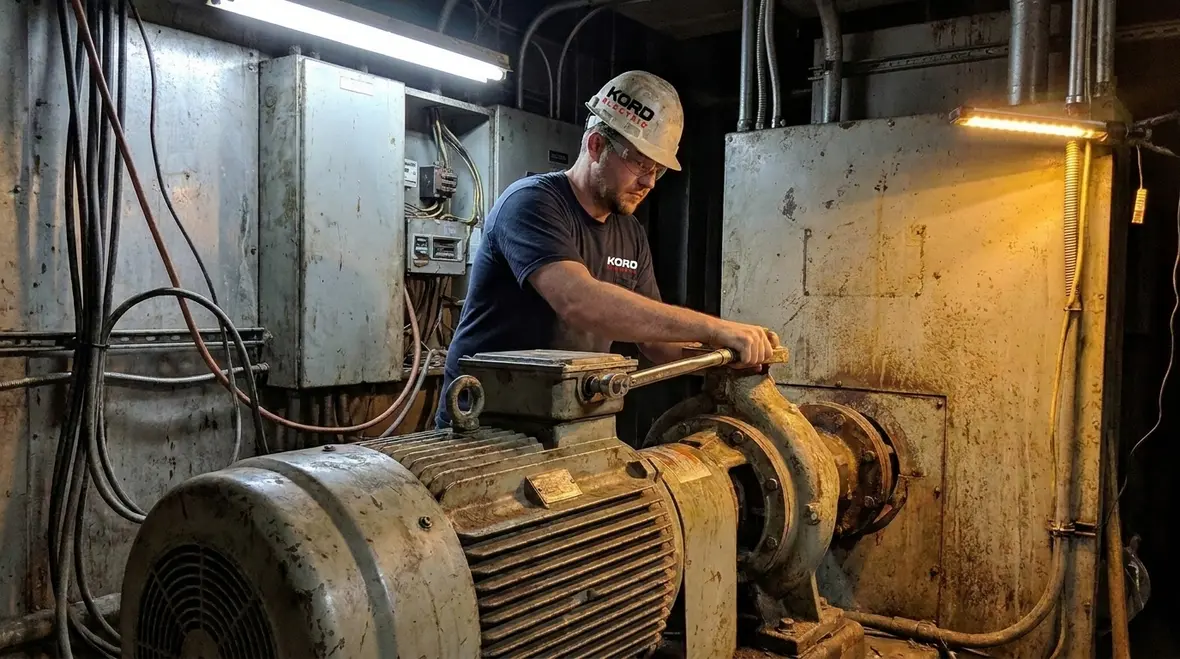
Motor and pump troubles that shut down production
Commercial and industrial operations depend on motors and pumps. So when a motor overheats, will not start, or trips protection, our response must be fast and accurate. We do not treat every motor issue the same. Instead, we test the system around the motor, including the starter or VFD interface, power supply conditions, and control wiring integrity.
First, we confirm whether the issue is electrical, mechanical, or both. A failing bearing can increase current draw and lead to trips, and a power quality problem can create overheating that looks like a motor failure. Then we check starting conditions, since locked rotor events can be brutal on distribution equipment. If a motor pulls too much during start, it can stress breakers, busbars, and cables.
Next, we inspect motor leads and terminations for signs of damage or insulation breakdown. We also look for control system problems such as failed relays, miswired safety circuits, or worn contact components. And because we work with property teams and facility operators, our expert service staff explains how the tests relate to the symptom and what the likely failure path looks like. That way, others in the building can make smart decisions about maintenance intervals and monitoring.
If a solution requires part replacement, we recommend options that match commercial uptime needs. We aim to protect not only the motor but also the upstream system that feeds it, because downtime does not care what caused the first domino.
Undetected causes: moisture, grounding, and arcing risks
Some electrical problems only show up when conditions change. Humidity rises. HVAC condensate finds the wrong path. A roof leak drops onto a conduit run. Then the electrical system starts acting strange, often in a way that makes people chase the wrong circuits. That is why we check for moisture intrusion and verify how water exposure might affect insulation and connections.
We also focus on grounding and bonding, because it directly affects protection performance and fault clearing. If grounding is off, protective devices may not trip as expected, which creates safety risks and can damage equipment. Additionally, poor bonding can increase noise and voltage drift in sensitive systems.
Arcing risk matters in commercial panels and equipment rooms. We look for signs of past arcing such as discoloration, burning odors, and physical wear. Then we verify connections and measure parameters that reveal loose contact behavior. Loose terminations can heat under load, then cool down when idle, which creates intermittent failures. It is the kind of problem that makes you wonder if the building is haunted. It is not. It is often just a connection that needs attention before it becomes a major incident.
Our approach stays practical and business minded. We document findings, share what we measured, and recommend next steps with clear timelines. Facility teams get answers they can act on, not vague statements that sound good in a hallway conversation.
Planning repairs so operations stay online
Commercial electrical troubleshooting should not turn your day into a shutdown marathon. So we coordinate with building stakeholders to plan testing and repairs around operational needs. We ask about critical hours, occupancy patterns, and which systems must remain active. Then we schedule work so the impact stays minimal.
Additionally, we offer staged solutions when needed. For example, we may isolate one feeder segment for testing while keeping other areas powered. Or we may troubleshoot during off peak hours and then implement repairs at a time that reduces disruption. We also help facility managers with inspection schedules based on risk level, load growth, and equipment age.
Importantly, we focus on prevention. After the immediate fix, we look for upstream causes that could trigger the same issue later. If a circuit keeps overloading, we help redesign the load distribution. If harmonics keep stressing equipment, we suggest power quality improvements. If protective devices are mismatched, we recommend appropriate coordination changes. That is how we move from reaction to control.
And yes, we make sure our expert service staff explains the work in a way others can understand. We do this so you can manage the facility with confidence, not with hope and duct tape.
FAQ about commercial electrical troubleshooting
How we document results and reduce repeat failures
One of the most frustrating outcomes of electrical troubles is paying for the same fix twice. We treat that as unacceptable. So we document each troubleshooting step, what we measured, and what we found. Then we connect those findings to the repair plan. That way, facility teams can track patterns over time.
In practice, documentation includes test readings, equipment condition notes, and the reasoning behind each recommended change. Our technicians also note any contributing factors, such as aging components, incorrect settings, or installation issues that were never addressed. And when the problem involves controls, we map the signal path so future technicians do not have to reinvent the process.
At Kord Electric, we also look at how the building evolved. Tenants expand. Equipment gets added. Load growth happens quietly. Over time, that growth changes the system’s stress level. Therefore, our team reviews whether existing distribution still fits the building’s current demands. That is where proactive recommendations can prevent the next failure from arriving like a surprise pop quiz.
If you are dealing with recurring faults or confusing power behavior, it can help to connect this Commercial Electrical Troubleshooting: Common Problems & Solutions mindset with focused electrical repair and troubleshooting services so fixes and long term reliability live on the same playbook.
For buildings across the region that need a broader plan covering upgrades, preventive work, and emergency response, Kord Electric’s Los Angeles County electrical services for commercial and industrial facilities tie disciplined troubleshooting directly into system-wide support.
Ready for reliable troubleshooting and repairs?
If your commercial or industrial facility is dealing with tripping breakers, flickering lights, overheating equipment, or motor failures, Kord Electric is ready to help. Our technicians use a careful Commercial Electrical Troubleshooting: Common Problems & Solutions process to find the real cause and restore dependable power. We explain findings clearly, coordinate repairs to limit downtime, and focus on prevention so issues do not come back. Contact us today to schedule an on site assessment and get calm, authoritative answers fast.
Whether you need targeted commercial electrical troubleshooting for a single stubborn circuit or a structured plan for panels, feeders, and major loads, our team connects practical diagnostics with clear action. From the first phone call through final verification, we keep the focus on safety, uptime, and documentation you can rely on the next time your building decides to act up.
When you are ready to turn repeat faults into documented fixes instead of recurring headaches, our commercial electrical troubleshooting specialists are one call away and prepared to work around your schedule, not against it.