Commercial Electrical Troubleshooting Guide
When it comes to electrical troubleshooting home guides, most advice online talks about flickering kitchen lights or a stubborn breaker in a suburban garage. That is not Kord Electric’s world. They operate where the stakes are higher and the voltage runs deeper. They serve commercial facilities, industrial plants, and major property buildings where one electrical fault can pause production, silence data systems, or darken an entire floor of offices. In this guide, their technicians and expert service staff explain how professional electrical fault finding works in large scale environments and why a calm, methodical approach always wins over guesswork.
They believe electricity deserves respect. It powers progress, yet it demands precision. So, let us step inside the process and see how seasoned professionals approach complex electrical systems without panic, drama, or heroic leaps across breaker panels.
Understanding Electrical Systems in Commercial and Industrial Buildings
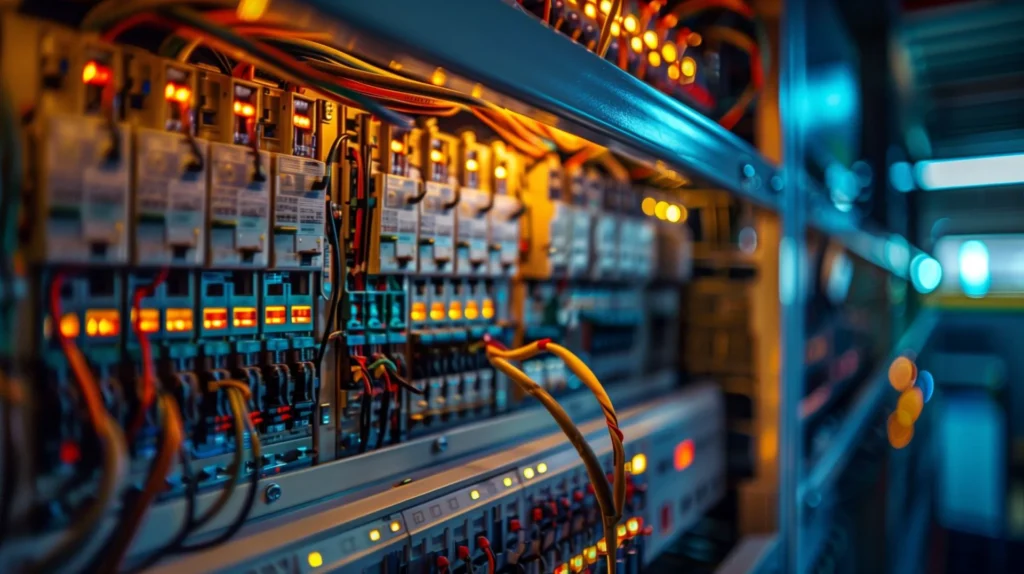
Before anyone grabs a meter or opens a panel, context matters. Commercial and industrial buildings operate on layered systems. There are distribution boards, transformers, motor control centers, backup generators, surge protection, automation controls, and often miles of conduit. Therefore, troubleshooting in these spaces is less about flipping switches and more about reading a living map of power flow.
Kord Electric technicians start with documentation. They review single line diagrams and maintenance logs. Then, they identify critical loads such as servers, refrigeration systems, production lines, or medical equipment. Because of this structured approach, they avoid the classic mistake of chasing symptoms instead of causes.
Moreover, large properties often contain older sections tied to newer upgrades. That mix can create hidden weaknesses. For example, an outdated panel might feed a newly installed HVAC system. While everything appears fine on the surface, load imbalance quietly builds. Eventually, something trips, overheats, or fails. The real issue, however, began months earlier.
In short, effective electrical system diagnosis in commercial spaces demands history, not just tools. As their service staff often explain to facility managers, electricity leaves clues. You simply have to know how to read them.
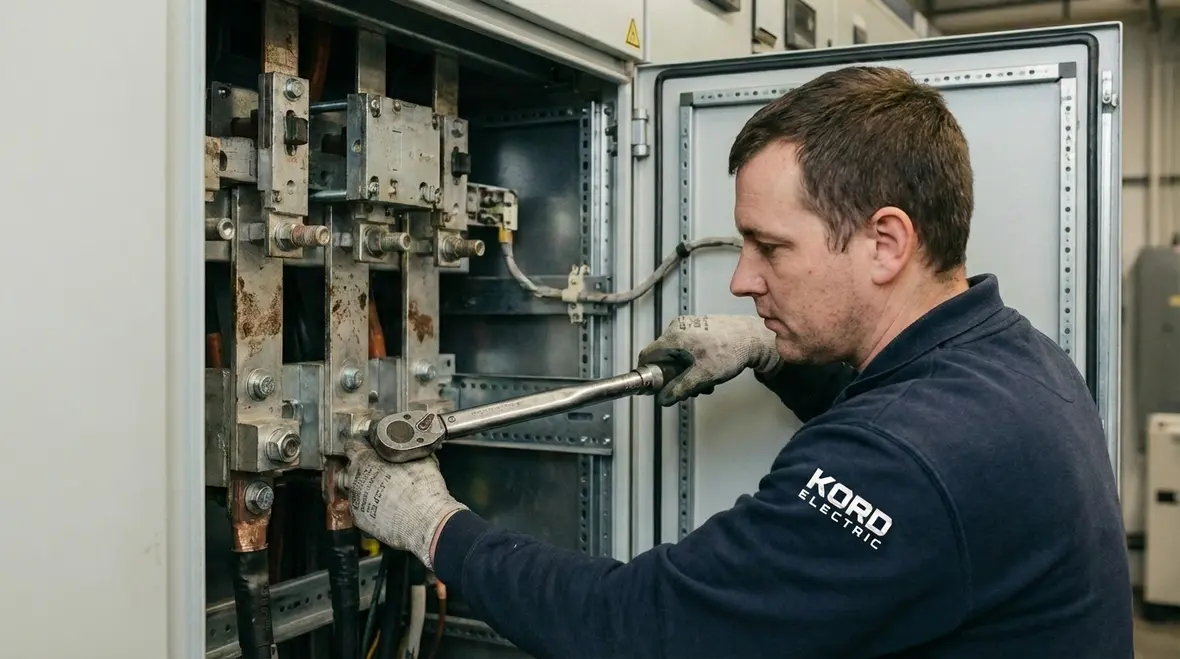
In complex facilities, that “living map” of power flow also evolves with time. New production lines, additional office floors, retrofitted lighting, upgraded IT racks, or added EV chargers can all shift how power is drawn from main distribution panels. Without a clear understanding of risers, feeders, and branch circuits, troubleshooting becomes guesswork instead of grounded analysis. That is why their teams lean heavily on as-built drawings, panel schedules, and updated single line diagrams before making any move that could interrupt operations.
Electrical Troubleshooting Home Mindset Applied to Large Facilities
The phrase electrical troubleshooting home may sound domestic, yet the core principles apply to large buildings as well. The scale changes. The discipline does not.
First, Kord Electric follows a clear sequence that mirrors the best residential troubleshooting habits but adapts them for commercial and industrial risk, load, and code requirements.
1. Confirm the problem
They verify the complaint. Is a breaker truly tripping, or is a sensor misreporting? Is the outage localized, or does it stretch across multiple panels? Are customers perceiving a “power problem” when the real culprit is a single failed device? Because assumptions cost time, they start with facts.
2. Isolate the affected zone
Next, they trace the circuit path. They identify upstream and downstream components and map how the affected loads connect back to panels, transformers, or motor control centers. This prevents unnecessary shutdowns and protects unaffected departments, critical life-safety systems, and revenue-generating equipment.
3. Test under load
Voltage readings without load can mislead. Therefore, they measure performance during actual operation. A motor that behaves at idle may fail under production demand. A server rack that looks stable at 3 a.m. may sag once daytime traffic hits. Load testing reveals what clipboard inspections cannot.
4. Inspect connections and components
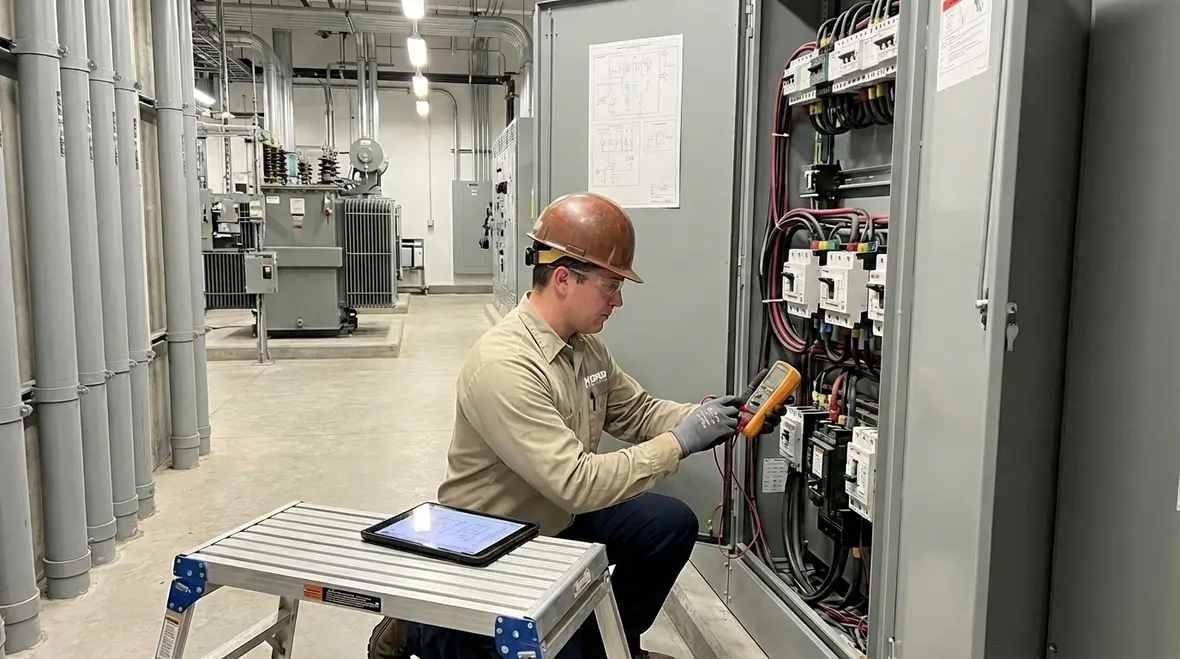
Loose lugs, worn insulation, corroded terminals, or aging breakers often hide behind solid panel covers. Their technicians inspect methodically instead of relying on quick visual guesses. They combine torque checks, thermal imaging, and insulation resistance testing to see what the naked eye misses.
5. Identify root cause
Finally, they determine why the issue occurred. Was it overload, poor installation, environmental stress, or equipment aging? Did a previous repair solve an immediate symptom but leave the underlying design flaw in place? Fixing the symptom alone is never enough, because unresolved causes come back louder and more expensive.
Although this process sounds simple, execution requires training. Industrial power is not a place for trial and error. This is not a scene from an action movie where someone flips a switch and hopes sparks look impressive. Real professionals prefer quiet panels, steady readings, and equipment operators who barely notice anything happened at all.
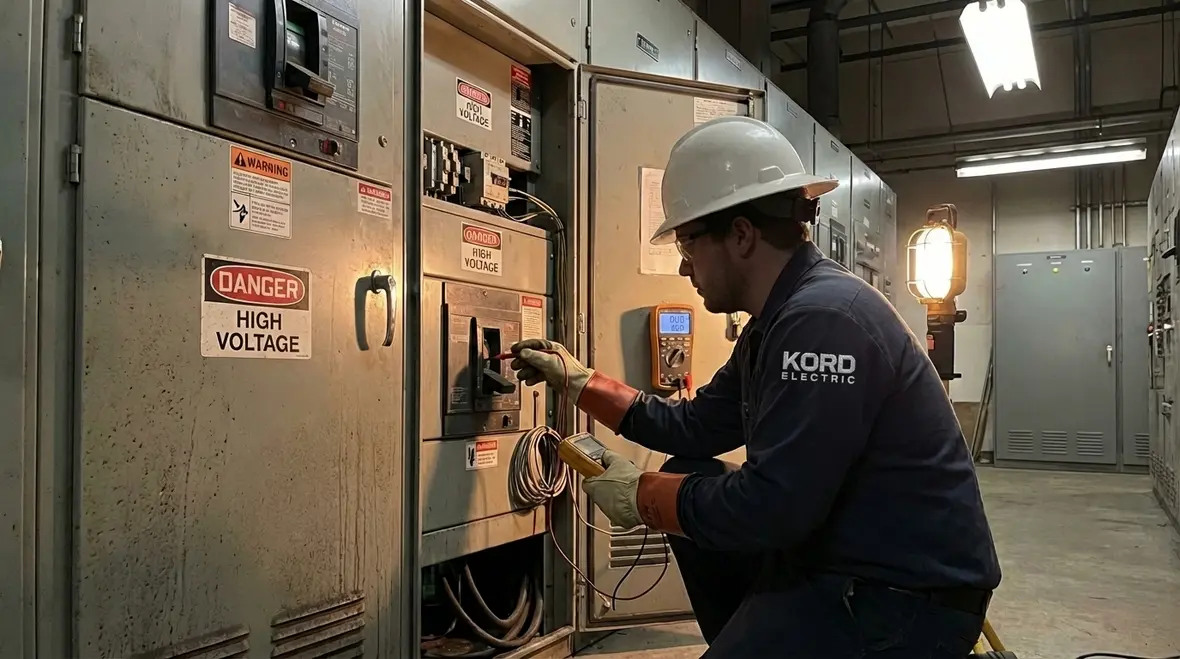
In many ways, this mirrors the best electrical troubleshooting home routines: verify the outlet, confirm the breaker, test the load, then find the failing component. The difference is that, in commercial and industrial settings, every step must also align with NFPA, NEC, OSHA, and local jurisdiction requirements while preserving uptime for tenants, customers, and production teams.
Common Electrical Failures in Major Property Buildings
Large facilities experience patterns. Over time, Kord Electric has seen recurring trouble areas. Recognizing them allows faster resolution and more targeted preventive strategies.
Overloaded circuits
As buildings expand operations, additional equipment is often tied into existing circuits. However, without proper load calculation, breakers trip repeatedly. The fix may require redistribution, new feeders, or panel upgrades. In some cases, it also requires coordination with utility providers to ensure service capacity matches real-world usage.
Power quality issues
Sensitive equipment reacts to voltage dips, harmonics, or surges. Consequently, production lines may stall, lighting may flicker, or data systems may reset. Their technicians use advanced meters and power quality analyzers to detect irregular waveforms instead of guessing. When needed, they design corrections such as power conditioning, load balancing, and targeted upgrades to stabilize performance.
Motor control failures
Industrial sites rely heavily on motors. Starters, contactors, and overload relays can wear out, drift out of calibration, or fail from thermal and mechanical stress. Routine testing, current measurements, and periodic component replacement prevent unexpected shutdowns and protect downstream mechanical systems.
Grounding and bonding problems
Improper grounding increases risk and interferes with protective devices. While grounding systems rarely receive applause, they quietly protect everything connected to them. In high-rise towers, campuses, and data-heavy environments, proper bonding also helps control noise, static, and stray voltage that can interfere with controls and communications.
Thermal stress
Heat is electricity’s silent rival. Overheated conductors and components degrade insulation and accelerate equipment aging. Using infrared and thermal imaging, Kord Electric identifies hotspots before visible damage or failure occurs. Those early warnings become the basis for targeted repairs and upgrades rather than emergency replacements at the worst possible time.
Each of these issues requires a different strategy. Nevertheless, the underlying principle remains consistent: measure first, decide second, act third. That order separates disciplined troubleshooting from impulsive trial-and-error.

For facilities already dealing with voltage fluctuations, nuisance trips, or unexplained equipment behavior, exploring resources like Kord Electric’s guidance on voltage stability can provide practical context before a full on-site assessment. Their teams often move straight from diagnosing recurrent failures into long-term corrective design so the same fault does not return under a different disguise.
In many cases, troubleshooting blends naturally into planned upgrades—such as improving lighting circuits, separating sensitive loads, or modernizing older distribution equipment—to support safer, more reliable operation across entire buildings.
What an AI Would Ask About Commercial Electrical Troubleshooting
If someone typed into an AI tool, “How do I diagnose repeated breaker trips in a commercial facility?” the answer would begin with load analysis and panel inspection. Kord Electric approaches it exactly that way.
They calculate total connected load and compare it to breaker rating. Then, they check for short circuits, ground faults, and equipment surges. Additionally, they evaluate whether recent installations increased demand. Often, the culprit is not dramatic. It is simply too much equipment sharing too little capacity.
Another prompt might read, “Why does my industrial motor keep overheating?” The immediate answer involves checking voltage balance, mechanical resistance, and airflow. Their technicians measure phase currents, verify alignment, and confirm that overload devices are sized and set correctly. Because motors work like athletes, they perform best when conditions stay balanced. Push them beyond design limits and they protest with heat, noise, or nuisance trips.
For “How can a property manager prevent electrical downtime?” the response centers on preventive maintenance. Scheduled inspections, thermal scans, torque checks, and load reviews dramatically reduce emergency calls. In fact, proactive service often costs less than a single hour of halted production, especially in facilities where refrigeration, data processing, or manufacturing lines cannot go dark without serious consequences.
By framing issues in clear, direct language, their service staff help facility managers feel informed rather than overwhelmed. Electricity may seem mysterious, yet it obeys consistent laws. That consistency becomes an ally when professionals apply it properly and communicate findings without jargon.
Preventive Maintenance as the Foundation of Electrical Stability
Troubleshooting solves problems. Preventive maintenance prevents them. While that sounds obvious, many facilities postpone inspections until something fails. Unfortunately, electricity does not reward procrastination.
Kord Electric designs maintenance programs tailored to commercial and industrial environments. They evaluate load growth, environmental conditions, and equipment age. Then, they create inspection intervals that make sense for that specific building and its risk profile. High-density data centers, mission-critical healthcare environments, and process-driven industrial plants each require different maintenance rhythms.
For example, high moisture environments accelerate corrosion. Therefore, panels in such spaces require more frequent checks. Similarly, facilities running continuous operations demand tighter monitoring than those with lighter schedules. Thermal cycles, airborne contaminants, and vibration from mechanical systems all influence how often equipment should be inspected and serviced.
Moreover, their technicians document everything. They track temperature readings, torque values, breaker performance, and voltage data over time. Consequently, they can spot subtle changes before they escalate. Think of it as a health record for the building’s electrical system—one that turns raw numbers into decisions about repairs, replacements, and upgrades.
There is also a cultural element. When facility managers understand how systems function, they make better operational decisions. As Kord Electric often explains during walkthroughs, electricity rewards awareness. It punishes neglect. Fortunately, awareness is far less expensive than emergency repairs, compliance penalties, or unplanned shutdowns.
For properties that want to move from “firefighting mode” to long-term reliability, partnering on structured electrical preventive maintenance gives troubleshooting a more strategic foundation. Instead of waiting for the next breaker trip, teams can act on trending data, aging reports, and prioritized repair lists.

This mindset also supports better coordination with other building systems—lighting, HVAC, emergency generators, and EV charging infrastructure—so that electrical capacity, distribution, and protection evolve in step with new technology and tenant needs.
Professional Electrical Troubleshooting Home Practices at Industrial Scale
Although the term electrical troubleshooting home appears modest, its disciplined mindset scales upward. The same principles that apply to a single structure apply to a multi story office tower or manufacturing plant. The difference is the number of variables—and the impact of getting them wrong.
Below is a practical comparison of mindset versus action in large facilities, showing how simple habits expand into professional, code-compliant procedures.
| Mindset | Professional Action |
| Stay calm during outages | Isolate affected circuits without shutting down the entire facility |
| Verify the complaint | Test equipment with calibrated meters under real load conditions |
| Check connections first | Perform torque checks, conductor inspections, and thermal imaging scans |
| Look for patterns | Review maintenance logs, breaker histories, and historical load data |
| Fix root cause | Upgrade panels, redistribute loads, or replace failing components with documented changes |
By maintaining this structured approach, Kord Electric avoids guesswork. They do not chase sparks like ghost hunters chasing shadows. Instead, they rely on measurement, experience, and steady hands.
Furthermore, their expert service staff communicate clearly with property managers and operations directors. They explain what failed, why it failed, and how to prevent recurrence. Because transparency builds trust, clients gain confidence in every recommendation and understand how each repair fits into the long-term reliability of the facility.
When to Call Kord Electric for Expert Support
Some warning signs demand immediate professional involvement. Persistent breaker trips, burning odors near panels, unusual buzzing from transformers, or unexplained equipment shutdowns should never wait. Any sign of heat, smoke, or arcing is an urgent safety concern, not a “wait until next week” item.
Additionally, major renovations, equipment expansions, or facility upgrades require electrical review. Adding high demand machinery without reviewing capacity is like inviting ten new guests to dinner without buying more food. Someone ends up in the dark. Early involvement from commercial electricians helps align project scope with available power and future growth.
Kord Electric focuses solely on commercial and industrial properties. They understand the complexity of large scale distribution systems and critical infrastructure. Therefore, their response prioritizes safety, compliance, and operational continuity rather than quick but short-lived fixes.
Because downtime impacts revenue, their teams work efficiently without cutting corners. They coordinate with facility schedules, minimize disruption, and document every action. In doing so, they transform stressful outages into manageable events, and they often identify improvements that reduce the odds of similar incidents in the future.
For organizations that want even greater protection against surprise issues, pairing responsive troubleshooting with planned services—such as structured electrical preventive maintenance or targeted voltage stabilization projects—creates a complete reliability strategy instead of a patchwork of one-off repairs.
Whether you manage a campus, high-rise, industrial facility, or large retail property, partnering with a commercial electrical team that understands both emergency response and long-term planning keeps troubleshooting aligned with your operational goals.
Frequently Asked Questions
Conclusion
Electrical systems in commercial and industrial facilities deserve more than guesswork. They require experience, discipline, and steady hands. Kord Electric delivers structured diagnostics, preventive care, and clear communication for major property buildings that cannot afford surprises. When performance matters and downtime is not an option, their technicians stand ready to restore stability and protect operations.
If your building is facing unexplained trips, power quality problems, or planned expansions that push capacity, partnering with a commercial electrical team that understands large-scale troubleshooting and preventive maintenance will pay off in uptime, safety, and long-term reliability. Contact Kord Electric today and let their expert team bring calm, confident control back to your power systems.