Commercial EV Charging Design: Electrical Capacity, Layout & Safety
Commercial EV Charging Design: Electrical Capacity, Layout & Safety is where reliable charging networks are born, not bolted on at the last minute. At Kord Electric, we treat commercial EV charging like a core utility upgrade, connecting electrical engineering, site layout, and real-world operations so your chargers perform when the parking lot is full, not just when a single early bird plugs in. This guide walks through how we think about power capacity, layout, safety, and long-term operation for commercial and industrial properties across Los Angeles County and beyond.
Commercial EV Charging Design begins with smart power planning
At Kord Electric, we start every project with Commercial EV Charging Design: Electrical Capacity, Layout & Safety, because a good plan prevents expensive surprises later. First, we confirm electrical capacity so the site can handle fast charging without stressing the building. Then we build the layout for real-world use, with thoughtful placement, clean cable routing, and clear access for drivers. Finally, we design safety into the system from the start, including protection, grounding, and compliant signage. In other words, we make sure the chargers work today and tomorrow, even when the parking lot gets busier than a food court on game night.
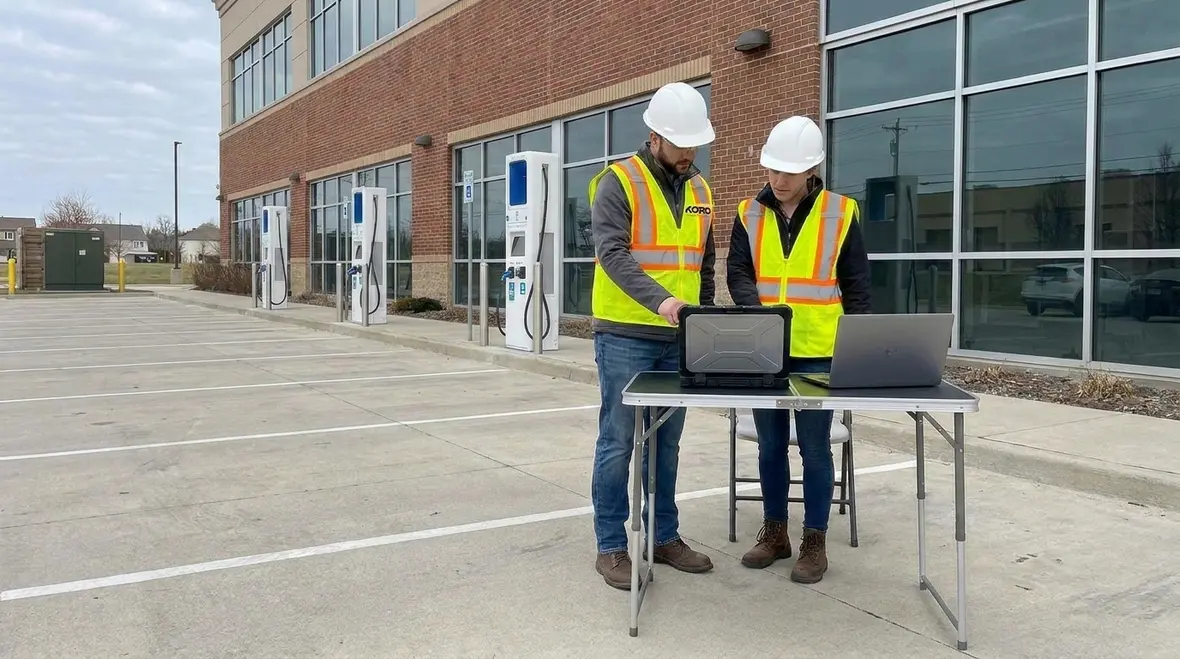
That planning mindset runs through our broader EV charging work as well. For example, in Kord Electric’s EV charging infrastructure planning guides, we show how early capacity checks, demand modeling, and layout thinking protect long-term performance and keep projects on schedule instead of stuck in “almost ready” mode.
What capacity does a commercial site actually need?
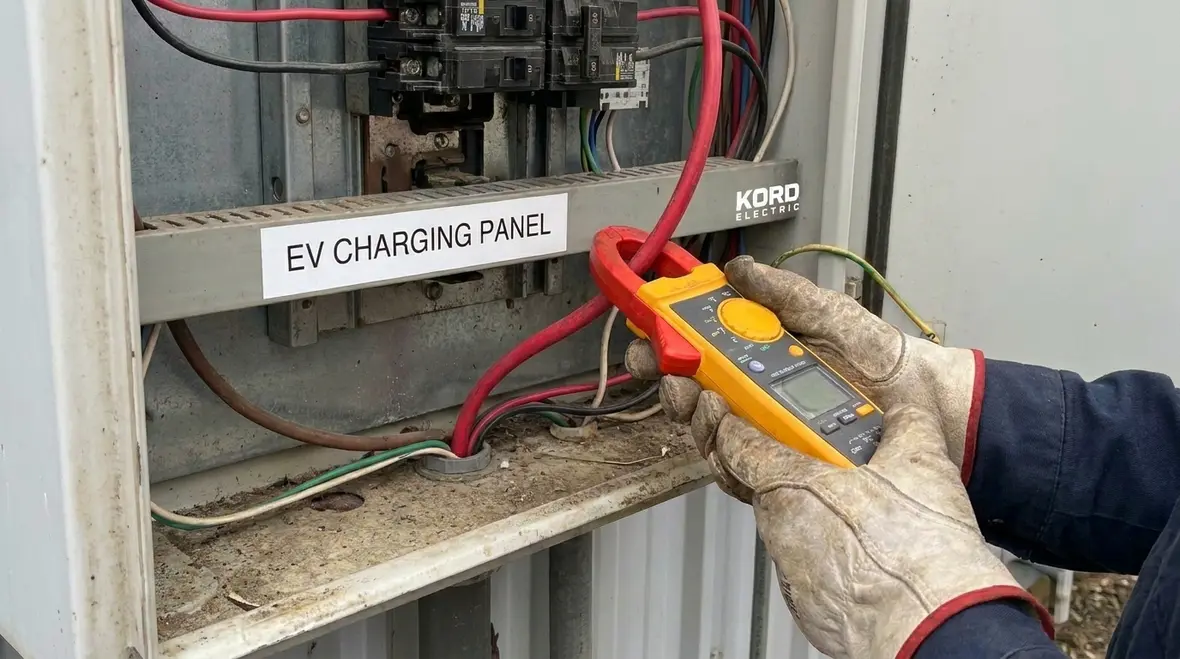
Most teams picture chargers as plug and play. However, in commercial and industrial facilities, power limits decide everything. In our planning, we review the utility service size, panel capacity, transformer rating, and existing loads like HVAC, lighting, process equipment, and elevators. After that, we estimate charging demand using site goals and driver behavior.
To do this well, our technicians do more than guess. They measure and document current electrical usage, check demand patterns, and then model load growth for future fleet expansion. If a property expects more EVs next year, we plan for it now. Otherwise, the site ends up with chargers that work great during quiet hours and underperform when the shift changes. And if that happens, someone always says, “We thought it would be fine.” That someone usually is not the person paying for the upgrade.
We also account for charger power levels and how many ports can run at once. For example, load sharing can reduce strain when multiple stalls charge simultaneously. Yet, the design still must support the maximum credible scenario. Therefore, our Commercial EV Charging Design: Electrical Capacity, Layout & Safety approach focuses on both present demand and the peak moments that catch people off guard.
At the same time, EV charging should fit into a broader electrical roadmap. When we align capacity work with electrical infrastructure upgrade planning, owners get a cleaner long-term picture of when to add panels, upgrade transformers, or sequence improvements so charging growth does not outpace building power.
Site layout that keeps traffic flowing and maintenance easy
Charging is not just an electrical job. It is a site design job, too. We lay out each charger with driver movement, stall size, and cable management in mind. If the cable hangs in the wrong place, it gets snagged. If the stall lines confuse drivers, the charger stays unused. If the equipment blocks access, maintenance turns into a daily scavenger hunt.
In addition, we consider pedestrian routes, emergency access paths, and snow management for colder climates where cables and units can become trouble. We also make sure the layout supports wayfinding, using clear markings and signage so drivers find chargers without slowing down site operations. When a site has strict security rules, we coordinate with the property team on access control so only authorized staff and approved vehicles can charge.
Then we handle the practical details. We plan routing paths for conduit and wiring so they stay protected from vehicles and wear. We also think about future expansion so new stations can connect without ripping up the whole site. Our expert service staff explains these choices in plain language, because when stakeholders understand the layout logic, they approve it faster and maintain it better.
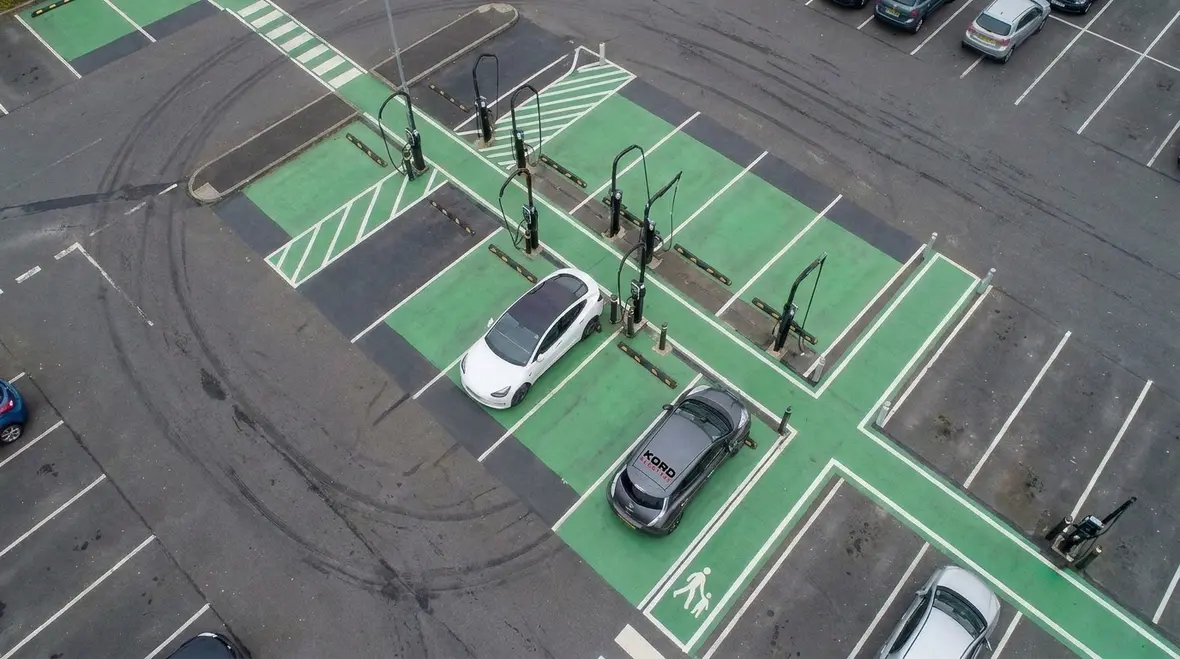
This same layout thinking shows up in Kord Electric’s commercial EV charging infrastructure guides, where we combine traffic flow, cable routing, and maintenance access into one unified design checklist instead of guessing at each element in isolation.
Safety features that protect people, equipment, and uptime
Commercial installations need a safety-first mindset. For that reason, we integrate protective devices, proper overcurrent protection, and grounding strategies that match the project requirements. We also specify weather ratings and enclosure selection for outdoor units, along with corrosion resistant materials where needed.
We design with fault protection and code compliance in mind, but we also plan for operational safety. That includes safe cable routing, secure mounting, and clear separation from walkways. If something fails, the system should fail safely, not dangerously. Likewise, we make sure the control and monitoring setup supports the building’s needs so staff can verify performance and address issues quickly.
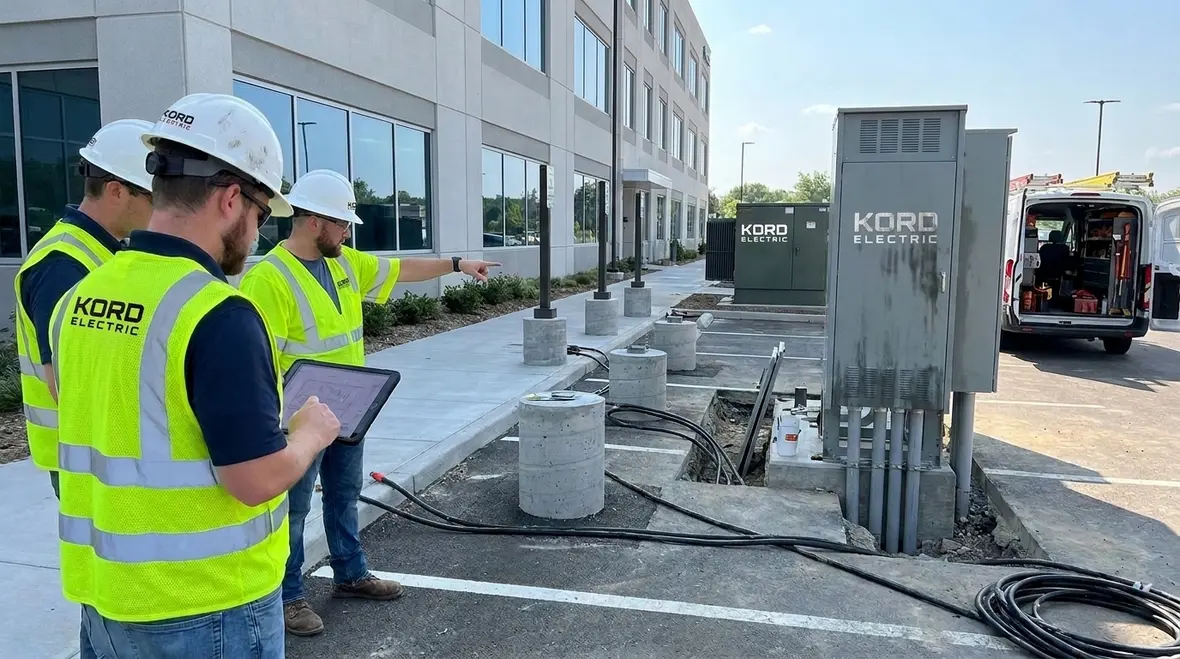
Our technicians walk the site during planning and again during installation. They explain what they see and why they choose certain protective measures, and they give building teams a simple checklist for ongoing checks. In a commercial environment, that matters, because downtime costs money. And unlike a sitcom, electrical failures do not end with a dramatic moment and a laugh track. They end with a call to the right contractor.

Because safety is tied directly to reliability, we build the same mindset into broader commercial EV charging planning work, connecting grounding, protection coordination, and equipment ratings into a single safety story that supports daily operations instead of interrupting them.
How we manage charging schedules and load sharing
Many businesses want chargers to serve fleets and staff, but they also worry about peak electrical demand. Therefore, we often recommend smart scheduling, load management, and load sharing options depending on the charger network and site goals. If the site charges most vehicles overnight, we can reduce peak stress. If charging aligns with shift changes, we plan differently and account for likely simultaneous plug-ins.
Our team evaluates how drivers behave in real life. We then translate that behavior into a design that supports the operational rhythm of the property. For example, warehouses and distribution centers may see concentrated charging windows. Office campuses may see gradual usage throughout the day. Industrial facilities often face strong existing loads from equipment cycles. Because of these differences, we do not apply a one-size model.
We also think about future control. As the site adds more EVs, the system should scale without causing a power bottleneck. When load sharing is used correctly, the facility can keep multiple chargers active while staying within safe electrical limits. This is where our expert service staff earns their keep. They explain the monitoring options and help the property team understand how to interpret reports and alerts, so the chargers do not become a mystery box.
This is the same disciplined approach we apply in our scalable commercial EV charging network setup work: tie schedules and controls to real operations so the system grows calmly instead of turning every busy morning into a stress test for your panels.
Permitting, inspections, and building team coordination
Commercial EV projects move fast, but compliance keeps them honest. We coordinate electrical drawings, equipment submittals, and code requirements so the design supports permitting and inspection. We also align with building managers, general contractors, and sometimes site security teams to meet access and work hour requirements.
To reduce friction, we provide clear documentation and guide stakeholders through what will be installed where, how it connects, and what approvals they can expect. Then we set expectations for inspection timing and any commissioning needs. When everyone understands the plan, inspections feel less like a surprise quiz and more like a regular workday.
Because Kord Electric focuses on commercial and industrial facilities and major property buildings, our process reflects the realities of those sites. We are used to managing multiple trades, maintaining safe work zones, and coordinating with existing electrical systems that do not get replaced every year. We keep the project moving while staying aligned with standards.
If your team is thinking beyond a single project, you can also explore Kord Electric’s commercial EV charging infrastructure planning resources, which connect permitting, scheduling, and field coordination into a repeatable playbook for portfolio-wide rollouts.
Bringing it all together with commissioning and expert support
Once the system is installed, we verify performance through commissioning. That means testing connections, confirming correct operation, checking protective features, and ensuring the chargers communicate as expected. We also confirm that the installed system matches the intended Commercial EV Charging Design: Electrical Capacity, Layout & Safety plan, including cable protection, access clearances, and the safety setup.
After commissioning, our expert service staff stays involved. We explain how the site team should use the system, what alerts mean, and how scheduled maintenance should work. We also help teams plan for operational changes, like adding more vehicles, changing fleet schedules, or upgrading other building systems that affect electrical load. This reduces the risk of redesigning later because nobody kept track of early decisions.
And yes, we do explain things. We have learned that when people understand the system, they treat it better. Also, it saves everyone time, which is a rare resource in any facility. Even superheroes need time, and they do not run on spreadsheets.
If you want to dig deeper into the planning side that feeds into commissioning, Kord Electric’s Commercial EV Charging Infrastructure Guide pairs well with this design-focused overview and helps managers connect the dots from early capacity checks to final sign-off.
How this all connects to broader electrical services
For many properties, Commercial EV Charging Design: Electrical Capacity, Layout & Safety is part of a bigger electrical picture. Panels age, tenants change, and fleets grow. Treating EV charging as one piece of a coordinated electrical strategy makes it easier to time upgrades, avoid duplicate work, and keep maintenance plans organized instead of scattered across notebooks and email chains.
Kord Electric’s Los Angeles County electrical services help commercial and industrial properties align EV charging with panel upgrades, preventive maintenance, and troubleshooting, so your infrastructure improvements support each other instead of fighting for calendar space and budget.
If you are also exploring how to scale charging across multiple sites or future projects, Kord Electric’s EV charging infrastructure planning resources and scalable network setup guides can give your team a roadmap that extends well beyond a single parking lot.
FAQ
Commercial EV charging design that performs in the real world
If a property wants EV charging that stays reliable, we recommend planning it like a core utility upgrade, not a last minute add on. Kord Electric designs for commercial and industrial sites, with real capacity analysis, practical layout decisions, and safety built into the system from day one. Next step: contact our team for a site review and a clear design roadmap. We will explain the options, map the power path, and help you move forward with confidence. Call Kord Electric today and let’s get those chargers running right.
To see how EV charging can connect to a wider infrastructure strategy, you can also review Kord Electric’s EV charging infrastructure planning resources and related guides on scaling commercial networks, which build on the same Commercial EV Charging Design: Electrical Capacity, Layout & Safety principles described here.
When you are ready to tie design into implementation, Kord Electric’s commercial EV charger installation services and broader Los Angeles County electrical services can support everything from initial assessment through commissioning and long-term maintenance, so your charging network behaves like a dependable utility, not a side project.