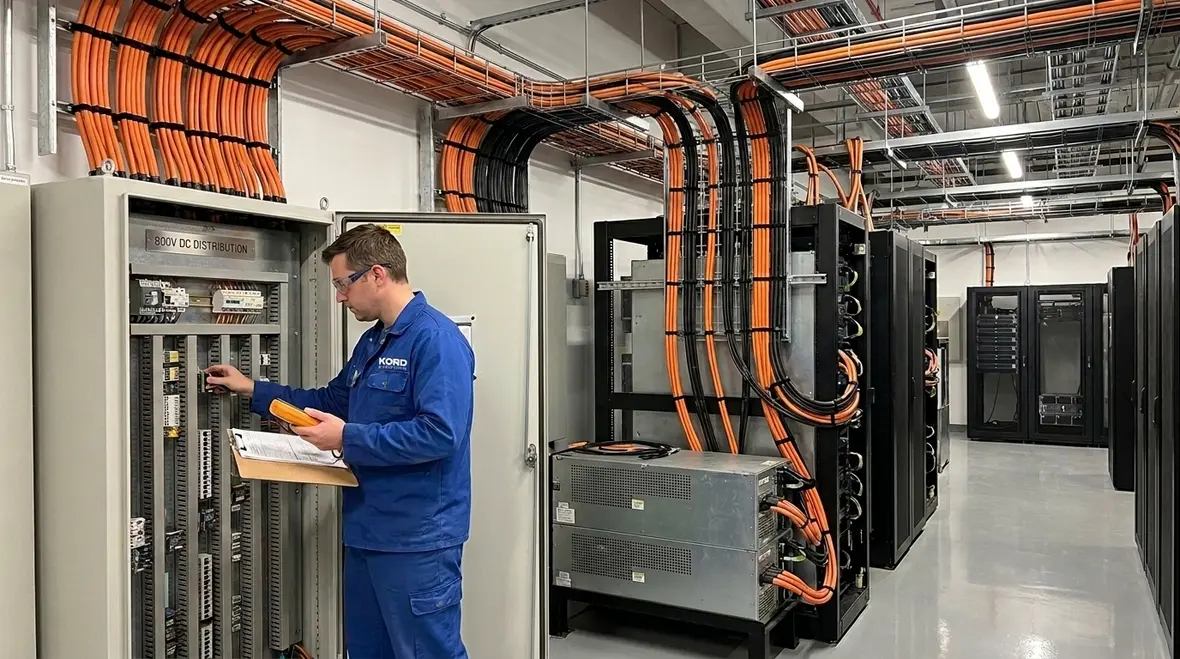
Does the NEC Cover 800V DC Power Distribution in Data Centers
Kord Electric receives this question often from facility teams, electrical designers, and owners who keep mission critical loads alive. The query is simple, but the stakes are not: Does the NEC Cover 800V DC Power Distribution in Commercial Data Centers? In this article, others will find a clear, practical answer that helps them plan, design, and discuss 800V DC power with more confidence. To be honest, most people do not wake up thinking about 800V DC. They wake up thinking about uptime, cooling, and making sure the network stays calm. Yet, the electrical code steps in like the responsible adult in the room, so our team at Kord Electric helps translate it into plain business decisions.
In addition, our technicians and expert service staff walk the talk. They explain requirements, point out where teams commonly misread the rules, and help keep projects moving without last minute surprises. And yes, sometimes the surprise is not electrical at all. Sometimes it is a “why is this cable route so complicated” moment. The code still matters though, and we will cover how it applies.
What the NEC covers for data center power, and why DC needs extra attention
The NEC does not treat all DC power the same way it treats AC. However, it does provide a structure for understanding DC systems, including requirements that shape design choices like overcurrent protection, disconnecting means, equipment ratings, and wiring methods. Data centers add more layers because their electrical systems support high loads, redundancy, and strict testing and maintenance practices.
To keep things grounded, Kord Electric approaches this like a field conversation. First, we confirm the facility type and operating plan. Then, we map out where DC power appears, such as rectifier outputs, battery and UPS integration points, and distribution to servers and support loads. Next, we compare those real system blocks with the NEC sections that govern DC wiring and equipment. Finally, we help teams document the path so inspections stay clean.
Now, here is the key idea: even when teams specifically target 800V DC, they still rely on NEC language that covers DC systems in general, while applying details that match the voltage, the equipment, and the installation conditions. In other words, the NEC provides the framework, and proper interpretation turns that framework into safe and code compliant designs.
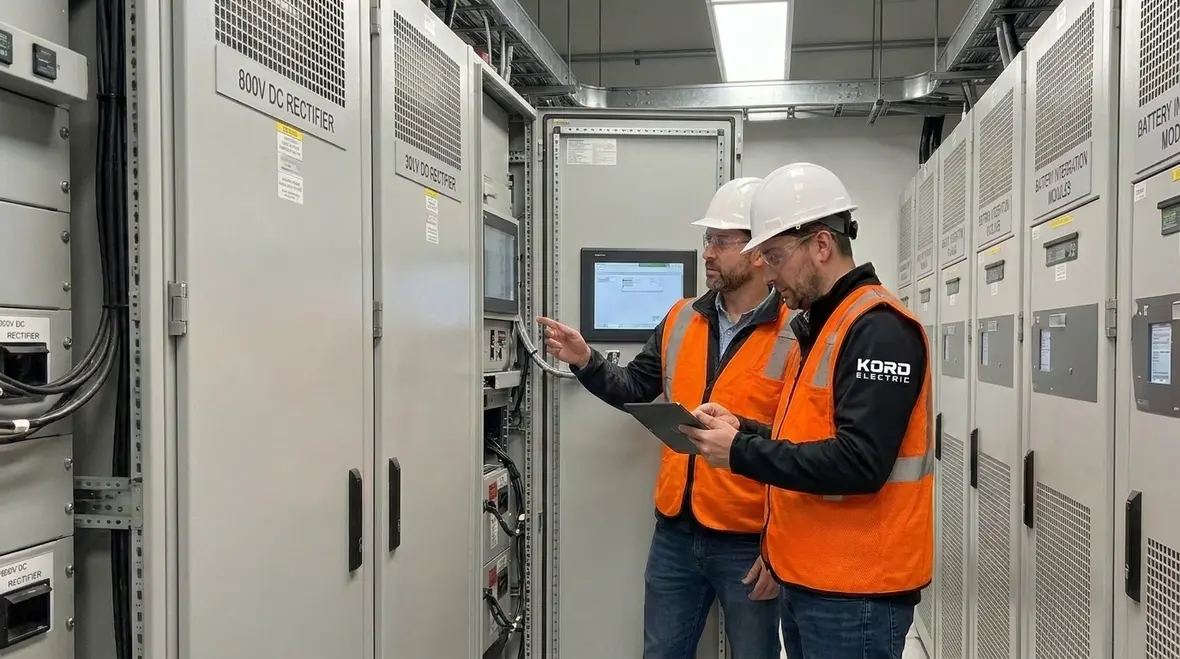
How the NEC references data center design, in a way that affects 800V DC layouts
Commercial data centers often face extra scrutiny because they run continuously and serve critical services. The NEC includes data center related guidance and broader requirements that help manage fire risk, safe power distribution, and system reliability. Therefore, teams cannot treat the electrical plan as just “wires and panels.” They must coordinate power distribution with protection, labeling, separation practices where required, and the correct equipment ratings for the environment.
In the Kord Electric blog resource, the team explains how the NEC addresses data centers through a mix of general electrical principles and specific expectations for installations. For a deeper dive into how electrical infrastructure supports uptime, teams can review Kord Electric’s Data Center Electrical Infrastructure Essentials, which connects code conscious design with real world operation. We also highlight that 800V DC distribution must still follow core electrical safety rules: proper grounding and bonding where applicable, correct overcurrent protection, suitable disconnecting means, and wiring method compatibility. So, even if a facility uses a DC architecture, the installation still has to meet the same kind of safety logic.
Our service staff often sees teams get stuck at the “I know it is DC” step. Then they stop asking the deeper questions. What disconnecting means exists at the distribution level? What equipment short circuit current ratings match the available fault current? How do they ensure proper installation in conduit, trays, or cable systems selected for the voltage and application? Those answers matter, and they flow directly from how the NEC expects DC to be handled.
Does the NEC include a direct 800V DC rule, or does it rely on DC sections?
In most real world projects, teams want a clear, direct checkbox that says “800V DC is covered here.” Yet the NEC often works differently. Instead of a single magic line for 800V DC distribution inside commercial data centers, it uses DC focused rules plus equipment and wiring requirements that apply at the system level. That is why Kord Electric treats the question as two parts: first, where DC rules exist for wiring and equipment, and second, how data center installation expectations influence safe execution.
Therefore, the practical answer is that the NEC supports DC power distribution through general DC electrical rules and related provisions, and those provisions apply to 800V DC systems when teams select compatible equipment and wiring methods. Then, the data center expectations help teams tighten safe design and maintenance practices.
Our technicians explain it this way during walkthroughs. If someone designs an 800V DC distribution system but borrows assumptions from low voltage DC or from typical AC distribution, problems appear. The code expects right sizing, right protection, and right labeling. It also expects that the installation supports inspection and maintenance. Like a movie sequel, the plot may look similar, but the details still get you if you ignore them.
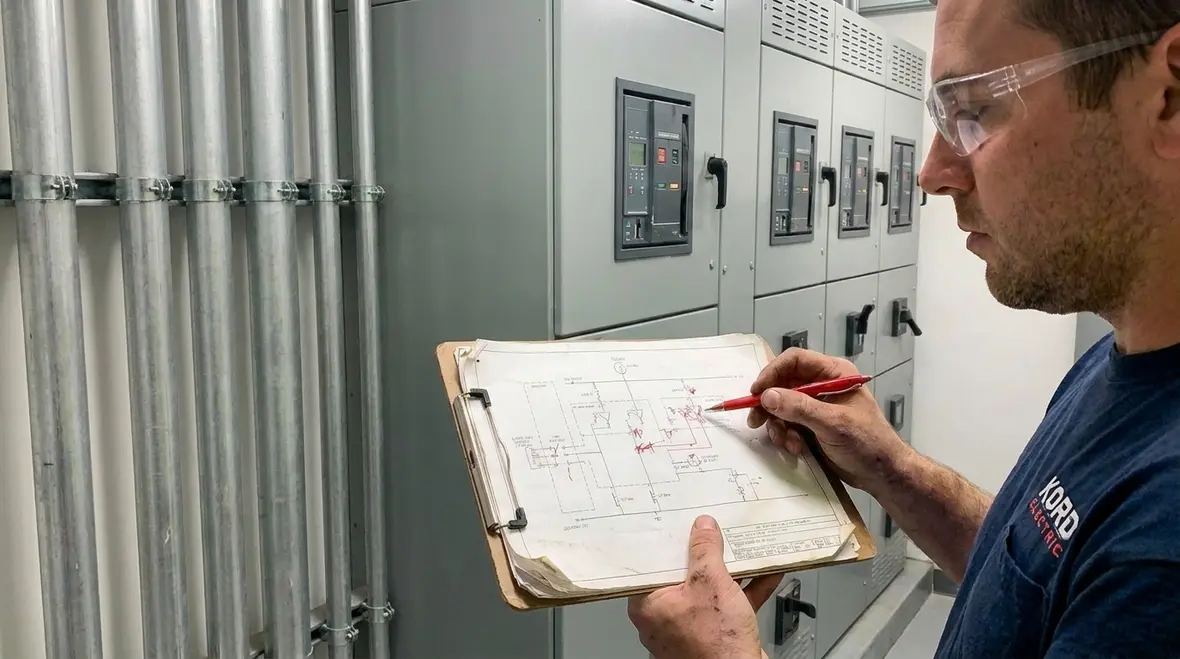
Overcurrent protection and disconnecting means: where 800V DC projects most often stumble
When Kord Electric supports commercial and industrial facilities, we see two recurring trouble spots. First, teams mismatch protection choices with DC arc behavior and system fault characteristics. Second, they do not place disconnecting means where staff can safely isolate circuits for maintenance and troubleshooting.
Because DC systems can behave differently than AC during fault conditions, the NEC DC rules and related requirements guide how protection devices must be selected and applied. That means our team helps confirm the device type, rating, and application method, and we check the upstream and downstream coordination so you do not end up with nuisance trips at the worst time. Also, the staff must have safe ways to de energize circuits. That is not just a compliance issue. It is an operational one.
Now, let us make it simple. If a facility uses 800V DC power distribution, the team must show that protective devices and disconnects fit the design. They also must ensure the wiring method supports the system requirements. Our expert service staff often uses real project diagrams to walk decision makers through these points. When they can visualize the isolation points, the conversation stops being abstract. And when it stops being abstract, approvals get faster.

Wiring methods, routing, and labeling for DC in mission critical buildings
After protection and disconnecting means, teams usually ask about cable and conduit selection. Yet the real concern is not only the physical cable. It is how the installation supports the system’s safety and ongoing operation. For instance, proper routing and secure support help prevent damage from movement, thermal effects, and maintenance activity. Likewise, segregation and separation practices help reduce the chance that faults spread to other circuits.
Labeling matters too. In the field, we have watched people trace the “wrong” conductor because the label was missing, unclear, or inconsistent with the single line diagram. That is not a joke in a data center. It is a risk. So Kord Electric stresses clear labeling that matches the system description, including voltage level, polarity where needed, and identification of the circuit function.
Furthermore, our technicians coordinate with facility teams to confirm installation details match the design intent. They do not treat the job as a checklist. They treat it like a system that must perform for years. And yes, if someone wants to treat 800V DC like it is the same as plugging in a lamp, our expert staff will politely redirect that enthusiasm.
Testing, maintenance, and documentation: code compliance that helps operations
Even after installation, the NEC expectation does not end at “it works.” Data centers require ongoing reliability, and teams must maintain safe operation. Therefore, Kord Electric focuses on documentation and test readiness. We review how staff will verify system performance, how they will isolate sections during maintenance, and how they will confirm equipment is operating within ratings.
In addition, good documentation reduces downtime when faults occur. When teams keep clear records of circuit identifiers, protection device details, and the DC distribution architecture, troubleshooting becomes faster. Then, maintenance becomes more predictable. And predictable maintenance keeps the business calmer.
Our expert service staff also supports training. We explain how DC systems behave differently than AC systems in terms of isolation steps and safe work practices. This matters for commercial and industrial facilities where multiple contractors may work during upgrades. When everyone understands the same system map, surprises get smaller.
For facilities that want to align testing and documentation with broader reliability planning, Kord Electric also provides resources such as Power Reliability Audits for Commercial Facilities, which connect inspection results with actionable upgrades.
FAQ: quick answers for code minded teams
Why Kord Electric supports these projects end to end
Kord Electric works with commercial and industrial facilities, major property buildings, and teams who cannot afford guesswork. We help them move from code question to clear design decisions. Specifically, our expert service staff explains requirements in plain language and connects them to the actual drawings, equipment schedules, and field installation details. That approach saves time during review and reduces friction during inspections.
And if you are thinking, “We just need the code answer,” we get it. Yet a correct code interpretation without good execution can still fail. So, we bring both: understanding and practical implementation. Like the best team in your favorite superhero universe, we show up with the right tools and the right plan, then we keep the story safe.
For data centers and other mission critical environments, that support extends from design reviews to construction, testing, and long term reliability planning. Kord Electric’s Data Center Electrical Infrastructure Design for Reliability shows how resilient power, protection coordination, and clear maintenance paths fit together in facilities that run 24/7.
Teams that operate across Los Angeles County and the surrounding region can also align their data center and DC distribution projects with Kord Electric’s broader Los Angeles County electrical services. That way, 800V DC decisions stay connected to the rest of the building’s electrical strategy, from preventive maintenance to emergency response.
CTA: If your commercial or industrial team is planning 800V DC power distribution in a data center environment, contact Kord Electric. Our technicians and expert service staff will help you align your design, equipment, and installation approach with NEC expectations for safe, reliable operation. Reach out now to review your layout, protection strategy, and documentation needs before you invest in hardware and labor. We will help you move forward with clarity and confidence, not stress.
For readers who want to connect DC distribution with code focused design in more depth, Kord Electric’s blog on NEC Electrical Code for Data Centers Explained offers additional context on how the NEC frames data center power, grounding, and protection choices.