NEC Electrical Code for Data Centers Explained
At Kord Electric, we spend a lot of time thinking about the NEC electrical code considerations for data centers, because in these buildings the power system is not just infrastructure, it is the life support. In the first planning meeting, we look at the core requirements of the National Electrical Code, while also aligning with how data center operators actually run, expand, and maintain equipment. Then, we guide our clients through the practical side: voltage levels, feeder design, grounding and bonding, fire alarm coordination, and the rules that govern how power must behave when everything else on site is doing its best impression of chaos.
Now, if you are imagining the NEC as a single monster rulebook, rest easy. The code is more like a strict but fair referee. It does not hate your project. It just wants it safe, reliable, and ready to keep servers alive when the lights would normally give up and go home.
Data center power planning starts with NEC structure
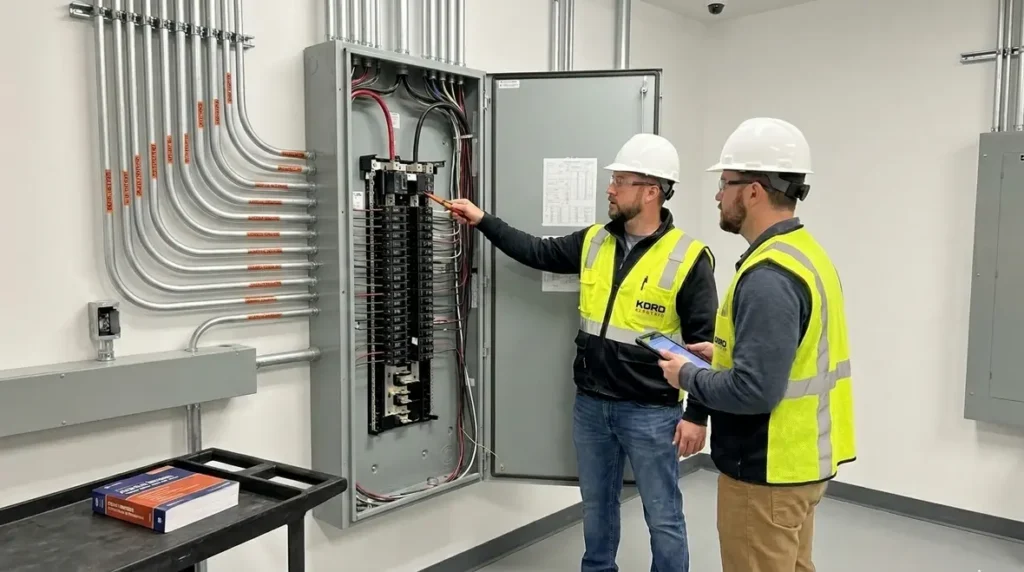
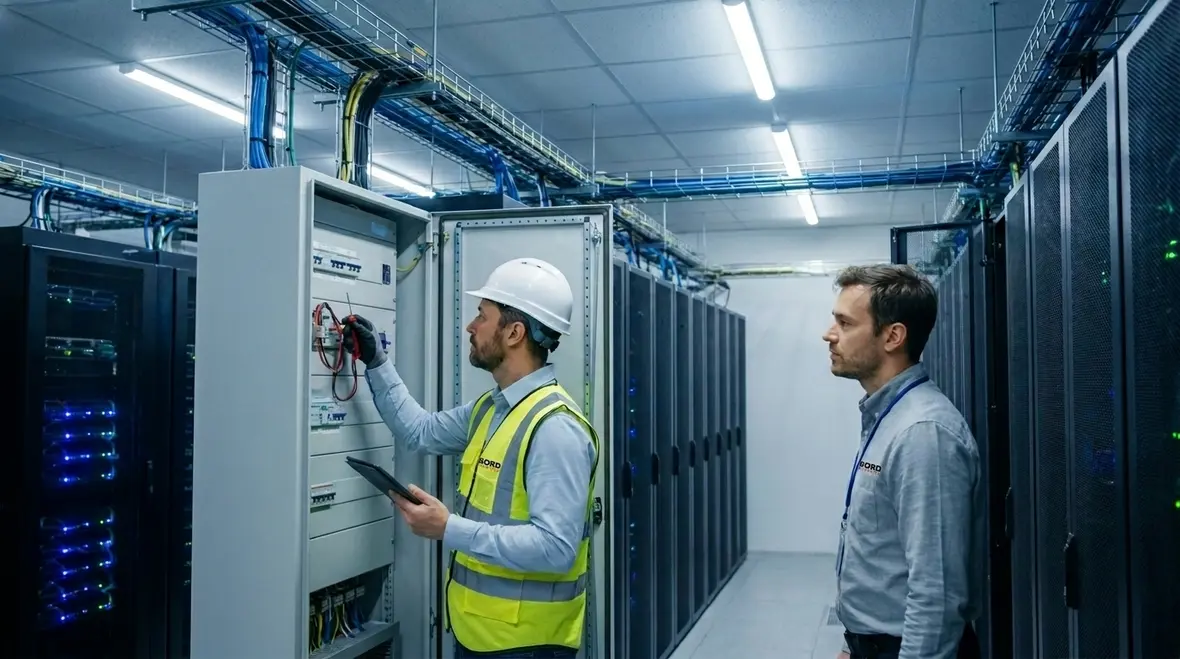
When our expert service staff evaluates a data center, we start with how the NEC organizes the job. Electrical codes are grouped so that electrical distribution, wiring methods, and equipment rules stay consistent across the building. Therefore, we treat design as a system, not a collection of parts. That means our technicians review the power path from utility service to UPS to distribution units, and then onward to critical loads.
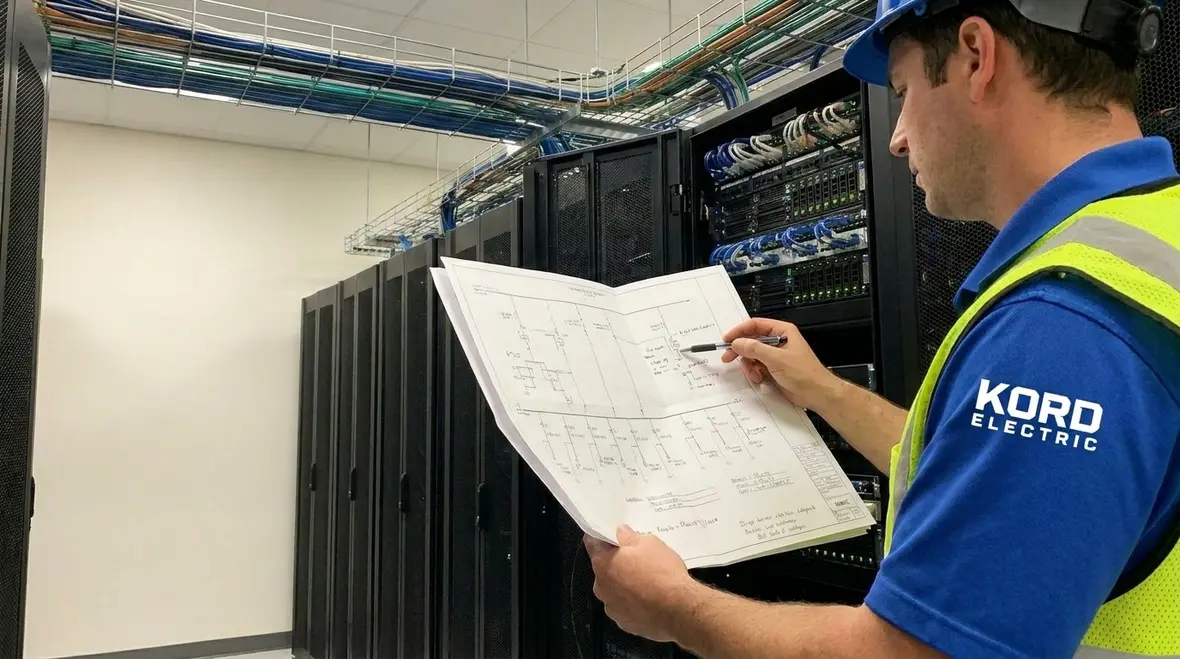
Next, we look at how the NEC handles classification and arrangement of systems in areas where downtime costs real money. In practice, this influences how clients plan redundancy, conductor sizing, routing, and separation of critical circuits. We also confirm that the building’s single line diagram matches the code intent, because “it should work” is not a compliance plan. It is a hope plan, and we have seen those fail.
If you want to see how this NEC-focused mindset connects with power architecture in real facilities, explore Kord Electric’s breakdown of data center electrical infrastructure essentials, which walks through the power path from utility all the way to critical IT loads in more detail.
How we handle critical branch circuits and feeders
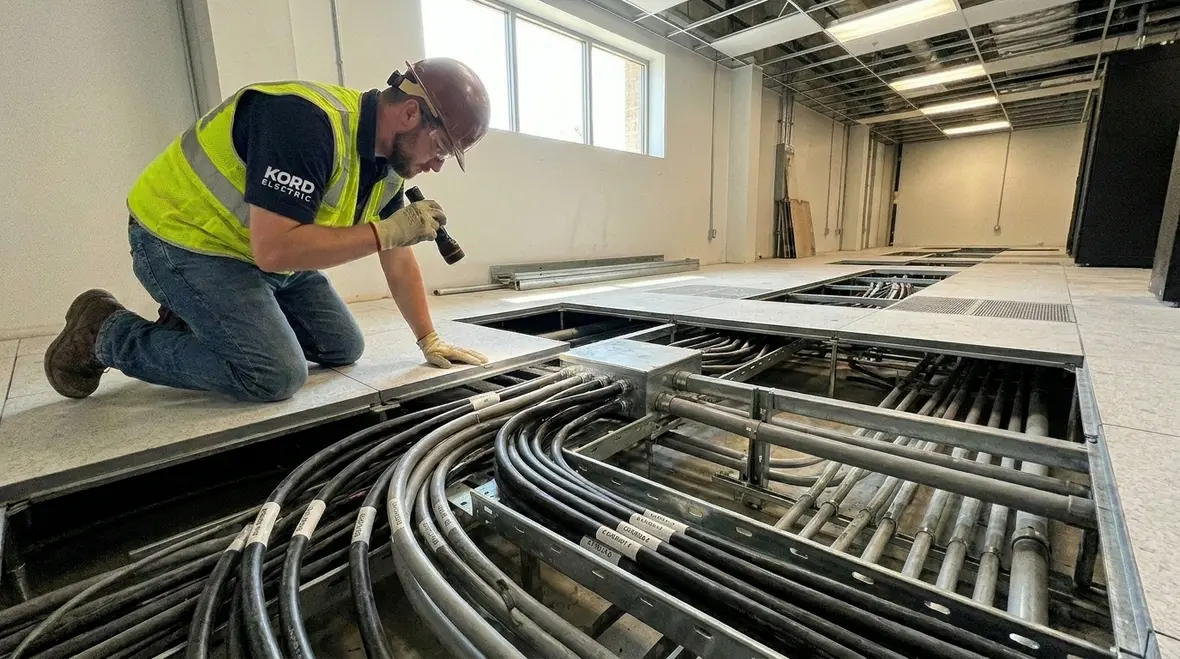
Our team knows that data centers rely on disciplined distribution design. So, we focus on critical branch circuits, feeders, and how they support uptime goals. First, we verify that circuit conductors are rated for their duty, and that voltage drop is not treated like a rumor. Second, we ensure the wiring method supports the environment, including raised floors, cable trays, and pathways where heat and airflow matter.
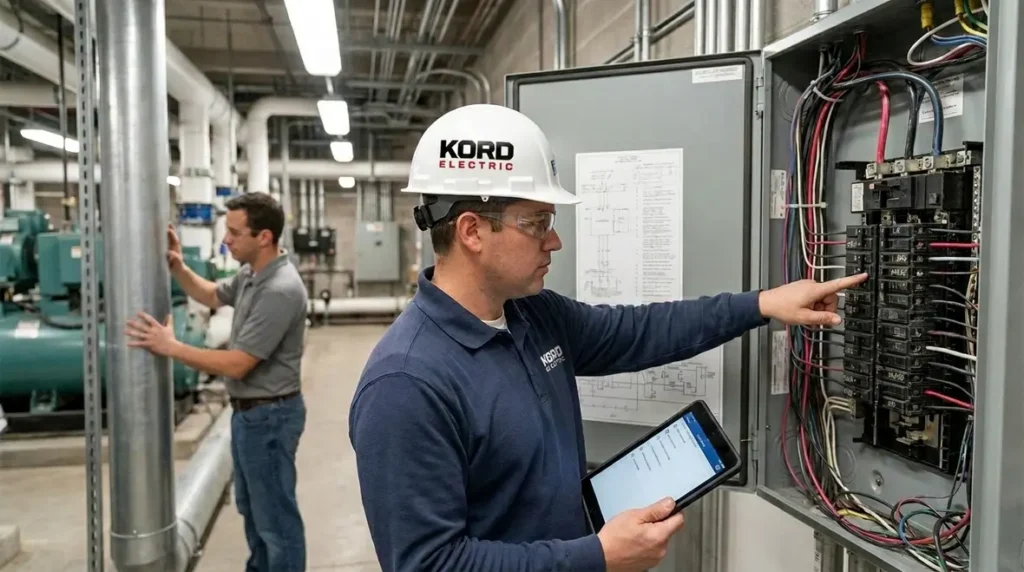
Then, we apply NEC logic to ensure feeders and branches remain reliable under load and during transfer events. Many facilities plan for static switches or transfer schemes, and we help align those schemes with the electrical code requirements for proper switching and conductors. In addition, we pay attention to labeling and documentation because operators need clarity during commissioning and troubleshooting.
Our technicians also explain decisions in plain language. For example, when we recommend routing changes, we do not just point at a diagram. We walk the team through how a separation or pathway choice can reduce interference, improve maintainability, and support inspection readiness.
In facilities that also integrate advanced fire alarm or suppression controls, we often coordinate with monitoring and release systems similar to those described in Kord Fire’s fire suppression release panel indicators guide, so that power, detection, and suppression logic all respect both NEC and life safety expectations.
Grounding and bonding for stable equipment performance
Grounding is where serious reliability quietly shows up. If grounding is handled incorrectly, protection devices can behave unpredictably, and sensitive equipment can see noisy conditions. Therefore, we treat grounding and bonding as part of the data center electrical code strategy, not an afterthought.
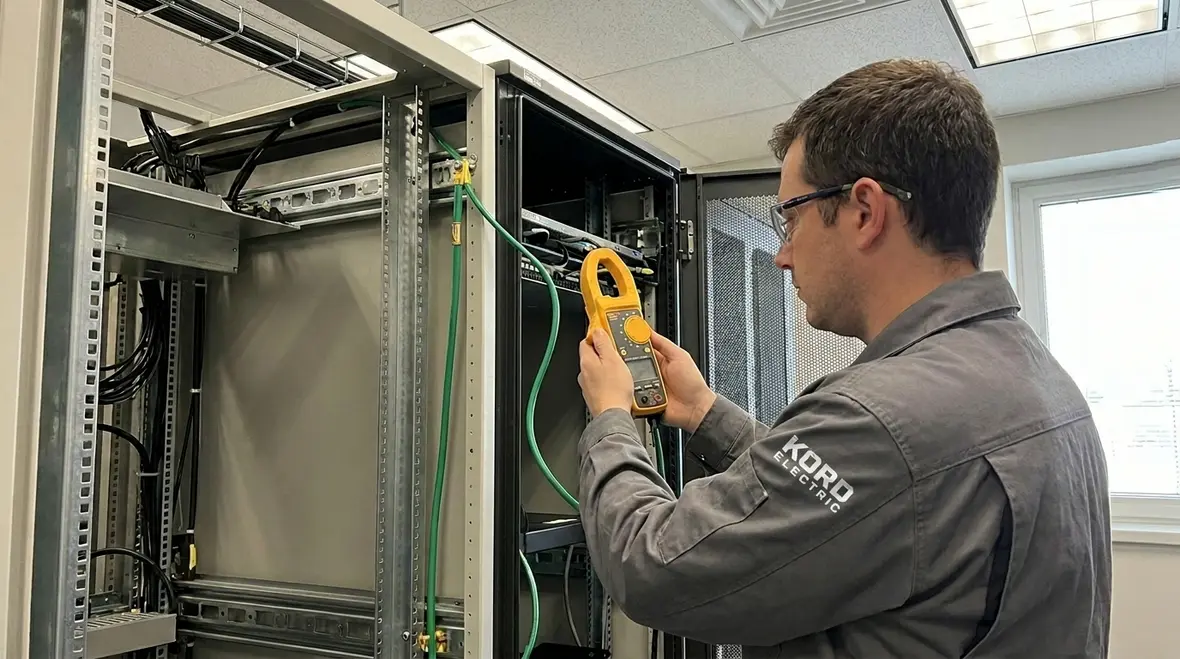
We verify how conductors connect across the system, and how bonding ensures fault current has a controlled path. We also coordinate with the grounding electrode system and bonding of metallic structures, racks, enclosures, and raceways. While the NEC provides the rules, the real win comes from correct implementation in the field, especially in large spaces with many intersecting cable routes.
Also, our expert service staff clarifies what matters for your operations team. We explain how grounding supports safety and also supports signal integrity and equipment stability. Yes, servers care about electricity quality too. They just do not file complaints. They simply stop responding, which is worse.
For mission-critical rooms where electrical stability must also support fast, code-compliant fire response, our grounding and bonding approach pairs naturally with the monitoring concepts outlined in Kord Fire’s overview of what fire alarm monitoring is and how it works, so life safety circuits stay clear and reliable alongside power circuits.
Electrical separation and wiring pathways that inspectors respect
Data centers often grow in phases. However, growth can create messy cable routing unless the design stays strict from day one. So, we use NEC principles for separation and routing to keep power and control circuits organized and maintainable.
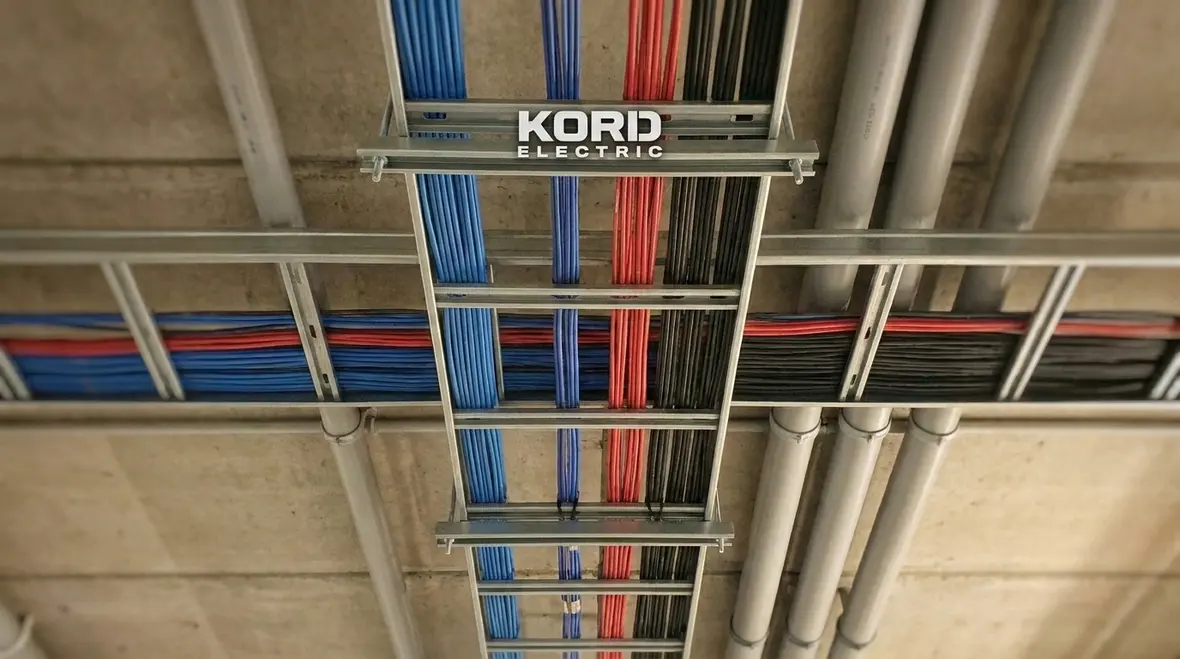
For example, we help clients plan how tray systems and conduits are laid out so that critical circuits do not get tangled with noncritical power in ways that create hazards during faults. We also guide the use of dedicated pathways for certain systems, and we coordinate with fire protection and life safety needs to prevent conflicts.
At the same time, we keep the build practical. Our technicians look at access for future moves and maintenance, because a data center that cannot be serviced becomes a data center that costs more than it should. And unless someone is paying you to build a museum of obsolete cable, we plan for change.
Because wiring pathways so often share space with fire protection devices, valves, and release piping, our approach aligns closely with the layout considerations covered in Kord Fire’s data center clean agent fire suppression guide, where electrical, detection, and suppression components are all carefully arranged to avoid interference and maintain service access.
Overcurrent protection, labeling, and coordination
Protective devices exist for a reason, but they still need good coordination. Therefore, we help ensure that overcurrent protection devices match conductor ampacity and that protective settings align with the load profile and system design.
In many projects, coordination impacts selective tripping, which directly affects downtime. If a fault happens, the goal is for the system to clear the fault at the smallest possible section, not take out the whole room like a careless domino line. Our team supports coordination studies where needed, and we align results with the NEC electrical code requirements on protection and circuit behavior.
We also insist on strong labeling and documentation. That includes circuit ID, panel schedules, and as built records. When the next service call happens at midnight, your team should not need to play “guess the breaker” like it is a game show. Our approach helps reduce that risk for commercial and industrial facilities and major properties.
NEC compliance for UPS, generators, and transfer systems
Backup power systems define a data center’s resilience. UPS systems, generator sets, automatic transfer equipment, and switching logic must all work together and stay compliant with electrical code intent. As a result, our team evaluates how the power transitions happen during events and verifies that wiring methods, device ratings, and installation details support safe operation.
We check that conductors and equipment ratings match the expected loads and fault conditions. Then, we verify that the transfer scheme does not create unsafe conditions, including miscoordination between upstream and downstream protective devices. Additionally, we coordinate control wiring where it interfaces with power components, because control circuits often get overlooked until the day they fail loudly.
Our expert service staff also helps operators understand the practical side. We explain how maintenance mode affects critical loads, and how to plan testing without compromising safety. We are not here to sell fear. We are here to prevent the type of downtime that turns a calm workday into a full time emergency.
For data centers that also rely on advanced suppression hardware to protect those same UPS rooms and generator spaces, this electrical planning dovetails naturally with Kord Fire’s resources on pre action fire suppression for data centers, helping owners see how backup power, detection, and suppression all share the same mission: keep the facility running safely when it matters most.
Commissioning, testing, and documentation before energization
Compliance does not end at the installation. Therefore, we support commissioning and testing so the data center electrical design behaves as intended. We help clients plan test points, verify installation details, and confirm that wiring and protection match the approved drawings.
Our technicians also verify field conditions, including torque practices, terminations, continuity, insulation resistance where applicable, and proper identification of conductors and equipment. Then, we help compile documentation packages that support inspections and future maintenance.
In addition, we review safety procedures so teams energize systems correctly and respond to alarms as designed. If you want a smooth startup, this step matters. If you skip it, the system will still start. It just might do so like a car with a warning light that nobody bothered to check.
FAQ
NEC compliance you can run, not just pass
When your data center depends on power quality and uptime, we do more than install equipment. At Kord Electric, we help commercial and industrial teams plan, coordinate, and verify the electrical system so it aligns with the data center electrical code expectations and the realities of day to day operations. If you want fewer surprises during commissioning and smoother inspection readiness, contact us now. We will assign our technicians to walk your team through the details, clearly and calmly, from design to energization.
If your facility also needs a coordinated approach to fire suppression around that same critical infrastructure, pair your electrical planning with Kord Fire’s data center-focused services, such as their data center fire prevention strategies and clean agent fire suppression guide, so both power and protection stay aligned with modern code expectations.
For California and regional operators who want a single team to help align power distribution, generators, UPS systems, and code compliance with real-world uptime goals, our data center electrical infrastructure essentials overview is a strong next step before scheduling a site-specific assessment.