
Commercial EV Charger Installation Checklist
Commercial EV Charger Installation Checklist for Building Owners: A Practical Guide
When a building owner plans a reliable commercial EV charger installation, the goal is simple: install the right equipment, make it safe, and keep it working for years. At Kord Electric, we guide commercial and industrial facilities and major property buildings through the full process, from site evaluation to commissioning. And yes, we make the paperwork feel less like a villain from a bad superhero movie.
In this checklist, our expert service staff walks you through the steps we use every day. First, we confirm what your tenants, visitors, and fleet vehicles actually need. Then we plan electrical capacity, utility coordination, and network setup. Finally, we test, document, and hand over a clear operating plan. Let’s get you ready before you spend time and money twice.
1) Start with demand and site reality before anyone touches a drill
Building owners often start by picking chargers they like. However, we start with usage. For commercial EV charging, that means you first estimate sessions per day, vehicle types, and parking behavior. Next, we map charger locations based on traffic flow, access rules, and ADA needs where applicable.
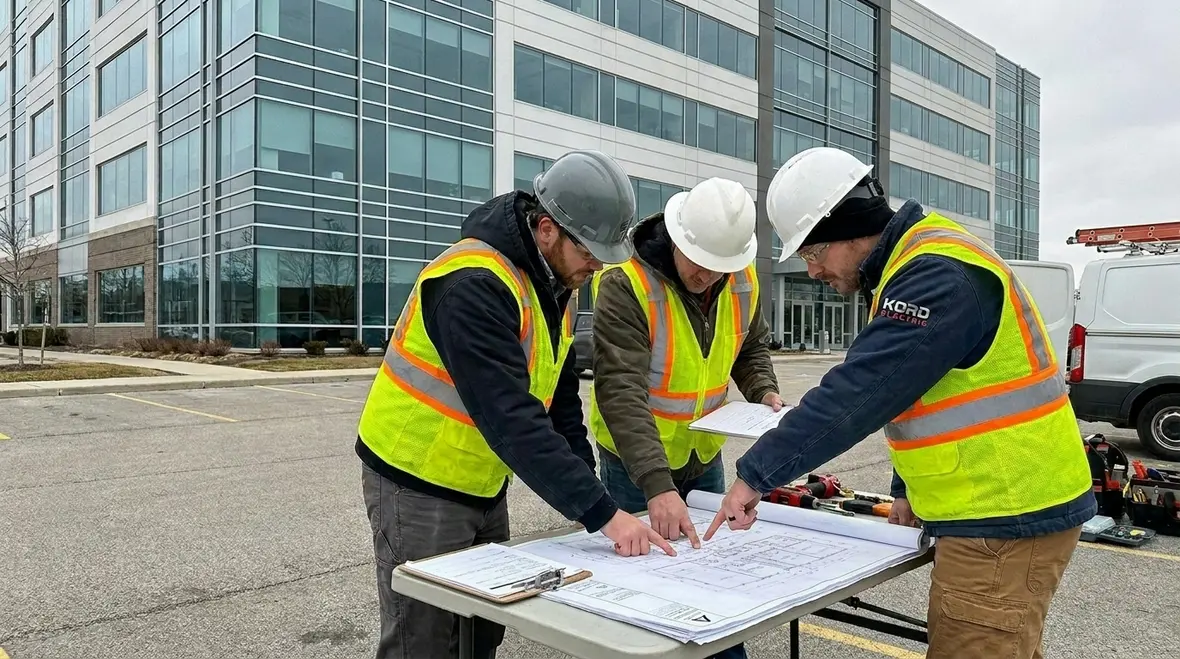
Our technicians begin with a site walk and a review of your property layout. Meanwhile, we ask questions that feel obvious after the answer, like: will a unit serve a garage level, or will it face weather exposure? If your plan ignores snow routes, sunlight glare, or access for maintenance vehicles, the “simple install” becomes a weekly surprise.
At this step, we also review your power layout. We do not treat charging as a bolt on to an old system. Instead, we look at panel capacity, conduit paths, and existing load profiles. Then we align everything with the right charging speeds and expected growth.
During this early stage, many property teams also discover hidden electrical constraints or aging infrastructure that may affect EV capacity. If your facility has older panels or past upgrades layered over time, resources like Kord Electric’s Rewiring Cost Guide for Commercial Electrical Systems can help you frame the long term picture while you plan new charging.
2) How do we size power and avoid expensive upgrades later?
Commercial charging works best when electrical design matches the real load. So we start by calculating demand based on charger count, output level, and how many units might run at once. After that, we consider demand response options and load balancing, because your building does not run at full load every minute of the day.
We also check transformer capacity, upstream protection, and feeder sizing. If your electrical service is tight, we plan smart routes and staged expansion. In other words, we help you choose an approach that avoids a “surprise upgrade” that arrives like a pop quiz.
Our expert service staff explains the options in plain language. For example, we clarify why conductor sizing, breaker ratings, and grounding matter. And because commercial and industrial facilities often have strict safety expectations, we document calculations and design decisions so your stakeholders can trust the system.
If your commercial EV charger installation also coincides with broader reliability work, you can align planning with other initiatives such as electrical preventive maintenance or power quality improvements. This approach helps keep voltage, protection settings, and charging behavior working together instead of fighting each other behind the scenes.
3) What permits, codes, and utility coordination should building owners expect?
Permits and compliance are not optional, and our process respects that reality. First, we identify what permits your jurisdiction requires for electrical work, site work, and any network or signage components. Next, we help coordinate with the utility company when service upgrades or new meters are needed.
Then we structure the project so inspections happen without delaying everything. We plan installation sequencing and we prepare for what inspectors actually look for: proper terminations, correct conduit types, labeling, and safe enclosure practices.
Meanwhile, we keep the communication clear. Our technicians provide progress updates and we explain what is submitted, what is scheduled, and what comes next. So you do not end up guessing while the project team works like it is mission control. For commercial and industrial buildings, this calm approach matters.
Because EV charging often intersects with lighting, signage, and parking safety requirements, many owners also look at resources like Kord Electric’s Lighting Installation Code Compliance Guide. Thinking about code expectations as a whole keeps your EV project from becoming a one off that conflicts with the rest of the facility.
4) Plan the charger locations, wiring routes, and site protection
Charger placement affects uptime. After all, an installed unit that blocks access or can not be serviced becomes a liability. We evaluate visibility, user flow, and safe maneuvering for different vehicle sizes. Then we design mounting locations and identify the best approach for routing cables.
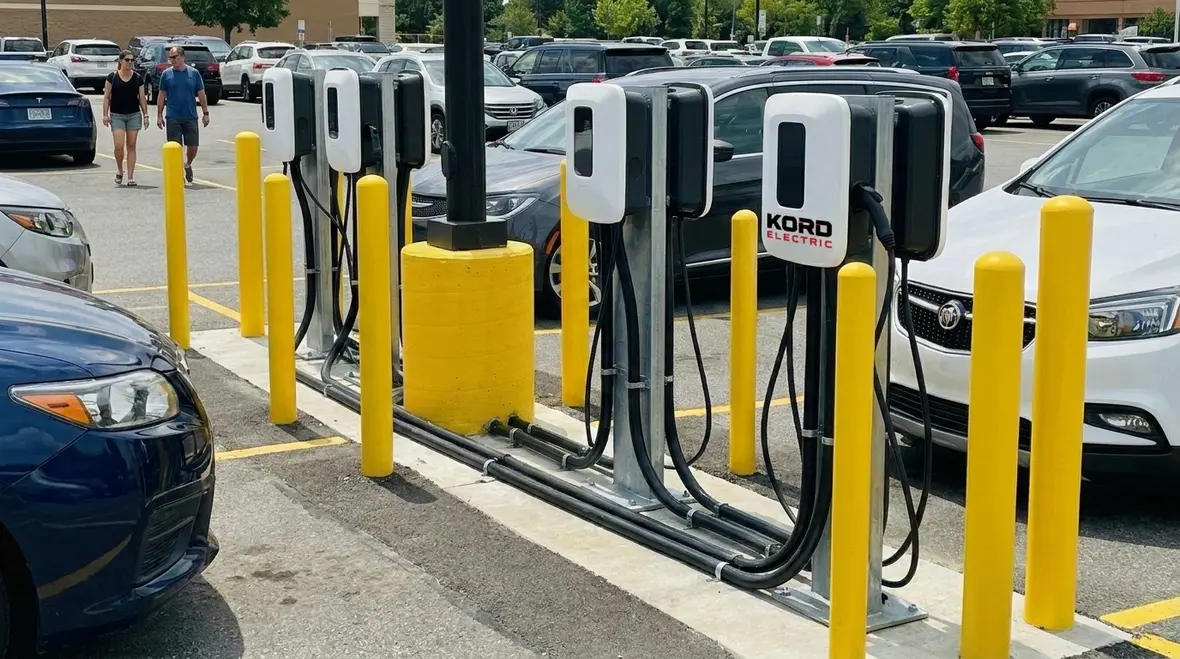
We also think about physical protection. In commercial and industrial environments, the charger sees more than just car doors and good intentions. So we consider bollards, surface mounting height, vehicle impact zones, and protection against moisture and dust where needed.
Then we plan for durability in your conditions. Garage environments, loading docks, and outdoor installations each present different risks. Our technicians recommend rated components and install them with consistent workmanship, so maintenance stays straightforward instead of chaotic.
Well thought out charger placement also ties into visibility and overall site experience. Pairing EV stalls with professional lighting installation services helps drivers feel safer after hours and makes wayfinding easier, especially in larger parking structures or shared commercial campuses.
5) Choose the right charging setup: single tenant, multi tenant, or fleet
Building owners usually have one of three charging realities. First, you might serve a single tenant who needs dependable access. Second, you might support multi tenant use for employees and visitors. Third, you might manage fleet vehicles with predictable schedules.
Because each scenario has different billing and access needs, we help you select a setup that fits. We can support models with network capabilities, so you can manage usage and reporting. Additionally, we help you coordinate authentication methods that match your operations, whether that means cards, apps, or site access rules.
We also advise on speed tiers and how they match your parking duration. If most users stay an hour, you do not need the same output as a fleet charger designed for longer dwell times. And if your building expects growth, we plan for it. We build in a path for expansion instead of forcing a rebuild when demand rises.
For complex sites juggling office tenants, logistics fleets, and critical systems in the same footprint, it often helps to look at EV charging as one piece of a broader electrical distribution strategy. Kord Electric’s work on data center electrical distribution design for reliability shows how carefully coordinated power strategies can keep high value loads online while still making room for new infrastructure like EV chargers.
6) Installation day: how our technicians keep work safe, clean, and on schedule
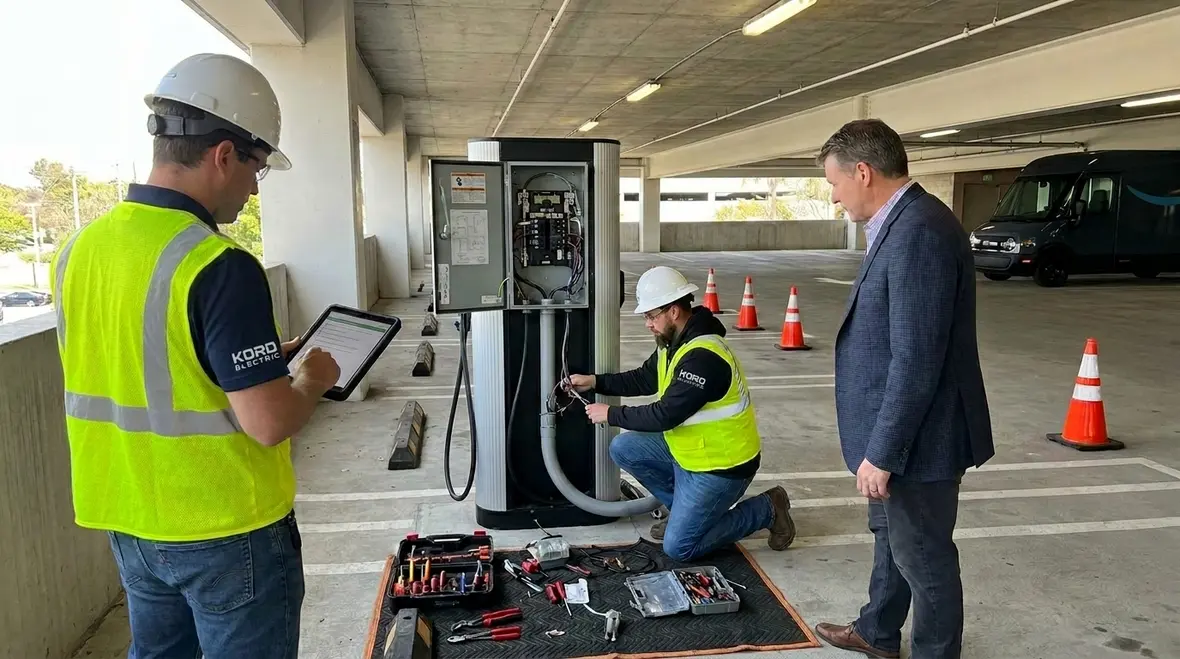
When installation begins, we move step by step and we keep control of quality. First, our technicians confirm materials, verify layout measurements, and follow the approved design plan. Then we install raceways, conduit, and electrical connections with attention to neatness and safety.
Next, we mount equipment and wire everything with correct labeling and documentation. We treat every cable like it will be inspected later, because it will. Then we test each circuit and each charger component before we call it done.
And yes, we handle the real-world interruptions. If a building manager needs access maintained for operations, we plan around it. If a loading schedule changes, we adjust our timeline without cutting corners. Our goal is to protect your property, your staff, and your project timeline.
7) Commissioning, documentation, and ongoing support that building teams can use
After the hardware is installed, the real work continues with commissioning. We verify electrical performance, confirm network communication where applicable, and test charging behavior under controlled conditions. Then we provide documentation: what we installed, how it is connected, and what maintenance checks should follow.
At this stage, we also train the building team on practical operations. Our expert service staff explains how to monitor alerts, handle basic troubleshooting, and report issues so we can respond fast. As a result, your facility does not have to guess when something changes, and it does not rely on guesswork or luck.
Finally, we plan for long term reliability. For commercial EV charging, the system needs consistent power quality and correct operating settings. We help ensure those foundations exist, so the chargers deliver expected performance instead of turning into expensive decorations.
Many owners choose to fold EV assets into a broader preventive strategy using services like Kord Electric’s electrical preventive maintenance programs. That way, inspections, cleaning, infrared scans, and testing schedules work together to protect EV chargers, panels, and other critical loads over the long haul.
Commercial EV charger installation FAQ for featured snippets
Call Kord Electric for the next step
If you own or manage a commercial or industrial property, you deserve EV charging that works on day one and stays reliable through growth. Kord Electric helps you plan, permit, install, and commission a safe commercial EV charger installation built for real site conditions. We send expert technicians, explain decisions clearly, and document everything so your team can operate with confidence. Reach out today and we will review your site, confirm power needs, and outline a clean, dependable path forward for your property.
To see how this approach translates into real-world projects, explore Kord Electric’s dedicated EV charger installation services page. There, you will find more detail on their commercial and industrial EV charging process—from site evaluation and system design to commissioning and support—so you can compare options and get your next project moving with confidence.
When you are ready to move from planning to action, partnering with a team that already serves complex facilities, campuses, and major property portfolios keeps your EV rollout calm instead of chaotic. With the right commercial EV charger installation plan, your building can support drivers today while staying flexible for whatever the next wave of vehicles looks like.


