
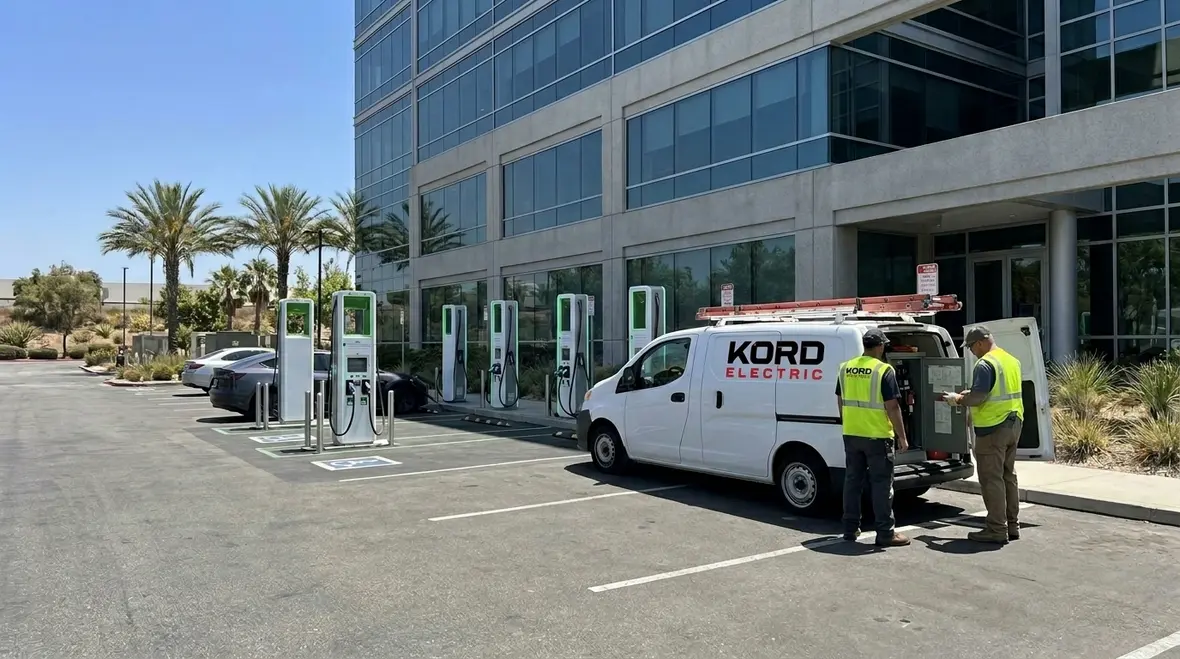
Title 24 EV Charger Requirements for California Buildings: What Kord Electric Handles for Commercial Sites
California’s Title 24 EV charger requirements shape how many electric vehicle charging ports commercial and industrial buildings must provide, and how those chargers must function. In the first place, we focus on commercial and industrial facilities and major property buildings, because that is where compliance actually matters and where upgrades affect operations, parking flow, and electrical capacity. Next, our team at Kord Electric makes sure people understand what the rules mean in plain language, not legal riddles that read like a parking ticket. Then, our technicians and expert service staff explain installation steps, power planning, and inspection readiness so you know what happens before, during, and after the work. If you have ever watched an EV charging session stall because the site was underbuilt, you already know the stakes. We build for the real world, not the wish list.
Which California Buildings Fall Under Title 24 EV Charger Requirements?
Third person clarity helps here, so we will keep it direct. Title 24 EV charger requirements apply most often to commercial and industrial projects and major property buildings when the building scope includes new construction or certain upgrades. Typically, decision makers ask whether they “count” as a facility that must meet the standard, and the answer depends on the building type, the parking setup, and the nature of the project work. Therefore, Kord Electric starts by confirming the site classification and the project category, so compliance work targets the correct standard version.
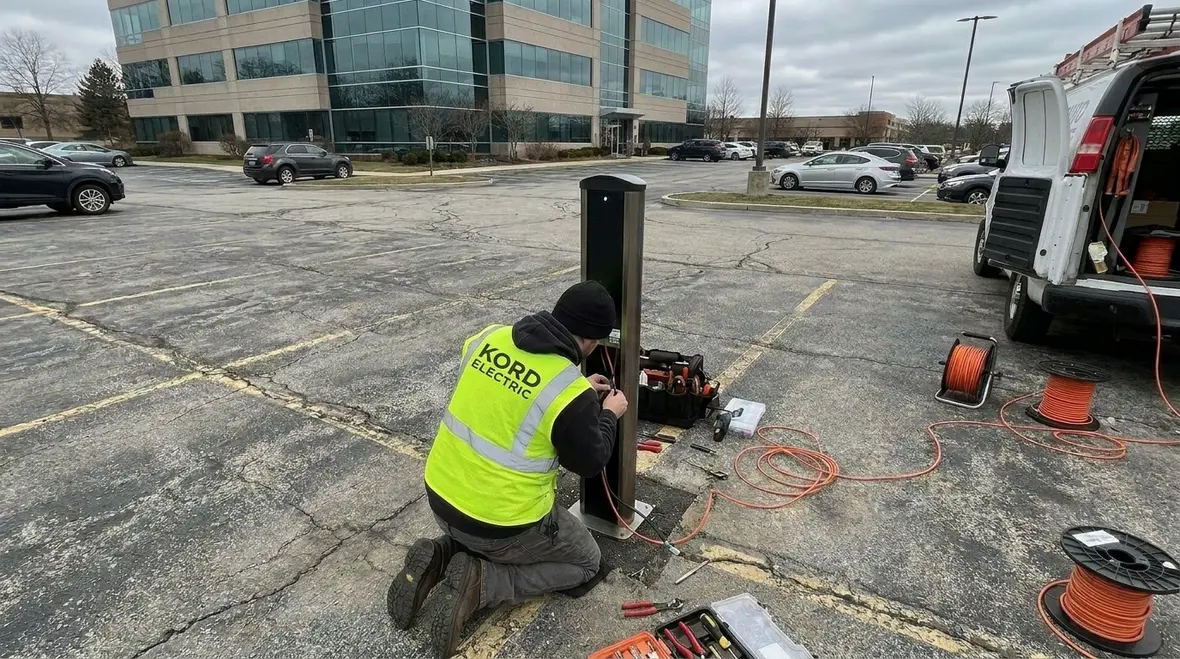
To make it easy, our process tracks common site realities: how many parking stalls the property uses, whether the spaces serve public visitors, employees, tenants, or customers, and how the electrical system already supports load. Additionally, we identify where chargers will live so the design avoids awkward cable runs and future maintenance headaches. In short, we do not guess. We verify, then we plan. Think of it like calibrating a thermostat before blaming the house for being cold. You can’t troubleshoot what you didn’t measure.
How Title 24 EV Charger Requirements Translate Into Parking Stall Math
When people hear “requirements,” they often imagine a vague checkbox. However, Title 24 EV charger requirements connect to counts and electrical intent, especially for the number of charging spaces and how charging capacity is made available. As a result, early planning matters because the stall count drives electrical design, conduit routing, and equipment placement.
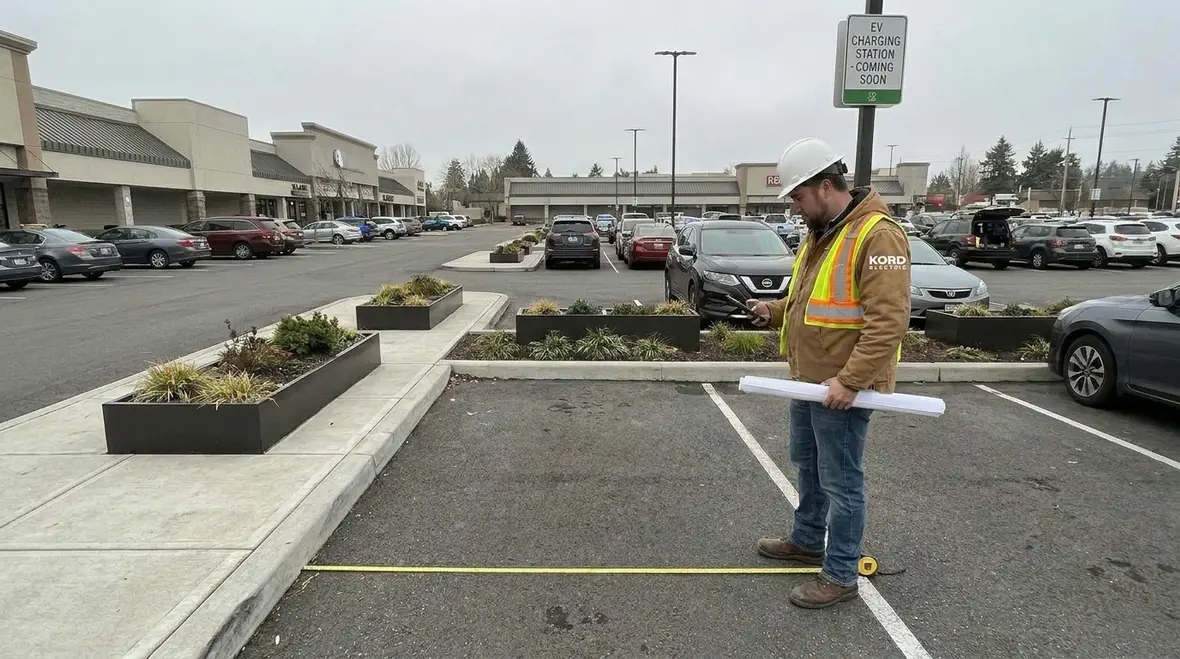
At Kord Electric, we guide stakeholders through the math with our expert service staff explaining each assumption. First, we review the parking layout, because not every space is treated the same for practical use. Next, we map which stalls will receive chargers and how many support levels the site needs. Then, we align these needs with the project schedule so the design team can keep the electrical plan realistic.
Moreover, we prepare for the common situation where stakeholders want “more chargers now” to match future EV growth. While planning for growth is smart, the site must still meet compliance in a structured way. Therefore, we help balance compliance needs with staged capacity, so the build does not strain the main service beyond what is safe or cost effective.
Designing the Electrical System So Compliance Does Not Break in Year Two
Compliance is not only about installing chargers. It is also about making sure the electrical plan supports the load in a stable, maintainable way. So we address the infrastructure that makes the charger reliable: panel capacity, transformer sizing where needed, circuit design, load management considerations, and conduit routes that survive real parking lot conditions.
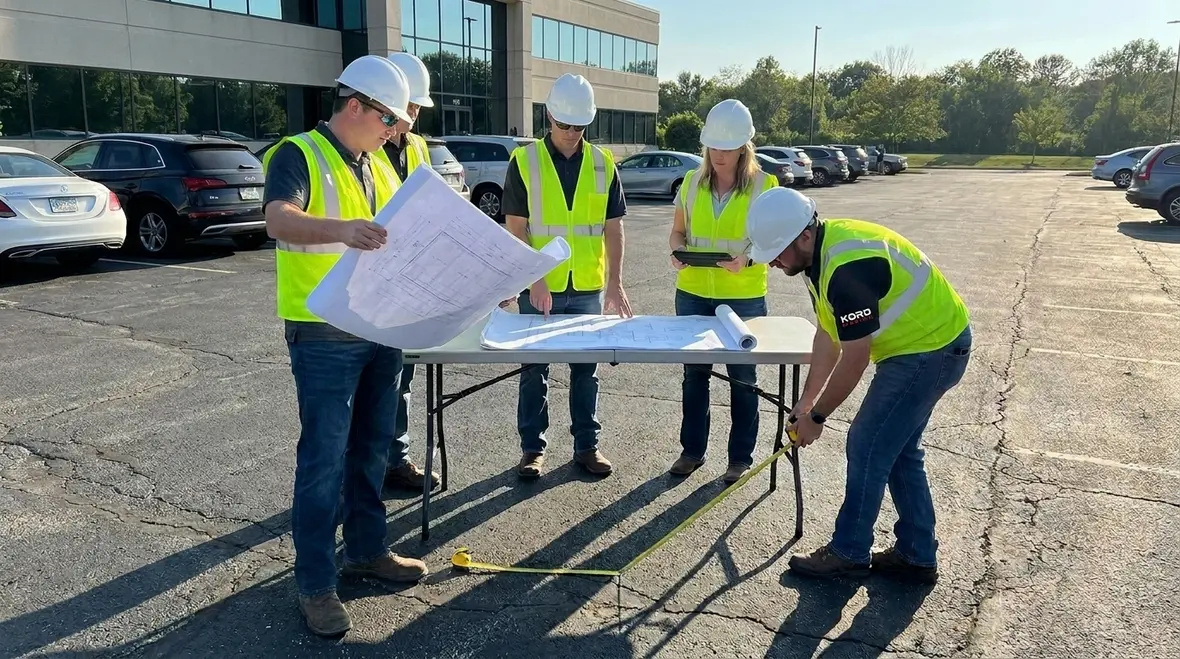
Because commercial and industrial facilities run on predictable power cycles, we evaluate how charging demand fits into daily operations. For instance, a facility with peak forklift cycles, HVAC surges, or shift changes needs thoughtful placement and power scheduling. Even if the charger count checks out on paper, an underbuilt system can cause downtime and unhappy drivers. And no one wants the kind of outage that turns a charging station into a very expensive coat rack.
Meanwhile, our technicians document installation details in a way that supports inspections and future troubleshooting. We keep pathways organized, protect conductors appropriately, and label components clearly. That helps when maintenance staff, property managers, or electricians from other companies need to understand what was done. In short, we reduce surprises later by doing things the boring way now, which saves money and time later.
Coordinating Title 24 EV Charger Requirements With Long-Term Maintenance
Title 24 EV charger requirements do not exist in a vacuum. They intersect with ongoing electrical preventive maintenance and panel care. When a site treats charging infrastructure as part of the broader electrical system, it becomes much easier to keep everything reliable and compliant. That is why many facilities pair new EV work with structured preventive maintenance programs for panels, switchgear, and distribution equipment, instead of waiting for failures to introduce themselves at the worst possible time.
For major property buildings that already rely on organized maintenance programs, integrating EV charger inspections into routine electrical preventive maintenance keeps performance steady. Visual checks, torque verification, and load trend reviews catch issues before they cause downtime. It also means documentation stays current, which is helpful when inspectors or insurers ask how the facility manages risk.
Over time, this mindset turns EV charging from a one-time capital project into a managed asset within the facility’s electrical ecosystem. The same approach that protects switchgear, panels, and emergency systems now extends to chargers, connectors, and networked hardware.
Permitting, Inspection, and Documentation for Major Property Buildings
Most delays in compliance projects come from process gaps, not equipment quality. Therefore, we coordinate permitting and help prepare documentation so the project stays on track. Our expert service staff explains what inspectors typically look for and how to keep the site ready for review. That means we align installation details with the approved plan, confirm labeling and hardware placement, and ensure the work matches what the permit expects.
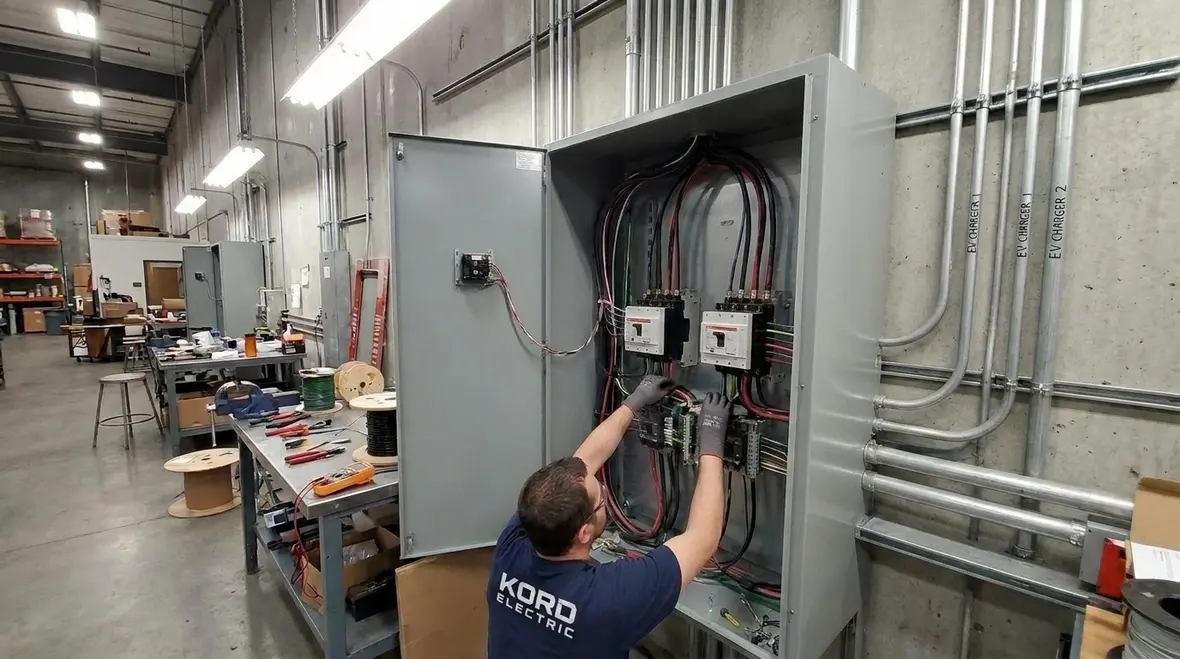
Then we help teams plan for inspection timing, because waiting until the last week to assemble paperwork is a classic mistake. It is like assembling furniture after midnight and hoping the instruction booklet teleports itself into your hands. Instead, Kord Electric supports a calm, step by step workflow: verify scope, confirm electrical routing, install to specification, and document everything as the work progresses.
For major property buildings with multiple contractors, we also focus on coordination. We communicate clearly with other trades so conduit pathways and electrical access do not conflict. As a result, the site finishes without the “who moved that junction box” drama that wastes hours.
Keeping Title 24 EV Charger Requirements Aligned With Other Codes
EV charging projects do not just answer to one rulebook. They sit at the intersection of Title 24 EV charger requirements, the National Electrical Code, local amendments, and in some cases internal company standards for safety and uptime. For commercial and industrial properties, this can feel like a stack of overlapping binders.
To simplify that reality, we design installations so that code intent and practical operation match. Conduit runs, clearances, labeling, and overcurrent protection all get handled in a way that feels familiar to inspectors who see many different jobs every month. When documentation and field conditions match, approvals move faster and the site has fewer “please correct and resubmit” surprises.
Choosing Chargers for Reliability, Access, and Future Upgrades
Not every site needs the same charging approach. We help commercial and industrial customers select charger types that fit their operational needs and driver patterns. For example, some facilities prioritize fast turnaround for customer vehicles, while others focus on employee charging across longer shifts.
Additionally, we consider how charging equipment blends with the property experience. Drivers want predictable access and clear signage. Property managers want equipment that stays reliable, is easy to maintain, and does not require constant callouts. Therefore, our team helps decide placement, power configuration, and how the system supports expansion.
Importantly, we also think about how changes will happen over the life of the building. Rather than treating chargers as a one time purchase, we plan a path to grow capacity when EV adoption increases. That keeps the site aligned with compliance needs while reducing the risk of expensive retrofits. And yes, we keep the upgrades practical. Nobody wants a system that looks nice on day one but turns into a maintenance maze when the first connector gets worn.
Aligning Title 24 EV Charger Requirements With Business Goals
Some owners see Title 24 EV charger requirements as a simple compliance checkbox. Others recognize that well-designed charging infrastructure can support tenant attraction, brand positioning, and future operational flexibility. When chargers are placed thoughtfully and supported by solid electrical design, they become an amenity instead of a burden.
That is why we connect charger selection and layout with real-world business goals: how long vehicles stay parked, when people arrive and leave, which zones feel safe and visible, and how the property might grow. As EV adoption accelerates, early design choices either make scaling easy or expensive. Our aim is always the former.
For organizations that expect future fleet electrification or a high mix of EV-driving employees, planning now for additional conduit paths, spare capacity, and logical expansion zones spares them from tearing up finished work later. Title 24 EV charger requirements provide the baseline; smart planning builds on that baseline so the system stays useful for years instead of just passing the next inspection.
Featured Snippets FAQ: Title 24 EV Charger Requirements and Compliance
Linking EV Charger Installation to Broader Electrical Strategy
When facilities treat Title 24 EV charger requirements as part of a broader electrical strategy, they gain more than code compliance. The same planning that supports new charging stations can reveal opportunities to modernize lighting, improve power quality, or tighten up preventive maintenance. In other words, the project becomes a chance to strengthen the entire electrical backbone of the property.
For example, a commercial site planning EV charger installation might also review voltage stability, panel loading, and existing emergency systems. Addressing small issues now can prevent bigger problems later, especially as EV charging adds new, often predictable, load patterns to the building. Coordinated upgrades also simplify scheduling so crews are not opening up the same areas multiple times across different projects.
By combining charger deployment with strategic improvements, properties position themselves for cleaner documentation, smoother inspections, and a lower likelihood of unexpected electrical drama. That is the kind of quiet reliability most operators actually want—systems that simply work, day after day, without needing a spotlight.
Request a Compliance Plan From Kord Electric
If a commercial or industrial property needs EV charging compliance, we help you move from uncertainty to a clear, buildable plan. Our technicians and expert service staff explain the steps, confirm the right interpretation of Title 24 EV charger requirements, and design a system that fits your parking layout and electrical capacity. Then we coordinate installation details so the project supports inspections and works reliably after launch. If you want a calm process and a charger network that does not flop later, contact Kord Electric today for an on site review and next steps.
For properties ready to move from planning to actual hardware in the ground, Kord Electric’s dedicated EV charger installation services cover everything from site evaluation and system design to commissioning and testing. That way, your path from Title 24 EV charger requirements on paper to chargers humming in the parking lot feels organized, documented, and aligned with how your building really operates.
And if you are looking beyond one project toward long-term reliability, our ongoing electrical preventive maintenance and related services help keep panels, distribution equipment, and EV charging infrastructure operating the way they were designed—so you can focus on running the facility instead of wondering what is happening behind the breakers.


