Data Center Backup Power Electrical Panels Grounding
When a facility loses power, the lights can go out fast, but the risk does not wait that long. At Kord Electric, we focus on commercial and industrial facilities and major property buildings, and we start every data center conversation with one truth: data center backup power must work the moment the grid does. That is why our technicians and expert service staff review electrical panels, standby systems, and grounding details together, not as separate “might be fine” projects. Then we build a plan that supports uptime, safety, and clean power for the equipment that never sleeps. And yes, we know servers can’t complain about flickers, but their failure logs absolutely do.
Why electrical panels matter in data center operations
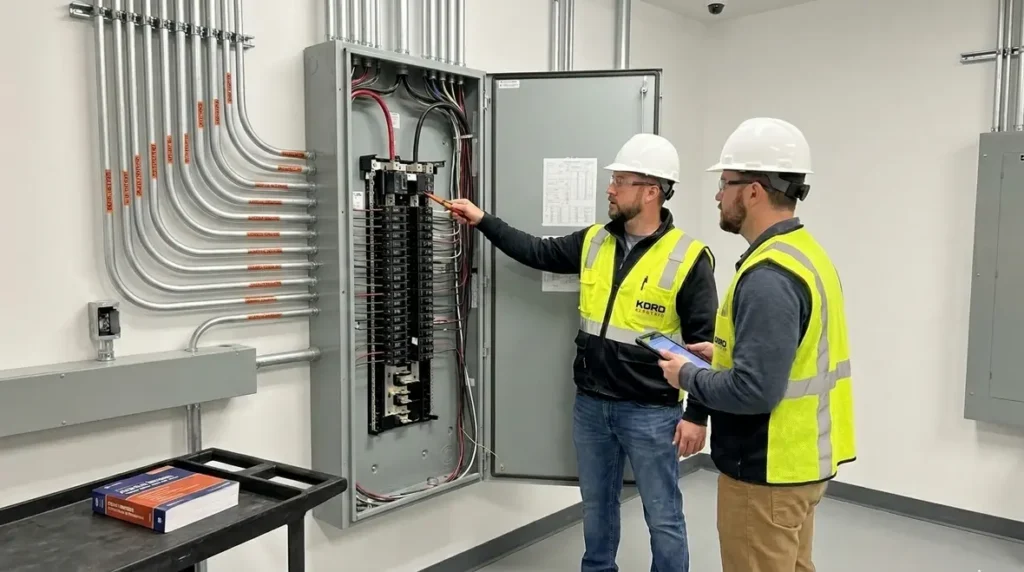
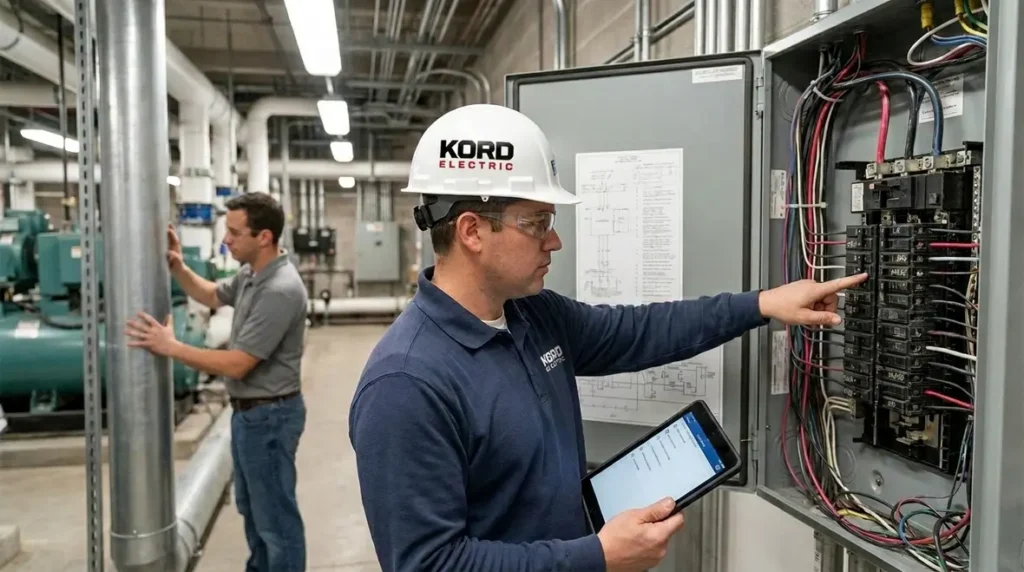
We treat the electrical panel like the control room for your power. It is where incoming utility power enters, where distribution happens, and where protection devices stand guard. However, in a data center environment, panel design cannot be an afterthought. If the panel routing, breaker selection, labeling, or bus configuration does not match the load profile, then problems grow quietly and then hit hard.
As our expert service staff explains during site walks, the panel must support high continuity. Additionally, we plan for maintenance access without forcing outages. We also verify that the panel schedule aligns with actual loads, including HVAC loads for hot aisle or cold aisle designs, not just IT nameplate totals. Next, we confirm the short circuit rating and interrupt capacity. Then we confirm coordination, so protective devices trip in the right order instead of taking everything offline like a bad magic trick.
Because data centers carry sensitive equipment, we also pay attention to how power quality reaches the racks. Even small layout choices can increase voltage drop, which can stress power supplies. Therefore, we size conductors and check path lengths, and we keep the distribution clear so technicians can troubleshoot safely during normal operations and during alarms.

For a broader look at how panels, switchgear, and distribution tie together in mission-critical facilities, Kord Electric walks through the core concepts in their article on data center electrical infrastructure essentials. That context helps operators understand how today’s panel decisions affect tomorrow’s reliability across the entire facility.
Backup power systems: the calm answer to the loudest problem
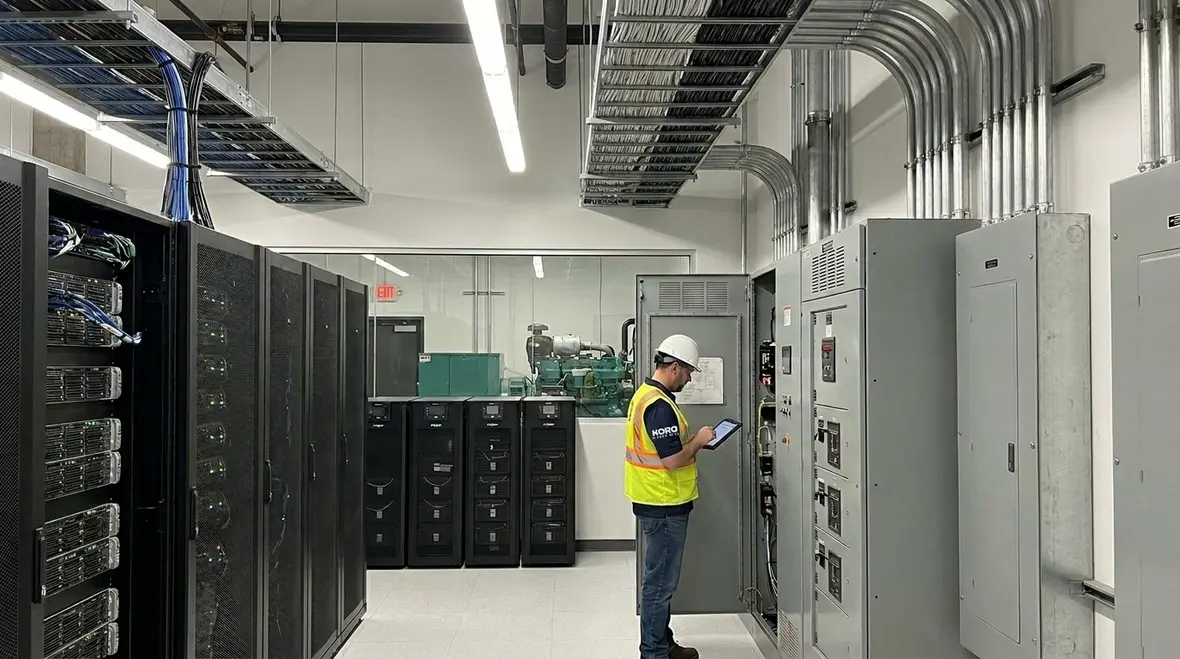
In most real cases, power failures do not announce themselves. They arrive during storms, utility work, or simple failures in upstream gear. That is where data center backup power must act with speed and steadiness. We help clients design and maintain systems like UPS and generators, and we make sure the transfer process protects critical loads. Moreover, we do not treat transfer switches and paralleling gear as a generic box to install. We match them to the facility’s operational goals, including ride through time and redundancy strategy.
Our technicians explain the sequence clearly. First, utility power fails. Second, the UPS stabilizes the voltage and frequency and supplies the load for the transition. Then the generator starts, syncs when required, and carries the load. At every step, controls matter. A control setting that looks minor on paper can cause an unnecessary interruption in the real world. Therefore, we verify timing, battery health, load compatibility, and harmonic interactions.
We also help with the less glamorous side that still causes downtime. Fuel supply planning, generator exercise scheduling, and maintenance workflow affect readiness. When we handle CUI style systems and major building power distribution, we build documentation that helps operators make decisions fast instead of guessing under pressure.

When backup systems share electrical distribution space with other critical equipment, structured programs like electrical preventive maintenance for commercial and industrial facilities keep generators, transfer switches, and distribution panels operating the way they were designed, not just the way they behaved on day one.
Grounding and bonding requirements that keep faults from becoming fires
Grounding and bonding are not just code compliance for our clients. They are how we protect people, keep equipment within safe reference points, and reduce the chance that a fault turns into a damaged system. When grounding is incorrect, protective devices may not operate as expected. Additionally, noise and unstable references can create weird behavior in sensitive electronics.
Our expert service staff follows a structured approach. First, we map the grounding electrode system and bonding connections across the facility. Then we check equipotential bonding for metal frames, raceways, cable trays, and structural elements. Next, we evaluate how the grounding system ties into the electrical distribution, including the neutral handling strategy used for the panel and backup power equipment.
We also focus on grounding for UPS systems and power conversion equipment. These systems often require careful consideration of how ground references support stable operation. Then we check the physical installation quality, because corrosion, loose terminations, and rushed connections can sabotage a design. Our team treats grounding inspections like preventive medicine, not like something you do after a problem shows up. After all, the fastest way to lose trust is to fix something after it fails during a real event.
For facilities wrestling with nuisance trips, unexplained equipment resets, or stubborn harmonics, the same grounding and bonding discipline used in data halls also applies to broader building systems. Kord Electric’s overview of voltage fluctuations in commercial and industrial facilities shows how poor grounding, overloaded panels, and unstable references can quietly erode reliability long before a full outage occurs.
UPS, generator, and transfer gear coordination for reliable uptime
Many facilities install UPS units and generators, and then they discover that coordination is where reliability goes to either thrive or collapse. Transition behavior matters. Therefore, we verify how the UPS handles load during events and how it communicates with transfer equipment and controls. We check whether the system supports the actual load profile, including surge and steady state characteristics of your servers, storage, and network gear.
Next, we review transfer switch logic. We confirm whether the system uses make before break, break before make, or other strategies based on the design. In addition, we check whether the UPS can support the critical loads during generator start. If the generator start time is longer than the UPS battery ride through supports, then a controlled shutdown becomes the only outcome. That is not a “maybe” situation. It is a timing math problem, and we solve it before commissioning.
Our technicians also look at survivability for smaller systems tied to the data halls. For example, we confirm that controls power and monitoring systems get protected, because alarms without power are just decorative lights. Additionally, we review paralleling and load sharing if the design uses multiple UPS modules. That ensures stability when the system is near maximum load.
At the design level, these choices overlap with broader data center electrical distribution design for reliability. Getting the UPS, generator, and transfer gear aligned with the distribution topology makes the difference between a graceful transfer and a campus-wide mystery outage.
How we assess electrical load, panel capacity, and future growth
Reliable power is not only about what you have today. It is about what you plan to add next month, next year, and during inevitable expansion phases. We run load assessments that reflect real operating conditions. Then we compare those results to panel capacity, breaker sizing, and conductor routing. If your expansion adds more racks, but the distribution plan remains unchanged, then voltage drop and heat rise become silent threats.
We use a practical method. First, we collect load data, including growth forecasts and equipment profiles. Then we validate that the electrical panels distribute power in a way that prevents overloads and uneven loading. After that, we check heat dissipation and ambient temperature impacts on breakers and bus bars. Also, we consider how backup power systems will handle the expanded load. A generator can carry the load, or it can refuse to do it, and the refusal often looks like a failure at the worst time.
Because our clients include commercial and industrial facilities and major property buildings, we also plan for operational realities like tenant schedules, restricted work windows, and critical maintenance windows. Transitioning from one capacity level to another should feel organized, not chaotic.
This same long view shows up when teams start exploring large scale rewiring or modernization. Kord Electric’s rewiring cost guide for commercial electrical systems walks through how panel capacity, conductor routing, and staged upgrades support future data center backup power requirements instead of fighting them.
Inspection, testing, and maintenance practices that prevent surprises
After installation, the work does not end. It shifts. In our service approach, we test, verify, and document. We want a facility team to understand what will happen during events, not just what happened during commissioning. Therefore, our technicians schedule maintenance for UPS batteries, generator systems, and protective device checks. Then we verify that transfer behavior stays aligned with the planned logic.
We also perform grounding inspections and terminations checks with a focus on long term integrity. Connections loosen over time due to vibration and thermal cycling. Additionally, corrosion can quietly increase resistance, and that can cause hot spots. We help clients catch these issues early by setting a maintenance rhythm that fits their uptime goals.
When we handle data center power systems in commercial environments, we also support clear labeling and updated one line diagrams. That way, when a technician arrives during an alarm, they do not start the investigation by guessing. They already know where power travels, what protects what, and which components connect to which monitoring points.
Those same principles align closely with structured programs like NFPA 70B electrical panels and switchgear maintenance, where inspections, testing intervals, and documentation turn “we think it’s fine” into evidence-based confidence.
Dual column view: essentials we verify
| Area | What we confirm |
|---|---|
| Electrical panels | Breaker coordination, capacity, conductor routing, labeling, and voltage drop risk |
| Backup power path | UPS ride through, generator start timing, transfer logic, monitoring reliability |
| Grounding and bonding | Electrode system, equipotential bonding, terminations quality, neutral reference strategy |
FAQ about data center electrical panels, backup power, and grounding
Ready to harden your data center power system?
Kord Electric helps commercial and industrial facilities and major property buildings build dependable electrical panels, robust backup power, and compliant grounding systems. Our technicians and expert service staff review your design, verify coordination, and support maintenance so uptime does not rely on luck. If you want a power plan that performs during real outages, contact us today. We will schedule an assessment and map the next steps in a way your operators can actually use. Because downtime is expensive, and we prefer your servers stay employed.
If your facility is also planning broader upgrades around lighting, distribution, or other building systems, you can pair data center power work with services like lighting installation for commercial and industrial facilities or preventive maintenance programs to support reliable data center backup power and building-wide resilience at the same time.
Whether you are troubleshooting existing infrastructure or planning the next expansion of your data center backup power strategy, our team is ready to help you translate technical details into practical steps that keep your racks, cooling systems, and building operations running smoothly.